
Brand spend on creators reached $32.6 billion in 2026, and micro and nano creators now claim 45.5% of that budget, according to Gigapay's Global Creator Economy Report 2026 published in July 2026.
Gigapay is the Merchant of Record for creator payouts: the one vendor that pays your creators on your behalf and takes on the compliance, payouts, and support so you don't have to.
A growing share of that spend goes to UGC creators who produce content for brand channels rather than their own feeds, and the rates, usage terms, and payment admin behind those deals have moved fast since 2024.
This guide breaks down what UGC creators charge in 2026, how usage rights are priced, and how one-invoice payouts remove the payment admin that grows with every new creator you hire.
Key Takeaways
- Professional UGC creators charge $500 to $1,200 per video in 2026.
- Usage rights add 25% to 100% on top of base creation rates.
- Paid usage, exclusivity, and whitelisting are priced separately from content creation.
- The US 1099 reporting threshold rose to $2,000 in January 2026.
- One-invoice payouts cut creator invoice volume by around 80%.
What Is UGC and Why Brands Pay for It in 2026
UGC (user-generated content) in a commercial context is content that a creator produces for a brand's own channels. The brand briefs the creator, the creator films and edits the asset, and the brand runs it in paid ads, on product pages, in email, or on its own social accounts. The creator's follower count barely matters because the brand buys the content, and the brand's media budget handles distribution.
That distinction separates UGC deals from classic influencer marketing. An influencer is paid for production plus reach, which is why follower tiers drive influencer pricing. A UGC creator is paid for production alone, which is why UGC pricing follows experience, content type, and usage rights instead.
Brands keep raising UGC budgets for three reasons:
- Ad performance: Native-looking creator video consistently outperforms polished studio ads in paid social auctions, where authenticity signals drive click-through.
- Cost: UGC runs 3 to 10 times cheaper than traditional production, according to Influence4You's 2026 pricing analysis.
- Volume: Paid social teams need dozens of creative variations per month to fight ad fatigue, and a bench of UGC creators produces them faster than any production agency.
The same shift explains why micro and nano creators claimed 45.5% of influencer spend in 2026, per eMarketer data cited in Gigapay's Global Creator Economy Report. Small creators produce most commercial UGC, and paying hundreds of them is now a standard operating problem for brands and agencies.
UGC Market Data 2026: What the Numbers Say About Creator Payments
The money flowing toward small creators has grown faster than the systems brands use to pay them. The figures below set the scene for every rate and payment decision in this guide.
Two of these numbers matter most for anyone budgeting UGC in 2026. Micro-creator rates have roughly tripled since 2024, so rate cards from even a year ago will underprice your offers and stall your outreach. And payment delays of up to 120 days remain routine, which means paying quickly is now a competitive advantage when recruiting good creators.
One more data point from the same research: agency markups on creator payments run 20% to 80%, a hidden inflation layer that most brands never see itemized. Knowing the real creator rates below helps you spot it.
How Much Do UGC Creators Charge in 2026?
Most professional UGC creators charge $500 to $1,200 per video in 2026, with beginners starting around $150 and established creators charging $3,000 or more for a single asset, according to JoinBrands' 2026 rate guide published in June 2026.
The spread is wide because experience, content type, platform, and region all move the price. The benchmarks below come from rate guides and platform datasets published between January and September 2026.
UGC Creator Rates by Experience Level
InfluenceFlow's 2026 rate card, updated September 2026, draws on 1,604 active creator profiles, which makes it one of the few benchmarks built on live platform data rather than surveys. Both datasets agree on the working range: budget $500 to $1,200 per video for a reliable professional, and treat anything under $200 as a beginner rate that usually buys you extra revision cycles.
UGC Rates by Content Type
Source: JoinBrands, June 2026. Testimonial and demo formats price higher because they require scripting, product familiarity, and stronger on-camera delivery.
UGC Rates by Region: US vs Europe
European UGC runs noticeably cheaper than US UGC. Influence4You's 2026 analysis puts the European base price at about €180 per video, with brands paying an average of €320 for high-quality, brief-compliant content.
Platform matters too: YouTube-format creators charge €350 to €400 while Instagram-format creators charge €130 to €160. A US brand sourcing creators across Europe can often cut per-asset costs by 30% to 50%, provided it can handle paying creators in 20+ countries, which is where payout infrastructure starts to decide what your real rates are.
UGC Add-On Pricing: Hooks, Raw Footage, Revisions and Rush Fees
Sources: Influee, JoinBrands, InfluenceFlow. Hook variations are the highest-ROI add-on for paid social teams: a $50 variation lets you test three openings against the same body footage instead of commissioning three full videos.
UGC Usage Rights Explained: What Each License Costs in 2026
Usage rights decide what you may do with the content after delivery, for how long, and where. They are priced separately from creation, and skipping them in the agreement is the single most common source of creator payment disputes. The base rate typically covers organic use on one platform for a limited window. Everything beyond that costs extra.
Organic vs Paid Usage Rights
Organic usage means posting the content on the brand's own social accounts and website. Paid usage means running the content as an ad, which exposes the creator's face to far larger audiences and competing brands. Commercial or paid usage adds 20% to 50% on top of the base rate, per JoinBrands, and most creators now refuse perpetual paid usage at any standard rate.
Usage Windows: 30, 90 and 365 Days
The two guides frame the top tier differently, as a percentage premium or a multiplier, but they agree on the principle: perpetual rights should roughly double your cost or more. Buy the window you will actually use.
A 90-day paid usage term matches how long most ad creative stays effective before fatigue sets in, so paying for perpetual rights on every asset wastes budget on content you will retire within a quarter.
Exclusivity Fees
Exclusivity stops the creator from working with your competitors for a set period. Industry-wide exclusivity for 3 to 6 months adds 30% to 50% to the rate, and full exclusivity doubles it or more. InfluenceFlow's platform data prices 30-day exclusivity at 1.3x to 1.5x base and 90-day exclusivity at 1.5x to 2x base.
Define the competitor set narrowly in the contract. "No other skincare brands" is enforceable and fairly priced, while "no other brands" prices like a retainer.
Whitelisting and Spark Ads Pricing
Whitelisting lets you run ads from the creator's own account handle, through Meta partnership ads or TikTok Spark Ads. It performs well because the ad inherits the creator's native credibility, and it is priced as an ongoing license rather than a one-off fee: around 30% of the creator's base rate per month of active whitelisting, per Influee's rate guide.
Budget for it as a recurring line item, and make the end date explicit so neither side has to chase the other when the campaign stops.
How to Structure a UGC Creator Contract and Payment Terms
A UGC agreement does not need to be long, but it needs to answer seven questions in writing before any filming starts. Every dispute in this category traces back to one of these being left vague.
- Deliverables: Number of videos, length, format, aspect ratio, and the number of hook variations included.
- Usage rights: Organic or paid, which platforms, which territories, and the exact end date. Tie every renewal to a new fee.
- Exclusivity: The named competitor categories and the period, or an explicit statement that there is none.
- Revisions: How many rounds are included and what each extra round costs.
- Payment amount and currency: The gross fee, who covers transaction fees, and the currency the creator actually receives.
- Payment timing: When the payment is triggered: on delivery, on approval, or on a net term.
- Kill fee. What the creator receives if the brand cancels after the brief is accepted, commonly 25% to 50% of the agreed fee.
Payment timing deserves the most attention. Gigapay's State of Influencer Payments research, run with Billion Dollar Boy, Meltwater, and The Influencer Marketing Factory, found payment terms stretching to 120 days in enterprise influencer programs. Creators remember who pays on delivery and who pays next quarter.
The brands that pay within days get first pick of reliable creators, better rates on repeat work, and faster turnaround when a campaign needs ten videos by Friday.
Self-billing is the contract clause that makes fast payment practical at scale. Instead of waiting for each creator to produce a correct invoice, the paying party generates the invoice on the creator's behalf from the agreed deal terms.
It removes the single biggest cause of delay, which is invoices that arrive late, wrong, or not at all. Self-billing is standard inside payout platforms like Gigapay, and legal in most European markets when the agreement authorizes it.
Ways to Pay UGC Creators: Payment Methods Compared
How you move the money matters as much as how much you agreed to pay. The method decides your fees, your creator's net amount, your paper trail, and who carries the tax reporting duty. Here is how the main options compare for a brand paying 10 or more creators.
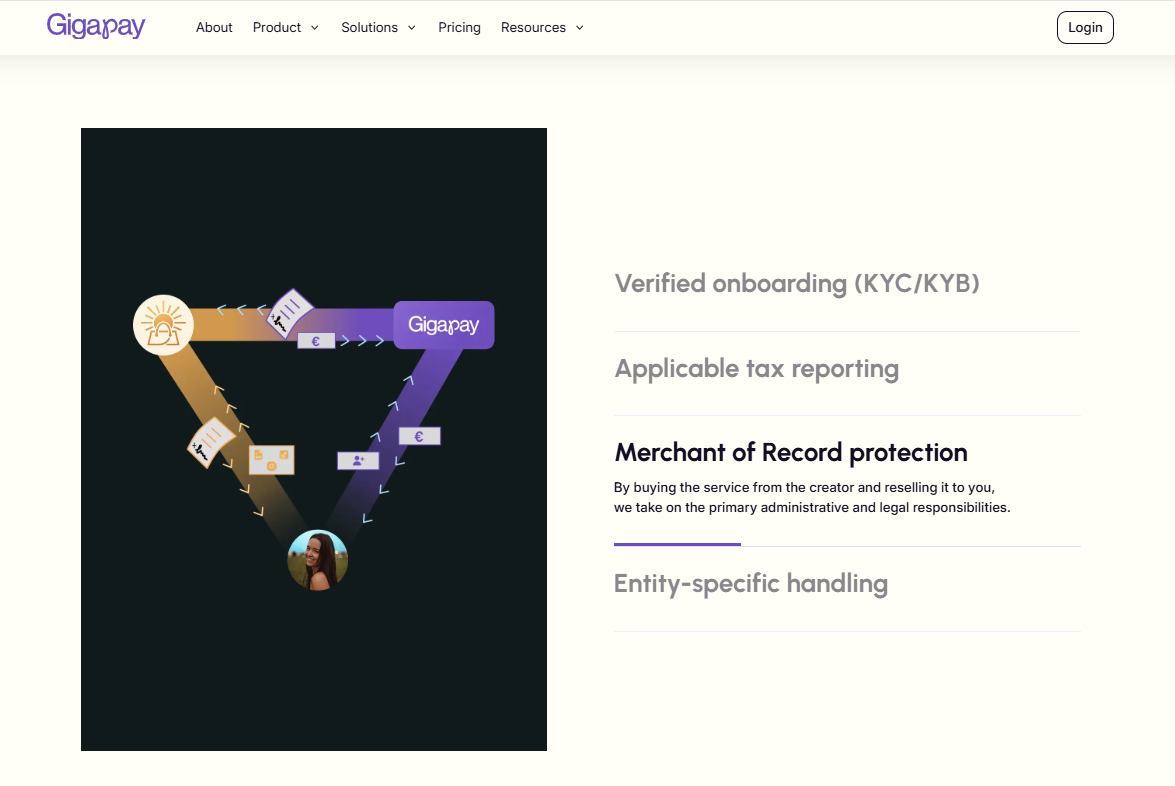
The structural difference sits in the last column of that table. Payment rails and AP tools move money and generate paperwork, and the compliance stays yours. A Merchant of Record becomes the counterparty: it formally purchases the creator's deliverable and resells it to you, so vendor onboarding, invoice collection, KYC, and tax reporting scope move off your plate.
Stripe's own documentation states that users remain fully responsible for their obligations when using its rails, which is the honest version of what every pure payment rail offers.
For one-off collaborations with two or three creators, a bank transfer is fine. The math changes at volume: finance teams report a true cost of €40 to €60 per manual creator payment once vendor setup, invoice chasing, and error cycles are counted, and roughly six hours of accumulated admin per creator payment cycle across marketing, finance, and legal.
What Are One-Invoice Payouts and How Do They Work?
A one-invoice payout consolidates an entire campaign's creator payments into a single invoice from a single vendor. Instead of onboarding 40 UGC creators as 40 suppliers, collecting 40 invoices in 40 formats, and reconciling 40 bank transfers, your finance team books one invoice from one counterparty and every creator gets paid individually on the other side.
The mechanism behind it is the Merchant of Record model. The MoR formally purchases each creator's deliverable and concurrently resells it to you, becoming the contractual counterparty on both sides. That legal structure is what allows the consolidation: because the MoR is the buyer of record for every creator, it can bill you once for all of them.
In practice, a one-invoice payout runs like this:
- You submit the batch: Upload a spreadsheet of creators and amounts, or push the payouts through an API from your own campaign tooling.
- Creators onboard themselves: Each creator verifies identity (KYC), picks a payout status as an individual, sole trader, or company, and adds their bank details. No registered business or VAT number is required, which matters because 88% of creators run content as a side business.
- Invoices generate automatically: Self-billing creates a correct invoice on each creator's behalf from the agreed amounts, so nobody chases paperwork.
- Creators get paid: Funds move over local rails such as SEPA Instant, Faster Payments, and ACH. On Gigapay this covers 65+ countries and 50+ currencies, and payouts land instantly when the account is pre-funded.
- You receive one consolidated invoice: One vendor entry in the ERP, one line for procurement, one counterparty for the audit trail.
The measurable effect on finance operations is large. Gigapay cites an 80% reduction in invoice volume from consolidated invoicing, and for agencies the consolidated-invoice-per-campaign model cuts the invoices behind a global deal by around 70%.
Boozt, the Nordic fashion retailer, tripled its creator collaborations without expanding the team after moving to this model. Its Brand Activation Lead put it plainly: "We've been trying to find a way forward with nano- and micro-influencers for years and Gigapay really enabled this."
For UGC specifically, one-invoice payouts solve the exact problem the rate data above creates. The economics push you toward many small creators at $150 to $1,200 per video rather than a few large ones, and every additional small creator adds payment admin. Consolidation makes the admin flat: paying 400 creators costs your finance team the same effort as paying 4.
Tax and Compliance Rules for Paying UGC Creators in 2026
Every payment to a creator is now a compliance event. Regulators spent the last three years building reporting pipes around the creator economy, and 2026 is the year several of them switch on enforcement. These are the rules that touch UGC payments directly.
United States: The New $2,000 Reporting Threshold
The 1099 reporting threshold rose from $600 to $2,000 for payments made on or after January 1, 2026, under the One Big Beautiful Bill Act. Fewer tiny payments trigger forms, but any creator you pay $2,000 or more across a year still requires correct tax identification collection and reporting. At typical 2026 UGC rates, two or three videos from the same creator crosses the line.
European Union: DAC7 Reporting
DAC7 requires digital platforms to report what EU-resident sellers, creators included, earn through them. Tax authorities exchange that data across member states and use it to match declared income against actual payouts, which is why creator audits have picked up. For brands, the practical question is who in the payment chain acts as the reporting platform operator.
When a Merchant of Record sits in the middle, the DAC7 reporting scope sits with it. Gigapay files DAC7 reports with Skatteverket, the Swedish tax agency, covering reportable EU-resident creators.
Germany: The KSK Levy
Germany's Künstlersozialkasse charges companies a 4.9% social levy on payments to creative freelancers, influencers and UGC creators included, once payments to them exceed €1,000 in a year. It applies to companies based in Germany regardless of where the creator lives.
Many German brands discovered the rule through an auditor's letter rather than a planning meeting, so if you pay creators from a German entity, bring KSK into the budget now. A payment partner can supply the payout data the reporting requires, but the levy obligation sits with the German company itself.
Classification Risk Across the EU
European courts have started examining whether long-running creator relationships amount to employment, and the EU Platform Work Directive lands in December 2026 with new presumption-of-employment tests for platform work. For a brand, the risk profile is simple to describe: recurring monthly deliverables, fixed briefs, and one dominant client make a creator look like a dependent worker to a regulator.
Project-based UGC with clear deliverables and multiple clients does not. Structure matters, and so does the paper trail showing each creator was engaged and paid as an independent business counterpart.
Beyond the EU and US
Rules keep appearing market by market. The UAE now requires influencer permits for paid creator work, Sweden's KU14 reporting covers Nordic cross-border cases, and VAT treatment of creator services differs across all 65+ markets a typical global program touches.
The pattern across every jurisdiction is the same: the paperwork multiplies with every country you add, and it lands on whoever is the legal counterparty to the creator. That is the strongest argument for making the counterparty someone whose core business is this paperwork.
How to Pay a UGC Creator: Step-by-Step Process from Brief to Payout
Here is the full payment workflow for a UGC collaboration in 2026, built to hold up whether you run 5 creators or 500.
- Agree the rate against current benchmarks: Use the 2026 tables above. Offering 2024 rates to a 2026 creator costs you the good ones before the brief is even read.
- Fix the usage terms in writing: Platform, paid or organic, territory, duration, exclusivity, and whitelisting as a separate monthly line. Price each element explicitly.
- Contract with all seven payment questions answered: Deliverables, rights, exclusivity, revisions, amount, timing, kill fee.
- Onboard the creator through a verified flow: Collect identity (KYC) and tax status once, digitally, before the first payment, and let the creator choose individual, sole trader, or company status. Skipping this step is what turns January into tax-form archaeology.
- Approve content against the brief: Tie approval to an objective checklist so payment is never hostage to taste.
- Trigger payment on approval: Generate the invoice by self-billing and pay over local rails in the creator's currency. Fast payment here is what earns you priority on the next brief.
- Keep the reporting trail: Every payment should land in a system that can produce per-creator, per-country reports when DAC7 data matching, a 1099 question, or an auditor asks.
Run manually, this workflow takes roughly six hours of combined admin per creator payment cycle. Run through a Merchant of Record for creator payouts, steps 4 through 7 happen inside the platform, and your team's involvement collapses to uploading the batch and approving the content.
Common Mistakes When Paying UGC Creators and What They Cost
The expensive errors in UGC payments are rarely about the rate. They are structural, and each one has a price you can put a number on.
- Buying perpetual rights on everything: Perpetual licenses run 2.5x to 4x base rate, and most paid social creative is retired within 90 days. On a 100-video program at a $600 base, defaulting to buyouts instead of 12-month terms can burn $60,000 or more on rights you never use.
- Paying through personal PayPal: Fees come out of the creator's side, "friends and family" transfers breach platform terms, and you build zero compliance trail. The saved transfer fee costs you the audit answer later.
- Letting payment terms drift to net-60 and beyond: With delays of up to 120 days still reported across the industry, slow payers lose creators mid-program. Replacing a proven UGC creator costs more than the margin you earned holding their fee for two months.
- Onboarding every creator as an ERP vendor: Finance teams report €40 to €60 of true cost per manual creator payment. Gigapay's analysis of a brand running 600 collaborations a year puts the manual process at roughly €139,590 and 840 admin hours annually, against about €46,350 and 60 hours with consolidated payouts through one vendor.
- Collecting tax data after the year ends: Reconstructing creator tax IDs in January, under a reporting deadline, is how fines happen. Collect verification at onboarding, before the first payment moves.
- Requiring creators to have a registered company: This one quietly shrinks your talent pool. Most UGC creators work as individuals with a side business, and a payment process that demands a VAT number filters out exactly the authentic, small creators UGC depends on. Boozt's 3x increase in collaborations came after it removed this barrier.
Each mistake is survivable at 10 creators. At 100, they compound into the operational ceiling that stops programs from scaling, which is why payment infrastructure, not creative supply, is usually what caps UGC growth.
How Gigapay Handles UGC Creator Payouts at Scale
Gigapay is the Merchant of Record for creator payouts: the one vendor that pays your creators on your behalf and takes on the compliance, payouts, and support so you don't have to. The platform has processed over 105,000 payouts worth 911 million SEK to creators in more than 40 countries, and it was built around the exact workflow this article describes.
What that looks like for a UGC program:
- One invoice per campaign: You upload a spreadsheet or call the API, and finance books a single consolidated invoice instead of one per creator. Invoice volume drops by around 80%.
- Creators paid instantly when pre-funded: Payouts move over local rails such as SEPA Instant, Faster Payments, and ACH across 65+ countries and 50+ currencies, with Spain added in July 2026 to complete pan-EU coverage.
- No company registration required: Creators onboard in minutes as individuals, sole traders, or companies, with KYC and tax ID validation built into the flow.
- Compliance reporting handled: DAC7 filings, KU14, and the audit-ready payment trail come with the counterparty structure, and payout data is available when country-specific obligations such as Germany's KSK need it.
- Creators keep what they earn: Clients cover the fees on all new plans, and EarlyPay gives creators instant access to scheduled funds when they need liquidity before a payout date.
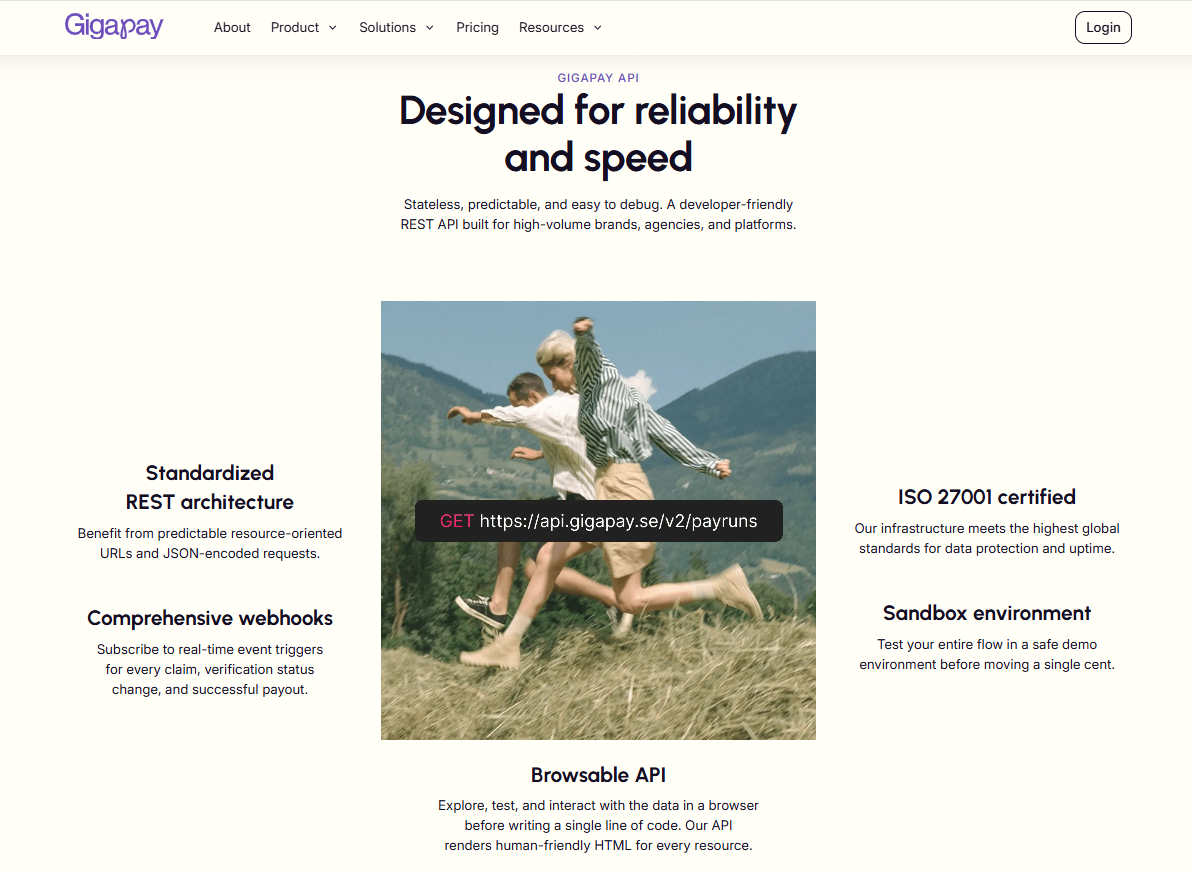
- Built to embed: A REST API with sandbox access takes 2 to 5 days to integrate into campaign tooling or platforms, and the service is ISO 27001 certified and GDPR compliant.
Agencies feel the difference fastest because every new client multiplies their invoice load. The Goat Agency, part of WPPMedia, summarized its experience this way: "Payments are easier and faster, while ensuring compliance with taxes and benefits."
For UGC programs specifically, the effect is that the number of creators stops being a cost variable. Whether a campaign needs 15 videos or 500, the payment workload on your team stays the same.
Conclusion
Gigapay is the Merchant of Record for creator payouts, the one vendor that pays your creators on your behalf and takes on the compliance, payouts, and support so you don't have to.
Paying UGC creators well in 2026 comes down to three decisions: pay current market rates, which now run $500 to $1,200 per video for professionals; buy the usage rights you will actually use instead of defaulting to buyouts; and move the money through a structure that scales, because reporting rules from DAC7 to the new $2,000 US threshold have turned every creator payment into a compliance event.
One-invoice payouts turn all of that from a per-creator admin cost into a single line your finance team books once per campaign.
Book a demo and see how a 200-creator campaign becomes one invoice.
Read Next:
- Influencer Marketing Budget Template 2026: How to Split Creator Fees, Usage Rights, Gifting and Payout Costs
- Gifting vs Paid Collaborations in 2026: When to Switch Nano Creators to Cash
- How to Pay Brand Ambassadors and Affiliate Creators Across Countries (2026)
FAQs:
1. How much do UGC creators charge per video in 2026?
UGC creators charge $150 to $3,000 per video in 2026, and most professional creators charge $500 to $1,200 per video. Beginners price at $150 to $400, intermediate creators at $400 to $1,000, and established creators at $1,000 or more, with usage rights, exclusivity, and rush delivery priced on top.
2. What usage rights should brands buy for UGC content?
The usage rights brands should buy for UGC content are the ones matching the real campaign plan: organic rights come with the base rate, paid usage across all channels for 6 to 12 months adds 25% to 40%, and perpetual buyouts cost 2.5x to 4x base rate. Most paid creative retires within 90 days, so time-limited paid rights fit most programs better than buyouts.
3. What is a one-invoice payout for UGC creators?
A one-invoice payout for UGC creators is a payment model where a Merchant of Record purchases every creator's deliverable, pays each creator individually, and bills the brand once per campaign through a single consolidated invoice. It replaces hundreds of creator invoices and vendor records with one counterparty and cuts invoice volume by around 80%.
4. What is the best way to pay UGC creators in 2026?
The best way to pay UGC creators in 2026 is through a Merchant of Record payout platform that pays creators on your behalf and takes on the compliance, reporting, and support. Bank transfers and PayPal work for a handful of creators, but past roughly 50 collaborations a year the admin cost of €40 to €60 per manual payment makes consolidated payouts the cheaper and faster option.
5. Do UGC creators need a registered company to get paid?
UGC creators do not need a registered company to get paid when the brand pays through a platform that supports individual payout status. On Gigapay, creators onboard as individuals, sole traders, or companies without a VAT number, which matters because 88% of creators run content as a side business rather than a registered firm.