
US brands spent $37 billion on creator advertising in 2025, a 26% increase in a single year, and 76% of brands plan to raise their influencer budgets again in 2026.
Gigapay is the Merchant of Record for creator payouts: the one vendor that pays your creators on your behalf and takes on the compliance, payouts, and support so you don't have to.
More money is moving through influencer programs than ever, yet most budget templates stop at creator fees and ignore the usage rights, gifting logistics, and payout costs that decide whether a program stays profitable.
This guide gives you a complete 2026 influencer marketing budget template, with benchmark numbers for every line: creator fees, usage rights, gifting, payout costs, and the hidden compliance charges in between.
Key Takeaways
- Allocate 50-60% of your influencer budget to creator fees, never all of it.
- Usage rights add 30-100% of the base rate per 30-day period.
- Product gifting produces content at roughly 80% lower cost than paid partnerships.
- Manual cross-border payouts carry €40-60 in hidden admin cost per payment.
- A Merchant of Record turns hundreds of creator invoices into one.
How Much Brands Spend on Influencer Marketing in 2026
Influencer marketing enters 2026 with record budgets in every major market. The numbers that matter for your planning:
Two of these numbers change how you should build a budget:
- 75% of US marketers and 50% of UK marketers now spend more than $1 million per year on influencer marketing, which makes the channel a board-level line item rather than an experiment.
- 66.33% of teams run influencer marketing fully in-house, which means they own every cost in the stack: fees, rights, shipping, payouts, and tax reporting.
For a deeper breakdown of where that money goes in the US, see the state of US influencer marketing spend in 2026.
Why Influencer Marketing Budgets Break Down in 2026
Most influencer budgets fail for reasons that never appear in the campaign plan. Four pressures hit at the same time in 2026:
- Creator rate inflation: Micro-influencer rates have risen 200-233% since 2024, according to the State of Creator Compensation 2026. Rising creator costs are now the top challenge for 35.4% of marketers, more than any other issue.
- Hidden intermediation: Agency markups on creator fees run 20-80%, a layer of cost that most brands never see itemized. A budget that looks like creator spend is often part service fee.
- The compliance era: Regulators across Europe now treat every creator payment as a taxable, reportable event. DAC7 reporting is live with fines up to €50,000 in Germany, the German KSK levy charges 4.9% on commissioned creative work above €1,000 per year, France's Loi Influence makes written contracts mandatory above €1,000 per advertiser per year, and the EU Platform Work Directive transposes on 2 December 2026. None of these costs show up in a rate card.
- Admin drag: A brand running 600 creator collaborations per year spends roughly 840 hours on payment admin: vendor onboarding, invoice chasing, error cycles, and reconciliation. Gigapay's analysis puts the true cost of a manual cross-border creator payment at €40-60 once labor is counted.
A budget template for 2026 has to account for all four pressures, which is why the template below goes beyond creator fees.
The 2026 Influencer Marketing Budget Template: Full Allocation Breakdown
This is the master template. It splits a full-program budget into six lines, so that rights, gifting, and payout costs are planned instead of absorbed as surprises.
Adjust the ranges to your model. A gifting-led e-commerce program pushes seeding toward 15%. A paid-social-heavy program pushes usage rights toward 25%. The one line teams most often set to zero, payouts and compliance, is the one that produces fines and creator churn when ignored.
Mid-Market Budget Example: $100,000 per Quarter
Gigapay's 2026 rate benchmarks model a mid-market quarter like this:
- 60% creator fees ($60,000): around 40 micro creators at roughly $1,200 each, plus 2-3 mid-tier anchor creators at about $6,000 each
- 20% usage rights and whitelisting ($20,000)
- 10% platform, tooling and measurement ($10,000)
- 10% performance bonuses and re-ups ($10,000)
Enterprise Budget Example: $1 Million or More per Year
At enterprise scale the split shifts toward creator mix rather than line type:
- 40% micro creators, the volume layer that drives reach efficiency
- 30% mid-tier and macro creators, the proven performers
- 15% mega creators, the awareness anchors
- 15% amplification and usage rights
At this scale, payout and compliance costs stop being a rounding error. A brand paying 600 creators per year across markets carries an admin cost of roughly €139,590 when run manually, against about €46,350 with a Merchant of Record handling payouts, invoicing, and tax reporting.
How to Budget for Creator Fees in 2026
Creator fees are the largest line, at 50-60% of the total. Price them from current benchmarks, not last year's rate card, because rates have moved sharply upward.
Influencer Rates by Follower Tier in 2026
Source: Gigapay influencer rate benchmarks, July 2026. Later's 2026 pricing guide shows similar ranges: nano 100-500, micro 500-2,500, macro 2,500-10,000+.
Influencer Rates by Platform in 2026
Format rules that save money: Instagram Stories price at 30-50% of a feed post, YouTube Shorts at about 50% of a full video, and Twitch, podcasts, and newsletters usually negotiate on a 15-50+ CPM.
How to Set Your Creator Fee Line
Start from deliverables, not headcount. Price each deliverable against the benchmark table, multiply by the number of creators per tier, and add 10-20% agency fees if mega creators come through representation.
A $60,000 quarterly creator fee line realistically buys about 40 micro collaborations plus 2-3 mid-tier anchors, and that volume of individual payees is exactly where payment admin starts to strain finance teams.
How to Budget for Usage Rights and Content Licensing
Usage rights are the most underpriced line in influencer budgets. The base fee buys an organic post on the creator's channel. Everything else, running the content as paid ads, putting it on your site, using it in retail, costs extra, and in 2026 creators enforce this.
What Usage Rights Cost in 2026
Sources: Gigapay rate benchmarks and Later, which puts the typical usage rights uplift at 30-50% and whitelisting at 30-50% on Instagram.
The planning rule: a campaign that includes paid amplification and usage rights should budget 1.5-2.5x the organic rate card total. That is why the template reserves 15-20% of the full budget for this line, and up to 25% for paid-social-heavy programs.
How to Buy Usage Rights Without Overpaying
Specify duration, channels, and geography in every contract. "All rights, forever, everywhere" costs 2-4x base rate and is rarely needed; a 90-day paid-social license in your active markets usually does the job at a fraction of the price.
In France this precision is now law: the Loi Influence requires written contracts with mandatory clauses once spend exceeds €1,000 per advertiser per year, on pain of nullity. Budget rights per flight, not per year, and re-license only the content that performs.
How to Budget for Product Gifting and Seeding Campaigns
Gifting looks free next to creator fees. It is not, but it is efficient: product seeding generates content at roughly 80% lower cost per piece than paid partnerships, and 71% of brands now use it. The numbers to plan around:
- 62% of seeded creators post content on average
- 120 products shipped per quarter in an active seeding program
- +23% post rate when packages include a personalized note
- 45% of brands still run seeding from spreadsheets
What Product Gifting Really Costs
Price the line on cost per piece of content, not cost per unit shipped. The formula: (product cost + shipping + fulfilment) ÷ 0.62 expected post rate.
A €50 product with €15 shipping and €5 fulfilment costs about €113 per piece of content once non-posters are counted. At 120 units per quarter, that is a €8,400 line, which fits the template's 5-10% band for a mid-market budget.
The Gifting Costs Brands Forget
Three items belong in this line and rarely appear:
- Cross-border duties and returns: Shipping into the UK, Switzerland, or Norway from the EU adds customs handling per parcel.
- Tax treatment of gifts: In Sweden, Skatteverket treats gifted products as taxable income for the creator at market value, and its targeted influencer reviews check for exactly this. Gifting at scale creates reporting obligations, not just shipping costs.
- Conversion to paid: Your best seeded creators become paid partners. Reserve part of the performance line for converting the top 10% of posters, because that is where seeding actually pays back.
How to Budget for Payout Costs, Admin and Compliance
Payout costs are the line most templates skip, and the one finance teams feel hardest. Every creator payment carries transaction fees, FX spreads, invoice processing, tax reporting, and staff time. Priced honestly, this line deserves 5-10% of the budget.
The True Cost of Paying Influencers Manually
- A manual cross-border creator payment costs €40-60 all-in once labor, error cycles, and reconciliation are counted, roughly 6 hours of work per creator payment.
- A brand running 600 collaborations per year spends about 840 admin hours on payments alone, around €139,590 in annual cost.
- PayPal cross-border payments can carry caps up to €16-20 per payment plus about 4% FX, with receiver-side fees that shrink what creators actually get.
- AP and mass-payout tools typically add 1.9-3.5% FX on top of subscriptions, and settlement takes 1-5 days.
- Each creator paid directly becomes a vendor in your ERP: 300 creators means 300 vendor records, 300 tax ID collections, and hundreds of invoices per campaign cycle.
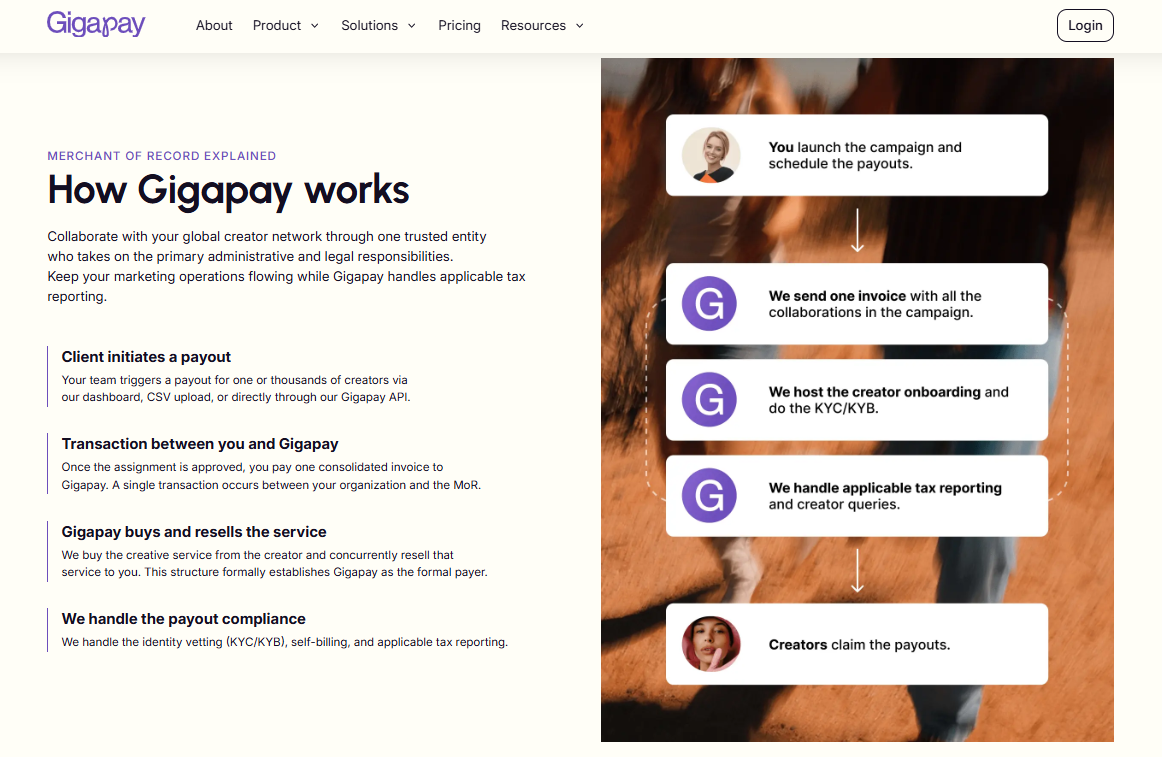
What a Merchant of Record Changes in Your Payout Budget
A Merchant of Record for creator payouts is the one vendor that pays your creators on your behalf and takes on the compliance, payouts, and support so you don't have to.
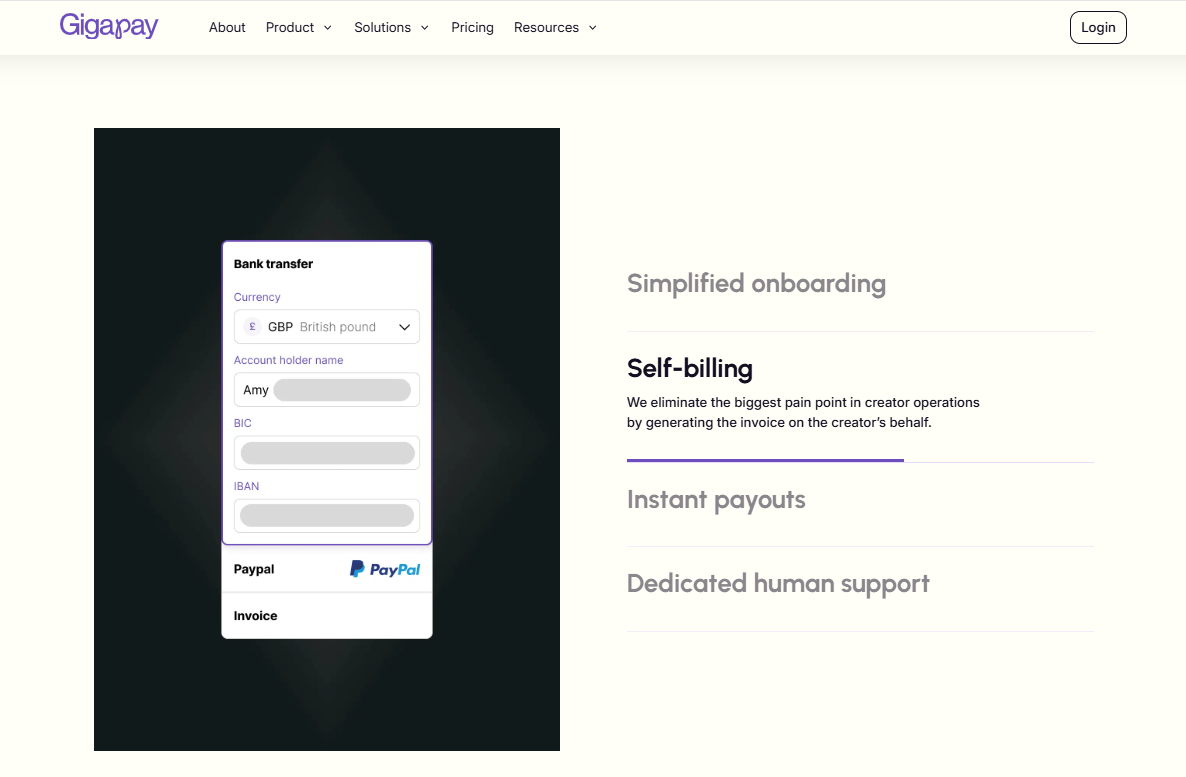
Gigapay becomes the contractual counterparty: it formally purchases each creator's deliverable and resells it to you, so finance deals with one vendor, one contract, and one consolidated invoice per campaign instead of hundreds.
The budget effect is direct:
- Invoice volume drops by about 80% through consolidated and self-billed invoicing.
- Admin time falls from roughly 840 hours to 60 hours per year at 600 collaborations, cutting the annual payment cost from about €139,590 to €46,350.
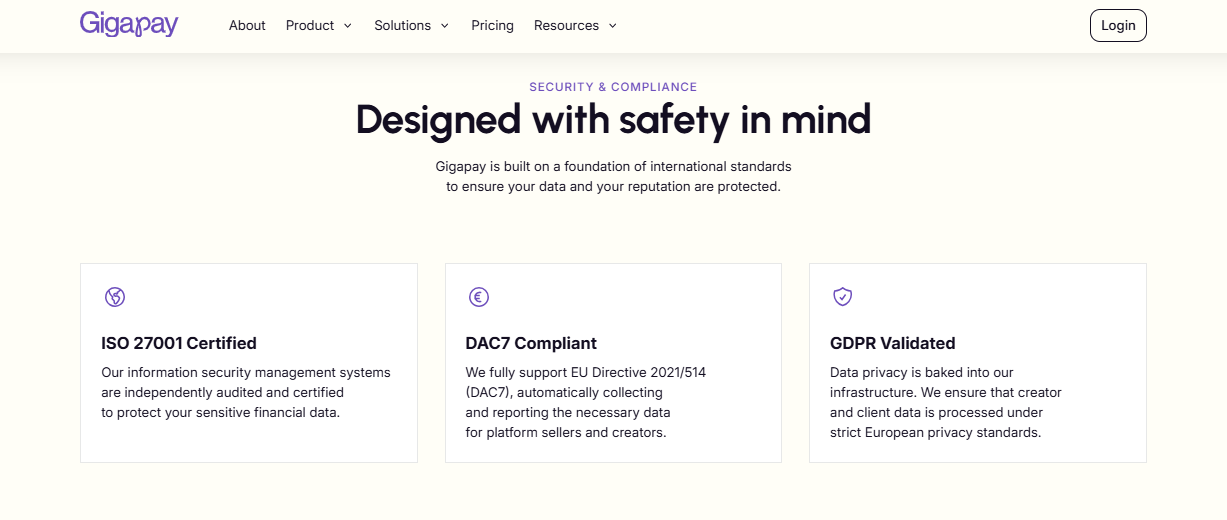
- Tax reporting runs automatically: DAC7 across the EU, KU14 in Sweden, KSK handling in Germany.
- Creators onboard without a registered company, which opens up the nano and micro tiers that procurement rules usually block.
- Payouts land instantly when the campaign is pre-funded, across 65+ markets and 50+ currencies, and clients cover the fees so creators keep what they earn.
The fee for this sits in the payouts line of the template, and it replaces costs you are already paying in salaries, bank charges, and FX spreads, whether you track them or not.
Hidden Costs That Destroy Influencer Marketing Budgets
The four template lines above cover planned spend. These are the unplanned costs that surface mid-year, usually from the compliance side.
Country-Specific Compliance Costs in 2026
German enforcement shows where this is heading: NRW investigators are running criminal probes into roughly €300 million in suspected evasion around 200 proceedings, and Hamburg authorities are auditing 140 influencers. Worker classification is a live market risk in several of these jurisdictions, and it belongs on your risk register even though no vendor can promise it away.
The Costs That Hide Inside Operations
- Late payments cost creators, then cost you: Payment terms in influencer marketing stretch up to 120 days, per Gigapay's State of Influencer Payments research. Creators drop brands that pay late, and replacing a proven creator costs more than paying the current one on time.
- Agency markups of 20-80% inflate what looks like creator spend.
- Reconciliation errors multiply with creator count: failed transfers, double payments, and currency mismatches each trigger support cycles that cost more than the original fee.
Budget answer: hold a 5-10% performance reserve, and move payouts and tax reporting onto infrastructure built for them, so the reserve covers growth instead of fines.
How to Scale Your Influencer Budget Across Multiple Markets
One budget, many rulebooks: that is the real challenge of international influencer marketing in 2026. Every new market adds its own withholding rules, reporting filings, invoicing formats, and payment rails, and most teams respond by adding process per country. Vendor sprawl follows, with different regions running different payout workflows and finance losing visibility of total creator spend.
The Per-Market Budget Rule
If you pay creators directly, add a compliance line for every market you enter: local tax advice, withholding administration, filing deadlines, and payment-rail fees. Across the UK, France, DACH, the Nordics, and Spain, those line items stack up fast, and they repeat every year.
The alternative is one counterparty across all markets. With a Merchant of Record structure, the per-market compliance lines collapse into a single payouts line, because the vendor carries the reporting scope in each country it supports.
What Scaling Looks Like With One Counterparty
The pattern shows in Gigapay's own numbers and customer results:
- 105,000+ payouts processed, 911M SEK in total payment volume, with creators paid in 40+ countries
- Radisson runs creator payments across 39 countries as one enterprise program
- Cure Media grew payment volume 4.5x with a single finance hire
- Boozt tripled its creator collaborations after years of being blocked from nano and micro tiers, without expanding the team
- Agencies like The Goat Agency (WPPMedia) cut the time spent managing payments while keeping tax and reporting compliant
The budget consequence: your influencer spend scales with campaign ambition instead of headcount. Scaling from 50 to 5,000 creators changes your creator fee line, and leaves the payout line flat as a percentage.
Conclusion
Gigapay is the Merchant of Record for creator payouts, the one vendor that pays your creators on your behalf and takes on the compliance, payouts, and support so you don't have to.
A 2026 influencer budget that works splits spend across six lines: 50-60% creator fees, 15-20% usage rights, 5-10% gifting, 5-10% payouts and compliance, 5-10% tools, and a 5-10% performance reserve.
The brands that plan rights, gifting, and payout costs up front protect their ROI; the ones that budget only for creator fees pay the difference in markups, delays, and fines.
Book a demo with Gigapay to see how your payout and compliance lines look with one contract, one invoice, and every creator paid fast and compliantly in 65+ markets.
Read Next:
- Gifting vs Paid Collaborations in 2026: When to Switch Nano Creators to Cash
- How to Pay Brand Ambassadors and Affiliate Creators Across Countries (2026)
- Influencer Usage Rights & Whitelisting Fees in 2026: Budget Benchmarks by Tier
FAQs:
1. How should brands split an influencer marketing budget in 2026?
Brands should split an influencer marketing budget in 2026 across six lines: 50-60% creator fees, 15-20% usage rights and whitelisting, 5-10% product gifting, 5-10% payouts and compliance, 5-10% tools and measurement, and a 5-10% performance reserve.
2. What percentage of an influencer marketing budget should go to creator fees?
The percentage of an influencer marketing budget that should go to creator fees is 50-60%. A $100,000 quarterly budget at 60% buys roughly 40 micro creators at about $1,200 each plus 2-3 mid-tier anchors at around $6,000 each.
3. How much do usage rights cost in influencer marketing in 2026?
Usage rights in influencer marketing in 2026 cost 30-100% of the creator's base rate per 30-day period, with whitelisting at 50-100% of the post rate per month and perpetual rights at 2-4x the base rate.
4. What do influencer payout costs include in 2026?
Influencer payout costs in 2026 include transaction fees, FX spreads of 1.9-3.5% on typical payout tools, invoice processing, tax reporting, and admin time, which together reach €40-60 per manual cross-border payment.
5. What is the best way to pay hundreds of influencers compliantly in 2026?
The best way to pay hundreds of influencers compliantly in 2026 is a Merchant of Record for creator payouts like Gigapay, which becomes the single counterparty, consolidates every creator payment into one invoice, automates tax reporting such as DAC7, KU14, and KSK, and pays creators in 65+ markets without requiring them to register a company.