.jpg)

73% of creators now favour brand deals that include both payment and gifted product, according to the UK Beauty Creator Gifting Report 2026 published in September 2026.
Free products alone no longer carry a creator program.
Gigapay is the creator payout platform that lets brands and agencies pay hundreds of creators across 65+ countries through one vendor, with tax reporting and compliance built into every payout.
The question facing most brands in 2026 is no longer whether gifting works. It is when a nano creator relationship has outgrown free product and earned a real rate.
This guide breaks down what gifting and paid collaborations cost in 2026, how each model performs, and the exact signals that tell you it is time to switch a nano creator to cash.
Key Takeaways
- 73% of creators prefer collaborations that combine gifted product with real payment.
- Gifting suits first-touch outreach; repeat collaborations in 2026 almost always require cash.
- Nano creators charge $25 to $500 per Instagram post in 2026.
- Paid posts generate roughly twice the views of gifted posts from the same brands.
- Gifted products count as taxable compensation in most markets, so compliance applies either way.
The State of Creator Marketing in 2026: Why Nano Creators Lead Brand Strategies
Nano creators, with 1,000 to 10,000 followers, are now the largest creator tier in brand planning. They account for 29.54% of all cost selections in 2026 budget data, more than any other tier, and 51.43% of marketers plan to expand their nano creator spend this year.
The money behind that shift is substantial. US influencer marketing spend reaches $12.17 billion in 2026, up 15.7% year over year, while the global market has passed $32.5 billion. Creator spend now takes a median 26% of social media budgets, up from 18% in 2024.
Performance data explains why so much of that budget flows to the smallest tier:
Nano accounts also make up 75.9% of all Instagram creators and 87.68% of TikTok creators, which gives brands an enormous pool to recruit from. Between 67% and 73% of marketers now prioritise nano and micro creators over larger tiers.
That scale is exactly what makes the gifting-versus-paid question urgent. A brand working with five mega influencers negotiates five contracts. A brand working with 500 nano creators has to decide, 500 times, whether the collaboration runs on product or on cash.
Gifting vs Paid Collaborations: How Each Model Works in 2026
Gifting and paid collaborations solve different problems. Understanding the mechanics of each model is the first step toward knowing when to move a creator from one to the other.
What Is Influencer Gifting?
Influencer gifting, also called product seeding, means sending a creator free product with no contractual obligation to post. The creator chooses whether to feature the product, when, and how. Gifting dominates by volume: an analysis of over 100,000 collaboration posts found that 77.35% were gifted, against 11.62% paid and 10.94% affiliate.
Gifting works because it is cheap per contact and filters for authentic interest. A creator who posts about a free product has signalled that they actually like it. What gifting cannot buy is certainty. There is no deadline, no brief, no usage rights, and no guarantee the product generates anything at all.
What Is a Paid Collaboration?
A paid collaboration is a contracted agreement: the brand pays a fee, and the creator delivers agreed content by an agreed date. Payment buys the things gifting cannot enforce, including deliverables, revision rounds, exclusivity, whitelisting, and content usage rights for ads.
Paid collaborations also move faster. Collabstr marketplace data from September 2026 shows campaigns offering product plus base pay receive their first creator application in a median of 22 minutes, against 31 minutes for all campaigns.
The Hybrid Model: Product Plus Cash
The fastest-growing structure in 2026 sits between the two. The creator receives the product and a fee, often a modest one. 73% of creators say they favour deals that include both, and the same UK report found 79% of nano and micro creators had received gifted products from brands in the previous 60 days, with 27% receiving deliveries from six or more brands. Creators are drowning in free products. A small fee is how a brand's package stands out in that pile.
The Real Cost of Influencer Gifting in 2026
Gifting looks free on a campaign plan. It rarely is. The true cost of a gifting program includes four line items that most brands only discover after the products have shipped.
Product, Shipping, and Returns
Every gifted unit carries its cost of goods, packaging, and shipping, and international sends add customs handling. Collabstr data shows 11% of product orders end up refunded when something goes wrong in fulfilment. For a 500-creator seeding wave at a $40 landed cost per package, the program starts at $20,000 before a single post exists.
The Posting Rate Problem
Gifting carries no obligation to post. Most brands that run pure seeding hear nothing back from the majority of recipients, and even campaigns that do set deadlines see only 70% on-time delivery. With 79% of UK nano and micro creators receiving gifts in the past 60 days, a free product competes against every other free product on the creator's desk.
Outreach and Admin Labour
Someone has to find the creators, vet their audiences, manage addresses, track shipments, and chase content. At scale this becomes a real salary cost. Gigapay's analysis of a 600-collaboration program puts the manual admin burden at roughly 840 hours per year, and gifting programs carry most of the same coordination load as paid ones.
The Tax Surprise
Gifted products are not free for the creator either. Tax authorities in most markets treat gifts with a promotional purpose as compensation at fair market retail value. Australia's ACCC penalised a brand in the PhotobookShop case for instructing influencers not to disclose gifted products worth between AUD 50 and AUD 400, and Estonia now taxes promotional gifts above €21.
A brand that gifts aggressively without tracking value creates reporting exposure for itself and its creators.
Nano Creator Rates in 2026: What Paid Collaborations Actually Cost
The jump from gifting to cash is smaller than most budget owners assume. Nano creator rates in 2026 remain modest, and a paid nano program often costs less than a mid-tier gifting wave.
Nano Creator Rates by Platform and Format
A common pricing baseline across tiers is about $100 per 10,000 followers, adjusted up for engagement and niche. Finance and B2B creators often charge 2x to 3x what lifestyle creators of the same size charge, and Reels cost 1.5x to 3x a static feed post.
Why Rates Vary So Much Between Identical Follower Counts
Two nano creators with 8,000 followers each can quote rates 3 to 5 times apart. The spread reflects engagement rate, niche, content quality, audience geography, and whether usage rights are included. A 2.5% engagement rate is the Instagram nano benchmark; a creator consistently above it has data to justify a premium.
What That Means for Budget Planning
At 2026 rates, $5,000 funds roughly 25 to 50 paid nano collaborations on Instagram, with briefs, deadlines, and usage rights attached. The same budget in pure gifting buys more packages but no guarantees.
For context on earnings pressure: 48.7% of US creators earn under $10,000 per year, and 56% of full-time creators earn below the US living wage. A fair, promptly paid fee of even $75 is meaningful income to a nano creator, which is exactly why it buys reliability that free product cannot.
When to Switch Nano Creators from Gifting to Cash: 7 Clear Signals
The switch from product to payment is a timing decision.
- Move too early and you pay for content that gifting would have produced anyway.
- Move too late and your best creators drift to competitors who pay.
These seven signals tell you a nano creator has earned a rate.
1. They Posted Organically More Than Once
One post after a gift can be politeness. Two or more unprompted posts mean the creator uses the product and their audience has seen it repeatedly. That is proven affinity, and affinity converts. Content from aligned creator-brand pairings earns up to 38% higher engagement than misaligned pairings.
2. Their Gifted Content Converted
If a discount code, affiliate link, or spike in branded search traces back to a gifted post, the creator is already generating revenue for free. Paying them formalises a channel that works. Nano creators convert roughly 7% of engagements into sales, more than double the macro rate, so a converting nano creator is one of the cheapest revenue sources available.
3. They Asked for a Rate Card
A creator who replies to a gifting offer with their rates has professionalised. Declining to pay rarely keeps the relationship on gifting terms; it usually ends it. With 79% of nano and micro creators receiving gifted product in any 60-day window, they can afford to ignore brands that only offer product.
4. You Need Usage Rights or Whitelisting
The moment you want to run creator content as a paid ad, feature it on your product pages, or whitelist their account, you need contracted rights. Gifting grants none. This signal is absolute: repurposing gifted content without a usage agreement is a legal risk, not a growth hack.
5. You Need Deadlines and Briefs
Product launches, seasonal windows, and coordinated campaign moments need content to land on specific dates. Only 70% of deadline-based campaigns deliver on time even when paid; unpaid seeding offers no timeline at all. If the calendar matters, pay.
6. Their Engagement Beats the Tier Benchmark
Instagram nano creators average 2.5–2.71% engagement and TikTok nano creators around 10.3%. A creator consistently above benchmark with real comments from real buyers is being watched by other brands. Securing them at a nano rate before they cross 10,000 followers locks in pricing that will not exist in six months.
7. You Want Them in an Always-On Program
Repeat collaborations are where gifting economics collapse. A creator will accept one free mascara; nobody accepts twelve as an annual salary. Ambassador programs, monthly content retainers, and long-term affiliate hybrids all require cash, and brands that moved early report the pattern directly.
Boozt's brand activation team tripled its creator collaborations after removing the payment friction that had blocked nano and micro partnerships for years.
How to Structure Your First Paid Nano Creator Collaboration
A first paid deal sets the template for every collaboration that follows. Five elements belong in it from day one.
Set the Rate With Data, Not Guesswork
Anchor the offer to the benchmarks above: 25–200 for an Instagram feed post, 50–500 for a Reel, or roughly $100 per 10,000 followers adjusted for engagement. For a creator moving up from gifting, a hybrid structure of product plus a 50–150 fee is the standard 2026 entry point. Creators with above-benchmark engagement or a conversion track record justify the top of each range.
Write a One-Page Brief
State the deliverables (format, count, platform), the key message, mandatory disclosure requirements, and the deadline. Keep creative control with the creator; their audience follows them because the content does not look like an ad. Over-scripted nano content loses the authenticity that produced the engagement you are paying for.
Define Usage Rights Explicitly
Specify where the brand may reuse the content, for how long, and whether paid amplification is included. Organic-only rights cost less; 6–12 months of ad usage typically adds 25–100% to the base rate. Agreeing this up front costs far less than negotiating it after a post performs.
Get Disclosure Right From the First Post
Every market now requires clear, immediate disclosure of paid partnerships, and regulators increasingly hold the brand jointly liable for a creator's failure to disclose. Use the platform's paid partnership tools rather than buried hashtags: Instagram's Paid Partnership label earns 38% higher trust than caption-only disclosure.
Pay Fast, Because Payment Speed Is Retention
Payment terms of 30 to 120 days are still common in influencer marketing, and for a creator earning under $10,000 a year, a 90-day wait on a $100 fee is a reason to never work with you again.
Brands using Gigapay pay creators instantly once content is approved, which turns payment speed from a churn risk into a competitive advantage in creator recruitment.
Gifting vs Paid Performance: What the 2026 Data Shows
The engagement argument for gifting is real but narrow. The Social Cat's analysis of over 100,000 collaboration posts found gifted and paid content nearly tied on engagement rate, at 2.01% versus 2.00% on average. Reach is where the models separate.
When the same brands ran both models, paid posts generated more than twice the typical views of gifted posts. Across the stable subset of 100 brands running 3+ posts of each type, paid delivered 2,372 typical views against 1,054 for gifted. Engagement rates stayed close in every cut of the data, which means paid content reaches far more people at nearly identical engagement quality.
Some vendor datasets show gifted content winning on specific metrics: one analysis reports gifted collaborations earning 12.9% higher engagement than paid, and 93% of influencers say they will work for product alone when they already love the brand. Both findings describe the top of the funnel.
Creators who adore a brand produce great free content once. They do not produce it on schedule, at volume, or with usage rights.
The ROI math favours structured payment as programs scale. Influencer marketing returns an average of $5.78 per dollar spent, micro campaigns deliver about 2.8x the ROI of mega campaigns, and the widely cited Café Royal program running roughly 3,000 nano and micro creators returned €5.44 per euro invested. The pattern across all of it: gifting finds your believers, payment compounds them.
Tax and Compliance Rules for Gifted and Paid Collaborations in 2026
Switching to cash changes your compliance picture less than most teams expect, because gifting was never compliance-free. Three rule sets apply to both models.
Gifted Products Are Taxable Compensation
Tax authorities in most markets treat gifts, vouchers, and free travel sent to influencers as compensation at fair market retail value, and the creator must report it as income. Several jurisdictions also put obligations on the paying side.
Estonia taxes promotional gifts above €21, with the payer owing corporate income tax on the value. In the US, payments to a creator of $600 or more in a year, including the value of non-cash compensation tied to services, trigger Form 1099-NEC reporting, and creators owe 15.3% self-employment tax on their income.
Disclosure Applies to Gifts, Not Just Cash
Regulators across the US (FTC), UK (ASA), EU (under the Digital Services Act), and Australia (ACCC) require disclosure of any material connection, and gifted products qualify. Under the DSA, the brand can be held jointly liable as the beneficial owner of the advertisement when a creator fails to disclose, with standardized fines reaching €10,000 per violation for companies in some member states. Vague tags like #collab or #sp are explicitly non-compliant in multiple markets.
Paid Collaborations Add Reporting, Classification, and Cross-Border Rules
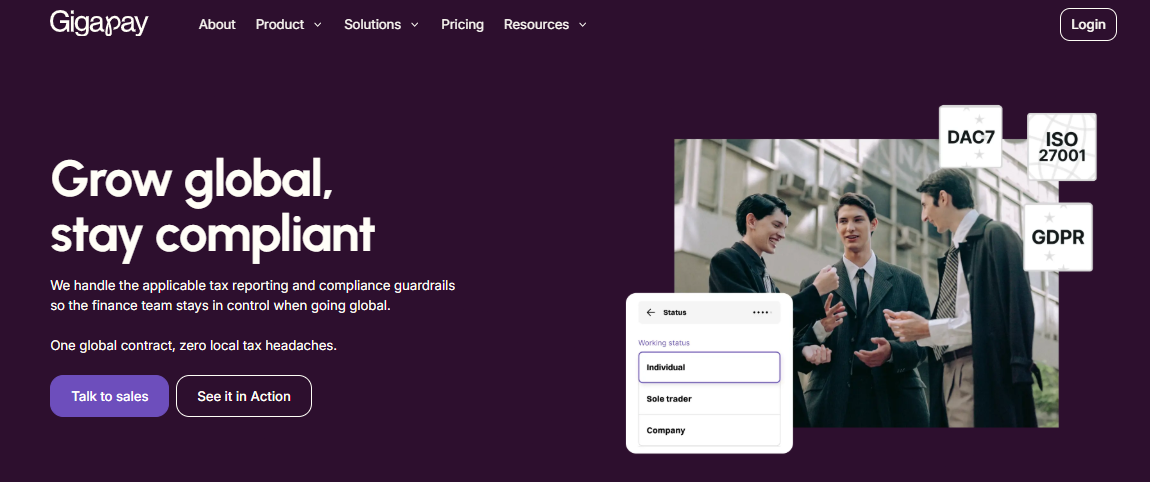
Cash payouts bring platform-economy reporting such as DAC7 in the EU, KU14 in Sweden, and Germany's Künstlersozialkasse, which levies 4.9% on creative payments above €1,000 even when the creator lives abroad.
Add misclassification risk from European court decisions on influencer employment status, and the admin per creator stacks up quickly. This is why many brands cap their programs below their real ambitions. The compliance load, not the budget, becomes the ceiling.
None of these rules argue for staying on gifting. They argue for running payments through infrastructure built for them rather than through a finance team processing creators one vendor at a time.
How to Pay Hundreds of Nano Creators Without the Admin Overload
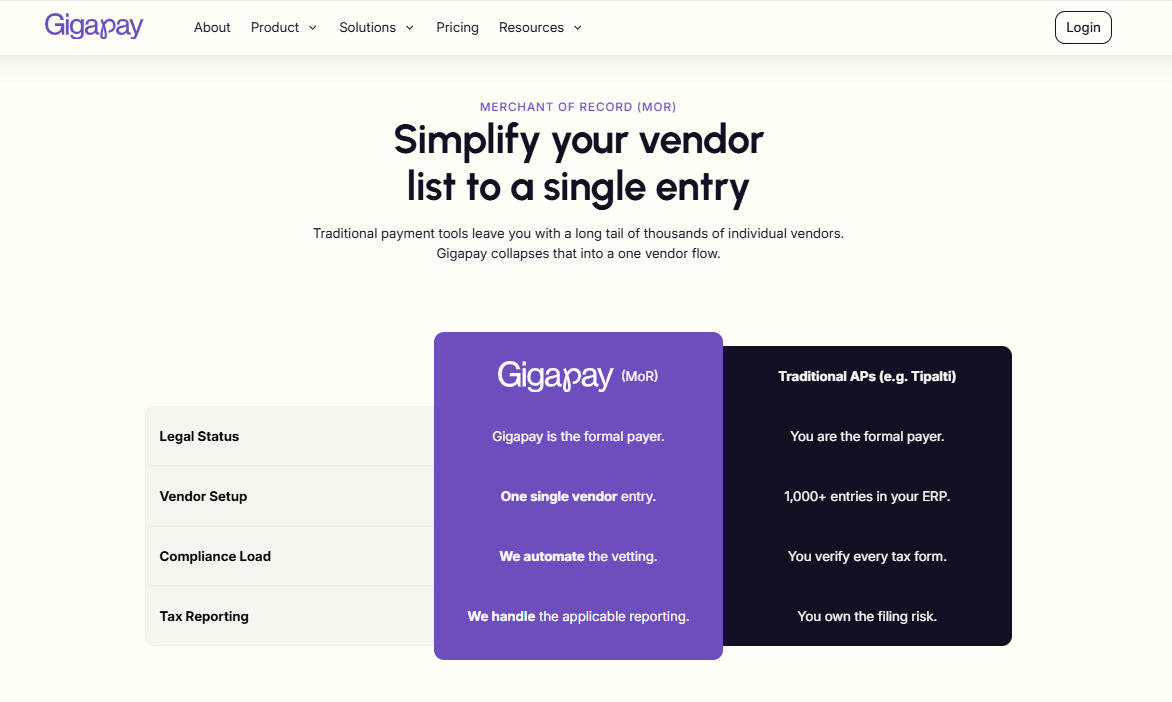
The economics of nano creators only work at volume, and volume is where manual payment processes break. A brand that switches 300 gifted creators to paid collaborations suddenly needs 300 vendor records, 300 sets of tax documentation, and 300 invoices, most from creators who have never invoiced anyone before.
Gigapay's benchmark for a 600-collaboration program puts the manual cost at roughly €139,590 per year across 840 admin hours. Run through a Merchant of Record, the same program costs about €46,350 and 60 hours.
The Merchant of Record model changes the structure of the problem rather than the speed of the old one:
- One vendor instead of hundreds: Gigapay becomes the single counterparty in your ERP, with one consolidated invoice per campaign. Brands report an 80% reduction in invoice volume.
- No business registration required from creators: Nano creators onboard as individuals, sole traders, or companies. The 8,000-follower creator without a VAT number stops being a creator finance cannot activate.
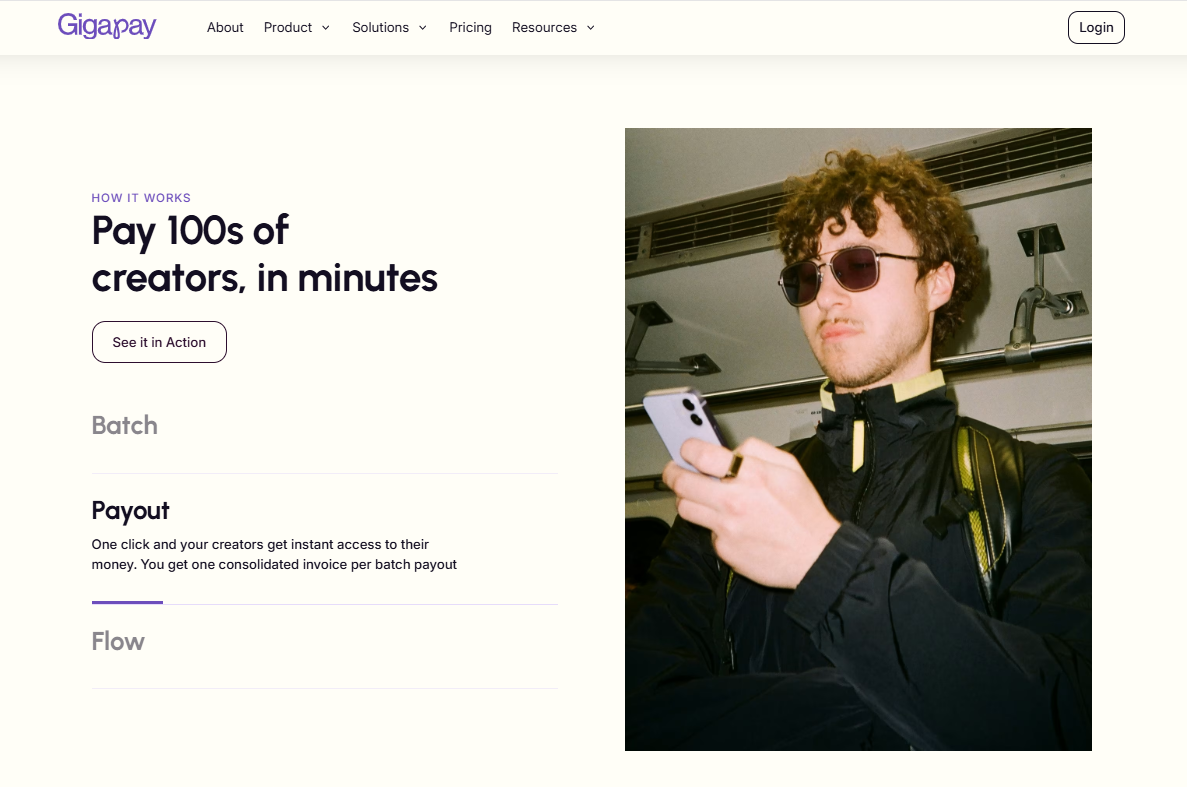
- Instant payouts in 65+ countries and 50+ currencies: Creators get paid instantly through local rails like SEPA Instant, Faster Payments, and ACH, instead of waiting 30 to 120 days.
- Compliance handled per payout: KYC verification, tax ID validation, and automated reporting for DAC7, KU14, and KSK run on every payment.
The results show up in program scale. Boozt had spent years trying to make nano and micro collaborations work before tripling its collaboration volume on this model, and agencies like The Goat Agency (WPPMedia) report payments running faster while staying compliant with taxes and benefits. The operational ceiling moves from hundreds of creators to thousands, with no new hires.
Conclusion
Gigapay gives brands and agencies the payment infrastructure to move nano creators from gifting to cash without adding vendors, admin hours, or compliance risk.
The 2026 data makes the strategic sequence clear: gifting remains the cheapest way to discover which nano creators love your product, and payment is how you turn those discoveries into reach, reliability, and content you can actually use.
Creators have voted too, with 73% preferring deals that include real payment.
The brands winning the nano tier are the ones that spot the switch signals early, pay fair rates fast, and run the whole program through one vendor.
If scaling paid nano collaborations is on your 2026 roadmap, book a demo with Gigapay and see how it works with your own creator list.
Read Next:
- How to Pay Brand Ambassadors and Affiliate Creators Across Countries (2026)
- Influencer Usage Rights & Whitelisting Fees in 2026: Budget Benchmarks by Tier
- How to Launch One Influencer Campaign Across 10 European Markets (2026 Checklist)
FAQs:
1. What is the difference between gifting and paid collaborations in 2026?
The difference between gifting and paid collaborations in 2026 is that gifting sends creators free product with no posting obligation, while paid collaborations contract specific deliverables, deadlines, and usage rights for a fee. Gifted posts match paid posts on engagement rate, but paid posts from the same brands generate more than twice the typical views.
2. When should a brand switch a nano creator from gifting to cash?
A brand should switch a nano creator from gifting to cash when the creator has posted organically more than once, their content has converted into sales, they request a rate card, or the brand needs usage rights, deadlines, or a repeat collaboration. Any one of these signals means the relationship has outgrown free product.
3. How much do nano creators charge for paid collaborations in 2026?
Nano creators charge between $25 and $200 for an Instagram feed post and $50 to $500 for a Reel in 2026, with roughly $100 per 10,000 followers as a common baseline. Hybrid deals combining product with a 50–150 fee are the standard entry point when moving a creator up from gifting.
4. Are gifted products to influencers taxable in 2026?
Gifted products to influencers are taxable in most markets in 2026, because tax authorities treat gifts with a promotional purpose as compensation at fair market retail value. Creators must report the value as income, and in several jurisdictions the brand carries reporting or disclosure obligations on gifted products as well.
5. What is the best way to pay hundreds of nano creators at scale?
The best way to pay hundreds of nano creators at scale is through a Merchant of Record platform like Gigapay, which acts as the single vendor, pays creators instantly across 65+ countries, and automates tax reporting such as DAC7, KU14, and KSK. This replaces hundreds of individual vendor records and cuts payment admin from roughly 840 hours to 60 hours per year for a 600-collaboration program.
.jpg)
.jpg)
.jpg)