.jpg)

89% of European marketing decision-makers plan to increase their influencer budgets over the next 12 months, according to Kolsquare's September 2026 study of 1,123 marketers across seven European markets.
Gigapay is the Merchant of Record for creator payouts: the one vendor that pays your creators on your behalf and takes on the compliance, payouts, and support so you don't have to.
Bigger budgets push campaigns into new markets, and every new market adds its own disclosure law, tax rules, and payment rails to your launch plan.
This article gives you a complete 2026 checklist for launching one influencer campaign across 10 European markets, covering the regulations, creator rates, payment models, and launch steps for each market.
Key Takeaways
- 89% of European marketers plan to raise influencer budgets in the next 12 months.
- Every market enforces its own disclosure law, tax rules, and creator classification tests.
- France requires written influencer contracts above €1,000; German clients owe a 4.9% KSK levy.
- Manual creator payments cost €40 to €60 each and take roughly six admin hours.
- A Merchant of Record turns 10 markets into one vendor and one invoice.
Why Brands Launch One Influencer Campaign Across Many European Markets in 2026
European influencer budgets are compounding, and the money is spreading across borders. Kolsquare's 2026/2027 study, fielded by B2B International in May and June 2026, puts the numbers on it:
- 89% of marketers expect to raise influencer budgets in the next 12 months, up from 75% in 2025 and 54% in 2024.
- Median annual influencer spend is €144,000 across the full sample, rising to €312,000 at companies with 500+ employees.
- 60% of companies now spend over €100,000 a year on influencer marketing, and 36% spend over €200,000.
- 36.8% of brands work with 100 or more influencers a year, double the 18.2% recorded in 2024.
- Spain shows the highest budget intent of any market, with 92.9% of marketers planning increases.
The supply side is growing just as fast. Europe counts 8.64 million income-generating creators, and the European creator economy is valued at $41.15 billion in 2026, forecast to reach $199.53 billion by 2033 at a 25.3% compound annual growth rate (Coherent Market Insights). Micro and nano creators capture 45.5% of European influencer spend (eMarketer), which means the average campaign now involves more creators, smaller individual payments, and more cross-border admin per euro spent.
Rates are climbing too. CreatorFest's State of Creator Compensation 2026 reports that micro-influencer rates have risen 200% to 233% since 2024, and that 88% of creators still run their content as a side business.
That last number matters for your launch plan: most of the people you will pay across 10 markets are individuals without a registered company, not agencies with invoicing departments.
What Makes a 10-Market Influencer Campaign Hard to Run
The creative work scales easily across borders. The operations behind it do not. A brand running 600 creator collaborations a year spends roughly 840 hours on payment administration alone, at a total manual process cost of about €139,590 a year once admin salaries, vendor onboarding, and error cycles are counted. Each individual manual payment carries a true all-in cost of €40 to €60 and consumes around six hours of combined marketing and finance time.
Three structural problems drive those numbers:
- Vendor sprawl: Procurement systems were built for suppliers with company registrations, VAT numbers, and bank letterheads. A 10-market campaign with 300 creators means 300 vendor records in the ERP, each with its own onboarding cycle, tax form, and reconciliation trail.
- Split ownership: Marketing owns the creator relationship, finance owns the payment, and neither owns the full process. Campaigns stall while finance chases missing tax documentation, and creators chase marketing for updates finance cannot give.
- Individuals, not companies: Most European creators work without a registered business. Procurement teams either block them entirely, which cuts brands off from the nano and micro tiers that capture 45.5% of European spend, or push them through supplier processes that take weeks per creator.
The creator side feels the damage first. Gigapay's State of Influencer Payments research with Billion Dollar Boy, Meltwater, The Influencer Marketing Factory, and Wild found payment terms stretching to 120 days in enterprise programs. Creators talk to each other, and a brand known for 120-day terms pays more or loses its first-choice roster in every new market it enters.
How to Structure One Campaign That Launches in 10 Markets
One campaign across 10 markets is not ten campaigns run in parallel. The teams that launch well build a single spine and localise the edges:
- One concept, local execution: Lock the campaign idea, the message, and the visual world centrally, then let creators in each market translate it into their own language, formats, and references. A brief that scripts every word produces ten stiff campaigns, while a brief that fixes the message and frees the delivery produces one campaign with ten native voices.
- One roster, tiered per market: Anchor each market with one or two mid-tier or macro creators for reach, then build depth with 10 to 20 micro and nano creators for engagement. At the European benchmarks covered later in this article, that structure prices a typical market at €15,000 to €30,000 and the full 10-market roster at 150 to 250 creators.
- One timeline, staggered starts: Launch in waves: two or three lead markets first, the rest 48 to 72 hours behind. The first wave surfaces disclosure mistakes, briefing gaps, and payment problems while they are still cheap to fix.
- One measurement frame: Define the same KPIs for all 10 markets before launch, using platform engagement averages as the baseline: 2.2% on Instagram, 4.8% on TikTok, 2.8% on YouTube.
- One payment backbone: Decide before launch who pays creators, in which currencies, on what terms, and who carries the tax reporting. This decision breaks first at 10-market scale, which is why the rest of this article keeps returning to it.
The sections below turn that spine into a launch sequence: the rules to clear, the market checks to run, the steps to follow, and the budget and payment structure to put behind them.
Before You Launch: The 2026 Rules That Apply Across Europe
The compliance era of the creator economy has started. Three regulatory layers now apply to every cross-border influencer campaign in Europe, regardless of which markets you pick.
DAC7: EU-Wide Reporting of Creator Income
DAC7 is the EU directive that requires platform operators to report what sellers, including creators, earn through their platforms to tax authorities. The data flows between member states automatically, which means a tax office in Berlin can see what a German creator earned through a Swedish platform.
For brands, DAC7 turns every creator payment into a reportable event with an audit trail.
- If you pay creators through a platform, confirm who files the DAC7 report and in which member state.
- If you pay them directly, confirm whether your setup triggers reporting obligations at all.
Disclosure Laws: National Rules, National Enforcers
There is no single European disclosure standard. Each market has its own advertising code, its own required labels, and its own enforcement body with its own fine structure. France criminalized serious violations under its 2023 influencer law, the UK's CMA can fine up to 10% of global annual turnover under the DMCC Act 2024, and Poland's UOKiK has fined brands and influencers hundreds of thousands of zloty since 2022. A disclosure matrix per market belongs in every campaign brief.
Creator Classification: 2026 Is an Enforcement Year
Tax authorities and labour inspectorates across Europe are actively testing whether long-running creator relationships are disguised employment or agency arrangements:
- Germany cross-references social security and VAT filings with automated audit tools, presumes false self-employment when more than 5/6 of a freelancer's revenue comes from one client, and fines severe cases up to €500,000.
- Poland's labour inspectorate gained powers on 8 July 2026 to reclassify B2B contracts as employment by administrative decision, with retroactive social contributions reaching back three years.
- Italy's INPS confirmed in Circular No. 44/25 (March 2025) that stable, continuous influencer relationships built on discount codes can qualify as commercial agency, which triggers ENASARCO registration and contributions.
- France presumes employment for "model influencers" whose physical presence is required under Articles L.7123-2 and L.7123-3 of the Labour Code.
On top of the national rules, the EU Platform Work Directive lands in December 2026. Long-running, exclusive, tightly controlled creator deals are the pattern every one of these regimes looks for. Keep engagements project-based, non-exclusive, and documented.
The 10-Market Checklist: What to Verify Before Launch
These are the 10 markets most European campaigns combine: the UK, Germany, France, Spain, Italy, the Netherlands, Sweden, Denmark, Norway, and Poland. For each one, check the disclosure rule, the tax quirk, and the classification risk before the first brief goes out.
The rules below reflect Gigapay's own legal research as of mid-2026; confirm current requirements with counsel before you publish or pay.
United Kingdom: ASA Disclosure Rules and IR35 Checks
- Disclosure follows the CAP Code, enforced by the Advertising Standards Authority. Labels like #ad, advert, or paid partnership work. "Collab", "spon", or a brand tag alone do not, and the label must appear at the start of a caption, never behind "See more".
- Any payment, gift, loaned product, or affiliate commission triggers the disclosure duty, not just cash fees.
- The CMA enforces consumer law under the DMCC Act 2024 and can fine up to 10% of global annual turnover for serious breaches without a court order. Influencer transparency is a stated enforcement priority.
- IR35 sits with the end client since April 2021. Tightly controlled, exclusive engagements need a Status Determination Statement; the typical multi-client creator falls outside IR35.
- Creators register for Self Assessment once trading income passes £1,000. The UK sits outside DAC7 post-Brexit and runs its own disclosure rules instead.
Germany: KSK Levy and Advertiser Liability
- German-based companies that commission self-employed creators owe the Künstlersozialkasse (KSK) levy: 4.9% in 2026 on payments above €1,000 per creator per calendar year. The duty applies even when the influencer lives outside Germany. Companies based outside Germany do not pay it.
- The Cologne Court ruled in September 2025 that advertisers can be held directly liable for influencer disclosure failures under German competition law, and promotional Reels are now treated like TV advertising.
- German creators who advertise for companies count as commercial traders and must register a business; this is the creator's obligation, but unregistered creators are a red flag in your roster.
- Scheinselbstständigkeit enforcement is digital in 2026: authorities cross-reference filings, presume false self-employment above the 5/6 single-client revenue line, and fine severe cases up to €500,000 with four years of retroactive social contributions.
- Mandatory B2B e-invoicing is phasing in: all German businesses must be able to receive structured e-invoices since January 2025, and issuing becomes mandatory for larger businesses from January 2027.
France: The Strictest Influencer Law in Europe
- Loi n°2023-451 of June 2023 made France the first country with a comprehensive influencer marketing law. It is fully in force.
- Written contracts are mandatory for every influencer engagement above €1,000 excluding taxes, under the implementing decree of 28 November 2025. Treat this as a hard launch gate.
- All paid partnerships must be disclosed through platform labels or hashtags. Promotions of unauthorised financial products, cosmetic surgery, and counterfeit goods are prohibited outright.
- The DGCCRF enforces the law with penalties up to €300,000 and two years of imprisonment for serious violations.
- Most French creators operate as micro-entrepreneurs who handle their own income tax and social contributions of roughly 22% to 25% of turnover. Watch the employment presumption for "model influencers" whose physical presence the production requires.
Spain: High-Profile Influencer Registration and Client-Side Withholding
- Royal Decree 444/2024 defines High Profile Influencers: over €300,000 billed in the prior year, plus over 1 million followers on one platform or 2 million across platforms, plus at least 24 videos published. HIPs must register with the audiovisual authority, label commercial content, and follow restrictions on gambling, alcohol, and political advertising. Verify HIP status before signing top-tier Spanish creators.
- When a Spanish company hires a Spanish natural-person influencer, the Spanish tax agency (AEAT) has confirmed the client must withhold 15% IRPF on professional fees and file the quarterly and annual withholding forms. Routing the payment through an intermediary does not move that obligation.
- Spanish creators working regularly must register as autónomos from day one of activity.
- Spain recorded the highest budget-increase intent in Europe at 92.9% (Kolsquare, September 2026), so expect competition for top Spanish rosters.
Italy: Occasional Work Thresholds and Agency Reclassification
- Italian companies paying creators directly for occasional self-employment apply a 20% withholding (ritenuta d'acconto) on the gross fee. Above €5,000 a year per creator, INPS Separate Management social contributions kick in.
- Creators working systematically need a VAT number (partita IVA); occasional creators issue receipts instead of invoices.
- Italian courts have reclassified long-running, discount-code-driven influencer deals as commercial agency, which triggers ENASARCO registration and contributions, and INPS confirmed active enforcement of this framework in Circular No. 44/25 (March 2025).
- The risk pattern is specific: stable multi-year relationships, sales promotion through discount codes, and indefinite contract duration. Keep Italian engagements campaign-based with defined end dates.
Netherlands: Advertising Code and Media Registration for Big Channels
- The Advertising Code for Social Media & Influencer Marketing (RSM) requires creators to label commercial posts and disclose payment or gifts, including products, travel, and vouchers. The Advertising Code Foundation (SRC) enforces it.
- Video creators with 500,000+ followers may also need to register with the Dutch Media Authority (CVDM) under media law.
- Dutch creators typically work as ZZP freelancers or sole traders with a KVK registration; the tax authority applies a strict test before accepting activity as a hobby.
- No withholding applies on cross-border B2B service fees, and the Netherlands has no mandatory B2B e-invoicing in 2026, which keeps the paperwork lighter than in Germany or Poland.
Sweden: Everything Is Taxable, Including the Gifted Bag
- Skatteverket treats all influencer compensation as taxable at market value: products kept, trips taken, vouchers used, and discount codes redeemed, not just cash.
- A gifted product tied to a promotion counts as a barter transaction. A SEK 10,000 bag means the creator invoices SEK 8,000 plus SEK 2,000 VAT for the advertising service.
- The F-tax and A-tax split decides who handles tax. Pay a creator who holds F-tax approval and the creator handles their own taxes. Pay a creator without it and the paying company faces employer contributions and tax deductions, which is why Swedish brands route these payments through self-employment platforms.
- Sweden has applied DAC7 platform reporting since January 2023, so creator earnings data already flows to Skatteverket.
Denmark: B-Income Keeps It Simple, Reporting Does Not Disappear
- Danish freelance creators are taxed under the B-income system: they pay their own taxes, and companies paying them have no withholding duty on B-income service fees.
- Danish marginal personal tax reaches roughly 57% to 60.5% including the 8% labour market contribution, which shapes what net fee a Danish creator actually accepts.
- Disclosure follows the Consumer Ombudsman's (Forbrugerombudsmanden) guidance on commercial content; there is no separate influencer statute.
- Cross-border payments to Danish creators can carry double reporting: DAC7 as an EU member plus KU14 reporting under the Sweden-Denmark exchange agreement when payments run through Swedish entities.
Norway: Retouching Labels and a Non-EU Reporting Path
- The Marketing Control Act requires clear disclosure of paid partnerships, and an amendment adds a standardised label whenever a body's shape, size, or skin has been retouched in paid content. Forbrukertilsynet monitors actively and issues fines.
- Norway sits in the EEA, not the EU, so DAC7 does not apply to Norwegian creators; income exchange runs through other channels such as KU14 where Swedish entities are involved.
- No withholding applies on service fees to foreign companies, and creators above NOK 50,000 turnover register for VAT at 25%.
- Creators earning regularly are expected to register a business; use the Brønnøysund register to verify whether a Norwegian creator has one.
Poland: E-Invoicing and the Toughest Reclassification Regime of 2026
- KSeF, the national e-invoicing system, became mandatory for Polish B2B invoices from February 2026. Any invoice a Polish entity issues must run through it.
- From 8 July 2026, the National Labour Inspectorate (PIP) can reclassify B2B and civil-law contracts as employment by administrative decision, without a court. Consequences include up to three years of retroactive social contributions, back taxes with interest, and fines of PLN 2,000 to 60,000 per violation. A 12-month grace period for voluntary conversion runs to July 2027.
- UOKiK enforces disclosure under unfair commercial practices law and has issued fines in the hundreds of thousands of zloty since 2022; #reklama labelling is the standard.
- Poland levies a 20% withholding on intangible services, including advertising, paid to foreign companies. Treaty relief exists but requires a certificate of residence and due diligence, and payments above PLN 2 million a year per recipient fall into a pay-and-reclaim mechanism. Budget time for this if any foreign vendor invoices your Polish entity.
- Polish creators typically operate as registered JDG sole proprietors; unregistered individuals are the hardest case to pay compliantly in this market.
Side-by-Side: The 10 Markets at a Glance
The Pre-Launch Checklist: 10 Steps Before You Go Live
Run these steps in order. Steps 1 to 4 belong to marketing, steps 5 to 8 to finance and legal, and steps 9 and 10 to both.
- Lock the market list and budget split: Decide all 10 markets up front rather than adding them mid-campaign. Every late market addition restarts legal review, vendor onboarding, and currency setup.
- Build the roster by tier, not by follower count alone: Micro and nano creators capture 45.5% of European spend for a reason: engagement runs higher and rates run lower. Expect 100+ creators for a 10-market campaign; 36.8% of European brands already work at that volume.
- Write one brief, localise ten disclosure blocks: The creative brief travels; the disclosure instructions do not. Specify the exact label per market: #ad at the start of the caption for the UK, platform labels or hashtags for France, #reklama for Poland, the retouching label for Norway.
- Contract before content: France requires a written contract above €1,000 excluding taxes. Make written agreements the standard in all 10 markets, with deliverables, usage rights, exclusivity limits, and payment terms spelled out.
- Collect tax data at onboarding, not at payout: Every market needs the creator's tax identification: National Insurance Number in the UK, Steuer-ID in Germany, SIREN/SIRET for French micro-entrepreneurs, NIF in Spain, PESEL or NIP in Poland. Chasing these after content goes live is where payment delays start.
- Verify registration status per creator: Check whether each creator operates as an individual or through a company, whether Swedish creators hold F-tax approval, whether Polish creators have a JDG registration, and whether Spanish top-tier creators fall under the HIP rules.
- Map the withholding and levy obligations: German clients: budget the 4.9% KSK levy above €1,000 per creator. Spanish clients hiring Spanish individuals: 15% IRPF withholding. Italian clients paying occasional creators directly: 20% ritenuta. These are client obligations, and they survive any payment routing.
- Set up payment rails and funding currency per market: SEPA Instant covers the euro markets, Faster Payments covers the UK, and Swedish, Danish, and Norwegian kronor need their own handling. Confirm funding currency, FX treatment, and settlement timing before the first invoice arrives.
- Decide the payment terms and publish them to creators: The research shows enterprise terms stretching to 120 days. Creators plan around payday; a stated, short, reliable term is a recruiting advantage in every market.
- Assign reporting ownership: Someone must own DAC7 scope, KU14 where Nordic flows touch Sweden, KSK records for Germany, and KSeF invoicing for Poland, before the campaign starts. If no internal owner exists, that is the signal to use a Merchant of Record, meaning a single vendor that becomes the legal counterparty to your creators and takes the compliance and reporting with it.
How to Budget a 10-Market Influencer Campaign in 2026
Rates vary more by market than most budget templates assume. The benchmarks below come from Gigapay's May 2026 analysis of European creator earnings, drawing on Limelight Digital, Glassdoor, InfluenceFlow, and creator-reported platform data.
Per-post rates by tier (UK benchmark, Limelight Digital):
How the other markets price against the UK (InfluenceFlow): Western Europe runs 15% to 25% lower, Southern Europe 25% to 40% lower, and Eastern Europe 40% to 60% lower.
Market-level examples:
- Germany: micro creators charge €350 to €1,200 per post, mid-tier €1,200 to €4,500. Full-time German influencers report a median annual income of €43,000 (Glassdoor).
- France: nano creators charge €35 to €220 per sponsored post, micro and mid-tier €500 to €3,000, macro €7,000 to €20,000.
- Spain: nano posts run €30 to €200, macro accounts €6,000 to €18,000 per post, with the Spanish market valued around $900 million.
- Nordics: niche quality lifts CPMs; Nordic finance-focused YouTube inventory reaches €18 to €22 CPM against a European YouTube average of $8 to $25.
- Niches: finance, tech, and luxury content commands two to three times standard rates in every market.
What a 10-market budget actually buys
Kolsquare's September 2026 data puts median European influencer spend at €144,000 a year, and €312,000 at companies above 500 employees. Platform split across Europe averages 40% Instagram, 28% TikTok, and 18% YouTube.
A €300,000 cross-border campaign built mostly on micro and mid-tier creators lands at roughly 150 to 250 collaborations, which is exactly the volume where payment administration, not creative capacity, becomes the limiting factor.
Budget one more line than media and fees: administration. At €40 to €60 of true cost per manual payment, 200 payments add €8,000 to €12,000 of hidden process cost per cycle, before a single error or late-payment escalation.
How to Structure Creator Payments Across 10 Markets
Five payment models exist for a cross-border creator campaign. Four of them move money. One of them also moves the liability.
A MoR for creator payouts is the one vendor that pays your creators on your behalf and takes on the compliance, payouts, and support so you don't have to. The structure is contractual, not cosmetic: the MoR purchases each creator's deliverable and resells it to you, so your finance team sees one counterparty instead of hundreds of micro-vendors.
For a 10-market campaign, that structure changes the arithmetic:
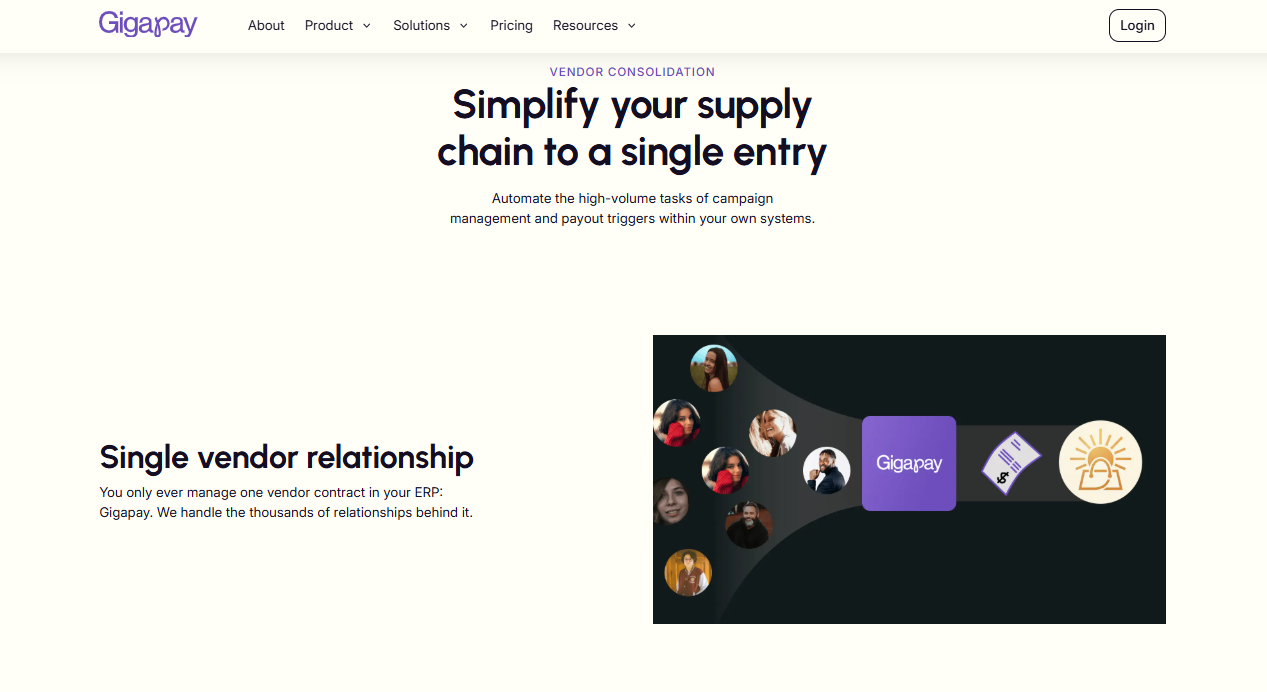
- One vendor record in the ERP instead of 300+ creator entries across 10 jurisdictions.
- One consolidated invoice per campaign or batch, which cuts invoice volume by around 80%.
- Individuals get paid compliantly: Creators onboard as individuals, sole traders, or companies, with no registered business or VAT number required, which reopens the nano and micro tiers procurement normally blocks.
- Reporting shifts to the vendor: Gigapay files DAC7 reports for EU markets and KU14 for Denmark through Skatteverket, and shares the payment data German clients need for their KSK records.
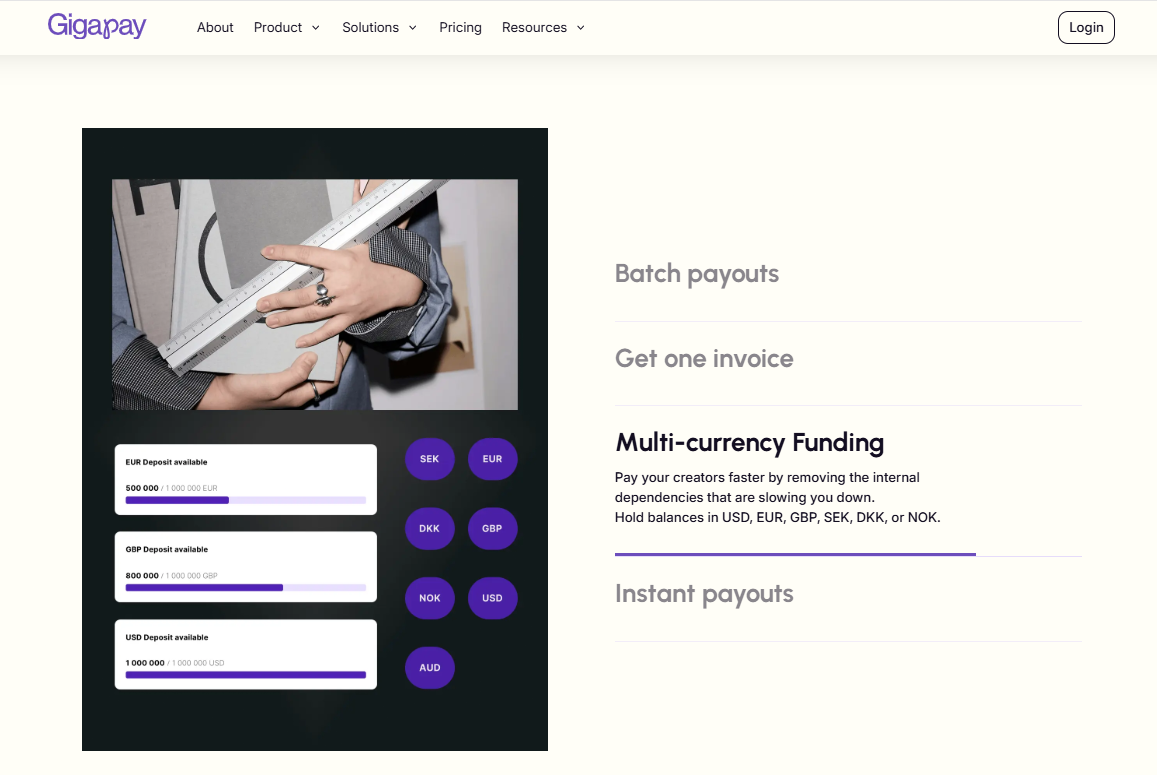
- Local rails, instant when pre-funded: Payouts run on SEPA Instant in the euro markets and Faster Payments in the UK, across 65+ countries and 50+ currencies, with funding in EUR, GBP, USD, SEK, DKK, or NOK. Pre-fund the campaign and creators are paid instantly on approval.
- Creators keep what they earn: On Gigapay, clients cover the fees on all new plans, so the agreed fee is the amount that lands.
The before-and-after on Gigapay's reference case of 600 collaborations a year: roughly €139,590 of annual process cost and 840 admin hours manually, against about €46,350 and 60 admin hours with the MoR structure in place.
Launch Week to Wrap-Up: Running the Campaign Once It Is Live
Launch week
Go live in waves and audit disclosure within the first 24 hours per market, label by label, against the matrix in your brief. A mislabeled post costs an edit on day one and a regulator's letter on day thirty. Confirm tracking fires in every market before the second wave starts.
During the flight
Approve content against the brief, not against personal taste, because ten markets of taste-based revisions will eat the timeline. Pay creators as deliverables clear rather than batching everything to campaign end. Mid-campaign payment is the strongest retention signal you can send a roster you want to reuse, and it is what separates you from the brands still running 120-day terms.
Wrap-up
Reconcile the campaign against one consolidated invoice if you run a Merchant of Record, or against hundreds of creator invoices if you do not. Archive contracts, disclosure screenshots, and payment records per market, since DAC7 data, German KSK records, and Danish KU14 reporting all draw on them later.
Then rank the roster by market on delivery, engagement, and ease of collaboration. The shortlist for your next 10-market launch is the real asset the first one produces.
Seven Mistakes That Sink a 10-Market Influencer Launch
- Running one disclosure standard everywhere: A caption that passes the ASA fails in France if the contract is missing, and fails in Norway if retouched imagery lacks the standard label. Build the disclosure matrix per market before briefing.
- Treating creators like procurement vendors: Supplier onboarding built for companies blocks the individuals who make up most of the European creator base. The campaigns that stall in procurement are usually the ones that found the right creators first.
- Missing France's written-contract rule: Above €1,000 excluding taxes, a missing written contract is a legal violation, not an admin gap, and DGCCRF penalties reach €300,000.
- Ignoring KSK as a German client: The 4.9% levy applies above €1,000 per creator per year, and it applies to foreign influencers too. KSK audits reach back five years, so the exposure compounds quietly.
- Assuming payment routing removes Spanish withholding: AEAT has confirmed the 15% IRPF obligation stays with the Spanish client hiring a Spanish individual, whoever executes the transfer. Budget and file accordingly.
- Letting long exclusive deals drift into employment: Germany's 5/6 single-client rule, Poland's PIP administrative reclassification from July 2026, and Italy's agency case law all target the same pattern: continuous, exclusive, tightly controlled relationships. Renew campaign by campaign, in writing.
- Paying late and losing the roster: Terms stretching to 120 days push creators toward brands that pay on delivery. Creator retention is a payment-operations metric before it is a relationship metric.
Each mistake has the same root: the campaign scaled across borders while the payment and compliance process stayed single-market.
How Gigapay Runs One Campaign Across 10 Markets
Gigapay has processed over 105,000 payouts worth 911 million SEK to creators in more than 40 countries, operating from Stockholm as the Merchant of Record for creator payouts since 2020. Spain joined the supported markets in July 2026, completing coverage across the full 10-market list in this article.
The working model for a cross-border campaign:
- Upload the batch: One CSV or one API call carries all creators, all markets, all currencies. Integration takes two to five days for platforms that embed it.
- Creators onboard themselves: KYC and KYB verification, tax ID validation, and VAT checks run in the onboarding flow, as individuals, sole traders, or companies. No registered business required.
- One invoice lands in finance: The campaign consolidates into a single B2B invoice from one vendor, with roughly 80% fewer invoices to process and one entry in the vendor master.
- Creators are paid on local rails, instantly when the campaign is pre-funded, with a dedicated human support team behind every payout and a creator NPS of 88.
- Reporting runs in the background: DAC7 for EU markets, KU14 for Denmark, and the payment records German clients need for KSK.
The results compound at scale:
- Boozt tripled its creator collaborations without expanding the team after years of failing to activate nano and micro creators.
- Radisson runs creator payments across 39 countries on the model.
- Cure Media scaled to 4.5x payment volume with a single finance hire.
That is the practical meaning of a Merchant of Record: the campaign grows from 50 to 5,000 creators, and the payment process stays the same size.
Conclusion
Gigapay is the Merchant of Record for creator payouts: the one vendor that pays your creators on your behalf and takes on the compliance, payouts, and support so you don't have to.
Launching one influencer campaign across 10 European markets in 2026 comes down to three disciplines: verify each market's disclosure and tax rules before the brief goes out, contract and collect tax data before content goes live, and consolidate payments so 300 creators never become 300 vendor records.
The regulatory load is real, from France's written-contract rule to Poland's reclassification regime, but for teams with the right structure behind them it is a checklist, not a blocker.
Book a demo and see how one contract covers all 10 markets before your next campaign brief is finished.
Read Next:
- How to Reduce Creator Churn: 7 Things That Make Influencers Want to Work With You Again
- Influencer Onboarding in 2026: From Signed Brief to Paid Creator in One Day
- How to Pay Instagram Creators Across Europe in Bulk (2026 Guide)
FAQs:
1. What is the best way to pay influencers across multiple European markets in 2026?
The best way to pay influencers across multiple European markets in 2026 is through a Merchant of Record, a single vendor that becomes the legal counterparty to your creators, consolidates every payout into one invoice, and takes on reporting obligations such as DAC7. The alternative models, meaning PSPs, AP tools, agencies, and manual processing, move the money but leave classification, reporting, and reconciliation with your team.
2. Which European countries have specific influencer marketing laws in 2026?
The European countries with specific influencer marketing laws in 2026 include France, with Loi n°2023-451 requiring written contracts above €1,000 and mandatory disclosure, Spain, with Royal Decree 444/2024 regulating High Profile Influencers, and Norway, which requires a standard label on retouched paid content. The UK, Germany, the Netherlands, Sweden, Denmark, and Poland regulate influencer content through advertising codes and consumer protection law rather than dedicated statutes.
3. How much does an influencer campaign cost across Europe in 2026?
An influencer campaign across Europe in 2026 costs a median of €144,000 a year per brand, with companies above 500 employees spending a median of €312,000, according to Kolsquare's September 2026 study. Per-post rates range from about €230 for nano creators to €11,500 for macro creators on UK benchmarks, with Western Europe pricing 15% to 25% below the UK and Eastern Europe 40% to 60% below.
4. Do brands need written contracts with influencers in France?
Yes, brands need written contracts with influencers in France for every engagement above €1,000 excluding taxes, under the decree of 28 November 2025 implementing Loi n°2023-451. The DGCCRF enforces the law with penalties of up to €300,000 and up to two years of imprisonment for serious violations.
5. What is DAC7 and how does it affect influencer payments in the EU?
DAC7 is the EU directive that requires digital platform operators to report the income that sellers, including creators, earn through their platforms to tax authorities, which then exchange the data across member states. For influencer campaigns, DAC7 means every creator payment made through a platform becomes a reportable, auditable event, so brands should confirm which party in their payment chain files the report and in which member state.
.jpg)
.jpg)
.jpg)