.jpg)

65% of German brands now run influencer marketing programs at scale, and any German company paying more than €1,000 a year to self-employed creators in 2026 owes a 4.9% Künstlersozialabgabe (KSK) levy on top of every euro sent, with the reporting obligation sitting on the brand, not the creator.
Gigapay is the mass creator payout platform built for exactly this environment, handling KSK reporting, DAC7 disclosures, VAT validation, and instant payouts across 65 countries under a Merchant of Record structure.
Choosing an influencer management platform in Germany is a different exercise than choosing one in the UK or the US, because German rules on tax reporting, social security levies, and Werbekennzeichnung disclosure add obligations that most global tools leave for the buyer to solve.
This guide covers the categories of platforms German companies are choosing between in 2026, the regulatory realities that shape the decision, and how to match the right platform to your team's size, structure, and creator volume.
Key Takeaways
- The KSK levy in Germany is 4.9% in 2026, applied to creator payments above €1,000.
- Most German brands need three layers: campaign management, compliance, and payouts.
- Enterprise brands running 100+ creators a year benefit most from a Merchant of Record.
- Gigapay handles KSK, DAC7, and VAT reporting automatically for German brands and agencies.
- Choosing the wrong platform creates audit exposure and slows Marketing's speed to campaign.
Why Platform Choice Matters More for German Companies in 2026
Germany has the strictest creator-payment compliance environment in the EU, and 2026 tightened it further. The Künstlersozialkasse levy rate dropped from 5.0% to 4.9% for the year, and the Bagatellgrenze (de minimis threshold) rose to €1,000 in annual creator payments before the levy applies.
Above that threshold, German brands and agencies owe 4.9% on every euro paid to self-employed creators and publicists, including influencers producing sponsored content.
The reporting deadline is 31 March of the following year, and audits from the Deutsche Rentenversicherung can go back several years.
Alongside KSK, EU Directive 2021/514 (DAC7) requires reporting platforms to disclose creator earnings to national tax authorities, with Germany's implementation actively enforced. Werbekennzeichnung rules (stricter than US disclosure standards) require creators to label sponsored posts with specific German-language tags depending on the platform, and violations expose the brand to Unterlassungsklage risk. GDPR applies to every creator record, invoice, and payment reference the brand or its platform stores.
A German CFO evaluating an influencer platform is asking a different set of questions than a US CFO. Cross-border VAT treatment, KSK reporting, audit readiness, and whether the vendor operates as a Rechnungsaussteller (self-billing party) all matter before the platform's discovery or reporting features are even considered.
The consequence is that platform choice in Germany starts from the compliance layer and works outward, not the other way around.
The Three Categories of Influencer Platforms German Companies Are Choosing Between
Every influencer management platform on the German market falls into one of three categories, and the categories solve fundamentally different problems.
1. All-in-One Influencer Management Platforms
This category includes GRIN, CreatorIQ, Kolsquare, impact.com, Meltwater, and similar tools. They are built primarily for creator discovery, campaign management, briefing, content approval, performance reporting, and Earned Media Value calculation.
Some of them include a payment module or integrate with one, but the payment layer is usually a light wrapper around Stripe, Wise, or PayPal Payouts.
Compliance in Germany (KSK reporting, DAC7 disclosures, VAT handling) is either not addressed at all or is handed to the brand as a "you handle this yourself" item.
- Where these platforms excel: finding creators, managing multi-campaign workflows, tracking content deliverables, and producing marketing-facing analytics.
- Where they underdeliver for German buyers: the compliance workflow that Finance, Legal, and Procurement actually own once the campaign ends.
2. General Payment Infrastructure
This category includes PayPal Payouts, Wise, Payoneer, Stripe Connect, Revolut Business, and mass payout tools like Tipalti, Trolley, and Hyperwallet. These are payment rails first, sometimes with vendor management on top. They move money quickly and reliably, and Finance teams recognize the brand names.
- Where they excel: moving money at scale, currency conversion, basic tax form collection (W-8/W-9 for US contexts, sometimes GoBD-compliant export for Germany).
- Where they underdeliver: none of them operate as a Merchant of Record for creator services, none of them handle KSK reporting or DAC7 disclosures out of the box, and Tipalti-style tools treat every creator as a vendor entry in the ERP, which slows down Marketing and alienates nano and micro creators who do not have a registered business.
3. Merchant of Record Creator Payout Platforms
This is the category Gigapay defines. A Merchant of Record (MoR) platform formally purchases the creator's deliverable and resells it to the brand, becoming the single legal counterparty for the transaction. The brand contracts with one entity (the MoR), receives one invoice, and books one vendor in the ERP regardless of how many creators were paid.
- Where MoR platforms excel: consolidating the compliance and administrative burden of paying hundreds or thousands of creators.
- Where they are less relevant: for teams doing five creator collaborations a year, the MoR structure is overhead the volume does not justify.
The category is small. Gigapay operates natively in the EU with Sweden-based Gigapay Sweden AB as the contracting entity, and the platform is specifically designed for the KSK, DAC7, and cross-border VAT workflows that dominate German influencer marketing.
Who Should Use Each Type of Platform
Matching the platform to the company is the decision that actually determines whether the tool creates value or headaches.
1. Early-Stage or Campaign-Heavy Brands
An all-in-one campaign platform is the right fit for German brands that are:
- New to influencer marketing and need help finding creators
- Running fewer than 25 collaborations a year with well-established creator agencies or freelancers who invoice as GmbHs
- Focused primarily on content management, brand safety review, and campaign analytics rather than payment operations at scale
A brand at this stage often has Marketing owning the entire workflow, including payments, through the agency or through Finance approving individual invoices. Compliance risk exists but sits below the audit radar because volumes are low. Platforms like Kolsquare (which now integrates directly with Gigapay for the payment layer) or CreatorIQ fit this profile.
2. Finance-First Teams Paying a Small Creator Roster
General payment tools like Wise Business, Payoneer, or Tipalti are the right fit for German companies that:
- Have Finance in the driver's seat for creator payments
- Already run a mass payout workflow for other contractor types
- Work with creators who invoice through registered businesses (GmbHs, UGs, or foreign equivalents), which sidesteps the KSK question because the levy does not apply to payments to juristische Personen
- Have accepted internally that KSK, DAC7, and Werbekennzeichnung are Legal's problem, not the platform's
The risk profile here is real. Finance sees a familiar tool. Marketing sees vendor onboarding slowing every campaign. Creators who are not registered as businesses cannot be paid, which locks the brand out of nano and micro tiers.
3. Enterprise Brands and Agencies at Scale
A Merchant of Record creator payout platform is the right fit for German companies and agencies that:
- Pay more than 100 creators a year in Germany, the DACH region, or across the EU
- Have Finance, Marketing, and Procurement in active tension over creator payment workflows
- Want to work with nano and micro creators who are not registered as businesses
- Face KSK, DAC7, and multi-jurisdiction VAT exposure and want the reporting handled at the platform layer
- Value having one vendor in the ERP instead of hundreds
- Care about creator retention and know that payment experience is part of the brand's reputation with talent
This is Gigapay's core profile:
- The Boozt team used Gigapay to enable nano and micro creator collaborations that had been operationally impossible before, tripling their creator volume without team expansion.
- The Goat agency uses Gigapay to reduce the administrative burden of managing payments across global creator programs.
What German Companies Should Check Before Choosing a Platform
Before signing with any influencer platform, German buyers should verify how the vendor handles the following, in writing:
- Does the platform report KSK-relevant payments to the Künstlersozialkasse, or is that the brand's job?
- Does the platform handle DAC7 creator disclosures under EU Directive 2021/514, or is that the brand's job?
- Can creators be paid without a registered Gewerbe or VAT number, or does the platform require every creator to be a formal business?
- How many vendor entries will exist in the ERP after switching, one or hundreds?
- What is the time from campaign approval to creator payment, and does that speed hold for cross-border payments to Nordic, Italian, or Portuguese creators?
- Which German payment rails does the platform use (SEPA Instant, SCT, IBAN validation), and how does it treat failed or returned payments?
- What is the audit trail for a payment made 18 months ago, and how does the platform respond to a Deutsche Rentenversicherung inquiry?
- Which German invoicing standard does the platform meet (GoBD compliance, e-invoicing readiness)?
The vendor's answer to each of these questions is more predictive of long-term fit than the demo of the discovery module.
Where Gigapay Fits Inside the German Influencer Marketing Stack
Gigapay is the compliance and payout layer, not the campaign layer. For a German brand or agency at scale, the practical stack looks like this: a discovery and campaign management platform (Kolsquare, CreatorIQ, Meltwater, or an in-house tool) handles briefing, content approval, and reporting, and Gigapay handles onboarding, compliance, and creator payments.
Under Gigapay's Merchant of Record structure, the brand signs one contract with Gigapay Sweden AB. Every creator paid through the platform is legally counterparted with Gigapay, and Gigapay resells the creative deliverable to the brand.
The brand receives one consolidated invoice per campaign or batch instead of hundreds of individual creator invoices. In the ERP, Gigapay appears as one vendor entry.
For KSK specifically, Gigapay reports creator payments that fall into the KSK-relevant category, generating the data Finance needs for the annual Entgeltmeldung by 31 March. For DAC7, Gigapay handles the platform-level disclosures the directive requires. For VAT, Gigapay validates VAT numbers at creator onboarding and applies the correct treatment based on the creator's location and status.
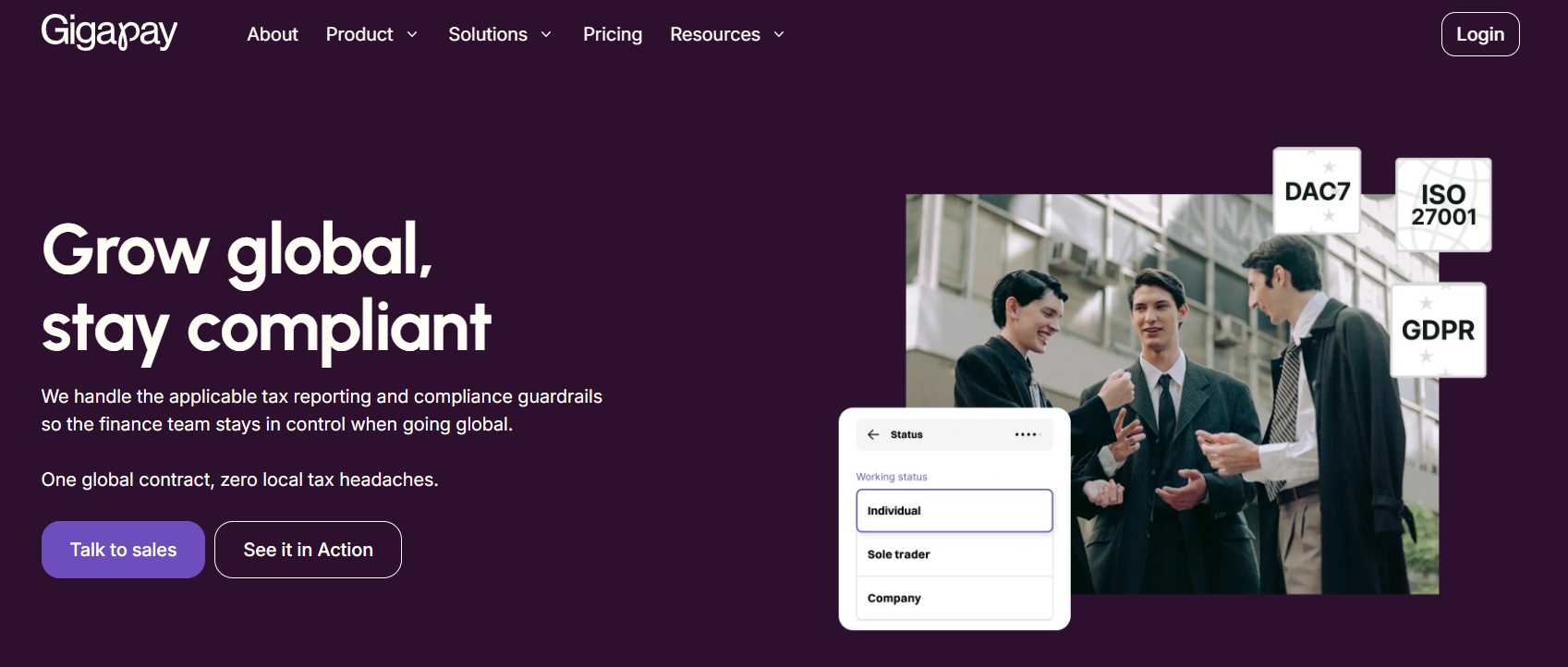
Creators can onboard as an individual, sole trader, or company, which means German brands can activate nano and micro creators without asking them to register a Gewerbe or obtain a Umsatzsteuer-ID. Payouts arrive instantly via SEPA Instant for European creators, with Faster Payments in the UK and ACH in the US covering the other major corridors.
The creator NPS of 88 reflects a payment experience that respects creators as talent, not as vendors filling out procurement forms.
Integration takes two to five days on the technical side, and Kolsquare users can activate the Gigapay integration without any additional engineering. ISO 27001 certification and full GDPR compliance address the security and data protection concerns that CTOs and Heads of Legal raise before signing.
Common Mistakes German Brands Make When Choosing a Platform
Four mistakes appear repeatedly in evaluations that end badly.
1. Choosing the platform based on the discovery module
A great creator database does not fix a broken payment workflow, and Marketing teams that fall in love with a discovery UX often find themselves rebuilding the payment layer with a second tool six months later.
2. Assuming the existing payment tool handles KSK
Finance teams that already use Wise or Payoneer sometimes assume the vendor covers German-specific reporting because the tool moves money into German accounts. It does not. KSK reporting is the payer's obligation regardless of the payment rail.
3. Building the compliance workflow in-house because "we already have SAP”
SAP or Oracle can hold the vendor record, but neither is designed to onboard 300 creators as individuals, run KYC/KYB on each one, generate self-billing invoices, and report to the KSK. The internal build is almost always slower and more expensive than the vendor solution, and the audit exposure sits inside the company instead of at the platform.
4. Delaying the decision until an audit finding forces it
Deutsche Rentenversicherung audits routinely surface KSK underreporting years after the fact, and the retroactive levy plus penalties can dwarf what a proper platform would have cost across the same period.
Conclusion
Gigapay is the mass creator payout platform German companies use when the compliance layer of influencer marketing becomes the bottleneck to campaign speed and cross-border scale.
The right platform choice in Germany starts from the KSK, DAC7, and Werbekennzeichnung obligations that Finance, Legal, and Procurement all have opinions about, and works outward to campaign management and discovery.
For enterprise and mid-market brands paying more than 100 creators a year, a Merchant of Record structure consolidates the vendor record, absorbs the reporting workflow, and lets Marketing move at the pace the campaign calendar requires.
Book a demo and we'll walk you through what your KSK, DAC7, and creator payout workflow looks like inside Gigapay before your next German campaign.
Read Next:
- Top 5 Ways to Legally Pay YouTube Creators in 2026
- TikTok Influencer Payments Report: 2026 Data
- Best Tipalti Alternatives for Influencer Payments: 2026 Review
FAQs:
1. What is the best influencer management platform for German companies in 2026?
The best influencer management platform for German companies in 2026 depends on creator volume and compliance scope, but enterprise and mid-market brands paying more than 100 creators a year in Germany typically choose a Merchant of Record platform like Gigapay because it handles KSK reporting, DAC7 disclosures, and cross-border VAT automatically while consolidating creator payments under a single vendor entry in the ERP.
2. What is KSK and how does it affect influencer platform choice in Germany?
KSK (Künstlersozialkasse) is Germany's social insurance system for self-employed creatives, and it affects influencer platform choice in Germany because any brand paying more than €1,000 a year in creator fees owes a 4.9% Künstlersozialabgabe levy on top of the honorarium, with reporting due to the KSK by 31 March of the following year, a workflow most generic payment tools do not handle and most all-in-one campaign platforms do not address.
3. Do German companies need a Merchant of Record for influencer payments?
German companies need a Merchant of Record for influencer payments when they run more than 100 creator collaborations a year, work across EU jurisdictions with DAC7 exposure, or want to reduce vendor sprawl inside their ERP, because a Merchant of Record like Gigapay becomes the single legal counterparty for creator services and absorbs the administrative and tax reporting responsibilities tied to the purchase.
4. How does Gigapay handle DAC7 reporting for German brands?
Gigapay handles DAC7 reporting for German brands by acting as the reporting platform under EU Directive 2021/514, collecting the required creator information at onboarding through KYC and KYB verification, and generating the DAC7 disclosures automatically so that Finance and Legal do not have to build the workflow in-house or coordinate reporting across each jurisdiction where creators are based.
5. Can Gigapay pay influencers who are not registered as a business in Germany?
Gigapay can pay influencers who are not registered as a business in Germany because the Merchant of Record structure lets creators onboard as an individual, sole trader, or company, which means German brands can activate nano and micro creators without asking them to register a Gewerbe or obtain a Umsatzsteuer-ID, opening up creator tiers that Procurement normally blocks.
.jpg)
.jpg)
.jpg)