.jpg)

Global influencer marketing spend crossed $32.6 billion in 2026, yet creator payment delays still stretch to 120 days according to Gigapay's 2026 Creator Pay Report.
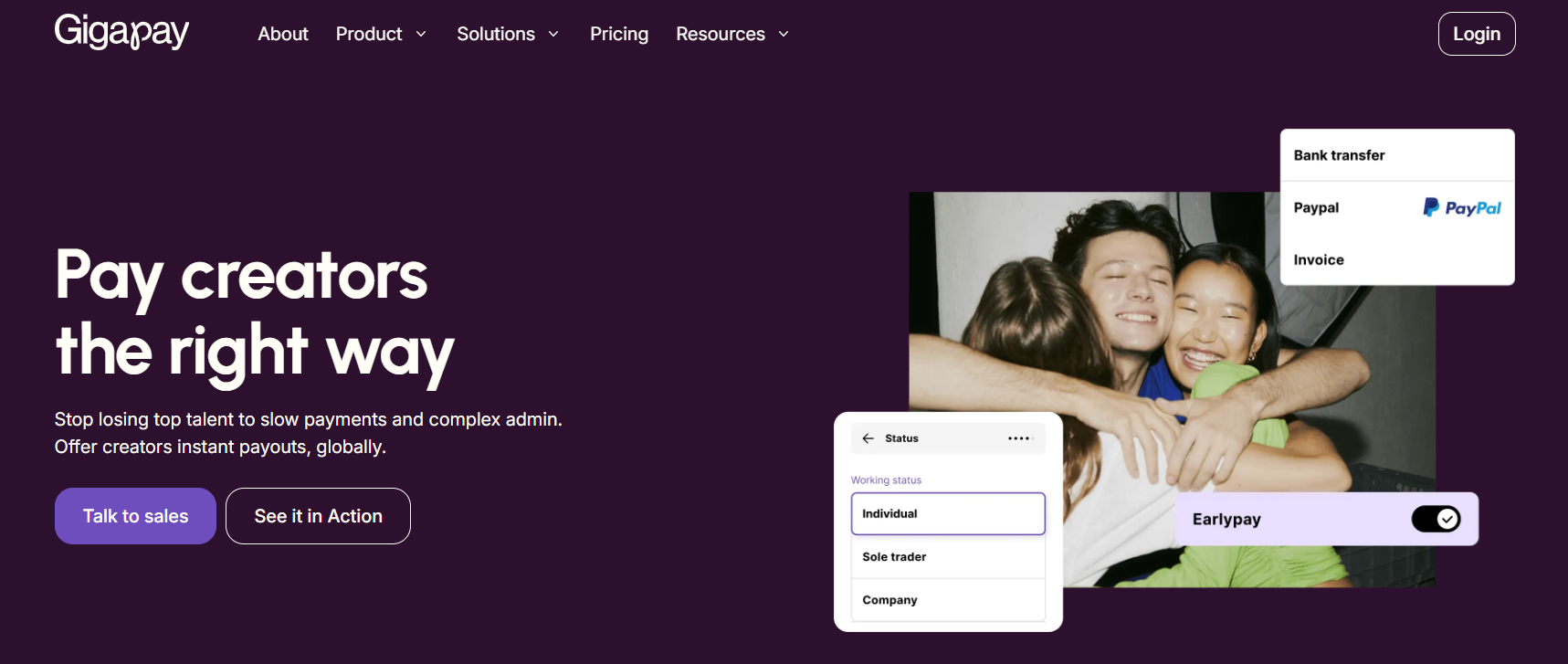
Gigapay is the mass creator payout platform and Merchant of Record built specifically for brands and agencies that pay hundreds or thousands of creators across dozens of countries.
Flowbox, the Stockholm-based UGC platform, added influencer payment functionality after acquiring Dreaminfluence in 2025, but many brands running high-volume creator programs need dedicated payment infrastructure with deeper tax and compliance coverage.
This 2026 review compares the strongest Flowbox alternatives for influencer payments, ranks them against the criteria that matter in a real program, and explains why Gigapay sits at the top of the list.
Key Takeaways
- Flowbox added creator payments through the 2025 Dreaminfluence acquisition; alternatives handle deeper compliance.
- Gigapay is the Merchant of Record for creator payouts across 65+ countries and 50+ currencies.
- Payment delays still hit 120 days for creators, per Gigapay's 2026 Creator Pay Report.
- Merchant of Record platforms consolidate hundreds of creator vendors into one invoice.
- Lumanu, Tipalti, Stripe Connect, and Wise handle payments with different compliance tradeoffs.
Why Brands Look Beyond Flowbox for Influencer Payments
Flowbox is a Stockholm-based UGC platform that built its business around collecting and displaying customer content in shoppable galleries for fashion, retail, and consumer goods brands. The influencer marketing capabilities, including creator payments, came into the product through the 2025 acquisition of Dreaminfluence.
That combination works well for brands that want an all-in-one place to manage UGC galleries, ambassador programs, and simple creator compensation inside one interface.
The gap opens when a brand's creator program grows past the "manage in a tab" stage. Once a marketing team is paying hundreds or thousands of creators across many countries every quarter, the payment side stops being a feature and becomes the operational core of the program.
At that scale, brands need infrastructure that was built for creator payouts from day one, that handles tax reporting across jurisdictions automatically, and that consolidates hundreds of creator invoices into a single vendor record in the finance system.
What to Look for in an Influencer Payment Platform in 2026
Before comparing platforms, it helps to know which criteria actually change the shape of the program at scale.
1. Merchant of Record vs. payouts-only
A Merchant of Record buys the creator's deliverable and resells it to the brand, becoming the formal counterparty and consolidating all creators into one vendor record in the ERP. A payouts-only tool moves money but leaves the brand as the legal payer of hundreds of individual creators. The distinction changes how much compliance work the finance team inherits.
2. Global reach and payment speed
A single global campaign may involve creators in 30 or more countries. The platform needs local payment rails to pay creators in each market without a 60-day wait, and it needs to hold funding currencies that match the finance team's treasury setup.
3. Tax reporting scope
The 1099 threshold in the US rose to $2,000 for payments made on or after January 1, 2026. In the EU, DAC7 requires platforms to report creator earnings. In Germany, KSK levies 4.9% on creative payments over €1,000. In Sweden, KU14 sits on top of that.
A payment platform that handles this reporting automatically saves the finance team from a year-end scramble.
4. Creator onboarding without a registered business
Nano and micro creators are the fastest-growing tier in 2026, and most of them do not have a registered company or a VAT number. A platform that requires every payee to onboard as a business excludes the segment growing fastest.
5. Consolidated invoicing
The strongest platforms replace hundreds of individual creator invoices with a single invoice from the platform itself. This is the difference between finance approving one payment record and finance approving four hundred.
Best Flowbox Alternatives for Influencer Payments: The 2026 Ranking
1. Gigapay
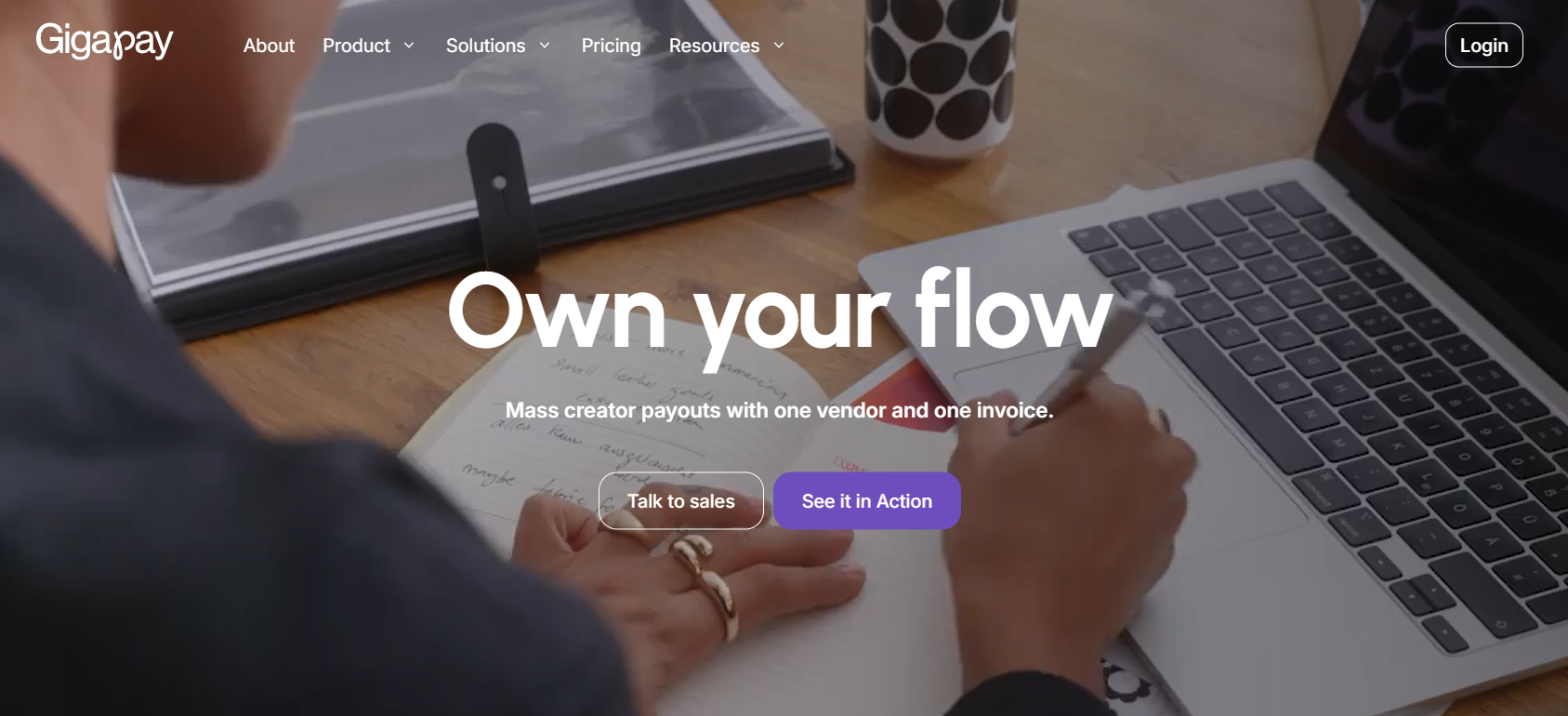
Gigapay is the best mass creator payout platform and Merchant of Record built specifically for brands and agencies that run creator programs at scale. Founded in Stockholm in 2019, Gigapay sits between brands and creators as the formal contractual counterparty.
That structure means the brand adds one vendor to the ERP instead of hundreds, and Gigapay handles the tax reporting, KYC verification, and cross-border compliance that would otherwise land on the finance team. The platform pays creators in 65+ countries and 50+ currencies, uses local rails like SEPA Instant, Faster Payments, and ACH, and processes payouts instantly.
Where Flowbox's payment functionality is one feature inside a broader UGC and influencer marketing platform, Gigapay is the payment infrastructure itself, which is why brands running programs beyond a certain volume tend to run their Flowbox or Kolsquare campaigns on the marketing side and route payments through Gigapay.
Gigapay integrates natively with Kolsquare so creators can invoice directly inside the campaign tool, and the API-first design allows agencies to embed payouts into custom dashboards in two to five days.
Compliance automation covers DAC7 in the EU, KSK in Germany, and KU14 in Sweden without brand teams having to file anything manually. Creator NPS sits at 88, driven partly by EarlyPay, the liquidity feature that gives creators instant access to scheduled funds.
Real customers include Boozt, The Goat Agency, all of whom cite the same shift after implementing Gigapay: from onboarding creators one by one to running hundreds of collaborations without adding headcount.
Pros
- Merchant of Record structure removes hundreds of individual creator vendors from the ERP, replacing them with one consolidated invoice per period.
- Instant payouts through local payment rails including SEPA Instant, Faster Payments, and ACH across 65+ countries and 50+ currencies.
- Automated compliance for DAC7, KSK, and KU14 removes the year-end reporting burden from marketing and finance teams.
- Creators can onboard as individuals, sole traders, or companies with no requirement for a registered business or VAT number, which opens the door to nano and micro creator work.
- API-first design with a two-to-five day integration window, plus a native Kolsquare integration for teams already running influencer marketing there.
Cons
- Enterprise pricing requires a minimum annual payout volume of €1.8 million, so brands with smaller programs sit on the Base plan at €279 per month plus a 4.9% admin fee.
- Gigapay is not the right tool for brands whose main pain point is UGC gallery display or organic content discovery rather than payments.
2. Lumanu
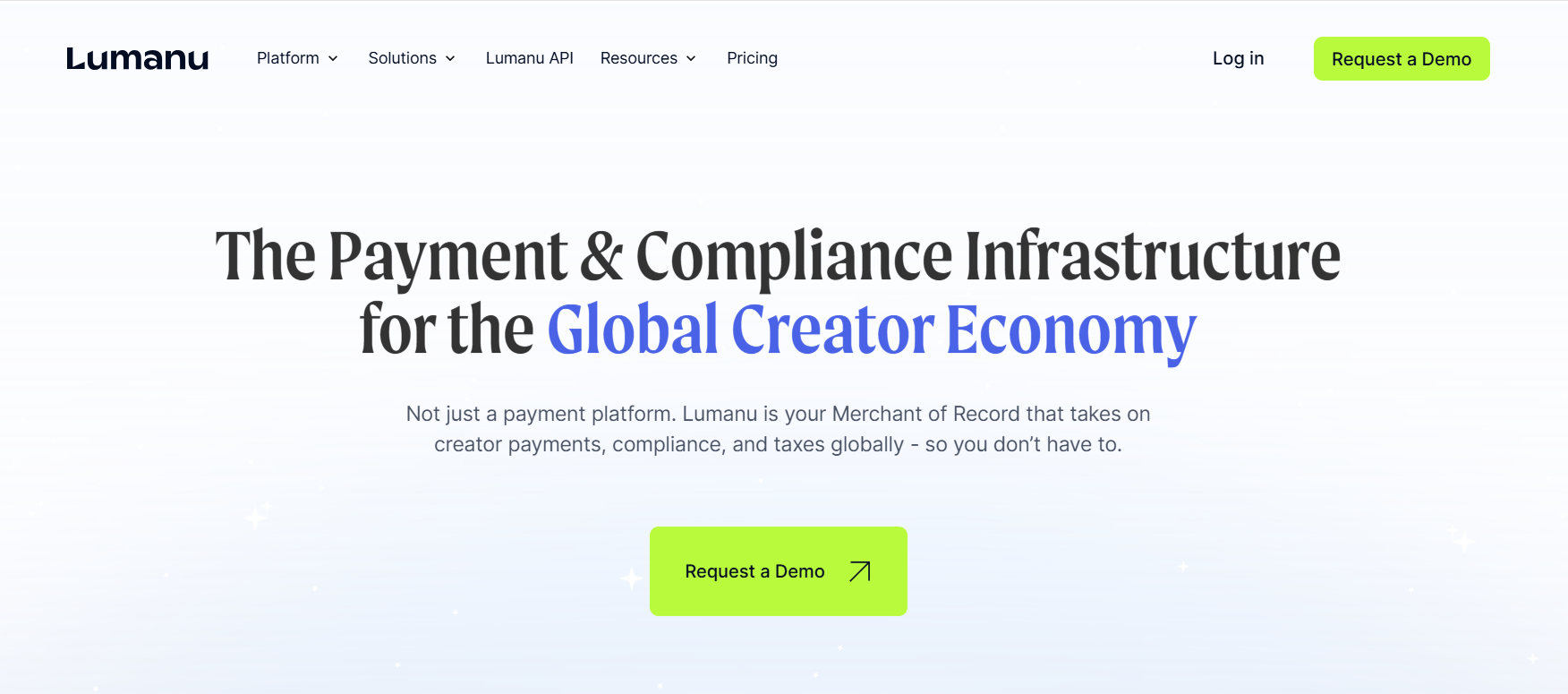
Lumanu is a US-based payment infrastructure platform that also operates on a Merchant of Record model, with a strong footprint in enterprise US agencies. The platform has processed over $1.5 billion in creator payments and supports payouts in 180+ countries.
Lumanu integrates with QuickBooks, Zapier, and Bill, and offers Instant Pay for creators plus EarlyPay for liquidity. The wallet architecture, where brand funds sit in a dedicated bank account until payout, is a real strength for finance teams that want treasury control.
Where Gigapay leads is depth of European regulatory automation. Lumanu covers US 1099 filings well and acts as Merchant of Record in the US, UK, EU, and Canada. Gigapay was built inside the European regulatory environment and handles DAC7, KSK, and KU14 natively, which matters for brands running Nordic or German campaigns at scale.
Gigapay's local rails, including SEPA Instant, also give European creators an instant experience, and Lumanu's public G2 and Capterra reviews still flag international payment coverage as a weaker area than domestic US payments.
Pros
- Master Vendor structure absorbs the tax and compliance counterparty relationship for US, UK, EU, and Canada payments.
- Strong integrations with QuickBooks, Bill, and Sprout Social, plus a Visa partnership for global card-based payouts.
- Instant Pay and EarlyPay give creators fast access to funds and let brands earn yield on working capital.
Cons
- International payment coverage outside the US has been called out repeatedly in G2 and Capterra reviews as weaker than domestic US payments.
- European compliance coverage is thinner than Gigapay's on Nordic and German reporting requirements such as KU14 and KSK.
- Pricing starts around $299 per month per user according to public review data, and enterprise implementation involves setup fees that extend time to value.
3. Tipalti
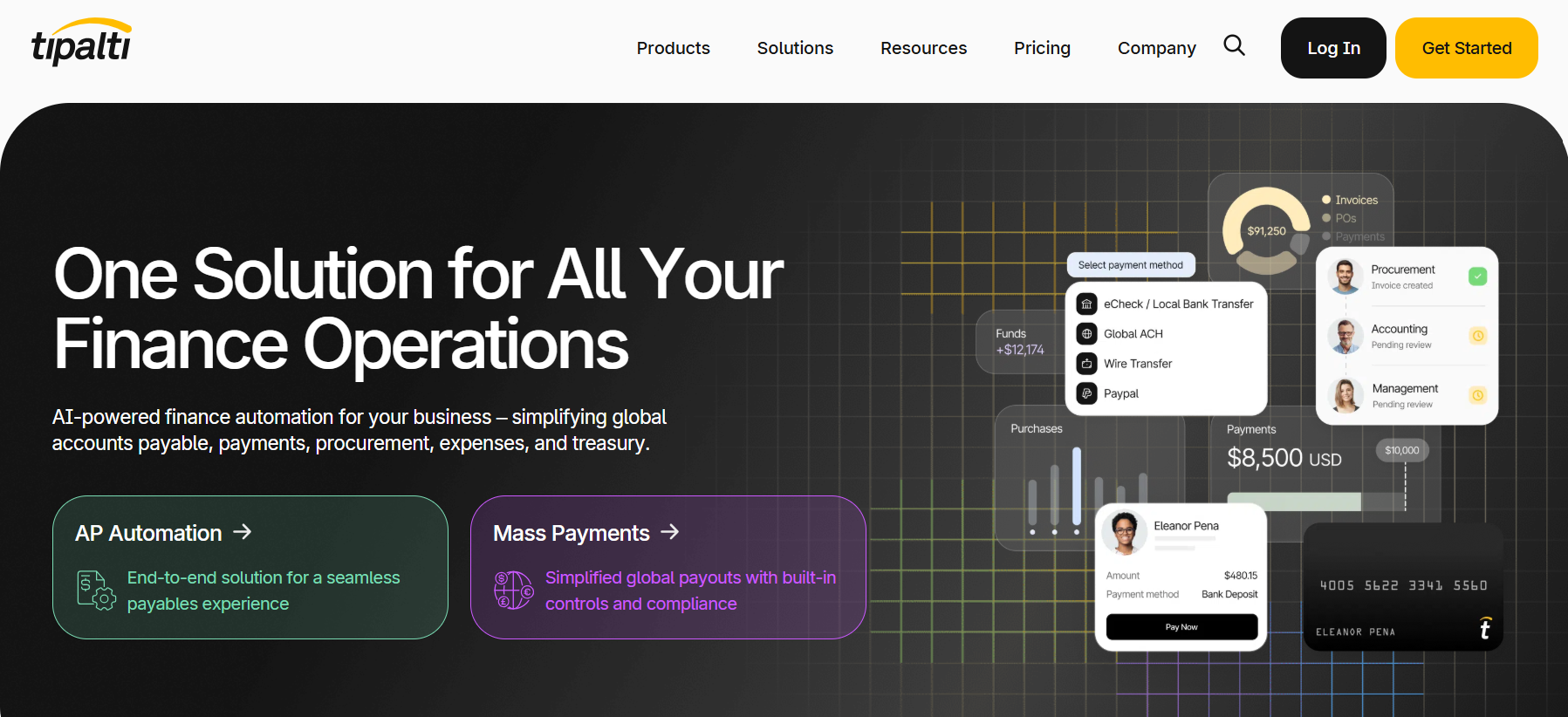
Tipalti is a broad accounts payable and mass payments automation platform used across supplier management, not only for creators. The system supports payments in 120 currencies to 200+ countries with over 50 payment methods, and it handles tax form collection, W-9 and 1099 workflows, and multi-entity finance operations.
For a finance team that already runs a wide supplier base and wants creator payments folded into the same AP engine, Tipalti is a serious option.
Where Gigapay differs is focus. Tipalti was designed for accounts payable teams managing invoices from a diverse vendor base, and its 1-5 day settlement window through ACH and wires is a natural fit for that use case.
Gigapay was built for creator payouts specifically, which is why it operates as a Merchant of Record rather than an AP automation tool, and why payouts land instantly through local rails instead of settling over multiple business days.
For a brand whose primary pain is creator payments, not vendor invoice automation, Gigapay's model removes more of the operational load.
Pros
- Deepest global payments footprint of the alternatives, covering 200+ countries and 120 currencies with 50+ payment methods.
- Strong accounts payable automation including OCR invoice capture, PO matching, and multi-entity finance workflows.
- Handles a wide range of vendor types beyond creators, useful for finance teams consolidating supplier payments into one platform.
Cons
- Settlement runs 1-5 days through ACH and wires, so creators wait longer than they would with a platform built on instant local rails.
- FX fees run 1.9% to 3% per transaction, which makes forecasting cross-border creator spend harder at high volume.
- Implementation timelines commonly run 3-6 months depending on ERP complexity, compared with the two-to-five day integration window Gigapay offers.
4. Stripe Connect
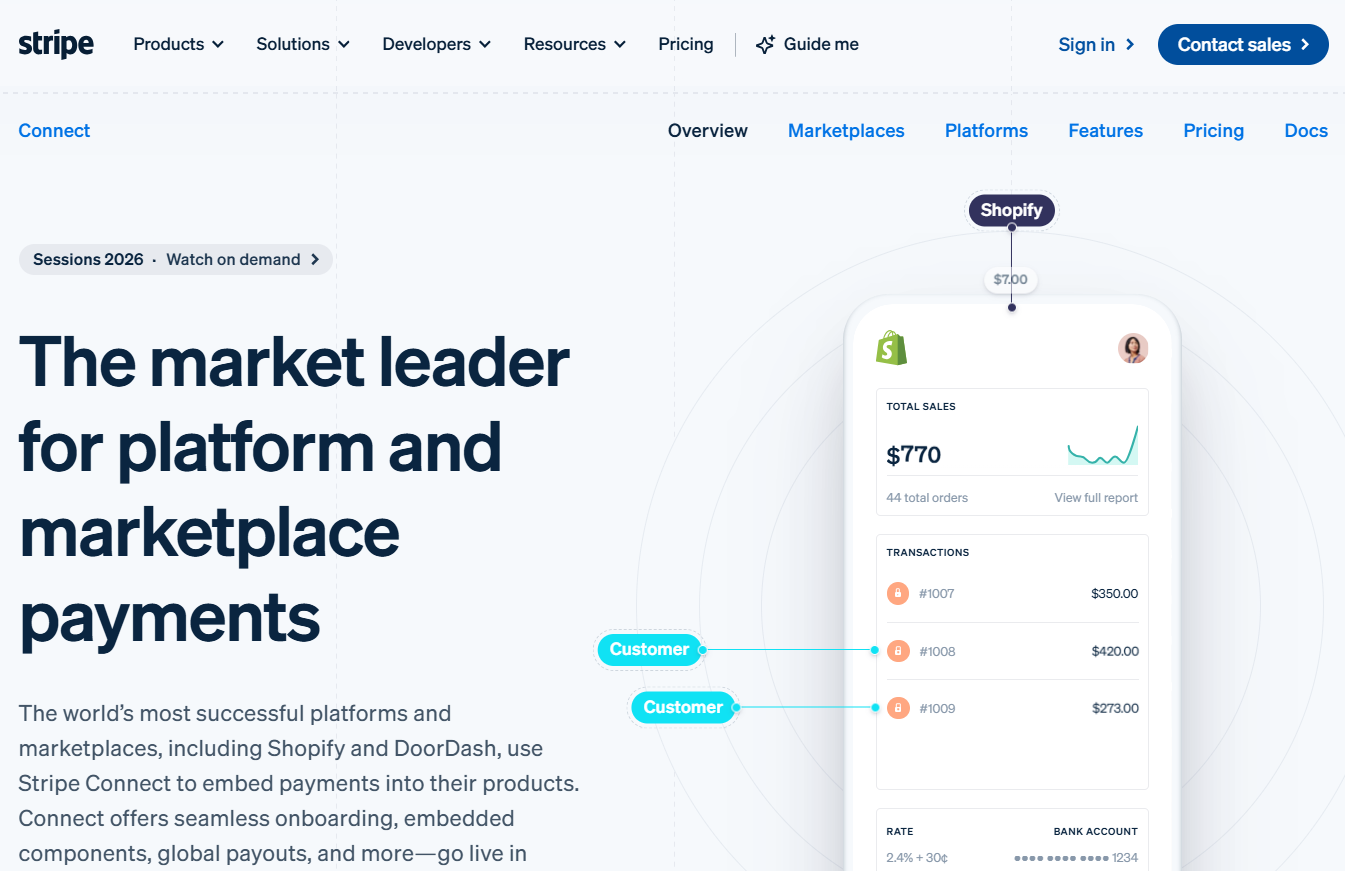
Stripe Connect is payment infrastructure for platforms and marketplaces that want to embed payouts into their own product. Companies like Shopify, DoorDash, Lyft, and Instacart use Connect to onboard sellers, split payments, and route funds globally.
It supports 40+ countries for payouts, 135+ currencies for pay-ins, and offers Standard, Express, and Custom account types that trade off UX control against compliance responsibility.
Stripe Connect is a strong choice if an engineering team is building its own creator platform and wants deep programmatic control. It is a heavier lift for a marketing or finance team that just wants to pay creators without owning a compliance layer.
Gigapay serves the second use case directly. Where Stripe Connect gives you a toolkit to build creator payouts, Gigapay gives you the finished product with the MoR structure already in place, so no engineering team is required to send the first payout on day one.
Pros
- Extensive developer tools and APIs with detailed documentation, aimed at engineering teams building custom payout logic.
- Global pay-ins support across 135+ currencies and 40+ countries for payouts, with support for card, invoice, and point-of-sale flows.
- Strong onboarding UX components including embedded elements, and support for tax reporting workflows such as US 1099 filings.
Cons
- Not a Merchant of Record for creator payouts, so the brand remains the legal payer of every creator vendor.
- Per-transaction and per-payout fees compound quickly at high creator volume, and instant payouts carry an additional 1% to 1.5% fee.
- Requires engineering resources to design, build, and maintain the creator payout flow, which delays time to first payout for marketing-led teams.
5. Wise
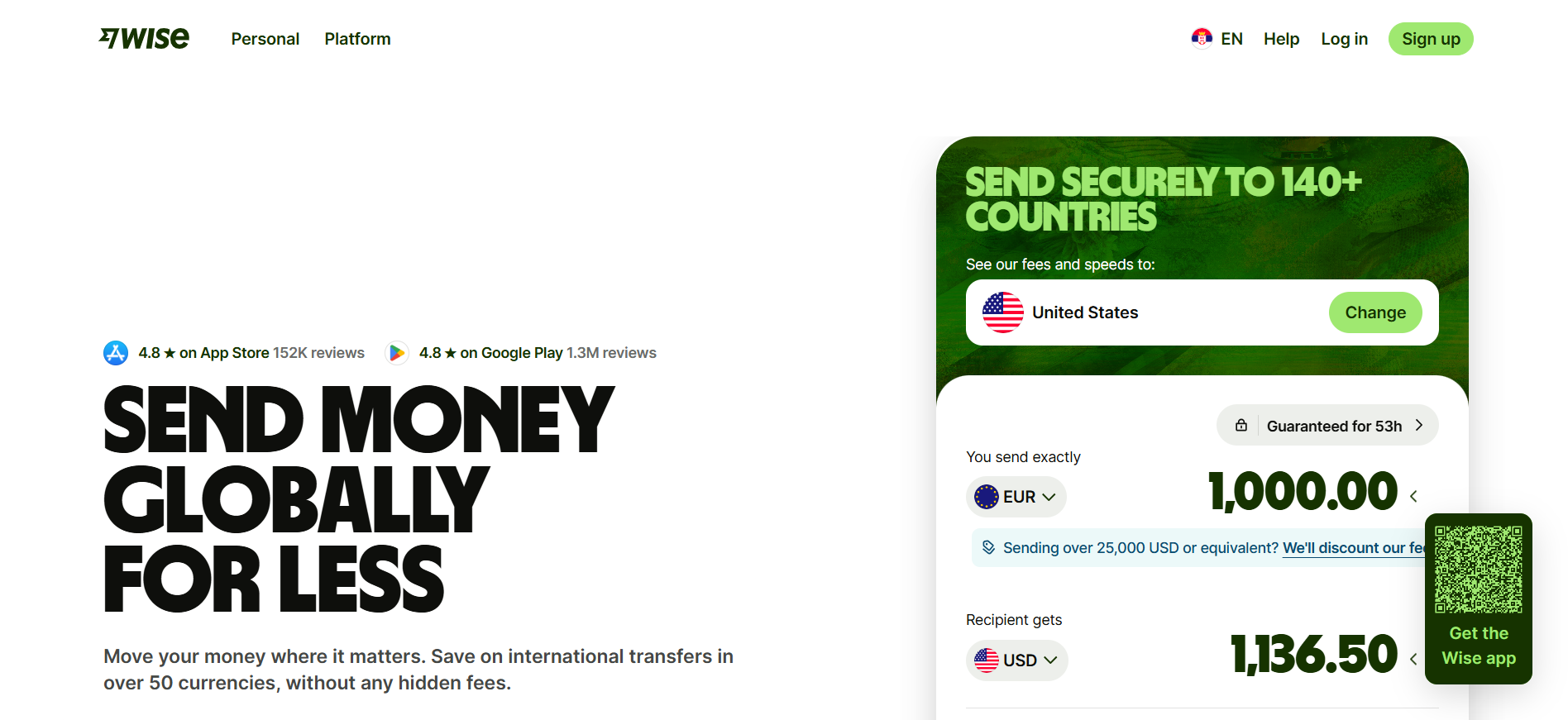
Wise (formerly TransferWise) is a multi-currency business account and international transfer service used by 16 million customers worldwide, with support for 50+ currencies and low FX fees at real exchange rates. For a brand paying a modest number of creators globally in a mostly manual workflow, Wise is a legitimate lightweight option.
Where Gigapay leads is the automation and compliance layer around the payment. Wise moves money efficiently but leaves the brand as the legal counterparty for every creator, and it does not file DAC7 reports, handle KSK, or automate KU14.
Batch payments on Wise are handled through CSV uploads without the API depth or ERP consolidation that Gigapay's Merchant of Record structure provides.
For a program of 20 creators a quarter, Wise can be enough. For a program of 200 or 2,000, it becomes the manual layer that Gigapay was built to replace.
Pros
- Transparent FX at real mid-market exchange rates, with fees typically three times lower than legacy banks on international transfers.
- Multi-currency business accounts that hold and pay in 50+ currencies, useful for lean finance teams managing global spend.
- Simple pricing and no monthly platform fee, which fits brands that pay creators at modest volumes.
Cons
- No Merchant of Record function, so the brand remains the tax counterparty for every creator payment.
- No native creator compliance features for DAC7, KSK, or KU14, and no automated 1099 filings for US creator payments.
- Batch payments require manual CSV uploads, and the API is thinner than options built for high-volume programmatic payouts.
6. PayPal Payouts
PayPal Payouts is one of the most widely recognized cross-border payment tools, and creators in nearly every country already hold a PayPal account. For brands, PayPal moves money in a familiar interface, and setup effort for the first payout is low.
The compliance and cost picture is where PayPal falls behind Gigapay. PayPal is not a Merchant of Record, does not consolidate creators into a single vendor record, and charges recipients 2% to 3% in fees plus FX markup on cross-border payments.
There is no automated DAC7 or KSK reporting, and enterprise financial controls, campaign-level cost tracking, and creator liquidity features are limited compared to a dedicated platform.
Gigapay covers all of this natively, which is why brands moving beyond ad-hoc creator payments tend to migrate away from PayPal as their program scales.
Pros
- Widest creator recognition of any payment method, with hundreds of millions of active accounts in nearly every country.
- Minimal setup for the brand to send a payout, useful for one-off or low-volume creator payments.
- Recognizable dispute and buyer-protection framework that some brands and creators are already familiar with.
Cons
- Recipients pay 2% to 3% in fees on cross-border transactions, which reduces creator take-home pay and creates friction in negotiation.
- Not a Merchant of Record, and does not consolidate creator payments into a single ERP vendor record.
- No native tax compliance automation for DAC7, KSK, KU14, or 1099 reporting at the platform level.
Best Flowbox Alternatives: Comparison Table
How to Choose the Right Flowbox Alternative for Your Team
The choice usually comes down to three questions.
- How many creators the program pays per year?
Under 50 mostly registered creators, a lightweight tool like Wise can be enough. Above 100, and especially across borders, a Merchant of Record model pays for itself in reclaimed finance hours. - Where the creators are based?
For US-heavy programs with straightforward tax reporting, Lumanu covers the ground. For European or global programs where DAC7, KSK, or KU14 come into play, Gigapay has the deepest native compliance automation. - Whether the team is paying creators or vendors?
If the answer is broadly "all of our suppliers", Tipalti has the AP breadth to justify the implementation. If the answer is specifically "creators, at scale, without the vendor sprawl", Gigapay was built for that use case from day one.
For most brands moving away from Flowbox specifically because payments have become the bottleneck rather than the content pipeline, Gigapay is the fastest path from spreadsheet chaos to a creator program that scales without adding finance headcount.

Conclusion
Gigapay is the mass creator payout platform built for brands and agencies that treat creator programs as a core marketing channel rather than a side project.
The alternatives to Flowbox for influencer payments each solve part of the problem: Lumanu handles US-heavy programs, Tipalti covers broader accounts payable, Stripe Connect gives engineering teams the toolkit to build their own, and Wise or PayPal move money at low volumes.
Gigapay is the option that consolidates creator payouts, tax reporting, and cross-border compliance into a single vendor record designed for creator programs specifically.
Book a demo to see how fast the first payout can leave the platform on your own campaign volume.
Read Next:
- Top 5 Merchant of Record Platforms for European Companies in 2026
- Which Influencer Management Platform Should German Companies Use in 2026?
- Top 5 Ways to Legally Pay YouTube Creators in 2026
FAQs:
1. What is the best Flowbox alternative for influencer payments in 2026?
The best Flowbox alternative for influencer payments in 2026 is Gigapay, the Merchant of Record platform that covers 65+ countries, 50+ currencies, and native EU tax reporting for DAC7, KSK, and KU14.
2. Why do brands look for Flowbox alternatives for creator payments?
Brands look for Flowbox alternatives for creator payments because Flowbox added its payment functionality through the 2025 Dreaminfluence acquisition and does not operate as a Merchant of Record for high-volume creator programs.
3. How does Gigapay compare to Lumanu for influencer payouts?
Gigapay compares to Lumanu for influencer payouts as the stronger option for European and global programs, with native DAC7, KSK, and KU14 compliance and instant payouts through local rails like SEPA Instant.
4. What is a Merchant of Record in influencer payments?
A Merchant of Record in influencer payments is a platform that legally buys the creator's deliverable and resells it to the brand, becoming the single vendor of record in the brand's finance system.
5. How fast can Gigapay pay influencers globally?
Gigapay pays influencers instantly through local payment rails including SEPA Instant, Faster Payments, and ACH across 65+ countries and 50+ currencies.
.jpg)
.jpg)
.jpg)