
Affiliate creators drove 69.9% of TikTok Shop sales in Germany, France, Spain and Italy in the 90 days to 9 July 2026, according to Lengow's analysis of Kalodata estimates (July 2026).
To pay those creators flat fees and retainers, use one counterparty that pays each creator and sends you one consolidated invoice.
Gigapay is the Merchant of Record for creator payments. Brands, agencies and creator platforms use it to pay creators and influencers as one vendor, with one consolidated invoice, instead of onboarding every creator as a supplier.
This guide covers agreements, invoicing, country rules, currencies, workflows and common mistakes.
Key Takeaways
- TikTok Shop calculates and pays affiliate commission to creators inside its own platform.
- Flat fees and retainers agreed outside TikTok Shop are yours to contract and pay.
- TikTok Shop runs in ten European markets that use the euro, pound and zloty.
- An individual creator cannot issue an invoice, so the payment needs other documentation.
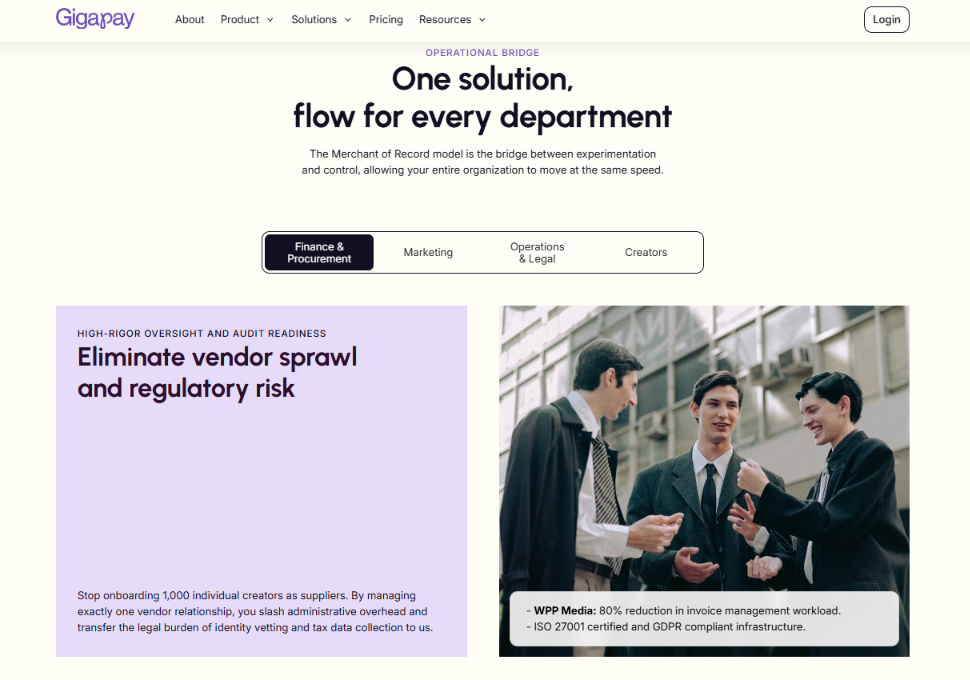
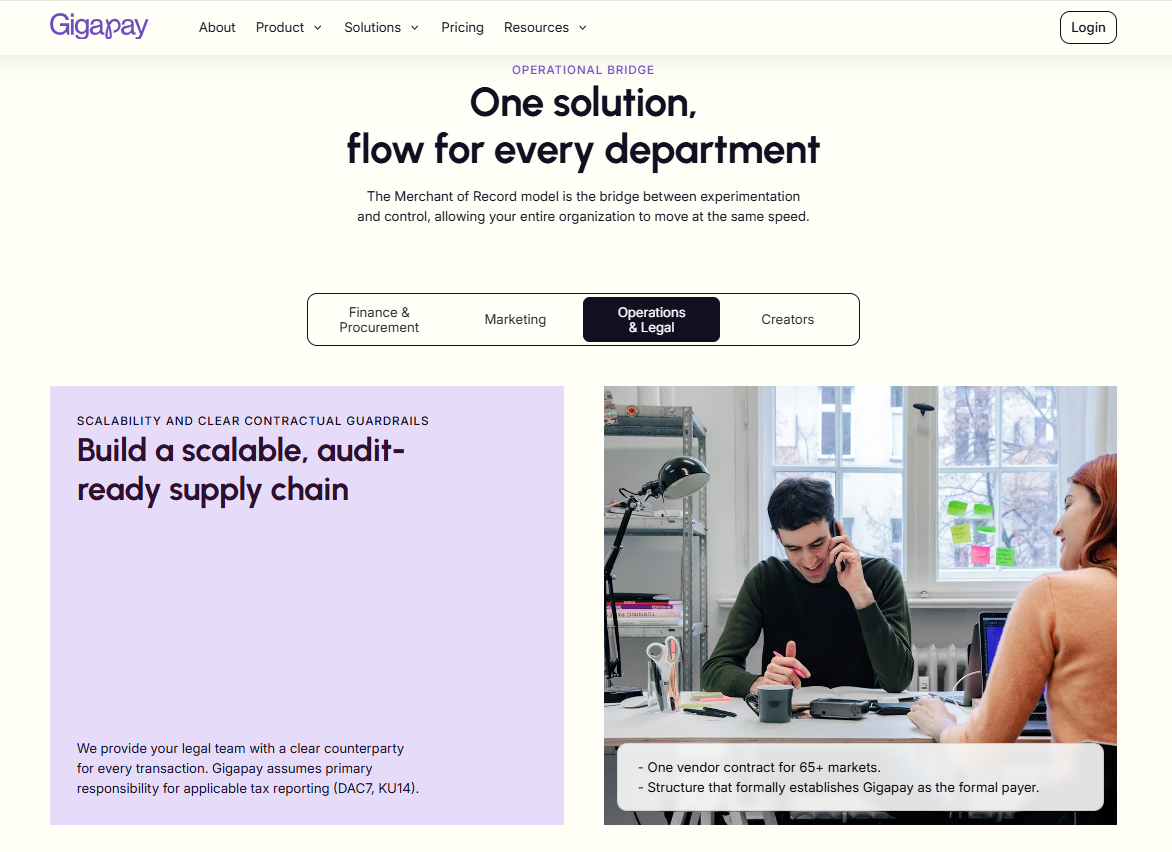
- With Gigapay, the client has one vendor record and one consolidated invoice per batch.
How Big Is TikTok Shop In Europe In 2026?
TikTok Shop is live in ten European markets, according to TikTok's Newsroom (28 May 2026). Austria, Belgium, the Netherlands and Poland joined on 15 June 2026, alongside France, Germany, Ireland, Italy, Spain and the UK.
TikTok says more than 100,000 European businesses have joined TikTok Shop across France, Germany, Italy, Spain and Ireland. It also reports triple-digit growth in daily gross merchandise value (GMV) between August 2025 and February 2026.
| Market | Estimated GMV, 90 days to 9 July 2026 | Affiliate creator share |
|---|---|---|
| Germany | €174.7 million | 73.8% |
| France | €132.8 million | 73.4% |
| Spain | €104.7 million | 70.2% |
| Italy | €86.6 million | 56.3% |
| Four markets | €498.8 million | 69.9% |
Source: Lengow, using Kalodata estimates (July 2026). These are third-party estimates, not TikTok’s reported figures.
Scroll sideways to see all columns
The newer markets are smaller and growing. Lengow's November 2026 analysis estimates 30-day sales of €11.9 million in Poland, €8.0 million in the Netherlands and €5.1 million in Ireland. Affiliate creators generated 70% of Irish and 58% of Polish revenue.
For your programme, creators are the main sales channel on TikTok Shop, so your creator payables grow with every market you open.
Why Do TikTok Shop Brands Pay Flat Fees And Retainers On Top Of Commission?
Commission alone pays a creator only after a sale. Brands add fixed fees when they need guaranteed output, such as a set number of videos, a weekly LIVE slot, content they can reuse in ads, or category exclusivity.
Sellers can set commission from 1% to 80% of each order's GMV, according to TikTok's help centre (updated August 2025). Fixed fees sit on top of that rate.
| TikTok creator tier | Followers | Median agreed flat fee |
|---|---|---|
| Nano | Under 10,000 | $138 |
| Micro | 10,000 to 100,000 | $300 |
| Mid | 100,000 to 500,000 | $500 |
| Macro | 500,000 to 1 million | $550 |
| Mega | 1 million+ | $1,000 |
Source: Kolect, client-programme creator fees, August 2025 to October 2026 (published October 2026).
Scroll sideways to see all columns
Kolect calculates that the $300 micro median equals the commission on $2,000 of sales at 15%. Short Form Nation's 2026 guide to TikTok Shop payment models puts hybrid deals at $30 to $150 per video plus 15% to 20% commission. It puts monthly retainers at $500 to $2,000 or more. Both sources report in US dollars, so treat them as reference points in Europe.
For your budget, 40 micro creators on a €500 monthly retainer cost €240,000 a year and create 480 payments, before any commission.
How Do Flat Fees And Retainers Differ From TikTok Shop Affiliate Commission?
| Affiliate commission | Flat fee | Monthly retainer | |
|---|---|---|---|
| Basis | A percentage of GMV on attributed orders | A fixed amount per video, LIVE or campaign | A fixed monthly amount for agreed output |
| Set by | The seller, in Seller Center | You and the creator, in the agreement | You and the creator, in the agreement |
| Paid to the creator by | TikTok Shop | You or your payment provider | You or your payment provider |
| Paid when | After the order settles | After you approve the work | On a set date each month |
| What finance sees | TikTok Shop settlement data | An invoice or equivalent document per payment | A recurring document every month |
Scroll sideways to see all columns
TikTok Shop runs the commission side itself. TikTok Shop Academy's UK guide (August 2025) shows creators withdrawing commission from the Earnings page in their Creator Center. Local commission can be withdrawn manually or paid automatically every Wednesday.
Timing rules vary by market. TikTok Shop's US Academy says commission is typically paid on the 15th day after delivery, and up to 31 days when settlement, returns or disputes delay it. Check the Academy for each market you sell in.
For your finance team, commission never creates a creator payable in your ledger, while every flat fee and retainer does.
What Does TikTok Shop's Own Flat Fee Option Cover?
TikTok Shop offers a flat fee structure inside target collaborations, which are invitations to specific creators. TikTok's help centre article About target collaborations in Seller Center (updated August 2025) describes how it works:
- Payment route: You make a flat payment to TikTok Shop, and TikTok Shop pays the creators.
- Trigger: Creators are paid after their videos are approved by you or the platform, depending on your video review settings.
- Format: The flat fee is available for video only.
- Process: Creators must accept your invitation and submit videos within an agreed timeframe.
The article does not list market availability, so check your own Seller Center before you plan around this option.
The format limit matters for European programmes. A flat fee tied to one approved video does not describe the other fixed payments brands agree with creators:
- monthly retainers for an agreed volume of content
- fees for LIVE sessions
- content made for Instagram, YouTube or your own site
- exclusivity and usage fees agreed outside the platform
- deals negotiated by an agency or a talent manager
For your planning, treat TikTok Shop's flat fee as one tool for single videos, and expect to pay retainers and other fixed fees outside the platform.
How To Agree And Contract Flat Fees And Retainers With TikTok Shop Creators
A written agreement is the base of every fixed payment, because TikTok Shop's terms cover the commission and nothing else you agree.
Cover these nine points:
- Scope: State the number of videos and LIVE sessions, the products and the dates.
- Fee and currency: Give the flat fee per item or the monthly retainer, and the payment currency.
- Commission: State that affiliate commission is separate, set in Seller Center and paid by TikTok Shop under its own terms.
- Payment trigger: Define approval, for example the video going live with the product link.
- Payment date: State the number of days after approval, or the monthly pay date.
- Retainer term: Set the length, the monthly minimum output and the notice period.
- Content use: Agree reuse in ads and on other channels. Your rights to use the content come directly from the creator, as agreed between you.
- Disclosure: Agree how the creator labels the content under the advertising rules in their market.
- Payment route: Name the party that will pay the creator and what onboarding the creator must complete.
Long retainers with fixed hours and close direction can raise employment-status questions in some countries. How you engage creators stays your responsibility, so ask counsel before you sign open-ended terms. Gigapay's guide to influencer contract payment clauses for the UK and EU includes a template.
For your legal reviewer, clause 3 prevents the most common dispute, which is a creator expecting commission and fee from the same payer.
How To Invoice Creator Flat Fees And Retainers Across European Countries
The creator's legal form decides the paperwork. TikTok Shop creators are often individuals with no business registration, and a retainer repeats the paperwork every month.
| Creator’s form | What they can usually provide | Where finance usually stalls |
|---|---|---|
| Individual | Name, tax ID and bank details | No invoice and no company number for the supplier form |
| Sole trader | An invoice in their own name | VAT status and tax ID need checking in each country |
| Company | A company invoice and registration details | Full supplier onboarding for one €300 video |
Scroll sideways to see all columns
A company or sole trader invoices you. An individual cannot issue an invoice, so the payment needs documenting another way.
VAT status varies creator by creator. In the UK, a business must register for VAT only when taxable turnover passes £90,000 in 12 months, according to GOV.UK. In Germany, the small business rule in section 19 of the VAT Act applies up to €25,000 of prior-year turnover. Most small creators in both markets will send an invoice without VAT, or none.
Ask every creator three questions before you agree the fee:
- Which legal form will you be paid in?
- Are you VAT registered, and what is your VAT number?
- In which country are you tax resident?
For your accounts payable team, 12 retainer payments to one unregistered creator mean 12 documents that someone other than the creator has to produce.
What Tax And Compliance Rules Change By Country?
Local rules attach to different parties in different countries. The table gives general information from official sources for five markets, and it does not replace advice on your own position.
| Market | Currency | Point to check | Official source |
|---|---|---|---|
| Germany | EUR | The artists’ social security levy (KSK) attaches to the client commissioning the work. The rate is 5.0% in 2027, after 4.9% in 2026. | Federal Ministry of Labour and Social Affairs (July 2026) |
| Spain | EUR | Spanish payers generally withhold 15% income tax (IRPF) from fees paid to Spanish-resident professionals, or 7% in their first years of activity. | Agencia Tributaria |
| Italy | EUR | Italian payers generally withhold 20% (ritenuta d’acconto) from professional and occasional fees. Flat-rate scheme creators are outside it. | Agenzia delle Entrate |
| UK | GBP | Creators register for VAT only above £90,000 of taxable turnover. | GOV.UK |
| France | EUR | Every business must be able to receive e-invoices since 1 September 2026. Small businesses must issue them from 1 September 2027. | impots.gouv.fr |
Scroll sideways to see all columns
In Austria, Belgium, Ireland, the Netherlands and Poland, confirm each creator's tax ID, VAT status and tax residence before the first payment. Poland pays in zloty (PLN).
DAC7 is the EU reporting regime for platform operators. It is separate from VAT and from withholding.
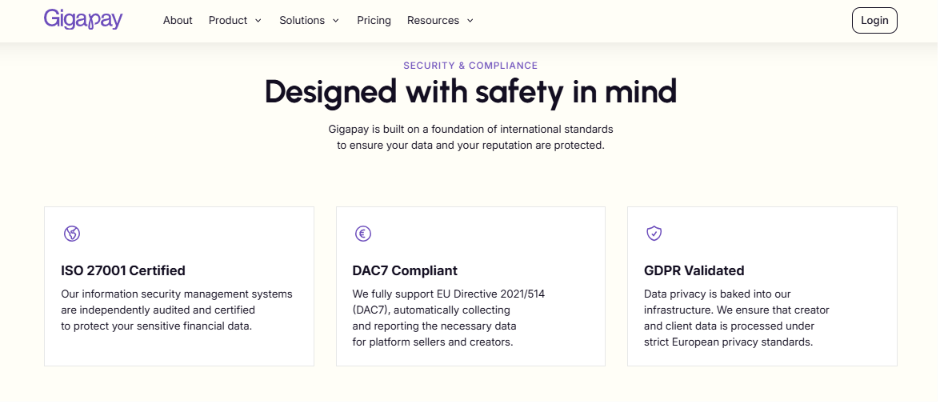
This is general information, not tax advice.
For your tax team, the question to settle in each market is which party the rule attaches to: the payer, the commissioning client or the creator.
How Do Cross-Border Payments And Currencies Work For European Creators?
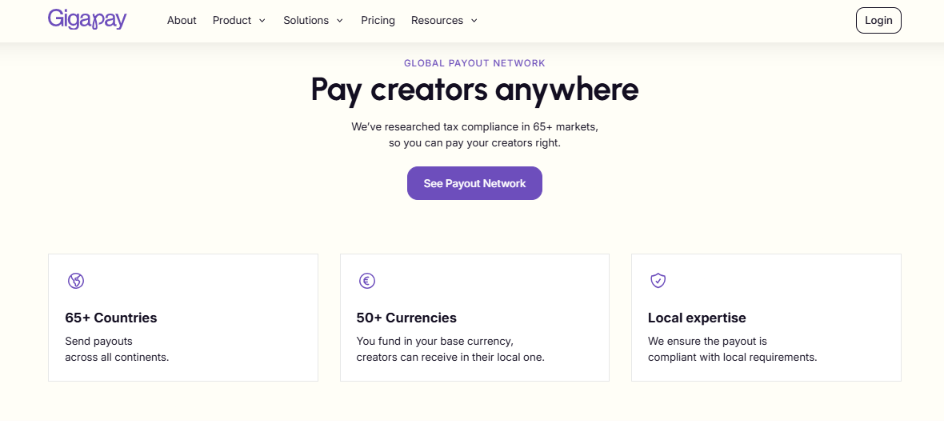
TikTok Shop's ten European markets use three currencies. Eight markets use the euro, the UK uses the pound and Poland uses the zloty.
Agree the currency in the contract. Paying in the creator's local currency removes the conversion the creator's bank would charge. If you pay a Polish creator in euros, state who carries the conversion cost.
Match the payment route to the currency. Euro payments between SEPA countries move as SEPA credit transfers. Pounds and zloty need a local payment route or a currency conversion on your side.
Record the rate. When your budget is in one currency and the payment in another, record the exchange rate and the date against each payment.
Check VAT on cross-border services. Under the EU VAT Directive's general rule, a service supplied between VAT-registered businesses in two member states is taxed where the customer is established. Ask your tax adviser how this applies to each creator invoice.
Gigapay's guide to GBP, EUR and local currency payouts covers the currency decision in more depth.
For your treasury lead, three currencies across ten markets is manageable once every contract names its currency.
How To Pay TikTok Shop Creator Flat Fees And Retainers Step By Step
The same seven steps work for 10 creators or 500. A monthly cycle suits retainers, and flat fees join the next cycle after approval.
- Separate the two payment types: Set commission in Seller Center and leave it there. List every flat fee and retainer in your own tracker.
- Confirm each creator's details: Record legal form, country, VAT status, tax ID and payout currency.
- Sign the agreement: Use the nine points above and store the signed copy with the campaign file.
- Onboard the creator: Verify identity and bank details before the first payment.
- Approve the work: Record the approval date for each video or LIVE, and confirm the month's retainer output.
- Pay and document: Pay in the agreed currency, and make sure each payment has an invoice or an equivalent document.
- Reconcile: Match every payment to its campaign, market and cost centre, then compare creator totals with TikTok Shop's commission data.
Write one payment date, such as the 10th of the month, into every creator agreement.
For your operations lead, one fixed pay date each month answers most creator payment questions before they are asked.
Which Payment Method Fits A Multi-Country TikTok Shop Creator Programme?
Five methods cover fixed fees for TikTok Shop creators. We compared them on 28 November 2026 against three criteria: who onboards the creator, how many documents reach finance and which fee types the method covers.
| Method | Who onboards the creator | What finance receives | Fee types covered |
|---|---|---|---|
| TikTok Shop flat fee | TikTok Shop | A flat fee payment record in Affiliate Center | Single videos only |
| Bank transfer per invoice | Your team, as a supplier | One invoice per creator, per payment | All, if the creator can invoice |
| Batch transfer tool | Your team | One invoice per creator, plus a batch record | All, if the creator can invoice |
| Agency pays and re-invoices | The agency | One agency invoice | All, with the same admin moved to the agency |
| Merchant of Record | The Merchant of Record | One consolidated invoice per batch or campaign | Flat fees and retainers |
Scroll sideways to see all columns
What the manual route costs. Take 50 creators on monthly retainers, which is 600 payments a year. At an assumed 15 minutes per payment, that is 150 hours of team time.
The average UK accounts payable specialist earns a base salary of £27,659, according to PayScale (updated June 2026). Over 1,650 working hours, those 150 hours cost about £2,510. Processing one invoice also costs a median of $6.00 in total, according to APQC's Open Standards Benchmarking, as reported by Corpay (2026).
On those three criteria, the Merchant of Record model is the best fit for programmes paying 20 or more creators in several markets.
For your decision, count the creators, markets and monthly payments you expect in 2027, then choose the method that carries that volume.
How Gigapay Pays TikTok Shop Creators Flat Fees And Retainers
Gigapay sits beside TikTok Shop. TikTok Shop keeps paying commission, and fixed fees run through Gigapay in six steps:
- The client signs one Service Agreement with Gigapay and adds creators and amounts by spreadsheet upload, the app or the API.
- Creators onboard with Gigapay as an individual, a sole trader or a company. Gigapay runs identity and tax-ID checks at onboarding.
- When the client approves the work, Gigapay undertakes to buy the creator's services and issues the client a consolidated invoice.
- The creator claims the payout in Gigapay. At the claim, Gigapay buys the services and resells them to the client.
- The payout is executed by a licensed third-party payment provider.
- Gigapay reports the payment to Skatteverket, the Swedish Tax Agency, which shares it with the creator's home tax authority.
A flat fee is one row in the upload. A monthly retainer is one row in each month's batch.
Tax and reporting: For the creator's fee we're the payer, not you: we pay them and report the payment. Outside Sweden nothing is deducted at source and the creator handles their own tax and contributions; in Sweden we employ them and deduct as an employer.
VAT: The client's VAT is on Gigapay's invoice, not on a creator invoice, because the creator supplies Gigapay and Gigapay invoices you.
Gigapay pros and cons
| Pros | Cons |
|---|---|
|
|
Scroll sideways to see all columns
Creator onboarding takes about 10 minutes. The Supported Markets page lists where Gigapay pays creators, and the pricing page shows current fees. In published case studies, WPP Media reports 80% fewer invoices and Boozt reports 3x collaborations without growing the team.
For your European programme, a Polish individual, a German sole trader and a UK company can all sit in the same monthly upload.
What Are The Common Mistakes When Paying TikTok Shop Creators Fixed Fees?
Most payment problems in TikTok Shop programmes start before the first payment. These seven appear most often.
- Treating commission and fees as one payment. TikTok Shop pays commission, so your agreement must say who pays the rest.
- Assuming the creator can invoice. An individual cannot issue an invoice, and many TikTok Shop creators are individuals.
- Agreeing the fee before checking tax status. VAT status and local withholding rules affect the fee you should agree.
- Paying every market in one currency. Creators in Poland and the UK then carry a conversion cost they did not agree to.
- Planning around a feature you have not checked. Confirm in Seller Center that TikTok Shop's flat fee is available in your market.
- Missing the client-side duties. Germany's KSK attaches to the client commissioning the work, whichever way the creator is paid.
- Running retainers with no end date. Open-ended terms with close direction raise employment-status questions.
For your programme owner, mistakes 1, 2 and 3 are fixed by one onboarding form sent with the first brief.
How Should Finance Reconcile Fixed Fees With TikTok Shop Commission Data?
A hybrid creator has two cost lines in two systems. Commission appears in TikTok Shop's settlement data, and fixed fees appear in your payables.
Use one creator ID. Record each creator's TikTok handle next to the ID in your payment file. Finance can then join both sources without matching names by hand.
Report total creator cost by market. Add commission from Seller Center exports to fixed fees from your payment file. Compare the total with the GMV each creator drove.
Keep the right records. When you pay creators directly, keep each agreement, onboarding record, invoice or equivalent document, approval and proof of payment. When you pay through Gigapay, the client keeps Gigapay's invoice, the contract and proof of payment.
Gigapay's guide on how to pay affiliate commission and flat fees covers the batch file in more detail.
For your controller, one creator ID across both systems turns a two-day reconciliation into a lookup.
What Changes For TikTok Shop Creator Payments In Europe In 2027?
Three dated changes affect how you plan creator payments for 2027.
| Change | Date | What to do |
|---|---|---|
| Germany’s KSK levy rises from 4.9% to 5.0% | 1 January 2027 | Update the rate in your German campaign budgets |
| French small businesses must issue e-invoices | 1 September 2027 | Ask French sole traders and companies how they will invoice you |
| UK sellers can sell into 12 EU countries through Sell Across Europe | Since 19 October 2026 | Expect UK creators to earn cross-border commission |
Sources: Federal Ministry of Labour and Social Affairs (July 2026), impots.gouv.fr and Lengow (November 2026).
Scroll sideways to see all columns
Market coverage can change quickly. TikTok's Newsroom and the Seller Center country selector are the places to confirm where TikTok Shop is live before you brief creators in a new country.
For your 2027 plan, set a quarterly review of markets, rates and local rules, and update your creator agreement template after each one.
Conclusion
Gigapay is the Merchant of Record for creator payments.
TikTok Shop pays affiliate commission inside its own platform, and the flat fees and retainers you agree beside it need their own contract, documents, currency and payment route. Across ten European markets, that means checking each creator's legal form, VAT status and country rules before the first payment, then running one monthly cycle.
Book a demo to see how your TikTok Shop creator fees would run through one vendor and one consolidated invoice.
Read Next:
- How to Pay Affiliate Commission and Flat Fees to the Same Creator in One Batch (2026)
- How to Pay Creators in 10 European Markets on One Invoice (2026 Cost by Country)
- How to Pay TikTok Creators in Other Countries When TikTok One Won't (2026)
FAQs:
1. How do you pay TikTok Shop creators flat fees and retainers across Europe?
You pay TikTok Shop creators flat fees and retainers across Europe by signing a written agreement and confirming each creator's legal form and tax details. You then approve the work and pay and document each payment in the agreed currency. Larger programmes often use a Merchant of Record, which gives the client one consolidated invoice.
2. Does TikTok Shop pay creators flat fees or only commission?
TikTok Shop pays creators affiliate commission, and it also offers a flat fee structure inside target collaborations. TikTok's help centre (updated August 2025) says the flat fee is available for video only. Retainers and other fixed fees agreed outside the platform are paid by you or your payment provider.
3. What is the difference between TikTok Shop affiliate commission and a creator retainer?
The difference between TikTok Shop affiliate commission and a creator retainer is who sets and pays it. Commission is a percentage of sales that TikTok Shop calculates and pays. A retainer is a fixed monthly amount you agree with the creator and pay yourself or through a payment provider.
4. Can you pay a TikTok Shop creator who has no company or VAT number?
You can pay a TikTok Shop creator who has no company or VAT number, but an individual cannot issue an invoice, so the payment needs documenting another way. With Gigapay, creators onboard as individuals, sole traders or companies, and no registered company or VAT number is needed.
5. What is the best way to pay TikTok Shop creators in several European countries?
The best way to pay TikTok Shop creators in several European countries is a Merchant of Record, according to our 28 November 2026 comparison of five methods. It fits programmes with 20 or more creators. With Gigapay, the client has one vendor record and receives one consolidated invoice per batch or campaign.