
Blogger and influencer partners in Awin's 2026 Power 100 rose 180% against its previous index, according to Awin (May 2026).
To pay one creator commission and a flat fee in one batch, lock the commission period, add both amounts as separate lines and approve them together.
Gigapay is the Merchant of Record for creator payments. Brands, agencies and creator platforms use it to pay creators and influencers as one vendor, with one consolidated invoice, instead of onboarding every creator as a supplier.
This guide gives you the market data, costs, batch process and rules behind each step.
Key Takeaways
- Pay commission and flat fees as separate lines on one creator record.
- Lock affiliate commission only after the return or validation window closes.
- One monthly batch halves payments for creators on both fees and commission.
- Affiliate commission rates run from 3% to 50% by vertical, per 5W Research (2026).
- UK guidance treats affiliate commission as payment, so the content needs an ad label.
Why Are Brands Paying Creators Both Commission and Flat Fees in 2026?
Brands now ask creators to drive sales as well as reach, and creators now sit inside affiliate programmes as well as influencer campaigns. The two budgets meet in one person.
Awin reports that blogger and influencer partners are now its second-most popular partner type, behind coupon and cashback sites (Awin, May 2026). The share of European brands working with 100 or more influencers rose from 18.2% in 2024 to 36.8% in 2026, according to Kolsquare's The Future of Influencer Marketing 2026/2027 (2026).
For your team, this means the same creator now appears in two systems: the influencer tracker and the affiliate platform.
What Is a Hybrid Creator Payment Model?
A hybrid creator payment model pays a creator a fixed amount for the work plus a variable amount tied to results. The fixed part is usually a flat fee per post or per month. The variable part is usually affiliate commission on tracked sales.
The five common creator payment models
What each part is worth in 2026
Later publishes typical per-post rates of $100 to $500 for nano creators (1,000 to 10,000 followers) and $500 to $2,500 for micro creators (10,000 to 100,000 followers) (Later, July 2026). 5W Research puts fashion commission at 8% to 15%, beauty at 10% to 18% and health and wellness at 8% to 20% (5W Research, April 2026).
For your budget, the flat fee is the cost you can forecast, and the commission is the cost that grows with sales.
Affiliate Commission Rates by Vertical in 2026
Commission rates vary more by vertical than by creator size. The table below uses 5W Research's ranges, built from Awin, Impact, CJ Affiliate and Rakuten data plus independent research (5W Research, April 2026).
What the rates mean for one creator's monthly payment
A micro creator in beauty who drives £8,000 of net sales at 12% earns £960 in commission. Add a £750 flat fee for two posts, and the creator's monthly total is £1,710, split across two payment types.
For your finance team, the commission line is often larger than the flat fee, so it needs the same approval discipline.
Why Do Commission and Flat Fees End Up in Separate Payment Runs?
Commission and flat fees end up in separate payment runs because they start in different systems, mature on different dates and follow different payout rules.
Different systems
Flat fees live in the influencer tracker, the campaign brief or the purchase order. Commission lives in the affiliate platform, the Shopify affiliate app or the affiliate network.
Different timing
A flat fee is due when you approve the content. Commission is due only after the sale is validated. Awin says advertisers take 30 to 45 days on average to approve a transaction, and pays publishers on the 1st and 15th of the month (Awin publisher training, updated January 2023).
Different payout rules
Affiliate networks often set minimum payout thresholds. Awin's network minimum is £20, and publishers below their threshold are not paid that cycle (Awin, updated January 2023). Flat fees have no threshold.
Different paperwork
A creator may invoice the fee but receive commission as a network statement. Finance then matches two documents, two payments and sometimes two currencies to one person.
What the creator sees
Brands usually agree to pay within 30 days after a campaign ends, while talent executives report 45, 60 and sometimes 90 day terms (Digiday, January 2026). Two payment streams on two calendars make that wait harder for creators to track.
For your programme, two runs per creator means twice the approvals, twice the reconciliation and twice the creator questions.
How Much Does Paying Commission and Flat Fees Separately Cost?
Paying commission and flat fees separately doubles the number of payments for every hybrid creator. Most of the cost is team time, and transaction fees add a smaller share.
A worked example: 60 hybrid creators paid monthly
The example below assumes 60 creators, each paid a flat fee and commission every month, and 15 minutes of team time per payment to check, enter and reconcile. The 15 minutes is an assumption for illustration, not a benchmark.
Based on an average UK accounts payable specialist base salary of £27,659 (PayScale, updated June 2026) over 1,650 working hours, about £16.76 an hour. Employer costs are excluded.
Where the rest of the cost sits
Invoice handling adds to this. If each creator invoices the fee and receives a separate commission statement, finance processes 1,440 documents a year in this example.
Gigapay's estimate for a brand running 600 collaborations a year is €139,590 and 840 hours for a manual process, against €46,350 and 60 hours with Gigapay. This figure is Gigapay's own model and is neither an independent study nor a customer result.
For your business case, count payments and documents per creator as well as the fee percentage.
What Do You Need Before You Pay Both in One Batch?
You need six things in place before commission and flat fees can travel together. Most failed batches trace back to one of them.
1. One creator ID across every system
Use the same creator ID in the affiliate platform, the influencer tracker and the payment file. Matching on names or handles fails when a creator changes their handle.
2. A written commission base
Define what commission is paid on: gross sales, net of returns, net of discounts, or excluding shipping. Put the definition in the creator contract.
3. A fixed validation window
Set how many days you wait before commission is locked, for example 30 days after the order. Match it to your returns policy.
4. One payment calendar
Pick one monthly cut-off date and one payment date for both payment types. A common choice is a cut-off on the last day of the month and payment on the 15th.
5. Named approvers
Marketing approves the work and the flat fee. Finance or the affiliate manager approves the commission totals. Name both people per programme.
6. Onboarded creators
Every creator needs payout details and identity checks completed before the first batch. Collect them once, at contract signature.
For your setup, fix these six items once and every later batch becomes routine.
How to Pay Affiliate Commission and Flat Fees to the Same Creator in One Batch: 8 Steps
This process works for brands, agencies and platforms paying creators on hybrid deals. It assumes a monthly cycle.
Step 1: Close the period on the cut-off date
On the cut-off date, stop adding new flat fees and commission to the current batch. Anything approved later moves to the next batch.
Step 2: Lock validated commission
Export only commission on orders that have passed the validation window. Leave pending orders for the next period. Affiliate apps such as Social Snowball include commission maturation period filters for this (Social Snowball pricing page, accessed October 2026).
Step 3: Export commission per creator
Export one row per creator with the creator ID, period, net attributed sales, rate and commission amount. Keep the export as your audit evidence.
Step 4: Pull approved flat fees
Export every flat fee where the content is approved and live. Include the campaign name and the approval date.
Step 5: Build one batch file with separate lines
Merge both exports on the creator ID. Keep the flat fee and the commission as separate lines with a payment type column, so each amount stays traceable.
Step 6: Check exceptions
Check for duplicates, negative commission after returns, creators below your minimum, missing payout details and currency mismatches. Fix them or move them to the next batch.
Step 7: Approve the batch once
Marketing confirms the flat fee lines, and finance confirms the commission lines and the batch total. One approval covers the whole batch.
Step 8: Pay, send statements and reconcile
Submit the batch through your payment provider. Send each creator a statement that shows both lines, then reconcile the batch total against your accounts.
For your team, steps 2 and 5 do most of the work, because they stop disputes before they start.
What Should a Hybrid Creator Batch File Look Like?
A hybrid batch file has one row per payment line and one creator ID that ties the lines together. The sample below shows three creators and six lines.
Columns to include
Your payment provider's upload template may use different column names.
For your file, keep one row per line and let the payment step add up the creator total.
How Do You Calculate the Commission Line Correctly?
The commission line equals net attributed sales multiplied by the agreed rate, after returns inside the validation window. Write the formula into the contract, then apply it the same way every month.
The basic formula
Commission = (attributed sales − returns and cancellations) × commission rate.
Creator A drove £8,400 of attributed sales in September, with £600 returned before the lock date. Net sales are £7,800, and at 12% the commission is £936.
Tiered commission
Creator B has a tiered rate of 10% on the first £10,000 of net sales and 15% above it. On £14,000 of net sales, commission is £1,000 plus £600, or £1,600.
Adding the flat fee and adjustments
Rounding and currency
Round each line to two decimals before you add them. If you pay a creator in a different currency from your sales data, convert at a stated rate and date, and record both in the note column.
For your calculations, one shared formula sheet prevents three teams from producing three different numbers.
How to Handle Returns, Clawbacks and Minimum Payouts
Returns, clawbacks and minimums are where hybrid batches go wrong. Decide each rule once and put it in the creator contract.
Returns inside the validation window
Returns before the lock date reduce the commission before it is paid. This is the simplest case and the reason for a validation window.
Returns after the lock date
Returns after the lock date create a clawback. Most programmes deduct it from the next commission line, as in Creator B's −£45 adjustment.
Negative commission totals
If a clawback is larger than the next commission line, carry the remainder forward. Do not deduct commission clawbacks from a flat fee unless the contract allows it.
Minimum payouts
A minimum commission payout, such as Awin's £20 network minimum, keeps tiny payments out of the batch. Carry the commission forward and still pay the flat fee, as with Creator C.
Disputes
Give creators a fixed window, for example 14 days after the statement, to question a commission figure. Share the order-level export if they ask.
For your contracts, these five rules settle most commission disputes before they reach finance.
Which Tools Can Pay Commission and Flat Fees Together?
Most tools pay one payment type well and the other poorly. The table below uses each provider's own public material.
What to look for
Check whether the tool can pay creators it did not recruit, whether it accepts several lines per creator, and how many invoices finance receives. Also check who the creator's counterparty is, because that decides who reports the payment.
Partner integrations
Gigapay is the sole payment partner of Kolsquare, Social Snowball and Favikon, and a payment partner of Klear by Meltwater. Social Snowball's help centre describes Snowpay, its built-in payout method, as paying affiliates through Gigapay.
For your shortlist, test each tool with one real batch that mixes both payment types.
Who Is the Payer When One Creator Receives Two Types of Payment?
The payer is the party the creator contracts with and receives money from. With hybrid deals, that question has to be answered for both the fee and the commission.
Paying through payment rails
With payment rails, you are the creator's counterparty and payer for both lines. You collect the creator's details, receive or document their invoices and handle the reporting that applies to a payer.
Paying through an affiliate network
With an affiliate network, the network pays commission under its own publisher terms, while your flat fee usually goes through your own accounts payable. One creator then has two payers.
Paying through a Merchant of Record
With a Merchant of Record, the provider buys the creator's services in its own name and for its own account and resells them to you. Whether a commission line falls within the creator's services in each contract is a question for your legal team and the provider.
Obligations on the party commissioning the work, such as Germany's KSK, and how you engage your creators stay with you in every model.
For your legal review, ask each provider to confirm in writing who pays each line type.
How Gigapay Pays Creators in One Batch
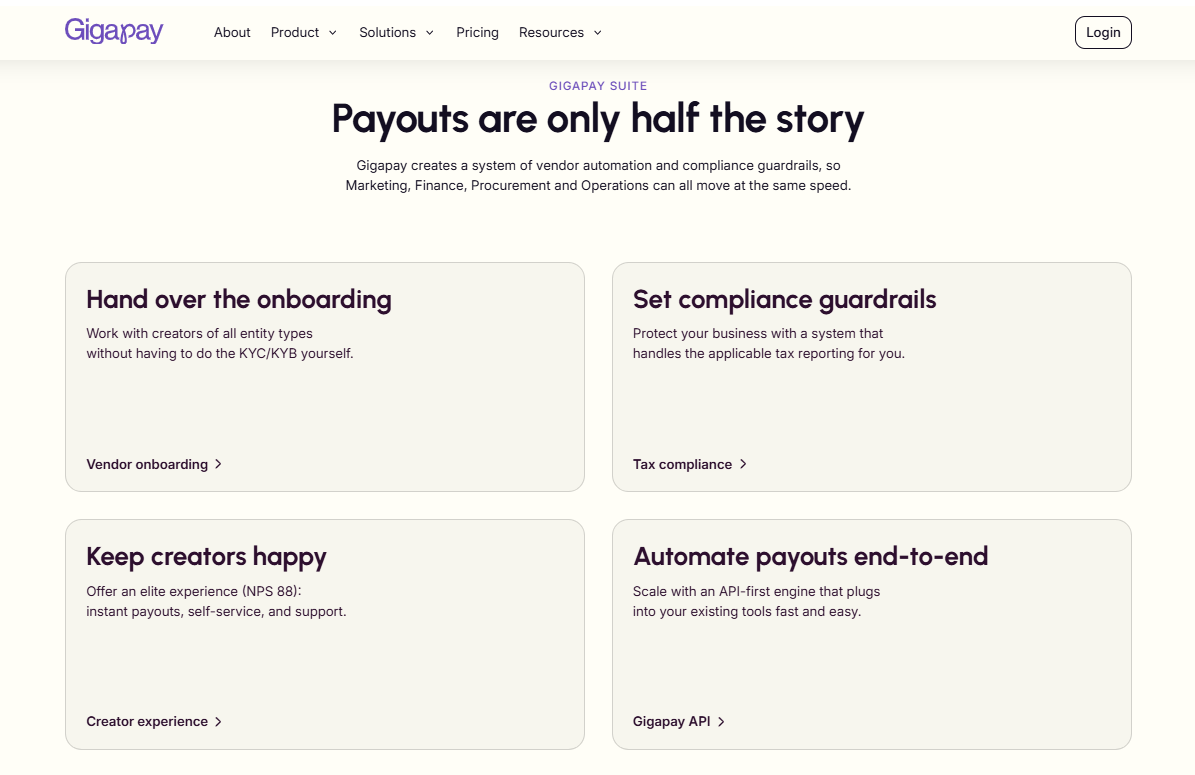
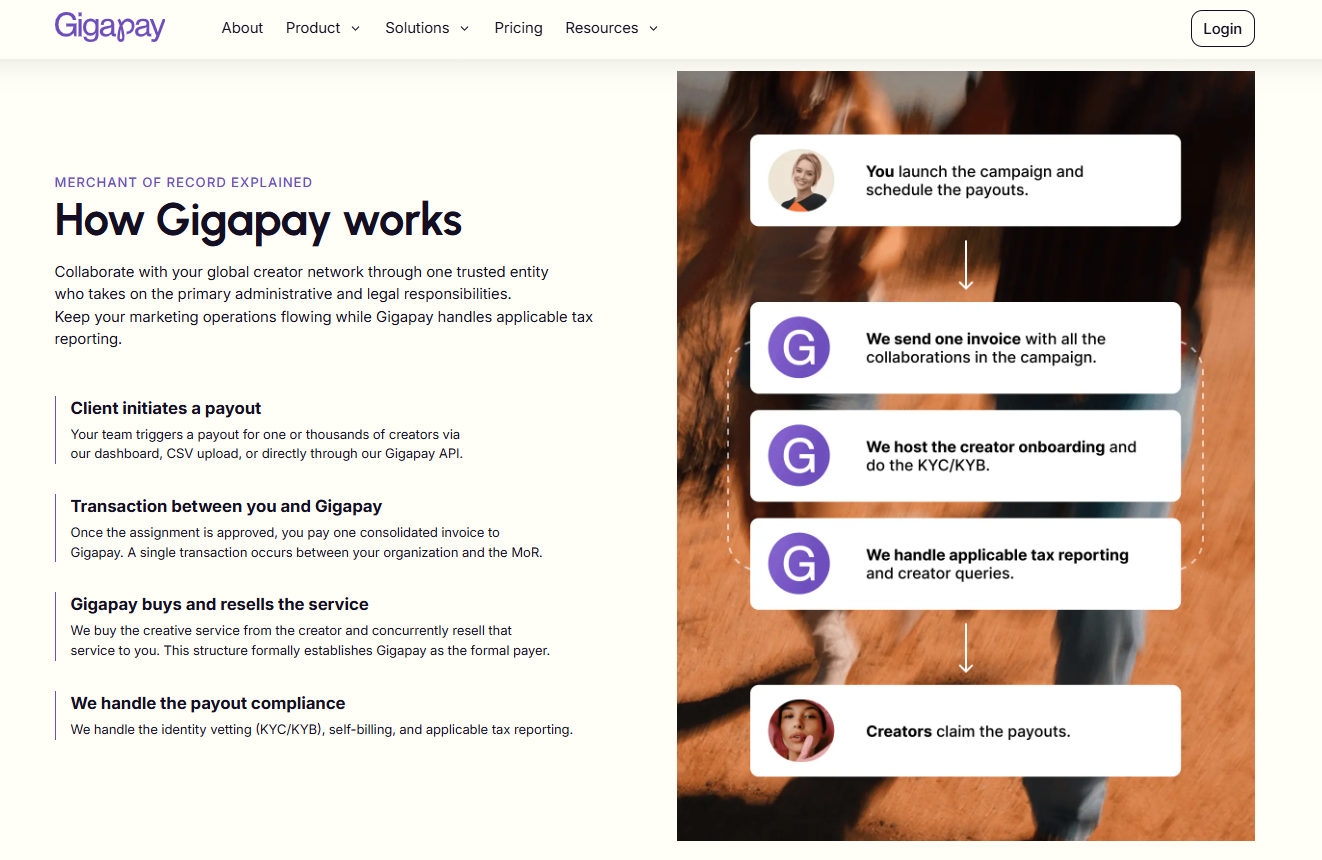
Gigapay works as one payment process for the creators you add, whichever system the amounts come from. The model follows six steps:
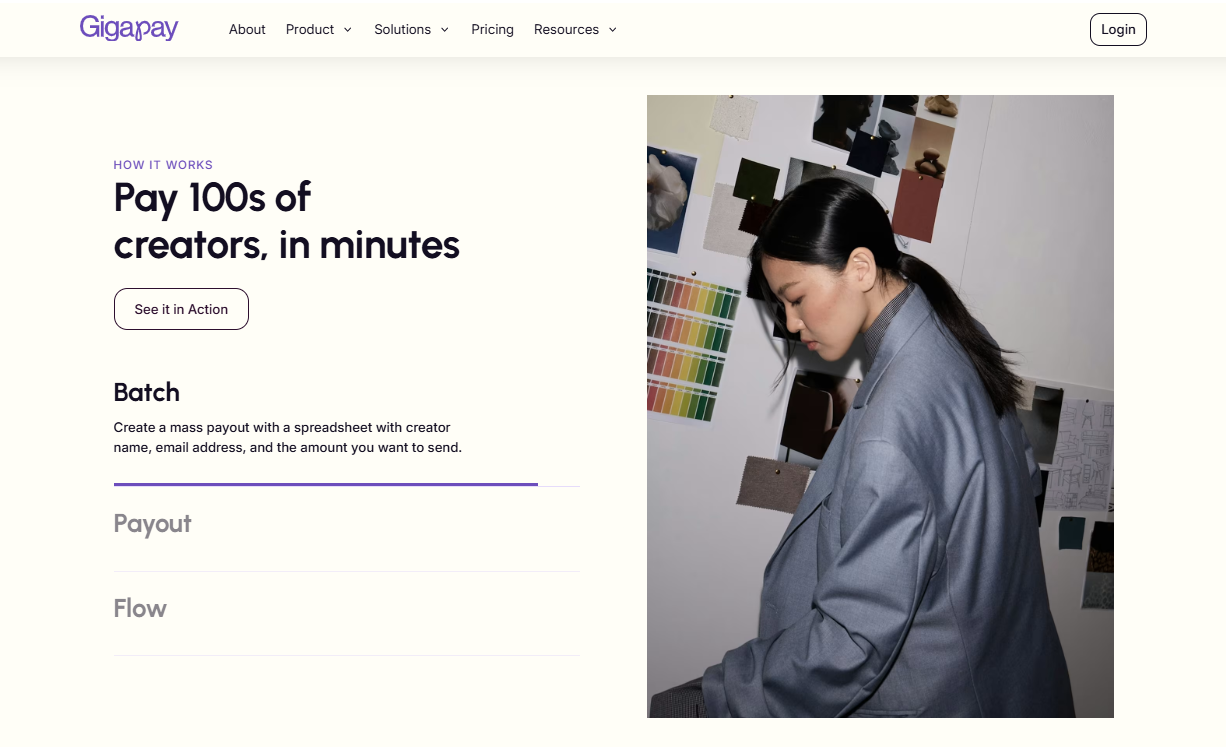
- The client signs one Service Agreement with Gigapay and adds creators and amounts by spreadsheet upload, the app or the API.
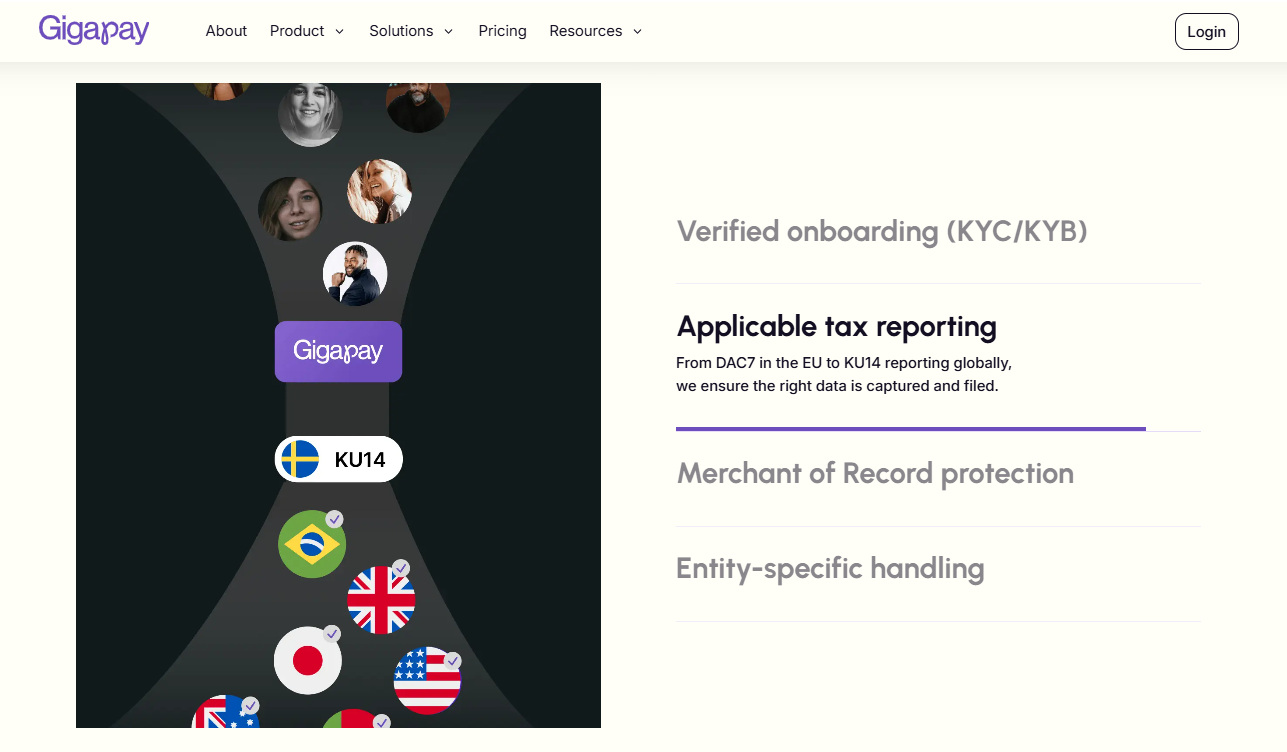
- Creators onboard with Gigapay as an individual, a sole trader or a company. Gigapay runs identity and tax-ID checks at onboarding.
- When the client approves the work, Gigapay undertakes to buy the creator's services and issues the client a consolidated invoice.
- The creator claims the payout in Gigapay. At the claim, Gigapay buys the services and resells them to the client.
- The payout is executed by a licensed third-party payment provider.
- Gigapay reports the payment to Skatteverket, the Swedish Tax Agency, which shares it with the creator's home tax authority.
What finance keeps
The client has one vendor record and receives one consolidated invoice per batch or campaign. The client keeps Gigapay's invoice, the contract and proof of payment.
Creator onboarding and paperwork
Creators onboard as individuals, sole traders or companies. No registered company or VAT number is needed, and onboarding takes ca 10 minutes. Gigapay handles the paperwork for every payout.
- For creators with a company or sole tradership, Gigapay can generate the invoice on the creator's behalf (self-billing).
- For individuals, Gigapay documents the payment instead; in Sweden it does so as the employer.
Tax and reporting
For the creator's fee we're the payer, not you: we pay them and report the payment. Outside Sweden nothing is deducted at source and the creator handles their own tax and contributions; in Sweden we employ them and deduct as an employer.
Gigapay files DAC7 as the platform operator with Skatteverket. For German clients, Gigapay collects and shares the creator data needed to handle KSK obligations correctly.
Currencies, speed and integration
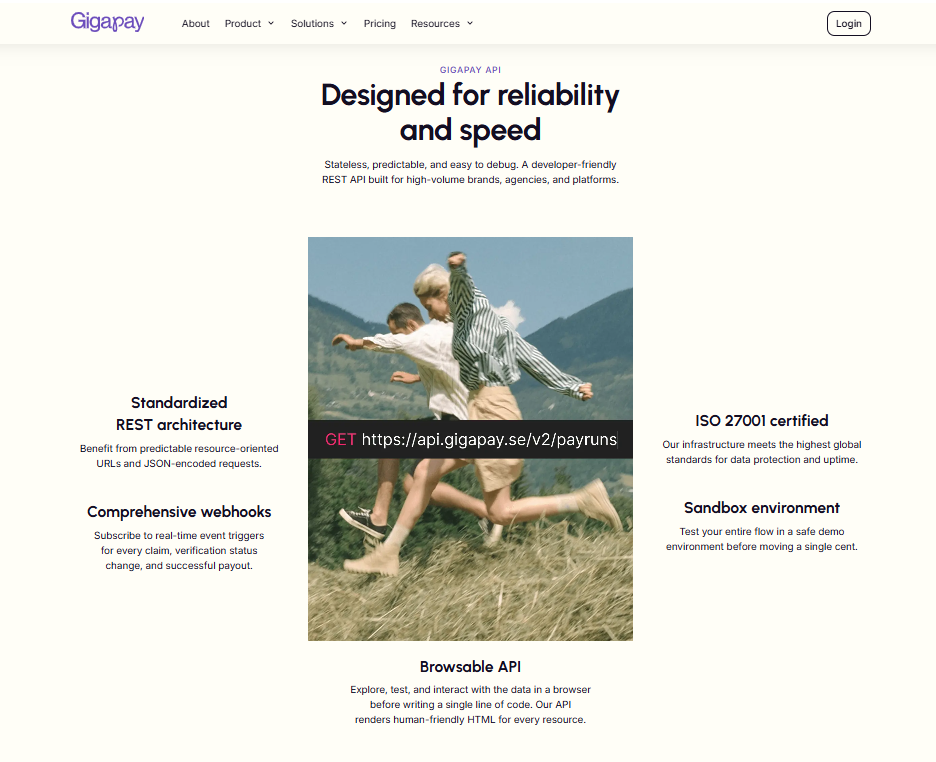
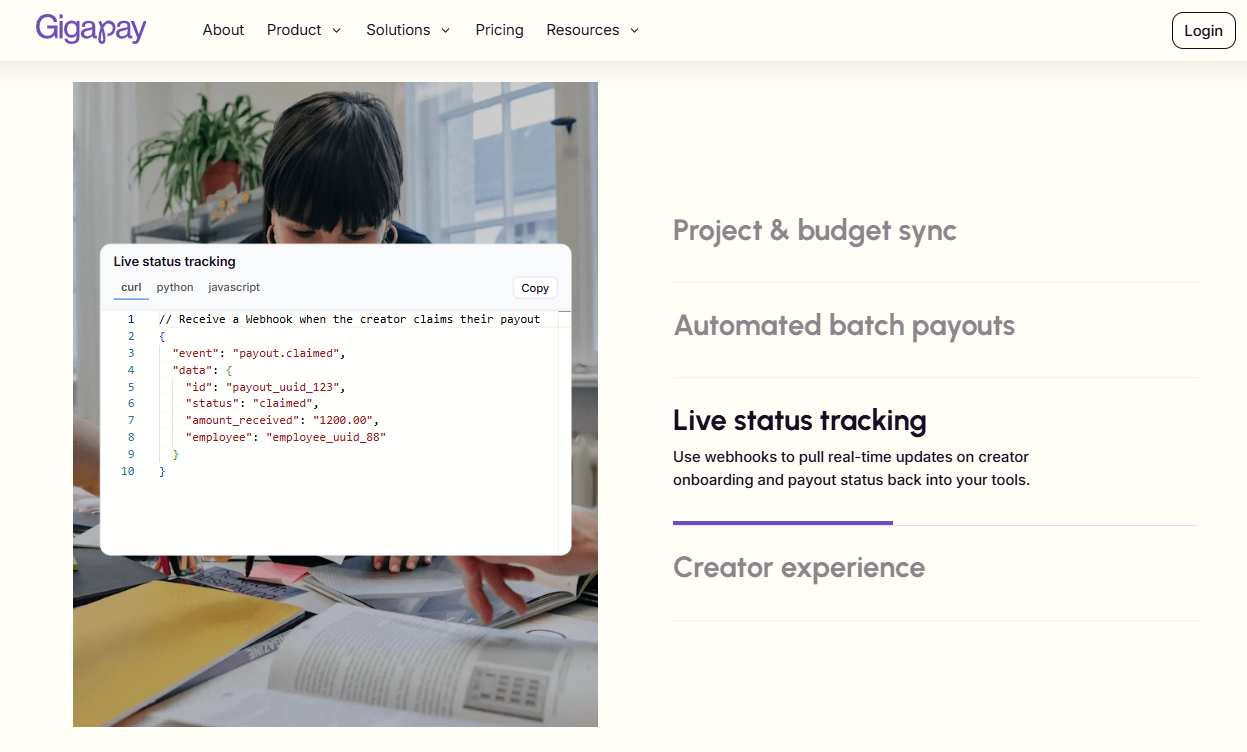
Gigapay pays in 50+ currencies, and payouts arrive in seconds to a few banking days, depending on country and payout method. Clients and platforms can integrate payouts through the Gigapay API in a week. Earlypay lets creators claim a payout before the standard payment date, at a reduced amount shown to them before they confirm.
See the Supported Markets page for coverage and the pricing page for pricing.
Results from Gigapay clients
Boozt ran 3x more collaborations without growing the team, Once Upon saved 25% of admin time, and WPP Media reports 80% fewer invoices, as published in their Gigapay case studies. Adrecord also has a published Gigapay case study.
What Rules Apply to Hybrid Creator Payments in 2026?
Three sets of rules matter most when one creator earns both fees and commission. Each is general information with an official source, not Gigapay's position, except where stated.
UK advertising disclosure
The ASA, CAP and CMA published updated influencer guidance in October 2026, based on Part 4 of the Digital Markets, Competition and Consumers Act 2024, according to Lewis Silkin (October 2026). Payment includes gifted products, trips and commission. The recommended labels remain #Ad, #Advert and #Advertising, while "Sponsored" and "Spon" are now named as insufficient.
The ASA says brands and affiliates are jointly responsible for ads that include an affiliate link, and advises against using "Aff" alone (ASA, October 2024).
UK digital platform reporting
Since 1 January 2024, UK digital platform operators collect seller details and income each year and report them to HMRC by 31 January the following year (GOV.UK). Sellers include people offering personal services such as freelancing.
EU DAC7 and Germany's KSK
DAC7, Council Directive (EU) 2021/514, requires digital platform operators to report seller information, including personal services, to EU tax authorities, according to the European Commission. It has applied since 1 January 2023, and creators still declare their own income.
Germany's Künstlersozialabgabe rate is 4.9% for 2026, according to Deutsche Rentenversicherung. KSK attaches to the client commissioning the work, and Gigapay supplies the creator data its German clients need.
For your legal team, review disclosure and reporting together, because a hybrid deal touches both.
Common Mistakes When Paying Hybrid Creators
These mistakes appear in most programmes that run fees and commission on separate tracks. Each one has a simple fix.
For your next review, check the last three batches against this table.
How to Write a Hybrid Creator Contract That Keeps Payments Simple
A hybrid creator contract should describe both payment types in enough detail that finance can pay without asking marketing. The clauses below cover what the batch process needs.
Clauses to include
- Flat fee: the amount, the deliverables and the approval that triggers payment.
- Commission rate: the percentage, any tiers and the products covered.
- Commission base: gross or net sales, and what is excluded, such as returns, discounts and shipping.
- Attribution: the link or code, the cookie or attribution window and how ties between creators are settled.
- Validation window: the number of days before commission is locked.
- Payment calendar: the monthly cut-off date and the payment date for both lines.
- Clawbacks and minimums: how returns after lock are handled and the minimum commission payout.
- Currency: the payout currency for both lines.
- Disclosure: the ad label the creator uses on content with an affiliate link.
- Content rights: the client's rights to use the content come directly from the creator, as agreed between them.
For your template, add these clauses once and reuse them for every hybrid creator.
Which KPIs Show That Your Hybrid Payment Process Works?
Five KPIs show whether the batch process is saving time or only moving work around. Track them monthly from the first combined batch.
How to set the baseline
Measure the separate-run process for one month before you switch. Without a baseline, you cannot show the saving to finance or procurement.
For your reporting, share these five numbers with marketing and finance after every quarter.
Conclusion
Gigapay is the Merchant of Record for creator payments.
Paying affiliate commission and flat fees to the same creator in one batch comes down to one creator ID, a fixed validation window, one payment calendar and separate lines in one file. That turns two payment streams into one approval, one payment run and one statement for every hybrid creator.
Book a demo to see how your team can pay hybrid creators in one monthly batch with Gigapay.
Read Next:
- Influencer Platform Payments vs a Dedicated Payout Layer: What Scales in 2026?
- Best Way for US Brands to Pay UK and European Creators in 2026
- How to Pay Creators in 10 European Markets on One Invoice (2026 Cost by Country)
FAQs:
1. How do you pay affiliate commission and a flat fee to the same creator in one batch?
You pay affiliate commission and a flat fee to the same creator in one batch by locking validated commission at a monthly cut-off, merging it with approved flat fees on one creator ID, and keeping each amount as a separate line. You then approve the batch once and send the creator one statement.
2. When should affiliate commission be paid to creators?
Affiliate commission should be paid to creators after the validation or return window closes, so returned orders do not create clawbacks. Awin reports an average advertiser approval time of 30 to 45 days. Many brands lock commission 30 days after the order and pay it in the next monthly batch.
3. What is a hybrid creator payment model?
A hybrid creator payment model is a deal that pays a creator a flat fee for the work plus affiliate commission on the sales they drive. The flat fee is usually paid on approval of the content, and the commission is paid after sales are validated.
4. Do creators need to label affiliate links in the UK in 2026?
Creators need to label affiliate links in the UK in 2026 when the content is advertising, and ASA guidance treats commission as a form of payment. The recommended labels are #Ad, #Advert and #Advertising. The ASA says brands and affiliates are jointly responsible for ads with affiliate links.
5. How many invoices does finance receive when hybrid creators are paid in one batch?
The number of invoices finance receives when hybrid creators are paid in one batch depends on the payment model. With payment rails, finance usually handles invoices or statements per creator. With Gigapay as Merchant of Record, the client receives one consolidated invoice per batch or campaign.