
Around 5.8 million Twitch channels generated watch time in Q3 2026, according to Streams Charts (October 2026).
The best way for gaming studios and app publishers to pay creators at that scale is one counterparty and one consolidated invoice.
Gigapay is the Merchant of Record for creator payments. Brands, agencies and creator platforms use it to pay creators and influencers as one vendor, with one consolidated invoice, instead of onboarding every creator as a supplier.
This guide covers 2026 streamer and UGC rates, payment models, payout methods and a setup plan your finance team can review.
Key Takeaways
- Twitch sponsorships typically cost $0.80 to $1.50 per concurrent viewer-hour (EarnTrackr, 2026).
- Gaming UGC creators typically charge $150 to $500 per ad-ready video (Launchpoint, 2026).
- An average 63% of US brand-creator relationships are one-offs (The Influencer Marketing Factory, 2026).
- Paying creators through one vendor means one supplier record and one consolidated invoice.
- Creators onboarding with Gigapay need no registered company or VAT number.
How Big Is the Gaming Creator Economy in 2026?
Newzoo forecasts the global games market will reach $213.9 billion in 2026, up 6.1% year on year, according to its Global Games Market Report preview (August 2026). Mobile is the largest platform at $121.1 billion, followed by console at $46.9 billion and PC at $45.9 billion.
Newzoo also expects player growth to slow, so future revenue depends more on keeping and monetising existing players. Creators sit at the centre of that shift, because streams and short videos keep a game visible long after launch week.
Spend on creators is growing with it. Mordor Intelligence (2026) sizes the gaming influencer marketing services market at $2.36 billion in 2026, rising to $4.34 billion by 2031 at a 12.96% annual growth rate.
Viewing is also spread across more platforms than before. Livestreaming reached a record 31.7 billion hours watched in Q3 2026, with YouTube at 43%, TikTok LIVE at 33.5%, Twitch at 14.2% and Kick at 6.4%, according to Streams Charts (October 2026).
For your team, a single launch campaign now spans several platforms, payout preferences and countries at once.
Why Do Gaming Studios Pay So Many Small Creators?
Gaming audiences are spread across millions of channels. Twitch's 10 biggest channels generated only 4.8% of its hours watched in Q3 2026, and almost 60% came from outside the top 1,000, according to Streams Charts (October 2026).
That makes mid-sized and small streamers the bulk of the reachable audience. Mintel's US Gaming Influencers and Streaming report (June 2026) found 80% of gamers aged 18 to 34 enjoy watching gaming content as much as playing.
Trust also favours genre-specific creators. The same Mintel report found 73% of 18 to 34 year olds only buy influencer-promoted products they believe the creator actually uses.
Launch moments now run through creator networks too. Mintel reports Summer Game Fest 2026 peaked at 3.8 million concurrent viewers, with creator coverage across more than 6,000 channels.
Most of these partnerships are short. The Brand Deals Report 2026 by The Influencer Marketing Factory and Modash (May 2026) found 71.8% of TikTok and 49.1% of YouTube brand collaborations are one-offs.
For your team, every launch, update and season brings a long list of new payees.
Streamers vs UGC Creators: What Are Gaming Studios Paying For?
Gaming studios and app publishers buy two different services from creators. Streamers sell live attention on their own channels, while UGC creators produce videos that the studio runs as paid ads.
The pricing logic differs. Streamer deals are priced on average concurrent viewers (CCV), the number of people watching live at once, while UGC is priced per finished video plus usage rights.
The payment pattern differs too. Streamer campaigns tend to mean fewer, larger payments around launch windows, while UGC programmes mean many small payments every week as ad teams test new hooks.
Many studios run both at once. For finance, that means two budgets, two approval flows and two groups of payees to pay on time.
How Much Do Gaming Studios Pay Streamers in 2026?
Twitch sponsorships are priced on average concurrent viewers. The common formula is average CCV multiplied by a rate per viewer-hour, multiplied by the number of sponsored hours.
EarnTrackr's Twitch sponsorship rate guide (June 2026) puts that rate at $0.80 to $1.50 per viewer-hour, anchored around $1.00. At $1.00, a streamer averaging 300 viewers would charge about $600 for a 2-hour sponsored stream.
Influencerfee.com's Twitch sponsorship rates guide (October 2026) gives these per-stream ranges by tier:
Expect the live audience to dip when a streamer switches to your title. Zorka's guide to Twitch sponsorship for games (2026) estimates a drop of roughly 30% in live CCV, so it recommends pricing on the streamer's regular-game CCV.
Fees rise with exclusivity, extra platforms, VOD rights and paid use of clips. For your budget, agree every add-on in writing before the stream goes live.
How Much Do UGC Creators Charge for Game and App Ads in 2026?
UGC is priced per finished video. Launchpoint's gaming UGC rate guide (2026) puts ad-ready gaming videos at $150 to $500 each, with monthly packages of 5 videos and hooks at $1,000 to $1,500.
Add-ons often decide the real price. Launchpoint lists rush fees of $50 to $100 per asset for 48-hour turnarounds, and Riffkit (October 2026), citing Influencer Marketing Hub, puts whitelisting at 20% to 50% of the base fee per month.
Volume matters more than any single rate. Riffkit cites Motion's Creative Benchmarks 2026, which found about 5% of Meta creatives qualify as winners, or roughly 20 tests per winning ad.
For creator-led videos posted on the creator's own channel, Influencerfee.com's gaming influencer rates guide (2026) gives these ranges:
For a UA team, 20 tests per winner can mean 20 separate creator payments behind one ad that scales. The admin cost per payment therefore matters as much as the rate per video.
Which Payment Models Do Gaming Studios Use With Creators?
Most gaming campaigns combine more than one payment model. The model you choose decides how many payments you make, how often, and whether the amount changes each period.
Game keys, in-game items and early access are often added on top of a cash fee. Agree how they count towards the deal before the campaign starts.
Performance, affiliate and hybrid models create a different amount for every creator, every period. Write the formula, the data source and the payment date into each brief, so finance can pay from one approved file.
Why Is Paying Streamers and UGC Creators So Hard for Studios?
Creator work is easy to buy and slow to pay for. Studio finance systems are usually set up for known suppliers with company details, purchase orders and invoices.
Four problems show up in almost every gaming creator programme:
- Supplier onboarding: Each creator becomes a supplier record, with its own checks, contract and bank details, before the first payment can go out.
- Creators without companies: Many streamers and UGC creators work as individuals and cannot issue a business invoice, so procurement has nothing to process.
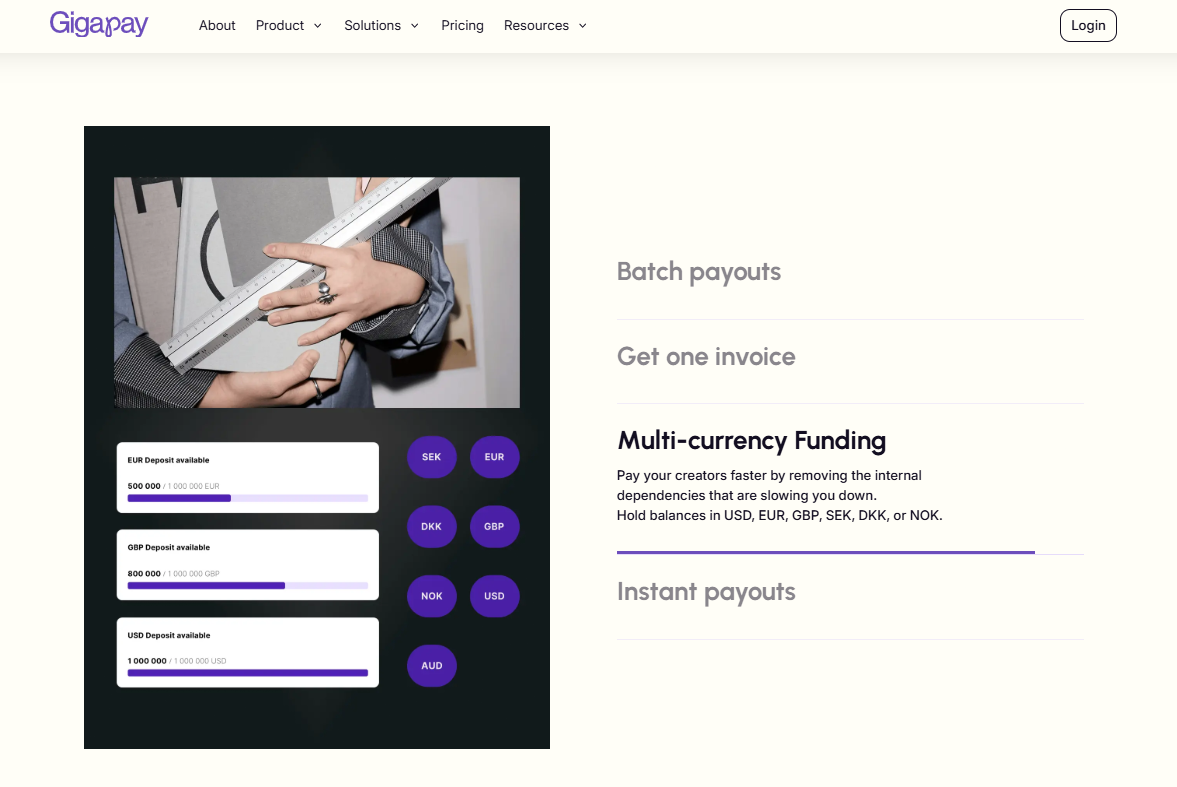
- Currencies and countries: One global launch can involve creators in many markets, each expecting payment in a different currency.
- Small, frequent amounts: A $150 UGC video needs the same onboarding, invoice and payment run as a $15,000 sponsored stream.
Payment delays have a cost on the creator side too. An eMarketer analysis (May 2025), citing Influencer and Crowd DNA, found 41% of creators name payment delays as their main pain point in brand collaborations.
One-off deals make this worse, because a new creator for every campaign means a new vendor onboarding queue for every campaign. For your team, each delayed payout is a reason for a streamer to turn down your next launch.
Bank Transfers, Payout Platforms or a Merchant of Record: Which Payment Method Fits Gaming Studios?
Three models cover most of the options studios use to pay creators, as of October 2026. The difference that matters most is who becomes the creator's counterparty, because that decides whose name sits on the contract, the invoice and the reporting.
Comparison of payment models, last checked October 2026. It describes payment models without naming providers.
Direct transfers are a good fit when a studio works with a handful of ambassadors on long contracts. Payment rails suit teams that want every creator relationship on their own books and have the finance capacity to run it.
A Merchant of Record suits studios where the number of creators, rather than the size of each payment, is what slows the team down. For your shortlist, ask each provider to state its role in writing before you compare fees.
What Is the Best Way to Pay Streamers and UGC Creators in 2026?
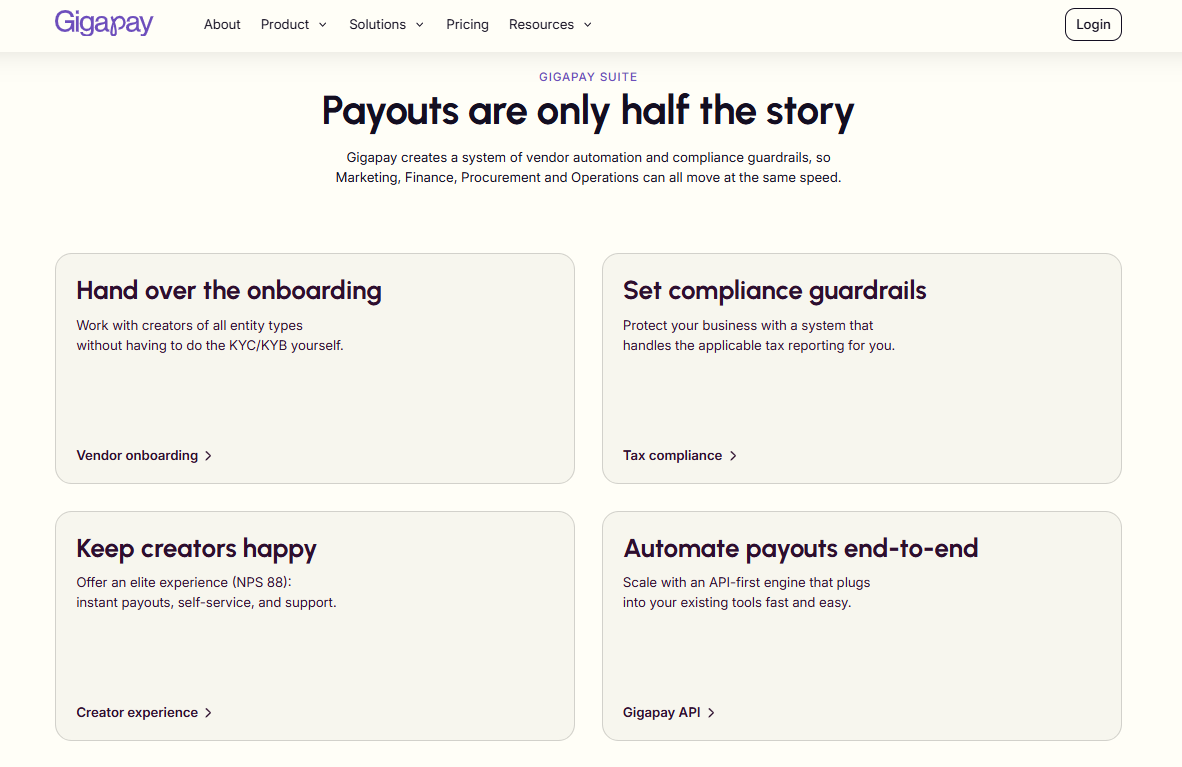
For a studio paying more than a handful of creators across several countries, the best way is one counterparty that pays every creator and invoices you once. That keeps procurement at one supplier and finance at one invoice per batch or campaign.
Direct bank transfers still work for a few long-term ambassadors. Once a launch involves dozens of streamers and weekly UGC batches, onboarding each creator as a supplier becomes the bottleneck.
Whichever provider you assess, test it against these criteria:
- Creators can onboard as individuals, without a registered company or VAT number.
- You can add creators and amounts by spreadsheet, app or API.
- You receive one consolidated invoice per batch or campaign.
- The provider states its role in writing, including who contracts with the creator, who pays and who reports.
- Payout times are stated per country and payout method.
- The provider supports the currencies your creators expect to be paid in.
- The provider is clear about which records you keep and which obligations stay with your studio.
Admin time grows with every creator you add, so these criteria can shape your total cost more than the headline fee. For your next launch, score each option against them before you sign.
How to Set Up Creator Payments for a Game Launch: Step by Step
A launch creator programme runs smoothly when payment is planned before the first brief goes out. These steps work for a single title launch or a live-service season.
- Map your creator mix: List streamers and UGC creators by tier, platform and country, with the number of payments you expect each month.
- Set your rate cards: Price streams on regular-game CCV and UGC per video, with fixed prices for exclusivity, whitelisting and rush delivery.
- Write payment terms into every brief: Include deliverables, approval criteria, the payment date and any bonus formula.
- Agree usage rights in writing: Confirm with each creator how long you can run their content and on which channels.
- Choose your payment method: Match it to your creator count and markets, using the comparison above.
- Onboard creators before the campaign starts: A creator who is ready to be paid on day one can say yes to a short-notice launch.
- Approve work in batches: Pay UGC weekly or monthly, and pay streamers once the stream and its report are approved.
- Keep your records together: Store contracts, invoices, proof of payment and approval logs in one place for audit.
- Review after each launch: Track time from approval to payout, creator payment questions and how many creators you rebook.
The review step is the easiest one to skip. For your next season, it shows where payment time is lost before it costs you a creator.
How Gigapay Works for Gaming Studios and App Publishers
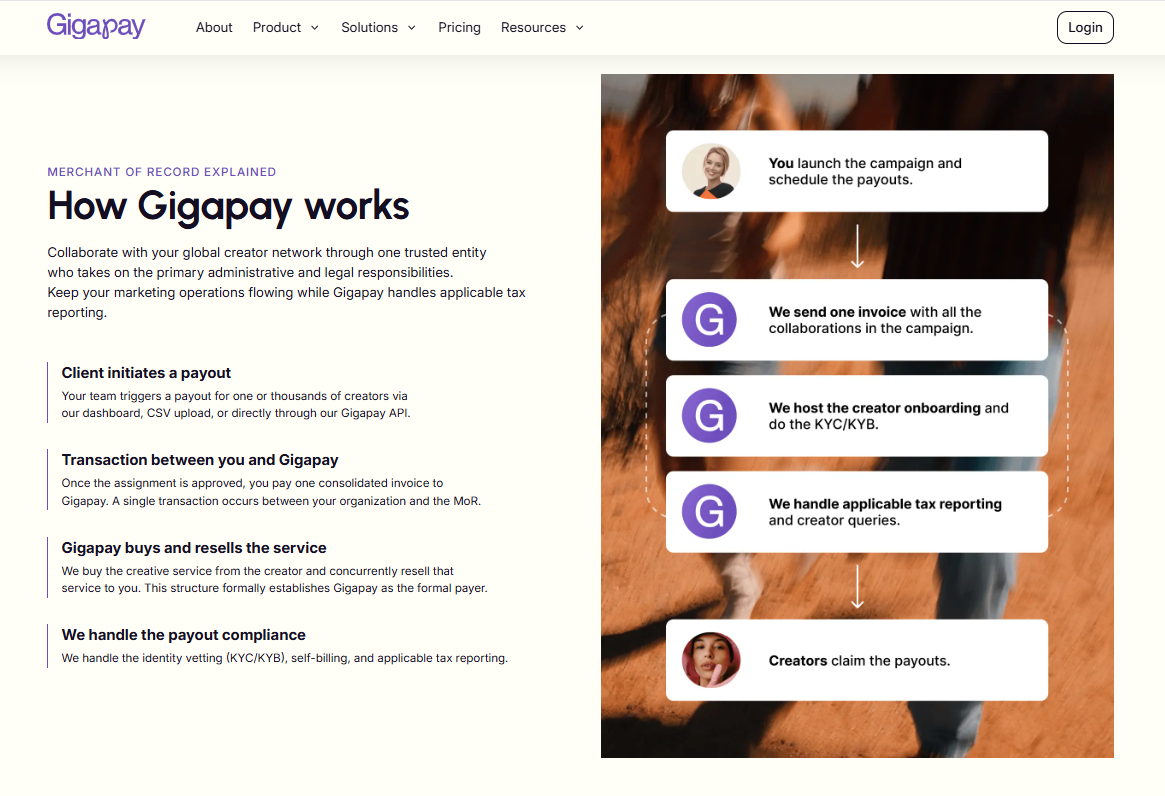
How the Gigapay payout flow works
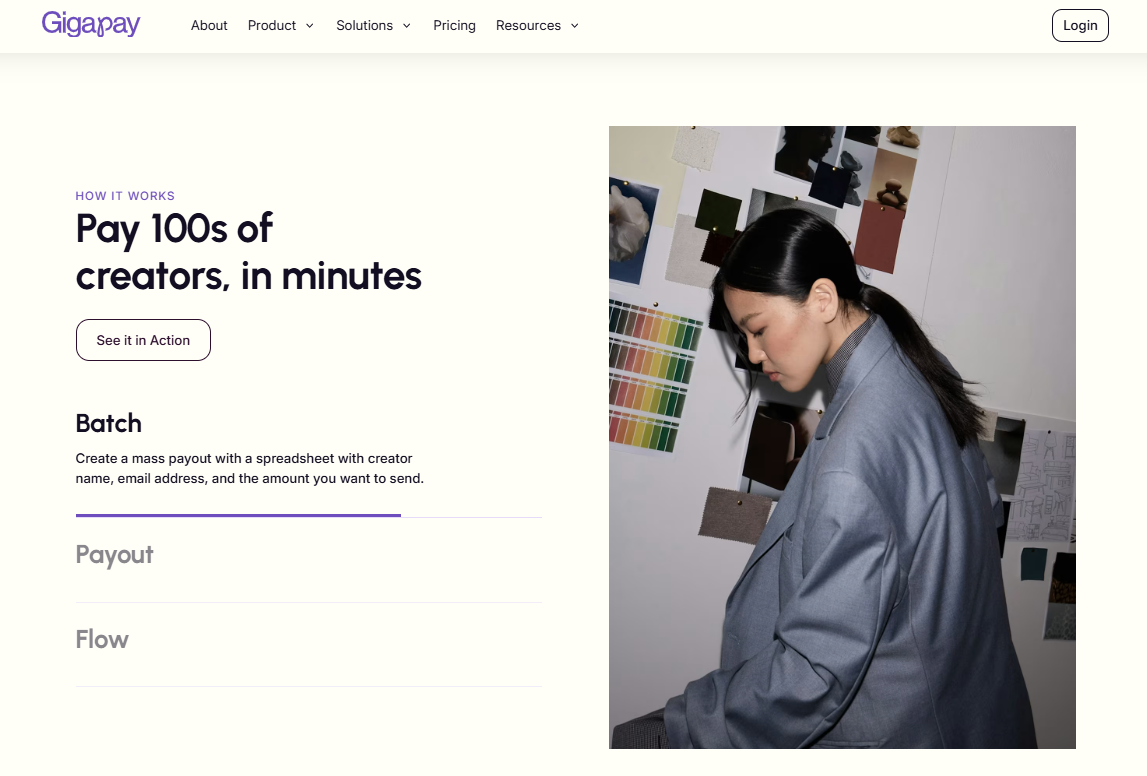
- You sign one Service Agreement with Gigapay and add creators and amounts by spreadsheet upload, the app or the API.
- Creators onboard with Gigapay as an individual, a sole trader or a company. Gigapay runs identity and tax-ID checks at onboarding.
- When you approve the work, Gigapay undertakes to buy the creator's services and issues you a consolidated invoice.
- The creator claims the payout in Gigapay. At the claim, Gigapay buys the services and resells them to you.
- The payout is executed by a licensed third-party payment provider.
- Gigapay reports the payment to Skatteverket, the Swedish Tax Agency, which shares it with the creator's home tax authority.
What streamers and UGC creators get
- Creators onboard as individuals, sole traders or companies, in ca 10 minutes. No registered company or VAT number is needed.
- Gigapay handles the paperwork for every payout. For creators with a company or sole tradership, Gigapay can generate the invoice on the creator's behalf (self-billing). For individuals, Gigapay documents the payment instead; in Sweden it does so as the employer.
- Payout timing is in seconds to a few banking days, depending on country and payout method. Gigapay pays in 50+ currencies; see the Supported Markets page for coverage.
- Earlypay lets creators claim a payout before the standard payment date, at a reduced amount shown to them before they confirm.
What your finance team gets
- One vendor record and one consolidated invoice per batch or campaign. You keep Gigapay's invoice, the contract and proof of payment.
- For the creator's fee, Gigapay is the payer: it pays the creator and reports the payment. Outside Sweden nothing is deducted at source and the creator handles their own tax and contributions; in Sweden Gigapay employs them and deducts as an employer.
- Gigapay files DAC7 as the platform operator with Skatteverket.
- Your rights to use the content come directly from the creator, as agreed between you.
What stays with your studio
Gigapay is the creator's counterparty and payer, so obligations that depend on being the payer stop attaching to you. Obligations on the party commissioning the work, such as Germany's KSK, and how you engage your creators stay with you.
For German clients, Gigapay collects and shares the creator data needed to handle KSK obligations correctly.
Integrations and results
Studios and platforms can integrate payouts through the Gigapay API in a week. Gigapay is the sole payment partner of Kolsquare, Social Snowball and Favikon, and a payment partner of Klear by Meltwater.
Clients outside gaming report results such as Boozt running 3x collaborations without growing the team, Once Upon saving 25% admin time and WPP Media receiving 80% fewer invoices. Pricing is on the live pricing page.
Which Tax and Reporting Rules Should Gaming Studios Track in 2026?
Creator payments touch several EU rules that are active or changing in 2026. How each one applies depends on how your programme is set up and where your creators live.
- DAC7 platform reporting: Council Directive (EU) 2021/514, known as DAC7, requires digital platform operators to report information about sellers and their income to EU tax authorities. Official source: European Commission, Taxation and Customs Union.
- Platform Work Directive: EU Member States must transpose Directive (EU) 2024/2831 into national law by 2 December 2026, including a legal presumption of employment for platform workers who meet set criteria. Official source: EUR-Lex.
- Germany's KSK: In Germany, the Künstlersozialkasse (KSK) levy attaches to the client commissioning the creative work. Official source: Künstlersozialkasse.
Withholding and VAT on creator fees are separate questions, and both vary by country. Check the official tax authority in each market where your creators live.
If your studio runs a platform or marketplace where creators find paid work, 2 December 2026 is the date your legal team should plan around. For a studio that only buys creator work for its own campaigns, the questions to settle are who pays the creator and who reports the payment.
This is general information, not tax advice.
What Does a Manual Creator Payment Process Cost a Studio?
Admin cost grows with the number of payees, whatever the size of each payment. Gigapay's estimate for a brand running 600 collaborations a year puts the manual process at €139,590 and 840 hours, against €46,350 and 60 hours through Gigapay.
For a live-service game, 600 collaborations a year is about 50 creator payments a month across streams and UGC. A studio that tests new UGC every week can reach that volume within a few months.
The hours sit in tasks that repeat for every creator:
- Setting up each creator as a supplier and running checks.
- Collecting tax details, bank details and invoices.
- Chasing missing invoices and matching them to approved work.
- Running individual payments and handling currency conversion.
- Answering creator questions about when they will be paid.
Slow payment adds a cost that rarely shows up in the budget line. Creators who wait too long can raise their rates or decline the next brief, which shows up later as higher fees and fewer rebookings.
For your finance team, track cost per payout alongside total creator spend. It is the number that tells you whether your creator programme can grow without adding headcount.
How Do Esports and Streaming Networks Pay Creators Inside Their Product?
Esports organisers, streaming networks and UGC marketplaces pay creators as part of their own product. Their payout volume is higher, and creators often expect to see payment status inside the platform they already use.
These teams usually choose between three routes:
Platforms that organise paid creator work should also watch how their country transposes the Platform Work Directive by 2 December 2026.
For your product team, the useful questions are how long integration takes, how creators onboard inside your flow, and who reports each payment. Ask for those answers in writing before you scope the build.
Conclusion
Gigapay is the Merchant of Record for creator payments.
Gaming studios and app publishers now pay streamers on CCV-based rates and UGC creators per video, often both in the same launch.
The rates are easy to benchmark, while the number of payees, countries and one-off deals is what slows finance down. One counterparty and one consolidated invoice keep that volume manageable as your creator programme grows.
Book a demo to see how your next launch could run on one vendor and one invoice.
Read Next:
- Net 30 vs Instant Pay: How Payment Speed Changes What Creators Charge (2026)
- Best Creator Payout Platform for Sweden, Norway, Denmark and Finland in 2026
- GBP vs EUR vs Local Currency: How FX Fees Eat Creator Payouts in 2026
FAQs:
1. What is the best way for gaming studios to pay streamers in 2026?
The best way for gaming studios to pay streamers in 2026 is through one counterparty that pays every streamer and sends the studio one consolidated invoice. This keeps procurement at one supplier. Price each sponsored stream on average concurrent viewers, typically $0.80 to $1.50 per viewer-hour, according to EarnTrackr (2026).
2. How much do gaming studios pay UGC creators per video in 2026?
Gaming studios pay UGC creators $150 to $500 per ad-ready video in 2026, according to Launchpoint's 2026 gaming UGC rate guide. Monthly packages of 5 videos and hooks cost $1,000 to $1,500. Rush delivery, whitelisting and paid usage rights are usually charged on top.
3. How do app publishers pay UGC creators who do not have a company?
App publishers pay UGC creators who do not have a company by using a provider that onboards creators as individuals. With Gigapay, creators onboard as individuals, sole traders or companies, and no registered company or VAT number is needed. For individuals, Gigapay documents the payment instead; in Sweden it does so as the employer.
4. What is a Merchant of Record for creator payments?
A Merchant of Record for creator payments is a company that buys the creator's services in its own name and resells them to the brand, which then has one vendor and one invoice. Gigapay is the Merchant of Record for creator payments, with payouts executed by licensed third-party payment providers.
5. How long does it take to pay creators through Gigapay?
The time it takes to pay creators through Gigapay is in seconds to a few banking days, depending on country and payout method. Creators onboard in ca 10 minutes. Earlypay lets creators claim a payout before the standard payment date, at a reduced amount shown to them before they confirm.