

The global creator economy reached $323.48 billion in 2026, up from $255.66 billion in 2025, growing at a 26.5% annual rate according to Research and Markets.
Gigapay is the Merchant of Record for creator payouts: the one vendor that pays your creators on your behalf by taking on the compliance, payouts, and support so you don't have to.
As that market compounds, the tools companies use to pay creators split into two camps: payment rails that move money and leave you holding the paperwork, and a Merchant of Record that becomes the legal counterparty and absorbs the liability.
This article compares Gigapay, Stripe Connect, Tipalti, and PayPal Payouts across pricing, compliance, payout speed, creator experience, and total cost of ownership, so you can pick the right platform for your creator program in 2026.
Key Takeaways
- Gigapay is the only Merchant of Record built specifically for EU creator payouts.
- Stripe Connect charges less per payment but leaves all tax liability with you.
- Tipalti fits supplier invoices; creators without registered companies struggle to onboard.
- PayPal cross-border payments can cost €16–20 each plus up to 4% FX.
- Manual creator payments cost €40–60 each once labor, FX, and compliance count.
The Creator Economy Professionalized. The Money Didn't.
Europe alone counts 8.6 million creators earning income, with creator marketing budgets compounding at roughly 26% per year. In the US, 75% of marketers now spend over $1 million annually on influencer marketing, and 50% of UK marketers do the same, according to the CreatorFest State of Creator Compensation 2026 report.
Rates for micro creators have risen 200–233% since 2024. This is a professional market with professional money moving through it.
The payment infrastructure behind that money still looks like 2015. Gigapay's 2024 State of Influencer Payments research, produced with Billion Dollar Boy, Meltwater, The Influencer Marketing Factory, and Wild, found creator payment terms stretching to 120 days.
The same CreatorFest data shows 88% of creators still treat content as a side hustle, and late, unpredictable payments are a large part of why. Meanwhile, agency markups on creator payments run 20–80%, a hidden inflation that finance teams rarely see itemized.
Every company scaling a creator program eventually hits the same wall: hundreds of individual creators, most without registered companies, each one a new vendor setup, a new invoice, a new tax question in a different jurisdiction. The platform you choose to solve that problem determines whether creator payments become infrastructure or a permanent operational tax.
2026 Is the Compliance Era of Creator Payments
The second thing that changed is enforcement. Regulators noticed the creator economy, and 2026 is the year the notices turned into audits.
DAC7 now requires platform operators across the EU to collect and verify seller tax data and report it annually, with German fines reaching €50,000 per reporting failure and Swedish penalties of SEK 2,500–12,500 per seller.
Germany runs the hottest enforcement in Europe: investigators in North Rhine-Westphalia opened roughly 200 proceedings over an estimated €300 million in suspected influencer tax evasion, Hamburg is auditing 140 influencers, and the Deutsche Rentenversicherung is running out-of-cycle KSK audits that reach back over retroactive years.
The KSK levy itself sits at 4.9% on commissioned creative work above €1,000, and it applies even when the creator lives abroad.
The calendar keeps filling. France mandates that all companies receive e-invoices from 1 September 2026. The EU Platform Work Directive, with its rebuttable presumption of employment, must be transposed by 2 December 2026. The DAC7 filing deadline lands every 31 January. Spain enforces IRPF withholding at 15% or 7% with Modelo 111, 190, and 238 filings.
Every payment to a creator is now a compliance event, and the four platforms in this comparison answer that fact in fundamentally different ways.
The Four Platforms at a Glance
The table shows the split in one line: Stripe, Tipalti, and PayPal move money and generate paperwork, while Gigapay becomes the counterparty and absorbs the liability. Nobody else in Europe combines liability transfer, payments to individuals without registered companies, payouts in seconds via pre-funding, and one counterparty for finance and procurement.
Gigapay: The Merchant of Record That Absorbs the Liability
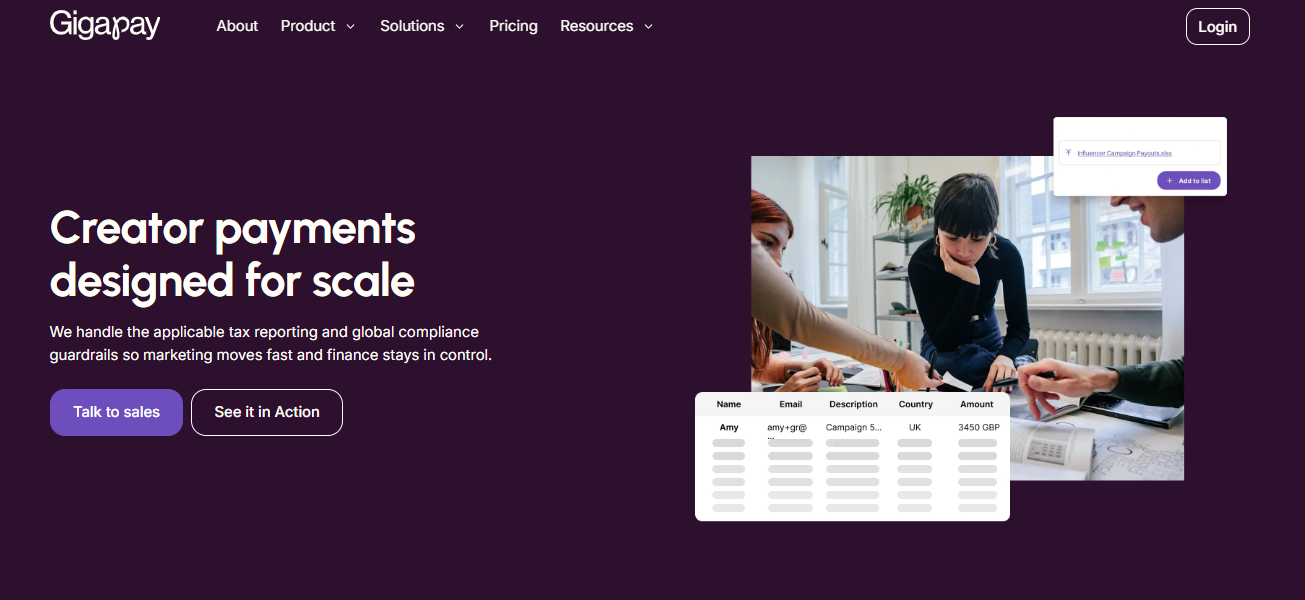
Gigapay, founded in Stockholm in 2018, built its entire product around one structural decision: instead of routing money between you and your creators, Gigapay becomes the payer of record.
You sign one contract and receive one consolidated invoice per campaign, and Gigapay pays every creator, verifies their tax status, handles self-employment admin, and files the reporting that regulators now enforce.
For marketing audiences, the translation is simple: Gigapay pays your creators on your behalf and takes the compliance, payouts, and support with it.
The numbers behind the model: 105,000+ payouts processed, 911 million SEK in total payment volume, creators paid in 40+ countries, and coverage across 65+ markets including the July 2026 addition of Spain within the same pan-EU setup.
Creators onboard in minutes without needing a registered company, which is exactly what unblocks nano and micro creator programs. Payouts land in seconds over local payment rails when campaigns are pre-funded, and Gigapay designs for pre-funding.
Creators who need money before a client pays can use EarlyPay at 4.0%. On all new plans, clients cover the fees, so your creators keep what they earn. The creator-side experience produces an internal creator NPS of 88.
On the compliance side, Gigapay automates and files DAC7 reporting as the platform operator, handles KU14 in Sweden and the KSK levy in Germany, and manages self-employment status for payees. That is the piece no rail or AP tool offers: when Skatteverket or a German auditor asks who verified a creator's tax status, the answer is Gigapay, not your finance team.
The customer evidence points the same direction:
- Boozt tripled its creator collaborations without expanding the team after years of failing to work with nano and micro influencers.
- Cure Media scaled 4.5x with a single finance hire.
- Radisson runs its creator program across 39 countries through Gigapay.
- The Goat Agency, part of WPP Media, reports payments that are easier and faster while staying compliant with taxes and benefits.
Gigapay pros:
- Merchant of Record structure transfers tax and reporting liability to Gigapay, the counterparty.
- Pays individuals without registered companies, which unblocks nano and micro creator programs.
- Payouts arrive in seconds over local rails when campaigns are pre-funded.
- DAC7 filed automatically; KSK and KU14 obligations handled within the platform.
- One contract and one consolidated invoice replace hundreds of creator vendor setups.
- API-first, with a 2–5 day integration for platforms embedding payouts.
- Clients cover fees on all new plans, so creators keep what they earn.
Gigapay cons:
- The 4.9% list rate is higher than raw payment rails, though volume tiers apply.
- Coverage spans 65+ markets, fewer than the 196–200 countries the global rails claim.
- US tax forms (W-9, 1099) are not the focus; the platform is built for European compliance depth.
Gigapay is the best choice in this comparison for any company paying creators in Europe at scale, because it is the only one where the fee buys liability transfer rather than just money movement.
Stripe Connect: Good Rails, but the Liability Never Leaves Your Books
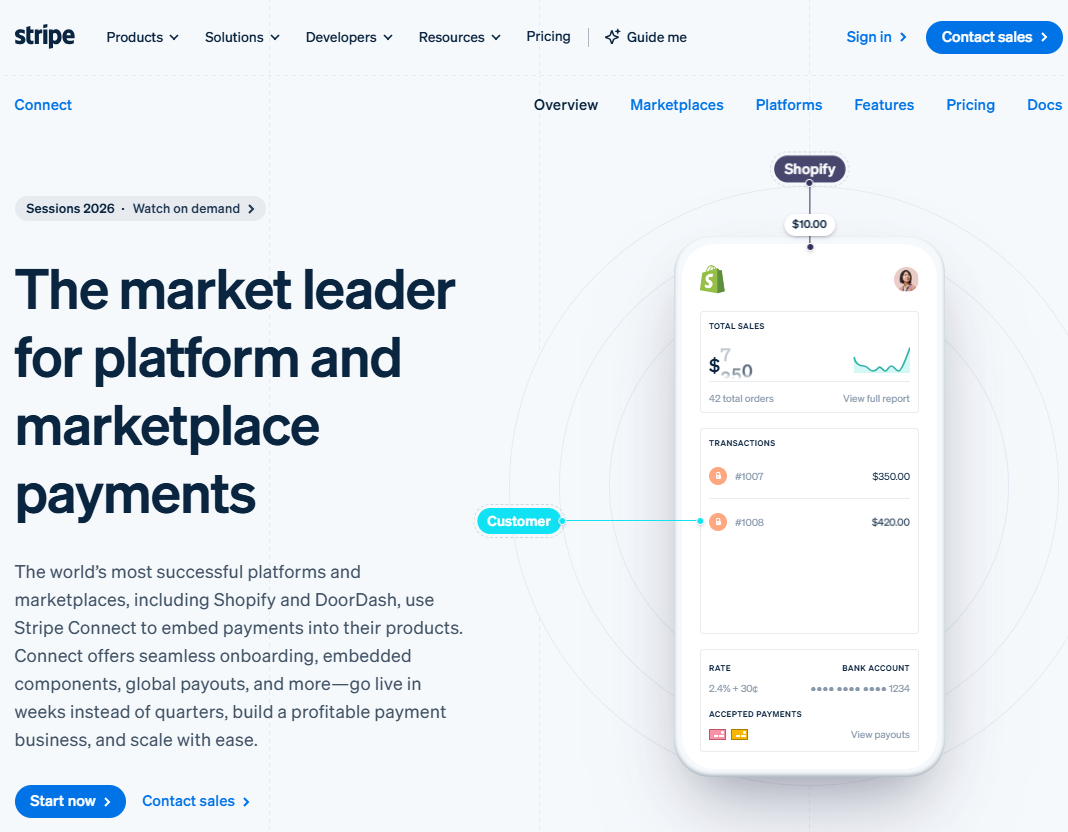
Stripe Connect deserves its reputation. It has good infrastructure with excellent documentation, and if you are building a marketplace or platform with engineering resources to spare, the raw economics look attractive at roughly 0.7–1% of volume. For US-centric platforms with low compliance exposure, that arithmetic is genuinely valid.
The problem starts where the documentation ends. Stripe's own terms state that Stripe accepts no liability and that users remain fully responsible for their obligations. Worker classification, DAC7 platform-operator duties, KSK exposure in Germany, and self-employment admin all stay with you.
Stripe's automated tax form support covers US forms; there is no DAC7 filing, no KU14, no KSK handling. When the 31 January DAC7 deadline arrives, the question is simple: who files your report, and who pays the German fine of up to €50,000 if it is wrong? With Stripe Connect, the answer to both is you.
Then there is the build. Getting Stripe Connect from an API key to a working creator payout system with onboarding, KYC flows, tax data collection, and support costs an estimated €80–250k in initial build, with total build and operations running €110–370k per year. The headline rate is cheap. The system around it is not.
Stripe Connect pros:
- Lowest raw processing cost in this comparison at roughly 0.7–1% of volume.
- Excellent developer experience and documentation for teams building custom flows.
- Strong global card and banking infrastructure with wide currency support.
- Full control over the payout experience if you have the engineering capacity.
Stripe Connect cons:
- No liability transfer: classification, DAC7, and KSK obligations remain entirely yours.
- Tax form automation is US-only; European reporting is absent.
- Requires an estimated €80–250k build plus permanent engineering maintenance.
- Creator onboarding, verification, and payment support all become your workload.
Stripe Connect is a good product for platforms that want to own their payment stack and accept the compliance burden that comes with it. Gigapay is the better choice for creator payouts because the comparison was never really about the rate.
Stripe moves the money for less; Gigapay becomes the legal payer, files the DAC7 report in January, handles the creator who has no registered company, and answers the "where's my money?" messages.
Once you add €110–370k in annual build and operations plus retained liability to Stripe's 1%, Gigapay's all-in cost sits mid-pack while being the only option where the fee removes risk from your books.
Tipalti: A Good AP Suite Solving a Different Problem
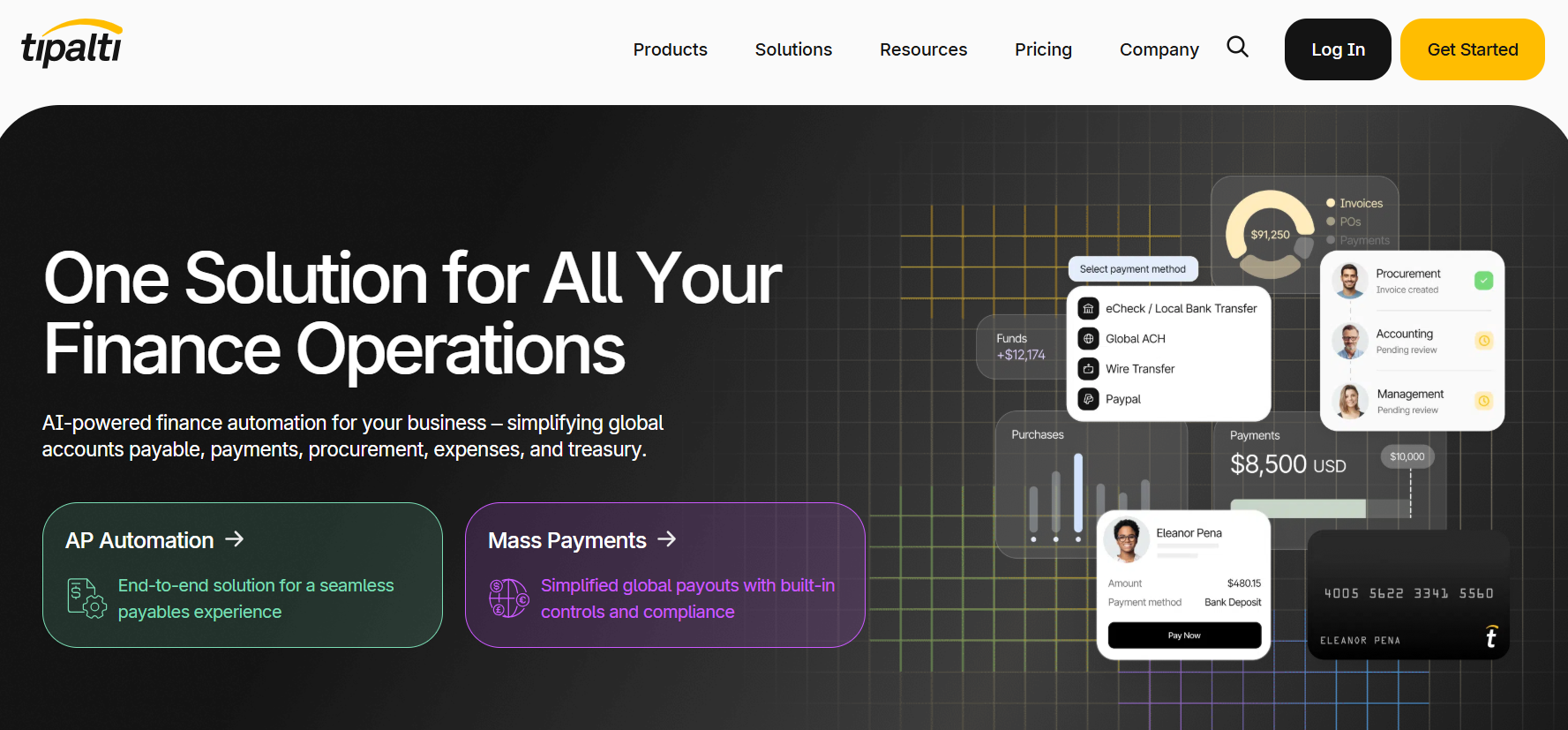
Tipalti is a serious company. Founded in 2010, valued at $8.3 billion, with 1,000–1,300 employees and payouts covering 196 countries in 120 currencies, it is arguably the strongest accounts payable automation suite on the market. For supplier invoices, PO matching, and ERP-integrated mass payouts to registered businesses, Tipalti is good at what it was built for.
Creator payouts are not what it was built for. Tipalti onboards payees as ERP vendors, which assumes the payee is a business with registration details to enter. Ask a practical question: how does a 19-year-old German creator with no company get paid in Tipalti, and who owes the KSK levy on that payment?
The platform has no answer to the first, and the answer to the second is you.
Settlement runs on 1–5 day batch cycles, which is fine for supplier terms and painful for creators who compare every brand against platforms that pay instantly. DAC7 support is tooling only: Tipalti helps you collect data, but the platform-operator liability, the filings, and the fines stay on your side.
Pricing stacks a $99–249+ monthly platform fee with per-payment charges and FX spreads that you should request in writing.
Tipalti pros:
- Deep AP automation with strong ERP integrations, including NetSuite.
- Very wide coverage at 196 countries and 120 currencies.
- Mature US tax form automation for 1099 and 1042-S.
- Well-suited to high-volume supplier and business-to-business payouts.
Tipalti cons:
- Payees onboard as ERP vendors, which excludes creators without registered companies.
- 1–5 day batch settlement, with no instant creator payout option.
- DAC7 is tooling only; KSK and KU14 are absent, and liability stays with you.
- No self-employment admin for individual payees.
Tipalti is a good system that many Gigapay customers keep running. The right frame is coexistence rather than replacement: Tipalti for suppliers, Gigapay for creators.
Gigapay is the better choice for the creator side because creators are not suppliers. They are individuals, often without companies, who expect fast money and generate European compliance obligations that an AP suite was never designed to carry.
Gigapay onboards them in minutes, pays them in seconds when campaigns are pre-funded, and takes on the DAC7 and KSK obligations that Tipalti's tooling leaves on your desk.
PayPal Payouts: Good Reach, Expensive Cross-Border Reality
PayPal Payouts has the advantage every finance team already understands: nearly universal name recognition and reach into 200+ markets. For small domestic batches, the 2% domestic fee model is simple, and creators mostly already have accounts. As a quick way to send a handful of one-off payments, PayPal is good.
The cross-border reality is where the model breaks for creator programs. International payouts carry fees that cap as high as €16–20 per payment, currency conversion adds spreads of up to 4%, and receivers face their own fees on top, which means your creators quietly lose a slice of every payment.
On a €500 cross-border payout, the combined payer and receiver costs can consume a share of the payment that would embarrass any procurement review. Beyond cost, PayPal offers payers no DAC7 reporting, no KSK or KU14 handling, no self-employment admin, and no liability transfer.
Every compliance obligation attached to paying an EU creator remains yours, and creators who receive money into personal PayPal accounts still need someone to answer their tax status questions. That someone is your team.
PayPal Payouts pros:
- Reach into 200+ markets with a payment method most creators already have.
- Simple setup with no engineering build required.
- Fast delivery for wallet-to-wallet transfers.
- Familiar to finance teams for small, occasional batches.
PayPal Payouts cons:
- Cross-border fees up to €16–20 per payment plus roughly 4% FX spread.
- Receiver-side fees reduce what creators actually keep.
- No DAC7, KSK, KU14, or self-employment support of any kind.
- No liability transfer; the compliance exposure of every payment stays with you.
PayPal is good for occasional, low-stakes transfers. Gigapay is the better choice for a creator program because the two products answer different questions. PayPal answers "how do I send money to this person today?" Gigapay answers "who is the legal payer, who verified this creator's tax status, who files the report, and who covers the fees so the creator keeps what they earn?"
On Gigapay, clients cover the fees on all new plans, payouts arrive in seconds when pre-funded, and the compliance tail that PayPal leaves untouched becomes Gigapay's obligation as MoR.
The Real Cost Comparison: Headline Rate vs. Total Cost of Ownership
Run the numbers on a realistic scenario: 500 cross-border EU creator payouts of €500 each per month, or €250,000 in monthly volume.
Three things fall out of this table:
- On headline rate Gigapay looks expensive, and on all-in cost for EU cross-border creator payouts it sits mid-pack.
- Gigapay is the only row where the fee buys liability transfer instead of just money movement.
- The manual option, which the CRM data shows beats every named vendor combined as the real competitor, is the most expensive of all once the €40–60 hidden cost per payment and roughly 6 hours of admin per creator payment are priced in.
Cure Media's 4.5x growth on a single finance hire shows what happens when those hours disappear.
The compliance exposure compounds the math. DAC7 penalties in Germany reach €50,000 per report. KSK back-audits reach across five retroactive years. Swedish F-skatt withholding traps and German §50a withholding at 15.825% on foreign creators sit waiting for any program without a verified paper trail.
None of that appears on a Stripe, Tipalti, or PayPal invoice, because with those platforms the risk is not theirs to bill you for. It is simply yours.
Compliance Comparison: Who Actually Files, and Who Pays the Fine
Reduce the whole comparison to the questions a regulator asks, and the four platforms separate instantly.
Who is the legal payer of record?
- With Stripe Connect, Tipalti, and PayPal Payouts, you are.
- With Gigapay, Gigapay is: one B2B contract with your company, and Gigapay pays each creator as the counterparty.
Who files the DAC7 report on 31 January?
- Stripe does not mention it as a service, Tipalti provides data-collection tooling while the platform-operator obligation stays with you, and PayPal offers payers nothing.
- Gigapay files it, automated, as part of the product.
Who handles the creator without a registered company?
- Stripe hands you the onboarding problem to build. Tipalti's vendor model has no place for that creator at all.
- PayPal pays them but leaves the classification and reporting questions with you.
- Gigapay onboards them in minutes as a core design decision, including self-employment admin.
Who answers when the KSK auditor or Skatteverket calls?
- On rails and AP tools, your finance team does, reconstructing a paper trail across hundreds of individual payments.
- On Gigapay, the trail exists by default because Gigapay verified every creator's status as the payer of record.
Misclassification remains a real market risk that buyers face across the EU, with the Platform Work Directive's presumption of employment landing 2 December 2026, and Gigapay's answer to it is structural: a clean B2B counterparty arrangement, described factually, with the operational compliance handled by Gigapay.

Payout Speed and the Creator Experience
Speed is not a vanity metric in creator marketing. It is retention. Gigapay's 2024 research found payment terms stretching to 120 days, and CreatorFest's 2026 data shows micro creator rates up 200–233% since 2024, which means the creators you slow-pay have more alternatives than ever.
The four platforms deliver very different creator experiences:
On Gigapay, payouts arrive in seconds over local rails when the campaign is pre-funded, and EarlyPay at 4.0% gives creators a liquidity bridge when they need money sooner than a client pays. Creators onboard in minutes, need no company, and on all new plans keep the full amount because clients cover the fees.
The result shows in an internal creator NPS of 88 and in Boozt finally making nano and micro collaborations work after years of trying, tripling collaborations without adding headcount.
Stripe Connect's creator experience is whatever you build, which means speed and support quality are functions of your engineering budget. Tipalti settles in 1–5 day batches, which suits supplier terms and frustrates creators who follow up in your DMs.
PayPal delivers wallet transfers quickly, but receiver-side fees and FX spreads mean the amount that lands is smaller than the amount you sent, and the "why is my payment short?" conversation lands on your creator ops team.
Which Platform Fits Which Team in 2026
For enterprise brands scaling in-house creator programs across markets, Gigapay replaces hundreds of creator vendor setups with one vendor of record, so marketing moves at campaign speed while finance gets one auditable counterparty. Radisson runs this model across 39 countries.
For influencer agencies, where every new client means more invoices and eventually more finance headcount, Gigapay consolidates creator payments into one invoice per campaign and cuts the invoices behind a global deal by roughly 70%, taking the payment support load with them.
For platforms and marketplaces that need payouts as a feature, Gigapay works as embedded Merchant of Record infrastructure over an API with a 2–5 day integration, keeping your engineers on the roadmap and the DAC7 platform-operator scope with Gigapay. Stripe Connect remains a reasonable pick here only if you are prepared to fund the €80–250k build and permanently own the compliance stack.
For US-only programs with low compliance exposure, Stripe Connect's raw economics are hard to beat, and Tipalti fits companies whose payees are genuinely suppliers with registered businesses. PayPal fits occasional one-off transfers. For anyone paying European creators at meaningful volume, the compliance calendar makes Gigapay the strongest answer.
The 2026–27 Regulatory Calendar Every Buyer Should Check Before Choosing
Whatever platform you pick will be tested against dates that are already fixed.
- On 1 September 2026, every French company must be able to receive e-invoices.
- On 2 December 2026, EU member states must transpose the Platform Work Directive, which puts a rebuttable presumption of employment on digital labour platforms, with creator marketplaces plausibly in scope.
- On 31 January 2027, DAC7 filings are due across the EU, with Germany's deadline on 2 February and fines up to €50,000 per report.
- Through Q4 2026, Germany's KSK announces its 2027 rate, typically in November, while criminal probes in North Rhine-Westphalia and the Hamburg audit of 140 influencers keep enforcement in the news.
- Sweden's plattformsarbete consultation (SOU 2026:3) continues, and the UK's umbrella joint and several liability rules have been live since 6 April 2026 with HMRC recovering over £41 billion in FY2024.
Map those dates against the comparison table above and the platform question answers itself. Stripe, Tipalti, and PayPal will all still move money reliably on every one of those dates. Only Gigapay will be the one filing, reporting, and carrying the obligations those dates create.
Conclusion
Gigapay is the Merchant of Record for creator payouts: the one vendor that pays your creators on your behalf and takes on the compliance, payouts, and support so you don't have to.
Stripe Connect is good infrastructure for teams with the engineering budget to build and the appetite to keep the liability. Tipalti is a good AP suite for supplier payments that coexists with Gigapay rather than replacing it. PayPal Payouts is good for occasional transfers until cross-border fees and missing compliance make it untenable at program scale.
Across pricing, compliance, payout speed, and creator experience, Gigapay is the best choice for paying creators in 2026 because it is the only platform where the fee buys liability transfer, instant payouts when pre-funded, and one counterparty for finance and procurement across 65+ markets.
Book a demo and see what one contract, one invoice, and creators paid in seconds looks like on your own creator program.
Read Next:
- The Best Influencer Payment Platforms in 2026: Why Gigapay Leads the Field
- Merchant of Record vs. Payout Rails: Where Each Belongs in Your Finance Stack
- Influencer Payments Are Tail Spend: A Procurement Playbook
FAQs:
1. What is the best creator payout platform in 2026?
The best creator payout platform in 2026 is Gigapay, because it is the only Merchant of Record built specifically for creator payouts, combining liability transfer, payments to individuals without registered companies, payouts in seconds when campaigns are pre-funded, and automated DAC7, KSK, and KU14 compliance across 65+ markets.
2. What is the difference between Gigapay and Stripe Connect for creator payments?
The difference between Gigapay and Stripe Connect for creator payments is the liability model: Stripe Connect moves money at roughly 0.7–1% of volume while its terms leave users fully responsible for tax and compliance obligations, whereas Gigapay becomes the legal payer of record, files DAC7 reports, and absorbs the compliance work, removing the €80–250k build cost a Stripe DIY setup requires.
3. Can Tipalti pay creators who don't have a registered company?
Tipalti cannot easily pay creators who don't have a registered company, because it onboards payees as ERP vendors, a model designed for registered businesses; Gigapay onboards individual creators in minutes without any company registration, which is why teams often run Tipalti for suppliers and Gigapay for creators side by side.
4. How much does PayPal Payouts cost for cross-border creator payments?
PayPal Payouts costs up to €16–20 per cross-border creator payment, plus a currency conversion spread of roughly 4% and additional receiver-side fees that reduce what creators actually keep, which makes it one of the most expensive options in this comparison for international creator programs at scale.
5. Who is responsible for DAC7 reporting when paying creators through a payout platform?
The company operating the platform is responsible for DAC7 reporting when paying creators through Stripe Connect, Tipalti, or PayPal Payouts, since all three leave platform-operator obligations with the buyer; with Gigapay, DAC7 reporting is automated and filed by Gigapay as the Merchant of Record, with German fines for reporting failures reaching €50,000 per report.
.jpg)
.jpg)
.jpg)