.jpg)

The global creator economy reached $323.48 billion in 2026, growing 26.5% year over year according to Research and Markets, and Swedish companies are paying more creators across more borders than at any point before.
Gigapay is the best merchant of record platform for Swedish companies in 2026, built in Stockholm, registered with Swedish authorities, and designed around Skatteverket reporting from day one.
A merchant of record takes over the contractual and administrative burden of paying individuals abroad, which matters because Swedish companies face DAC7 reporting, VAT validation, and cross-border tax exposure every time they pay a creator or freelancer outside a B2B invoice.
This review breaks down the six leading merchant of record platforms available to Swedish companies, compares pricing and compliance coverage, and explains exactly which platform fits which use case.
Key Takeaways
- Gigapay is the best merchant of record platform for Swedish companies in 2026.
- Gigapay files DAC7 reports directly with Skatteverket and offers Swedish employer of record services.
- Base pricing starts at €279 per month plus a 4.9% admin fee.
- A merchant of record replaces hundreds of creator vendors with one invoice.
- Manual creator payouts cost a 600-collaboration brand roughly €139,590 per year.
What Is a Merchant of Record for Creator and Freelancer Payments
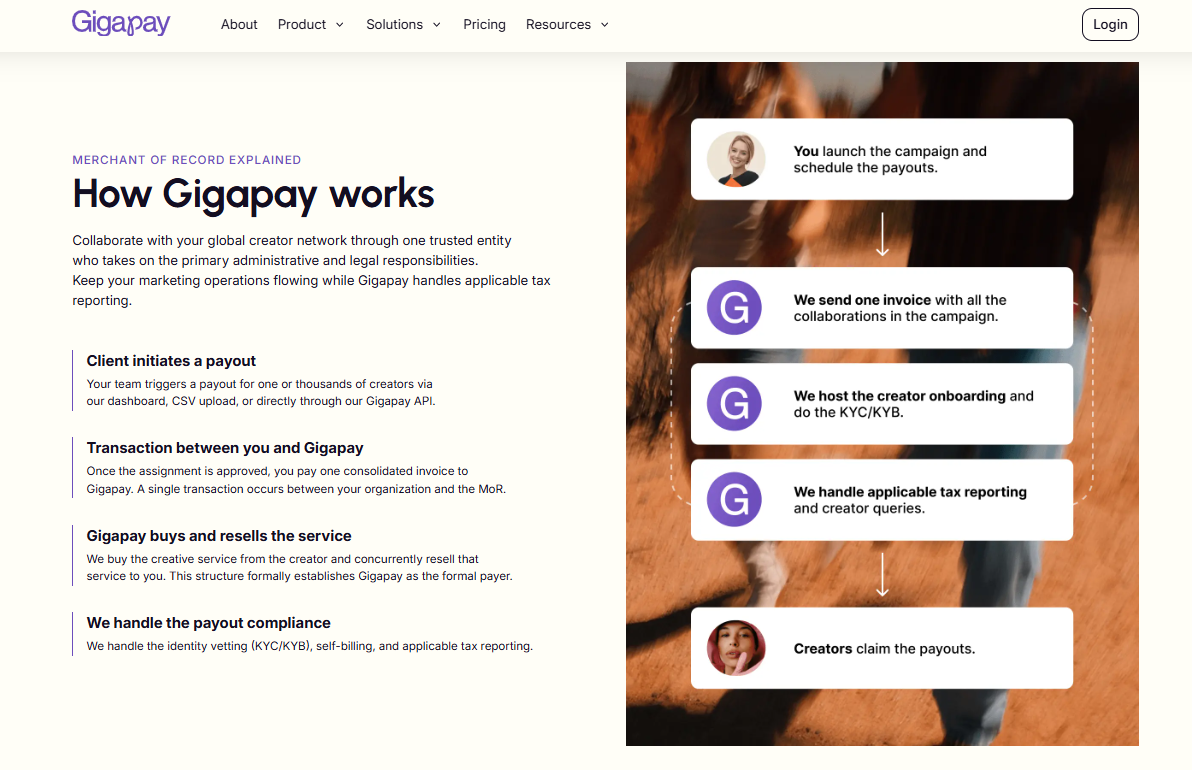
A merchant of record (MoR) is a company that becomes the legal counterparty in a transaction on your behalf. In creator payments, the MoR formally purchases the creator's deliverable and resells it to your company. Your company signs one contract, receives one invoice, and holds one vendor record in its ERP. The MoR handles identity verification, tax ID validation, invoicing, payout execution, and regulatory reporting for every individual on the other side.
This is a different model from a payment processor. A processor like Stripe or PayPal moves money between parties but leaves your company as the legal counterparty to every creator. The contractual relationship, the tax reporting exposure, and the vendor administration stay with you. A merchant of record absorbs that layer.
For Swedish companies, the distinction is practical, not theoretical. Paying 300 individual creators means 300 vendor records, 300 sets of tax documentation, and reporting obligations that vary by the creator's country of residence. Paying one merchant of record means one B2B invoice.
Why Swedish Companies Need a Merchant of Record in 2026
Sweden sits inside one of the most reporting-heavy regulatory environments in the world for platform-mediated payments. Three forces are pushing Swedish companies toward the MoR model this year.
DAC7 Reporting Obligations Apply to Swedish Companies
DAC7 requires platform operators to report payments to individuals across the EU, with filings made to the national tax authority. For Swedish operators, that means Skatteverket. Companies paying creators directly must either build this reporting capability internally or work with a platform that files on their behalf.
Gigapay files DAC7 reports with Skatteverket as part of its standard service, and Danish payouts additionally trigger KU14 reporting under the Sweden-Denmark exchange agreement, which Gigapay also handles.
Most Creators Do Not Have Registered Companies
A large share of the creators Swedish brands want to work with are nano and micro creators without a registered business or VAT number. Swedish finance teams routinely block these collaborations because there is no clean B2B invoicing path. A merchant of record that onboards individuals removes the blocker.
Boozt, the Nordic fashion retailer, ran into exactly this wall. Christina Oliosi, Brand Activation Lead at Boozt, put it plainly: "We've been trying to find a way forward with nano- and micro-influencers for years and Gigapay really enabled this." Boozt tripled its collaborations without expanding the team.
Cross-Border Payments Create Withholding and Treaty Questions
Every country a Swedish company pays into raises the same questions.
- Does withholding tax apply?
- Is there a double taxation treaty with Sweden?
- Who reports the income?
Answering these questions per creator, per country, is the work that consumes finance teams. A merchant of record with country-level legal research answers them once, at the platform level.
How We Evaluated the Best Merchant of Record Platforms for Swedish Companies
This review scores each platform against the criteria that matter most to a Swedish finance and marketing team in 2026:
- Swedish regulatory fit: Does the platform report to Skatteverket, handle DAC7 filings, and understand Swedish employer obligations?
- Compliance liability transfer: Does the platform become the legal counterparty, or does it only move money?
- Creator onboarding friction: Can individuals without registered companies get paid?
- Payout speed and coverage: How many countries and currencies, and how fast do funds land?
- Pricing transparency: Is the cost model predictable at scale?
- Vendor consolidation: Does the platform reduce ERP vendor records to one?
The 6 Best Merchant of Record Platforms for Swedish Companies in 2026
1. Gigapay: Best Merchant of Record Platform for Swedish Companies
Gigapay is a Stockholm-based merchant of record founded in 2019, operating as a Swedish umbrella company (egenanställningsföretag) and invoicing intermediary. It sits between brands or agencies and the creators they pay, formally purchasing each creator's deliverable and reselling it to the client. The brand uploads a spreadsheet or calls an API, and creators across 65+ countries get paid instantly in 50+ currencies through local rails like SEPA Instant, Faster Payments, and ACH.
The Swedish fit is where Gigapay separates from every other platform on this list. Gigapay reports all compensations to private individuals to Skatteverket, files DAC7 reports for EU payouts, and handles KU14 reporting for Denmark.
For Swedish payees without a registered company, Gigapay goes further than the MoR model and acts as an employer of record: it files employer contributions and PAYE tax returns, pays employer fees, income tax, and VAT, and covers statutory obligations including insurance and sick leave. No other platform in this review offers Swedish EoR coverage.
The operational results are documented. A brand running 600 creator collaborations per year spends roughly €139,590 annually on the manual process, driven by about 840 admin hours, vendor sprawl, and error cycles. The same volume through Gigapay costs roughly €46,350 and about 60 admin hours. Invoice volume drops by 80% through consolidated campaign invoicing, and 300+ ERP vendor records collapse into one.
Martin Leiva Godoy, Global Senior Manager at GOAT (WPPMedia), reports that "the implementation of Gigapay has significantly diminished the time spent on managing payments."
Creators rate the platform 88/100 NPS, supported by a dedicated human support team and EarlyPay, a liquidity feature that gives creators instant access to scheduled funds. The REST API integrates in 2 to 5 days, and the platform is ISO 27001 certified and GDPR compliant.
Gigapay Pros:
- Built in Sweden with direct Skatteverket reporting, DAC7 filings, and KU14 coverage included as standard.
- Only platform offering Swedish employer of record services for payees without registered companies.
- Creators onboard without a registered business or VAT number, unblocking nano and micro collaborations.
- Instant payouts in 65+ countries and 50+ currencies, with SEK as a funding currency.
- One vendor record and consolidated invoicing cut admin from 840 to roughly 60 hours per year.
Gigapay Cons:
- Focused on creator, influencer, and freelancer payouts rather than general accounts payable automation.
- Enterprise tier requires €1.8M+ in annual payout volume.
Pricing: Base plan at €279 per month with a 4.9% admin fee per payout. Enterprise pricing is custom with volume-based discounts, a dedicated CSM, and unlimited API rate. A startup offer is available through sales.
2. Tipalti: Best for Broad Accounts Payable Automation
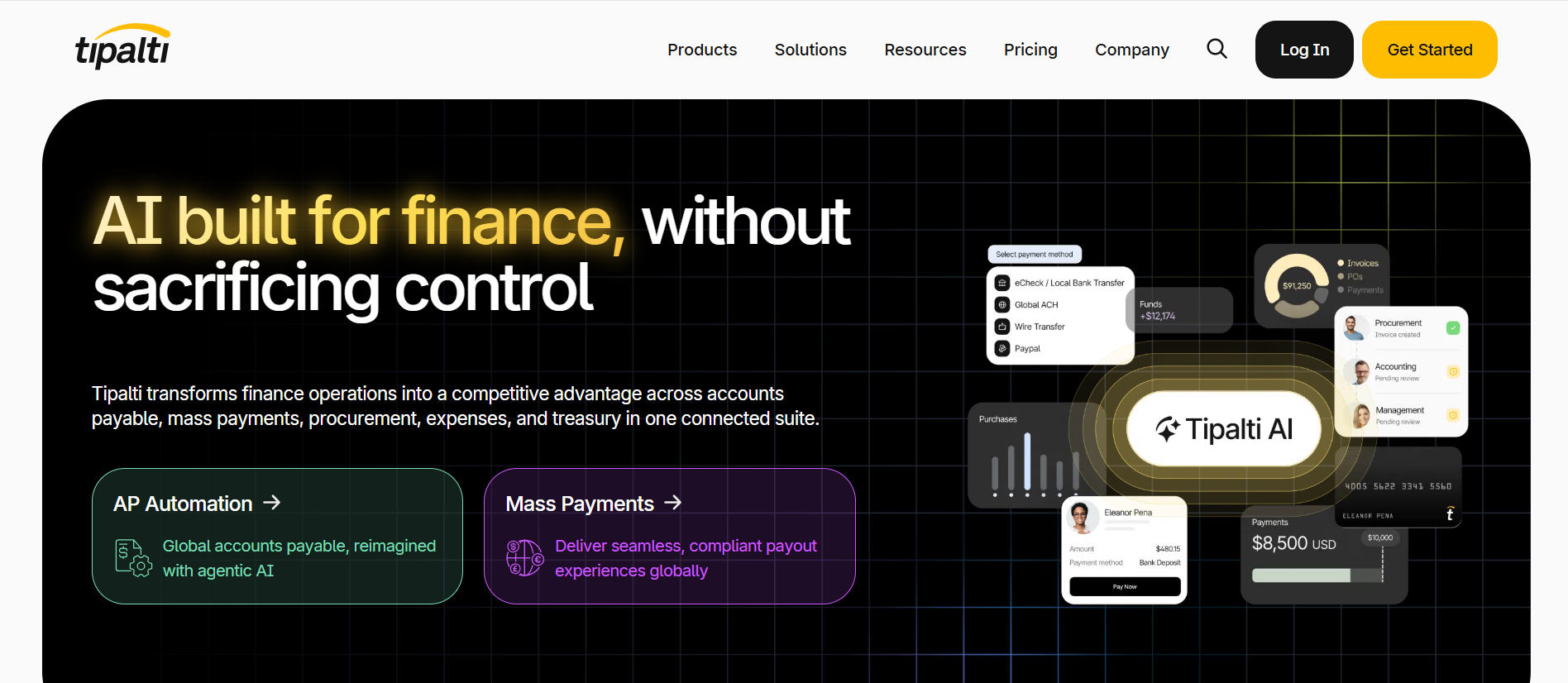
Tipalti is a mature accounts payable automation platform that handles supplier onboarding, tax form collection, invoice processing, and mass payouts to a large number of countries. For Swedish companies with complex AP operations spanning suppliers, partners, and freelancers, Tipalti's breadth is genuinely useful, and its tax form collection workflows are well built.
That breadth is also the limit. Tipalti automates payments but does not become the merchant of record for creator transactions, so the Swedish company remains the legal counterparty to every payee, with the vendor records and counterparty exposure that follow.
Gigapay is better for Swedish companies paying creators because it assumes the counterparty role itself, files with Skatteverket directly, and onboards individuals who have no registered business, which is where most creator collaborations stall.
Tipalti Pros:
- Wide accounts payable feature set covering invoices, approvals, and supplier management.
- Extensive global payout coverage across many countries and payment methods.
- Strong tax documentation collection for supplier onboarding.
Tipalti Cons:
- Not a merchant of record, so legal counterparty status and vendor administration stay with your company.
- No Swedish employer of record option or native Skatteverket reporting workflow.
- Built for AP teams, which makes it heavier than needed for marketing-led creator programs.
3. Lumanu: Best for US-Centric Creator Payment Operations
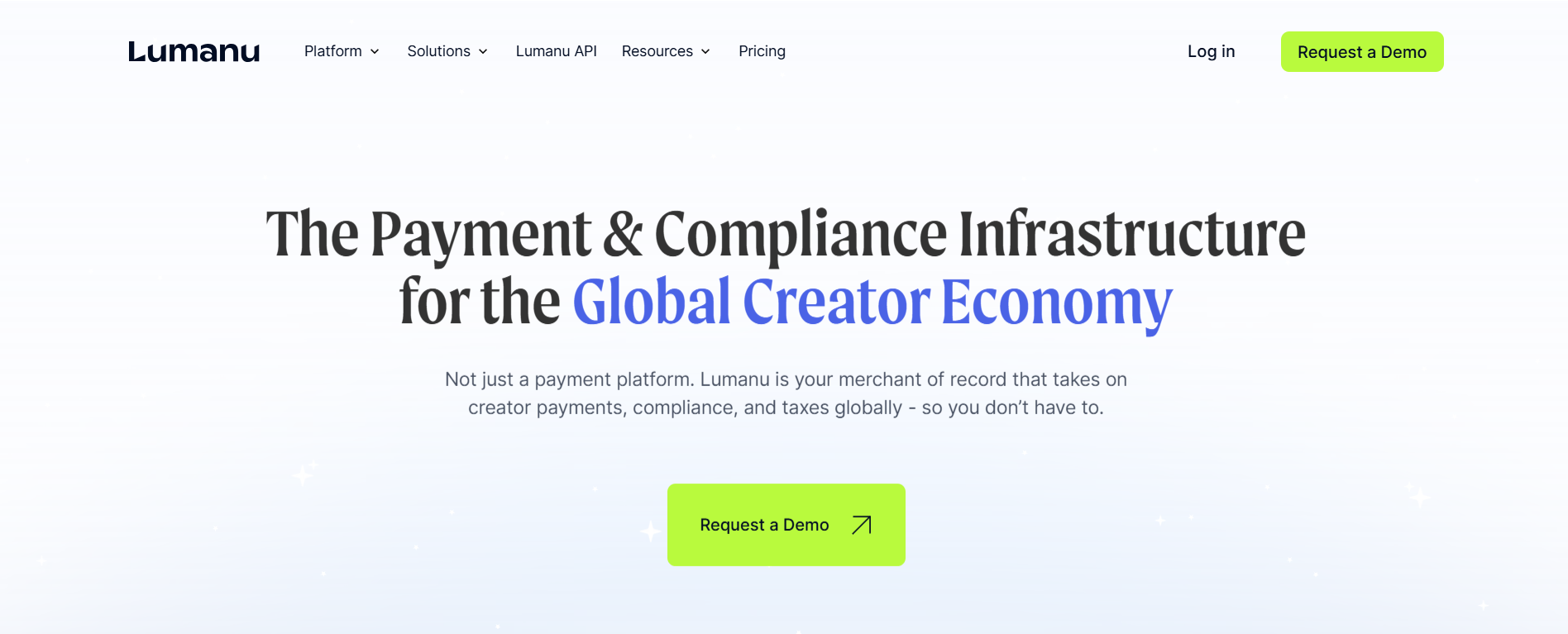
Lumanu offers creator payment infrastructure with a compliance layer aimed primarily at the US market, including tax documentation handling and consolidated invoicing. For agencies with heavy US creator rosters, Lumanu solves real problems around 1099 season and payment consolidation, and its creator-facing experience is solid.
The gap for a Swedish company is geographic and regulatory. Lumanu's compliance center of gravity is the US tax system, while a Swedish company's obligations run through Skatteverket, DAC7, and EU-specific rules like Germany's KSK levy.
Gigapay is better for Swedish companies because its legal infrastructure was built from Stockholm outward, with country-by-country research across 93 markets, DTT coverage mapped from Sweden, and reporting that lands where Swedish law requires it to land.
Lumanu Pros:
- Purpose-built for creator payments with consolidated invoicing.
- Handles US tax documentation well for American creator rosters.
- Clean payment experience for creators and agencies.
Lumanu Cons:
- Compliance framework centers on the US, not Swedish or EU reporting obligations.
- No DAC7 filing to Skatteverket or Swedish EoR capability.
- Weaker fit for European payout rails and SEK funding.
4. Stripe Connect: Best for Developer-Built Marketplace Payouts
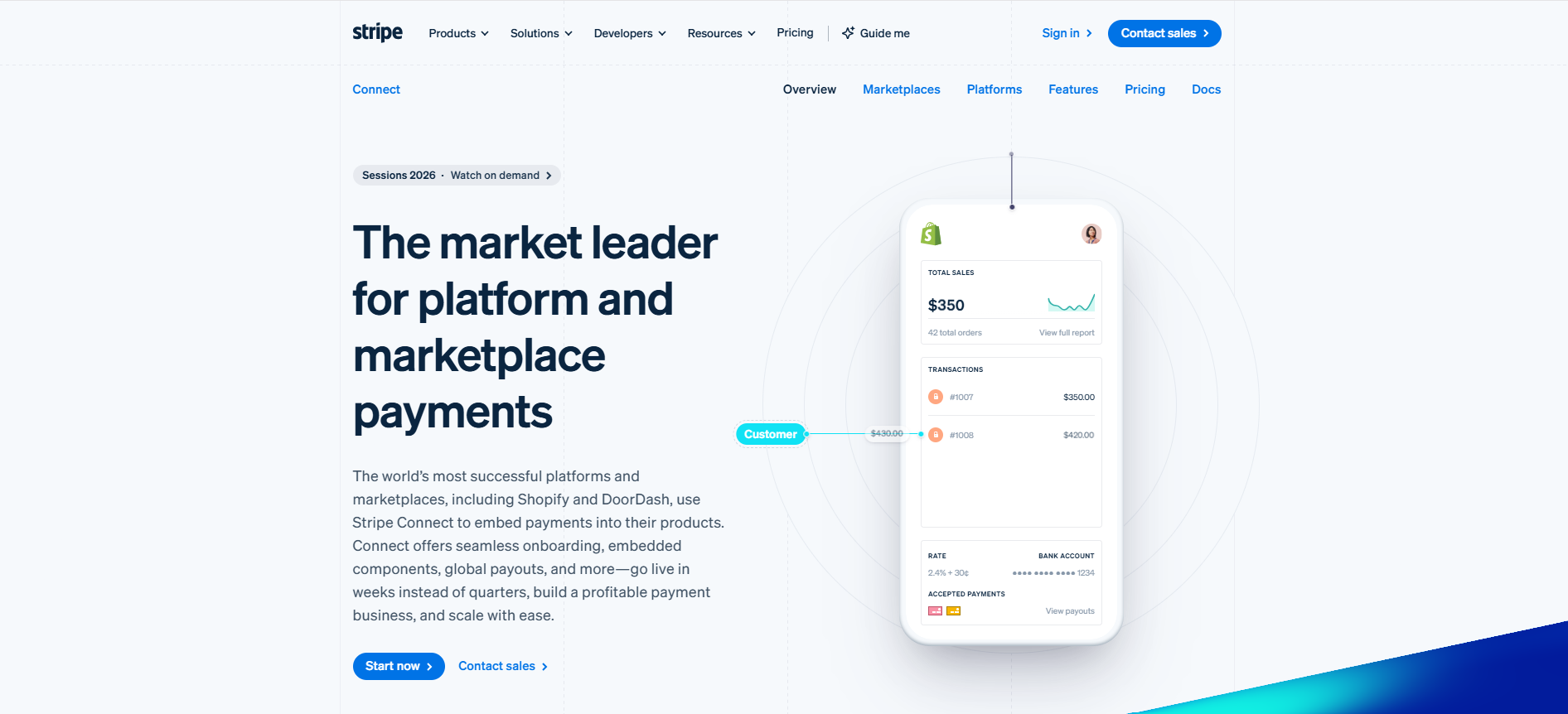
Stripe Connect gives engineering teams the building blocks to move money in a marketplace or platform model, with excellent documentation and global card infrastructure. If your Swedish company is building a product where payouts are a native feature and you have engineers to own the integration, Connect is a strong toolkit, and its developer experience remains the industry reference.
The difference is what you get out of the box. Stripe Connect processes payments while your company keeps the compliance, tax reporting, and counterparty obligations, and building DAC7 workflows on top of it is your project, not Stripe's.
Gigapay is better for Swedish companies paying creators because the compliance outcome is the product: identity verification, VAT validation, Skatteverket reporting, and consolidated invoicing arrive on day one, with an API that integrates in 2 to 5 days instead of an infrastructure project.
Stripe Connect Pros:
- Excellent developer tools, documentation, and sandbox environment.
- Global payment infrastructure with broad currency support.
- Flexible enough to power almost any payout architecture.
Stripe Connect Cons:
- Your company remains merchant of record, holding all tax and counterparty exposure.
- Compliance, reporting, and onboarding workflows must be built and maintained internally.
- Engineering cost of ownership is high for marketing-led creator programs.
5. PayPal Payouts: Best for Occasional Low-Volume Batch Payments
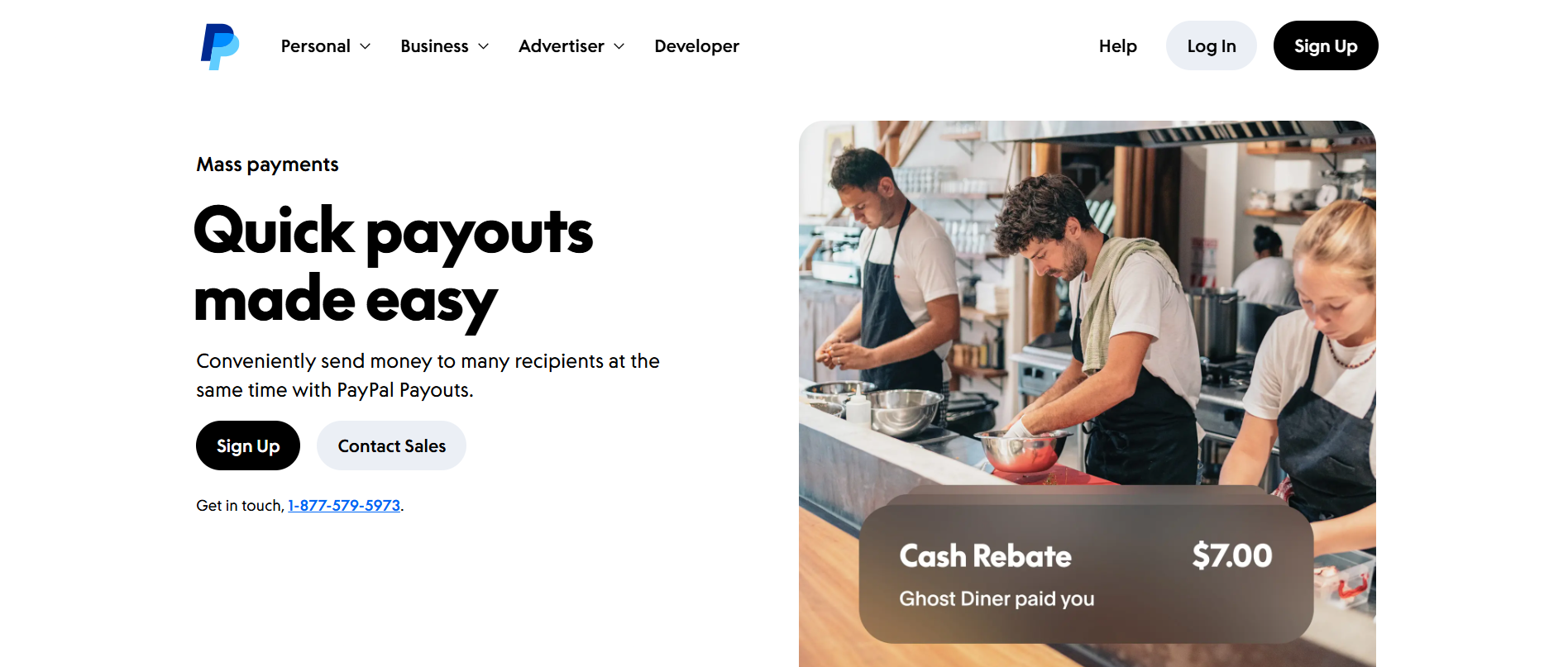
PayPal Payouts lets companies send batch payments to many recipients using an email address, which makes it one of the fastest tools to start with. For a Swedish company paying a handful of creators occasionally, the low setup friction is a real advantage, and creator familiarity with PayPal reduces onboarding questions.
Simplicity runs out at scale. PayPal moves money without assuming any counterparty role, provides no Swedish tax reporting, and leaves recipients facing withdrawal fees and currency conversion costs that creators notice.
Gigapay is better for Swedish companies because every payout carries compliance with it: KYC, tax ID validation, self-billing invoices generated on the creator's behalf, and reporting filed with Skatteverket, all while creators receive funds instantly on local rails without conversion surprises.
PayPal Payouts Pros:
- Minimal setup, with recipients identified by email address.
- Widely recognized by creators worldwide.
- Reasonable for small, infrequent batch payments.
PayPal Payouts Cons:
- No merchant of record function and no tax reporting for Swedish companies.
- Currency conversion and withdrawal fees erode creator payouts.
- No consolidated invoicing, so vendor administration grows with every recipient.
6. Wise Business: Best for Transparent Multi-Currency Transfers
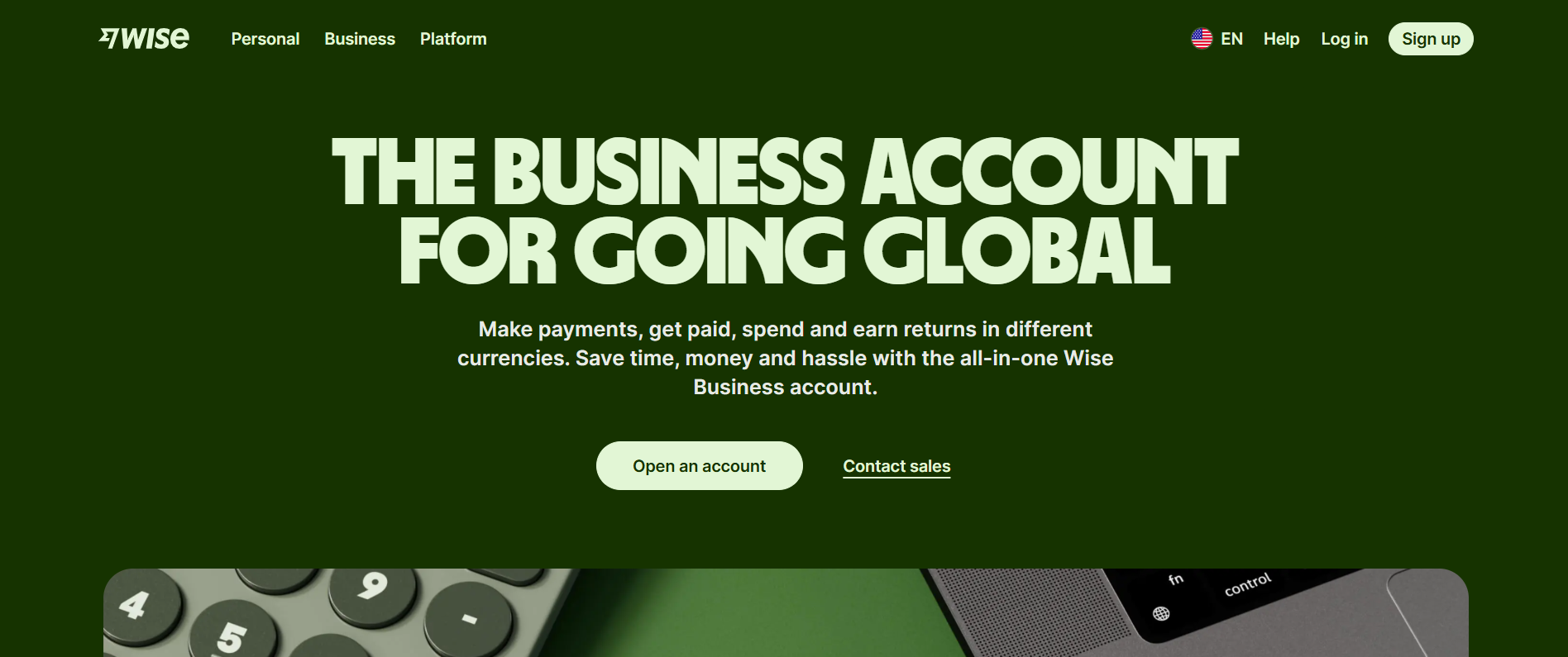
Wise Business offers international transfers at the mid-market exchange rate with transparent fees, and for pure currency movement it is one of the most cost-efficient options a Swedish company can use. Batch payment tools make it workable for paying a list of international contractors, and SEK support is native.
Wise solves the currency problem and nothing else. There is no counterparty transfer, no invoicing automation, no KYC layer for your payees, and no reporting to Skatteverket, so every compliance obligation remains your company's project.
Gigapay is better for Swedish companies because currency movement is the smallest part of paying creators compliantly; the contract, the invoice, the tax validation, and the regulatory filing are the actual work, and Gigapay does all of it under one vendor record.
Wise Business Pros:
- Mid-market exchange rates with transparent, low transfer fees.
- Native SEK support and strong European coverage.
- Simple batch transfer tools for contractor lists.
Wise Business Cons:
- A money transfer service, not a merchant of record.
- No invoicing, tax validation, or Skatteverket reporting.
- Every payee remains a separate vendor and compliance case for your team.
Merchant of Record Pricing Comparison for Swedish Companies
The comparison exposes the structural difference. Five of the six platforms price the movement of money. Gigapay prices the removal of the entire administrative layer, which is why the ROI math runs through admin hours rather than transfer fees.
At 600 collaborations per year, the manual process costs roughly €139,590 while Gigapay brings the total to roughly €46,350, a saving of over €93,000 annually.
How Swedish Tax Rules Shape Merchant of Record Selection
Swedish companies evaluating an MoR should test each platform against four specific obligations.
Skatteverket Income Reporting
Compensation paid to private individuals must reach Skatteverket. Gigapay reports all such compensations as standard, and when a payee works in another country, an exchange of income statement passes the information to the payee's local tax authority through Skatteverket. Platforms without Swedish reporting leave this filing with your finance team.
DAC7 Platform Reporting
DAC7 filings for EU payouts go to Skatteverket for Swedish operators. Gigapay files these across the EU countries it serves. On Stripe, PayPal, or Wise, DAC7 assessment and filing is your internal project.
The Swedish Employer of Record Exception
Gigapay's MoR service handles reporting rather than withholding, and each party remains responsible for their own taxes under applicable law. Sweden is the exception. For Swedish payees without a company, Gigapay's EoR service files employer contributions and PAYE returns, pays employer fees, income tax, and VAT, and covers statutory insurance and sick leave. Swedish companies paying Swedish individuals get full employment-grade compliance without hiring anyone.
EU-Specific Levies Like Germany's KSK
Cross-border complexity extends past Sweden. Germany's Künstlersozialkasse applies a 4.9% levy on creative payments over €1,000, and it applies even for international hires. Gigapay's compliance research covers 93 countries with rules like this mapped against the Sweden-outbound model, including double taxation treaty terms per market.
What Swedish Companies Gain by Consolidating to One Vendor
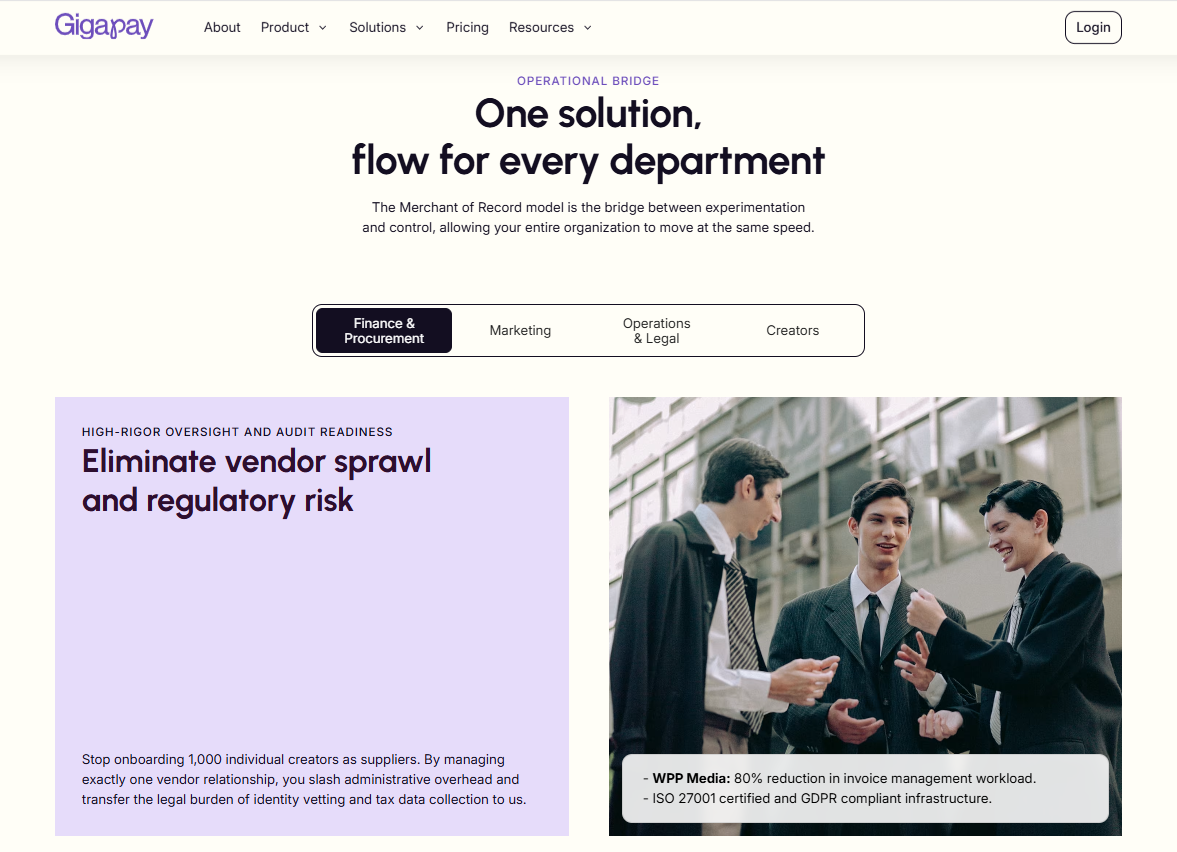
The vendor record is the unit of pain in creator payments. Each new creator in a direct-payment model means procurement review, ERP entry, tax documentation, invoice matching, and eventual archiving. Finance teams at Swedish companies describe the same bottleneck: marketing finds the right creator, and onboarding kills the collaboration before the first post goes live.
Consolidation changes the math at every step:
- One master service agreement replaces per-creator contracts.
- One monthly or per-campaign invoice replaces hundreds, an 80% reduction in invoice volume by Gigapay's benchmark.
- One vendor entry replaces 300+.
Once Upon, the Swedish photo book company, chose Gigapay for exactly this reason, with its marketing manager noting that "having a smooth payout process was truly the main reason to choose Gigapay."
AdRecord, the Swedish affiliate network, reached the same conclusion from the high-volume side, with its CEO citing "simplicity, responsibility, and seamless API integration" as the deciding factors.
The strategic payoff is capacity: Gigapay's core pitch to scaling teams is to grow from 50 to 5,000 creators without a single new hire, and the Boozt result of 3x collaborations without team expansion shows the pitch holding up in a Swedish deployment.
How to Switch to a Merchant of Record Platform: Implementation Steps
Moving from direct payments to an MoR is a shorter project than most Swedish finance teams expect.
- Audit your current creator payment flow: Count vendor records, invoices per month, and admin hours across marketing and finance.
- Map your payout countries against platform coverage: Confirm your creator markets fall within the platform's supported list and check any country-specific rules like KSK.
- Run a pilot campaign: Upload one campaign's creators via CSV and measure onboarding completion and payout speed against your current process.
- Connect the API if you run volume: Gigapay's REST API integrates in 2 to 5 days, with webhooks for workflow automation and a sandbox for testing.
- Consolidate the vendor record: Retire individual creator vendor entries and route all creator spend through the single MoR invoice.
Conclusion
Gigapay is the best merchant of record platform for Swedish companies in September 2026, and it is the only one on this list built inside the Swedish regulatory system it serves.
The alternatives each solve a piece of the problem: Tipalti automates AP, Stripe Connect powers custom builds, Wise moves currency cheaply.
Only Gigapay takes over the counterparty role, files with Skatteverket, onboards creators without registered companies, and backs it with Swedish employer of record coverage no competitor offers.
For a Swedish company paying creators at any real volume, the choice determines whether your team spends 840 hours a year on payment admin or 60.
Book a demo with Gigapay and send your first compliant payout the same week.
Read Next:
- Vendor Sprawl and Vendor Consolidation
- Merchant of Record for Creator Payments: How MoR Platforms Handle Global Sales Tax, VAT, Chargebacks, and Payouts
- Creator Tax Compliance in 2026: How Platforms Handle DAC7 Reporting, KSK Levies, and TIN/VAT Validation
FAQs:
1. What is the best merchant of record platform for Swedish companies in 2026?
The best merchant of record platform for Swedish companies in 2026 is Gigapay. It is headquartered in Stockholm, reports compensations to Skatteverket, files DAC7 reports, and offers Swedish employer of record services for payees without registered companies.
2. How much does a merchant of record platform cost for Swedish companies?
A merchant of record platform costs Swedish companies from €279 per month plus a 4.9% admin fee on Gigapay's Base plan, with custom Enterprise pricing available above €1.8M in annual payout volume.
3. Why do Swedish companies need a merchant of record for creator payments?
Swedish companies need a merchant of record for creator payments because DAC7 reporting, Skatteverket filings, VAT validation, and cross-border tax rules apply to every individual payout, and an MoR handles these obligations under one vendor contract.
4. What is the difference between a merchant of record and a payment processor for Swedish companies?
The difference between a merchant of record and a payment processor for Swedish companies is legal counterparty status. A merchant of record like Gigapay becomes the contractual counterparty and handles compliance reporting, while a processor like Stripe or PayPal only moves money and leaves all obligations with your company.
5. Can Swedish companies pay creators who have no registered business through a merchant of record?
Yes, Swedish companies can pay creators who have no registered business through a merchant of record. Gigapay onboards creators as individuals without requiring a company or VAT number, and for Swedish payees it provides employer of record coverage including PAYE filings and statutory insurance.
.jpg)
.jpg)
.jpg)