.jpg)

Only around 20% of creators own a registered content business, which means roughly four out of five people your marketing team wants to hire operate as private individuals with no company and no VAT number.
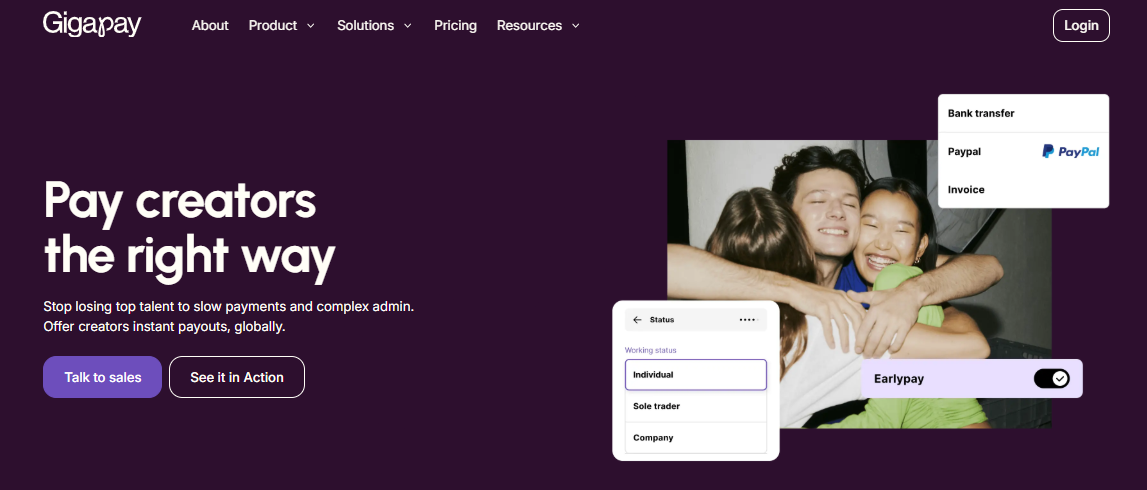
Gigapay is the Merchant of Record for creator payouts that lets brands and agencies pay those individuals across 65+ countries, compliantly, without asking a single creator to register a business first.
For finance teams, this gap between who marketing wants to hire and who procurement can onboard has become one of the most common blockers in influencer marketing.
This guide breaks down exactly how to pay unregistered creators legally in 2026: what data to collect, how VAT and reverse charge work, which countries carry withholding or licensing rules, and how to remove the entire burden with one vendor.
Key Takeaways
- Around 80% of creators operate without a registered business, per 2026 Whop research.
- Paying individuals is legal, but reporting, VAT, and withholding rules still apply.
- Self-billing and reverse charge remove the need for creators to issue VAT invoices.
- DAC7, KSK, and local withholding rules decide what data finance must collect.
- A Merchant of Record replaces hundreds of creator vendors with one compliant counterparty.
The Creator Economy Runs on Individuals, Not Companies
The money in this industry flows to people, not legal entities. The creator economy market is currently valued at $248.95 billion and is expected to grow at a CAGR of 22.9% between 2026 and 2033.
Yet the people earning that money rarely look like traditional suppliers. 50% of creators earn under $15,000 annually, and at that income level, registering a company, hiring an accountant, and applying for a VAT number makes no financial sense for the creator.
This creates a structural mismatch. Your ERP was built for suppliers with company registration numbers, VAT IDs, and the ability to issue a correct invoice. The supplier your marketing team just sourced is a 22-year-old with a phone, a bank account, and 8,000 followers who have never bought anything without her recommendation.
Both sides are doing their jobs properly. The infrastructure between them was never designed for this transaction.
Why Nano and Micro Creators Dominate 2026 Campaign Budgets
Finance teams see more of these unregistered individuals every quarter because the performance data keeps pushing budgets toward them. Brands now prefer nano influencers (44%) and micro influencers (26%) over larger creators, and 74% of brands are moving budget into creator programmes in 2026, with allocation shifting down the tiers.
The engagement math explains the shift. Nano-influencers average 10.3 percent engagement on TikTok, versus under 1 percent for macro accounts. Smaller creators convert better and cost less per activation, so a campaign that once used five macro influencers now uses two hundred nano creators. That is two hundred potential vendor onboardings, and almost none of them have a company or VAT number.
Boozt, the Nordic fashion retailer, lived this exact problem. Christina Oliosi, their Brand Activation Lead, put it plainly: "We've been trying to find a way forward with nano- and micro-influencers for years and Gigapay really enabled this." They tripled their collaborations without expanding the team.
Can You Legally Pay a Creator Who Has No Company or VAT Number?
Yes. There is no law in the EU, UK, or most major markets that requires a person to have a registered business before they can be paid for a service. A private individual can sell a deliverable, receive compensation, and declare that income themselves. The legality was never the problem.
The problem is what paying an individual triggers for you as the payer. Depending on the country involved, paying a private person directly can create obligations that paying a registered company does not:
- Income reporting: Several jurisdictions require the payer or an intermediary to report compensation paid to individuals to the tax authority.
- Withholding: In countries including Spain, Switzerland, South Korea, Slovenia, and Serbia, Gigapay's legal research shows that a local client paying a local private individual would need to withhold taxes on that payment.
- Social levies: Germany's Künstlersozialkasse charges German-based companies a levy on payments to independent creative workers, covered in detail below.
- Classification risk: European courts have issued decisions on influencer employment status, and paying individuals directly, repeatedly, under your instruction, is exactly the pattern that classification reviews examine.
So the correct question for a finance team is not "can we pay this person" but "what does paying this person obligate us to collect, report, withhold, and defend." That answer changes by country, which is why the rest of this guide goes market by market.
What Finance Teams Must Collect Before Paying an Unregistered Creator
An individual without a company still has a tax identity. Every country issues a personal tax identification number, and collecting it is the foundation of compliant payouts. Gigapay's KYC process for international individuals without a company requires, among other things:
- Full legal name and address
- Tax Identification Number (TIN) and personal number where relevant
- Country of work and nationality
- VAT number, only if the creator happens to have one
- Date of birth and a copy of official ID
- Bank account number
- A1 social security certificate, where relevant
No creator receives compensation through Gigapay without providing all requested information. That is the standard a finance team should hold itself to as well, because the TIN is what makes downstream tax reporting possible.
The TIN itself looks different everywhere, and verifying the right format matters:
- A German creator provides a Steuerliche Identifikationsnummer.
- A French creator provides a Numéro d'Immatriculation Fiscale found on the first page of their tax declaration.
- A Croatian creator provides an OIB.
- A Canadian creator provides a Social Insurance Number.
- An Australian creator provides a Tax File Number. Collecting "a tax number" is not enough; validating that it is the correct individual TIN for that jurisdiction, in the correct format, is what stands up in an audit.
How VAT and Reverse Charge Work for Creator Payments
VAT is where most finance teams expect the biggest problem and where the rules are actually cleanest.
When No VAT Applies at All
An individual with no registered activity does not charge VAT, does not issue invoices, and does not appear in the VAT system.
The compensation is simply paid out and reported as income. The creator remains an independent self-employed person responsible for their own taxes: direct and indirect taxes, social fees and contributions, and personal income tax. Your obligation is to document the payment correctly, not to handle VAT that was never chargeable.
Why Reverse Charge Applies Even in Domestic Collaborations
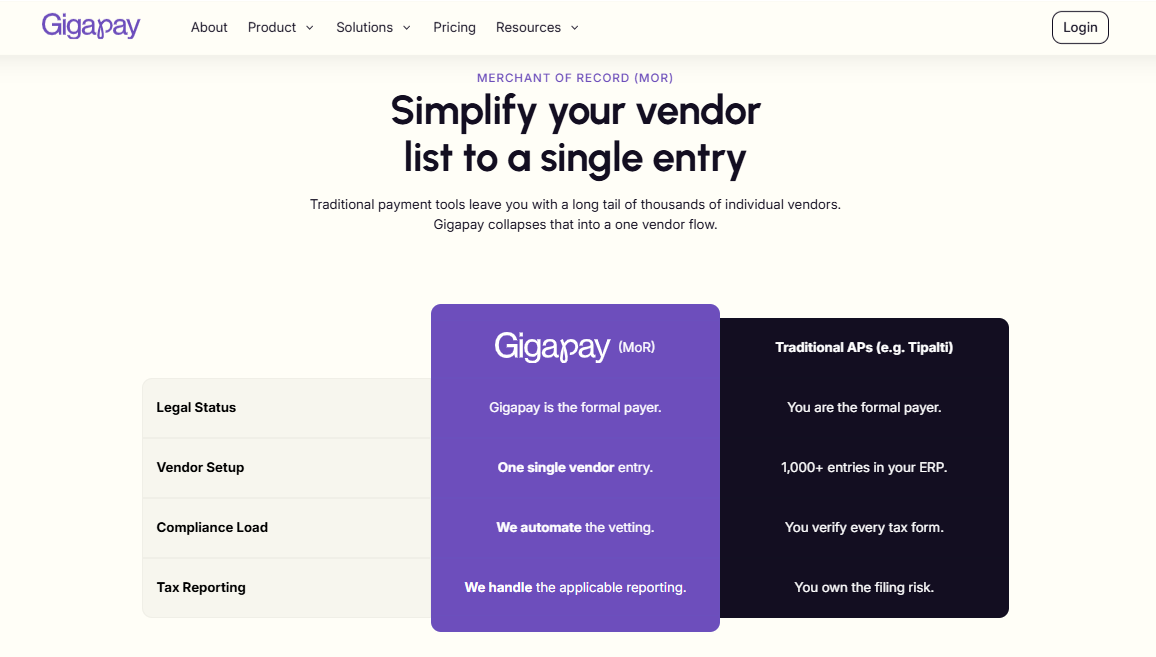
For creators who do have a sole trader registration or company, the reverse charge mechanism usually removes VAT from the invoice entirely. Here is the part most teams miss: when payments run through a Merchant of Record like Gigapay, reverse charge generally applies even when the creator and the brand sit in the same country.
The mechanics explain it. The creator does not invoice your brand. The creator invoices Gigapay, a Swedish entity, and Gigapay issues one consolidated invoice to you while paying the creator on your behalf. Because the creator's invoice crosses a border to Sweden, the cross-border reverse charge system applies in most cases, and no VAT lands on the invoice.
A French creator working with a French brand still transacts with a Swedish counterparty in the middle.
How Invoicing Works When the Creator Cannot Issue an Invoice
A private individual with no registered activity cannot legally issue an invoice in most jurisdictions, and asking them to produce one is asking them to produce a document that has no legal standing. Two mechanisms solve this.
1. Self-billing
The paying entity generates the invoice on the creator's behalf, with their agreement, containing all required data. Gigapay automates self-billing for international compensations, so the paperwork exists, is correct, and is generated without the creator touching an invoicing tool. One caution: self-billing is not universally permitted.
Gigapay's country research flags markets like China, Ukraine, and Tunisia where self-billing is not allowed and suppliers must issue their own invoices, which is one of many reasons country-level rules cannot be guessed.
2. Consolidated invoicing
Instead of processing 300 creator payments as 300 payables, the brand receives one invoice per campaign or batch. Gigapay's benchmark across clients is an 80% reduction in invoice volume.
Your ERP holds one vendor record instead of hundreds of individual entries, and your month-end close stops depending on whether a creator in another timezone responds to an email.
Country-Specific Rules Finance Teams Should Know in 2026
The following rules come from Gigapay's internal legal research database covering 93 countries. These are the ones that most often surprise finance teams.
Germany: The Künstlersozialkasse (KSK) Levy
The KSK is a German institution, running since 1983, that funds social security for freelance artistic and journalistic workers, and that includes influencers and creators. Companies based in Germany that commission work from self-employed creatives owe the KSK contribution, and it is payable regardless of whether the influencer is based in Germany or abroad.
Under the 2026 rules, the levy is 4.9% on relevant creative payments above €1,000. Companies based outside Germany do not have to pay the contribution.
One nuance matters for anyone using an intermediary: Gigapay is considered an intermediary from a KSK perspective and cannot report KSK for the client. German clients must assess, report, and pay KSK themselves where the law requires it, and Gigapay supports this by sharing the payment data it has collected.
Sweden and the Nordics: Income Reporting and Exchange
Gigapay reports all compensation paid to private individuals to Skatteverket, the Swedish tax authority. When the creator works in another country, an exchange of income statement follows: Skatteverket shares the information with the creator's local tax authority.
For Denmark, KU14 reporting also applies under the Sweden–Denmark exchange agreement. The practical effect is that a payment to an unregistered creator does not disappear into an informal grey zone. It is reported, matched, and visible to the creator's own tax authority.
Countries Where Local Clients Must Withhold on Local Individuals
Gigapay's research identifies a repeating pattern: when the client and the individual creator are in the same country, the client may need to withhold tax on the payment. Markets flagged include Spain, Switzerland, South Korea, Slovenia, Serbia, and, depending on the type of work, Thailand, Taiwan, and Vietnam. This is the single most common trap for brands paying domestic individuals directly from their own accounts.
Countries Where Creators Need a License
In the UAE, influencers need a license, and the country introduced new NMA influencer permit requirements in 2026 that affect both brands and creators. Saudi Arabia requires influencer licensing as well, and Qatar's research indicates residents will most likely need one too. In Türkiye, influencers need a dedicated bank account and can only receive payments to that account.
Paying an unlicensed creator in a licensing market creates risk for the creator and, by extension, for the campaign.
Markets Where Individuals Cannot Be Paid at All
Some jurisdictions do not support individual payouts under Gigapay's compliance model. Estonia, for example, is available as a market but flagged for company users only, and several markets including Argentina, Brazil, and Morocco carry "no individual" restrictions in Gigapay's database.
A compliant payout operation needs this map, because "we pay individuals in 65+ countries" never means "we pay anyone, anywhere, under any structure."
AML Screening for Higher-Risk Jurisdictions
As of the March 2026 FATF update, the grey list of jurisdictions under increased monitoring includes 22 countries, among them Bulgaria, Monaco, Vietnam, Kenya, and Lebanon, while Iran, Myanmar, and North Korea remain on the black list.
Gigapay tracks these lists and applies extra due diligence to clients from grey-listed countries. Finance teams paying into these markets directly should expect their banks to ask questions, and should have KYC documentation ready before the transfer, not after.
What DAC7 Means for Paying Individual Creators in the EU
DAC7 is the EU's platform economy reporting directive, and it is the reason "just wire the money" stopped being an option for organized creator payments in Europe. To stay DAC7 compliant, Gigapay collects from users with a company: official name, primary address, tax registration number per issuing Member State, VAT registration number, company registration number, and details of any permanent establishment in the Union.
Gigapay files DAC7 reports to Skatteverket covering creators across EU markets including Germany, France, Italy, Spain, the Netherlands, and the wider Union.
For a finance team, the takeaway is simple: income paid through organized channels to EU creators is reported to tax authorities, whether the creator has a company or not. Building your creator program on the assumption that small payments fly under the radar is building it on an assumption that expired.
Worker Misclassification: The Risk Behind Paying Individuals Directly
Paying an unregistered individual repeatedly, under brief, with deadlines and approval rounds, starts to resemble employment, and European court decisions on influencer status have made classification a live issue for brands.
The risk is not that a single campaign payment is illegal. The risk is that a pattern of direct payments to the same individuals, with no contractual counterparty in between, gives a labor authority or court room to argue an employment relationship existed, with back-dated social contributions attached.
An MoR structure changes the pattern itself. The creator's contractual counterparty is Gigapay, which formally purchases the deliverable and resells it to the brand. In Sweden, Gigapay goes further and acts as an employer of record for individuals without a company, filing employer contributions and PAYE returns, paying employer fees, and providing statutory insurance and employment certificates.
Honesty matters here, and Gigapay is explicit about the boundaries: outside the Swedish EoR service, Gigapay does not withhold social costs or taxes on behalf of the creator, and each party remains responsible for their own tax obligations under applicable law. What the model does is make the counterparty relationship, the documentation, and the reporting clean.
The Real Cost of Managing Unregistered Creators Manually
Gigapay modeled the numbers for a brand running 600 creator collaborations per year. The manual process costs roughly €139,590 annually: about 840 admin hours spent onboarding individuals as vendors, chasing tax data, correcting payment errors, and maintaining 300+ individual vendor records in the ERP. The same volume through Gigapay costs roughly €46,350 and around 60 admin hours.
The hidden cost sits with the creators. Gigapay's 2024 industry research with Billion Dollar Boy, Meltwater, The Influencer Marketing Factory, and Wild found payment terms stretching to 120 days, and found that enterprise onboarding requirements were an active barrier to working with nano and micro influencers at all.
A creator waiting four months for €400 does not come back for the next campaign, and your marketing team starts sourcing from a shrinking pool. Slow, painful payments are a talent retention problem wearing a finance costume.
How a Merchant of Record Model Solves the Whole Problem
Everything above collapses into one structural decision: who is the creator's counterparty? When it is your company, you inherit the data collection, the VAT logic, the country rules, the reporting, and the classification exposure for every individual you pay. When it is a Merchant of Record, you inherit one vendor.
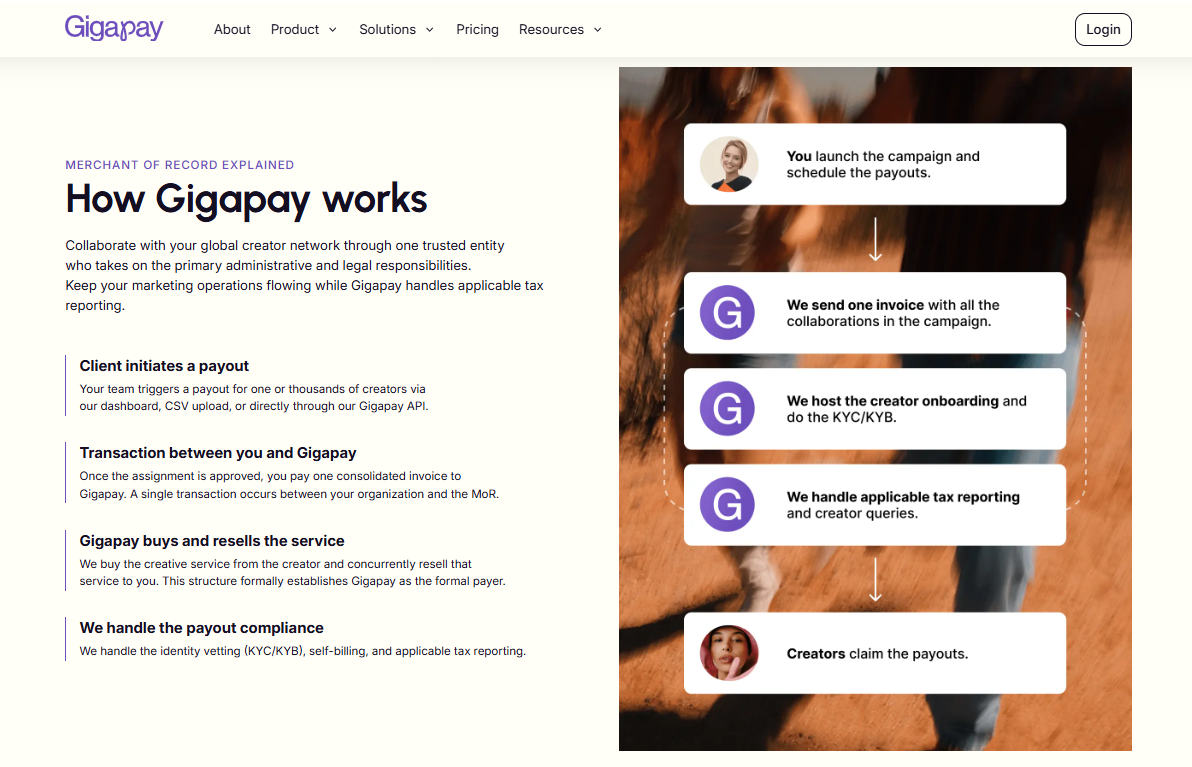
With Gigapay as MoR, the operating model looks like this:
- One vendor in your ERP: One contract, one supplier record, one consolidated invoice per batch, regardless of whether you pay 50 creators or 5,000.
- No creator needs a company or VAT number: Creators onboard as an individual, sole trader, or company, and complete full KYC including TIN validation before any payment moves.
- Compliance reporting handled: DAC7 filings, KU14 for Denmark, and income reporting to Skatteverket with international exchange of income statements run automatically.
- Correct paperwork without creator effort: Self-billing generates compliant invoices on the creator's behalf, and reverse charge keeps VAT off the invoices in most cases.
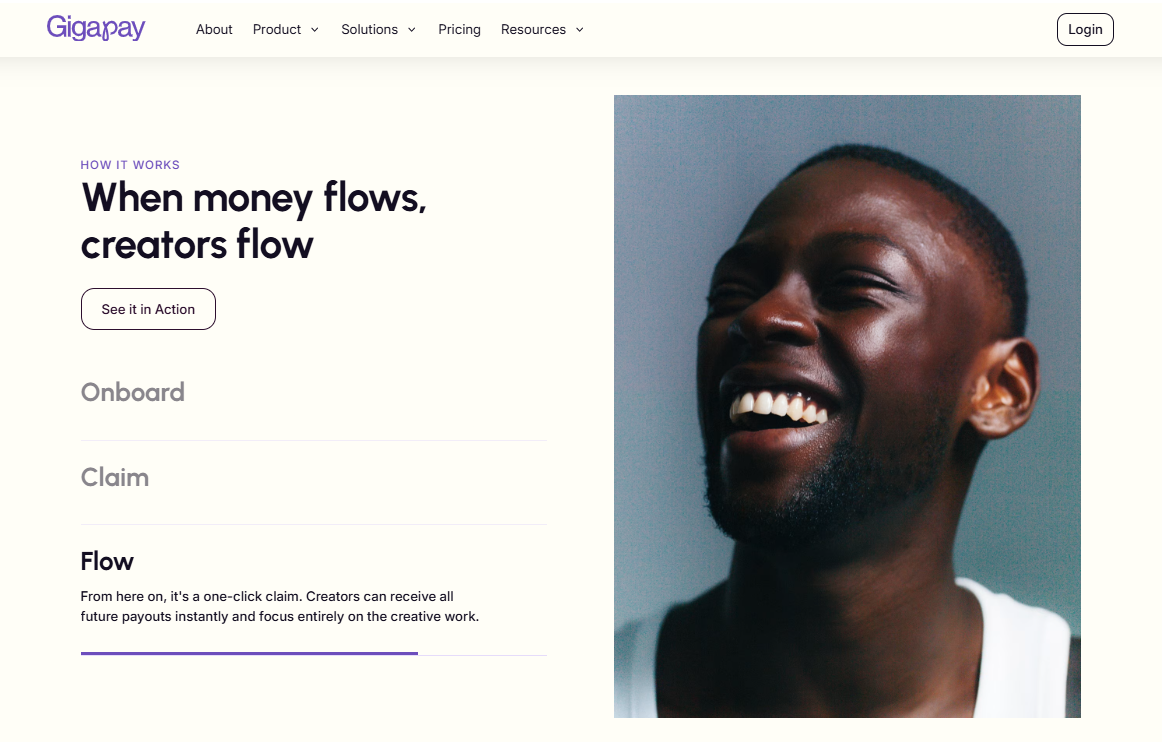
- Instant payouts on local rails: SEPA Instant in the EU, Faster Payments in the UK, and ACH in the US pay creators instantly in 50+ currencies, with EarlyPay giving creators access to scheduled funds when they need liquidity.
- A creator experience that keeps talent: Dedicated human support and a creator NPS of 88 mean the people your campaigns depend on actually want to work with you again.
Compliance Checklist: Paying Creators Without a VAT Number in 2026
Before any payment to an unregistered creator leaves your accounts, confirm the following:
- Identity and tax data collected: Legal name, address, date of birth, ID copy, bank details, and the correct individual TIN for the creator's country, validated in the right format.
- Country rules checked: Local withholding for domestic individuals, licensing requirements (UAE, Saudi Arabia), self-billing restrictions, and any market where individuals cannot be paid at all.
- VAT position documented: No VAT for unregistered individuals; reverse charge assessed for registered sole traders and companies.
- Reporting obligations mapped: DAC7 in the EU, KSK exposure for German-based companies, income reporting where required.
- Classification pattern reviewed: Repeated direct payments to the same individuals under your instruction deserve a legal look.
- Payment terms a creator can live with: If your process takes 90 days, your creator pool will shrink until it fits your process.
Or replace all six steps with one vendor that does this for a living.
Conclusion
Gigapay is the Merchant of Record built for exactly this problem: paying the 80% of creators who have no company and no VAT number, in 65+ countries, without your finance team carrying the compliance weight.
Paying unregistered individuals is legal everywhere your campaigns run, but it obligates you to collect the right tax data, apply the right VAT treatment, respect country-specific withholding and licensing rules, and report income under frameworks like DAC7.
Done manually at scale, that work costs hundreds of hours and six figures a year. Done through a Merchant of Record, it costs one contract.
Book a demo and see how your next campaign pays every creator, registered or not, from a single invoice.
Read Next:
- ViDA and Creator Payments: How EU "VAT in the Digital Age" Changes Influencer Invoicing for Finance Teams (2026–2030)
- France's E-Invoicing Mandate Is Live: What Brands Paying Creators Must Change Now (2026)
- Influencer Payments Are Tail Spend: A Procurement Playbook for Controlling Long-Tail Creator Vendors in 2026
FAQs:
1. Can you pay a creator who has no company or VAT number?
Yes, you can pay a creator who has no company or VAT number, because individuals can legally sell services and declare the income themselves. The payer, however, must collect the creator's tax identification data, apply the correct VAT treatment, and meet any local reporting or withholding obligations, which is why many brands run these payments through a Merchant of Record like Gigapay.
2. What information do finance teams need to pay an unregistered creator?
The information finance teams need to pay an unregistered creator includes the creator's full legal name, address, date of birth, a copy of official ID, bank account details, country of work, nationality, and a validated Tax Identification Number (TIN) for their country, plus an A1 certificate where relevant. Without complete data, the payment cannot be reported correctly.
3. Does VAT apply when paying a creator without a VAT number?
VAT does not apply when paying a creator without a VAT number, because an individual with no registered activity cannot charge VAT or issue invoices. For creators who are registered as sole traders or companies, the reverse charge mechanism generally removes VAT from the invoice, especially when payments run through a cross-border Merchant of Record.
4. What is the best way to pay creators without a registered business in 2026?
The best way to pay creators without a registered business in 2026 is through a Merchant of Record such as Gigapay, which becomes the creator's contractual counterparty, runs full KYC and TIN validation, generates self-billed invoices, handles DAC7 and income reporting, and pays creators instantly in 65+ countries from one consolidated invoice.
5. Is DAC7 reporting required when paying individual creators in the EU?
DAC7 reporting is required when paying creators through digital platforms in the EU, and it obligates the reporting entity to collect and file data including names, addresses, and tax registration numbers with the tax authority. Gigapay files DAC7 reports to the Swedish tax authority for creators across EU markets, so brands using Gigapay do not manage these filings themselves.
.jpg)
.jpg)
.jpg)