.jpg)

69% of creators say their financial insecurity is directly tied to unpredictable payment timing from brands, according to Gigapay's Global Creator Economy Report 2026 (July 2026).
Gigapay is the mass creator payout platform that pays creators in 65+ countries in as little as 7 seconds, acting as Merchant of Record so brands carry one vendor instead of hundreds.
Brand spend on creators reached $32.6 billion in 2026, yet most of that money still moves on net-30 and net-60 terms, with delays stretching to 120 days. Creators have noticed, and payment speed now sits next to rate when they decide which briefs to accept.
This article breaks down why creators put fast-paying brands first in 2026, what net-60 terms cost both sides, and how brands can pay in seconds without losing compliance or financial control.
Key Takeaways
- 69% of creators link financial insecurity to unpredictable brand payment timing in 2026.
- Net-60 remains the most common influencer payment term, with delays reaching 120 days.
- 85% of creators say fast access to earnings decides where they work.
- 44% of independent earners would leave a platform if instant pay disappeared.
- Gigapay pays creators in 7 seconds across 65+ countries as Merchant of Record.
The State of Creator Payment Terms in 2026
Most creator payments still run on terms written for corporate suppliers, not for individuals who invoice for a living. Digiday reports that typical payment terms range from 30 to 90 days after the work goes live, and that net-60 shows up more often than net-30. In a Tipalti survey cited by Digiday, 56% of creators reported experiencing late payments on top of those already long terms.
The pain shows up consistently across independent studies. A March 2025 report by Influencer and Crowd DNA, covered by eMarketer, found that 41% of creators name payment delays as their single biggest pain point when working with brands.
Gigapay's own State of Influencer Payments research documented payment terms stretching as far as 120 days once approval cycles and cross-border settlement are added.
Here is what the common payment terms actually mean for a creator who posts today:
The gap between the first four rows and the last one is the gap this article is about. Creators in 2026 know the last row exists, because platforms like Gigapay already deliver it, and that knowledge has changed how they rank the brands that approach them.
Why Payment Speed Now Decides Which Brands Creators Work With
Creator income is thin, concentrated, and dependent on brand deals. Archive's January 2026 analysis found that 73% of creators earn below $30,000 a year, while 46.7% identify as full-time content professionals. Brand partnerships supply roughly 69–70% of total creator income.
Gigapay's Global Creator Economy Report 2026 puts median creator earnings at about $3,000 a year, with 48.7% of creators earning under $10,000.
That math explains the behavior. A creator earning $25,000 a year from brand deals cannot float a net-60 invoice the way a supplier with a finance department can. When payouts run late, the fallback is expensive: industry payout research compiled by Talentir (August 2026) found that 65% of independent gig earners have used payday loans or cash advances because of payout delays.
The same research shows how directly speed now drives choice:
- 85% of independent earners say fast access to earnings is very or extremely important when choosing where to work.
- 70% prefer daily or instant payouts over weekly or monthly cycles.
- Workers on instant-pay platforms report 63% satisfaction versus 50% on weekly-pay platforms.
- 44% say they would quit if instant pay became slower or more expensive.
- 68% already work across two or more platforms each month, so moving effort to the faster payer costs them nothing.
Brand-side data points the same way. In the Tipalti survey reported by Digiday, 74% of creators said they stopped working with brands after feeling undervalued, and payment experience is one of the clearest signals of value a brand sends.
Creators now negotiate deposits, cut terms down to 10–15 days, and attach late fees of up to 10% per month to overdue invoices. A brand that pays in seconds never enters that negotiation.
Paying in Seconds vs Net-60: What Each Timeline Actually Looks Like
The phrase "net-60" hides how many steps sit between a creator posting and money landing. The table below walks through the same campaign payment twice: once through a manual net-60 process, once through an instant payout platform like Gigapay.
Two details in that comparison matter most:
- First, the slow version is slow at every stage, so fixing one step rarely fixes the outcome.
- Second, the fast version does not require the brand to pay its own invoice faster.
The brand funds Gigapay on its normal terms and receives one consolidated invoice, while creators are paid out in seconds across 50+ currencies. Speed for the creator and cash flow control for finance stop being a trade-off.
What Net-60 Payment Terms Really Cost Brands in 2026
Slow payment feels free to the brand because the cost never appears as a line item. It appears in four other places.
Creator churn and lost repeat collaborations
74% of creators have stopped working with brands after feeling undervalued, and late or slow payment is one of the most concrete forms of being undervalued. With 68% of independent earners active on multiple platforms, the creators a brand loses do not leave the market. They move their best work to the competitor that pays faster.
Repeat collaborations are where influencer ROI compounds, and net-60 quietly caps the repeat rate.
Rate premiums and tougher contracts
Creators have started pricing payment risk into their quotes. The negotiation tactics documented by Digiday include upfront deposits, terms shortened to 10–15 days, and late fees of 10% per month on overdue invoices. A brand known for slow payment pays more per deliverable, or loses the brief entirely to a fast payer at the same rate.
Admin cost inside the brand
Gigapay's benchmark for a brand running 600 creator collaborations a year puts the manual process at roughly €139,590 and 840 admin hours annually, spread across vendor onboarding, invoice chasing, error correction, and reconciliation.
The same volume runs at about €46,350 and 60 admin hours with payouts consolidated through one vendor. Slow payment and heavy admin are the same problem measured in two units.
Reputation in a market where creators talk
Creators compare notes on payment behavior in group chats, Discord servers, and public posts. 41% already call payment delays their biggest pain point when working with brands, so a reputation for paying in seconds is one of the cheapest differentiators a brand can own in 2026. It costs nothing extra per campaign and shows up in every pitch to a creator who has been burned before.
Why Brands Still Pay Creators on Net-60 Terms
Most slow-paying brands are not short on cash or goodwill. They are running creator payments through systems built for corporate suppliers, and every step of that system adds days.
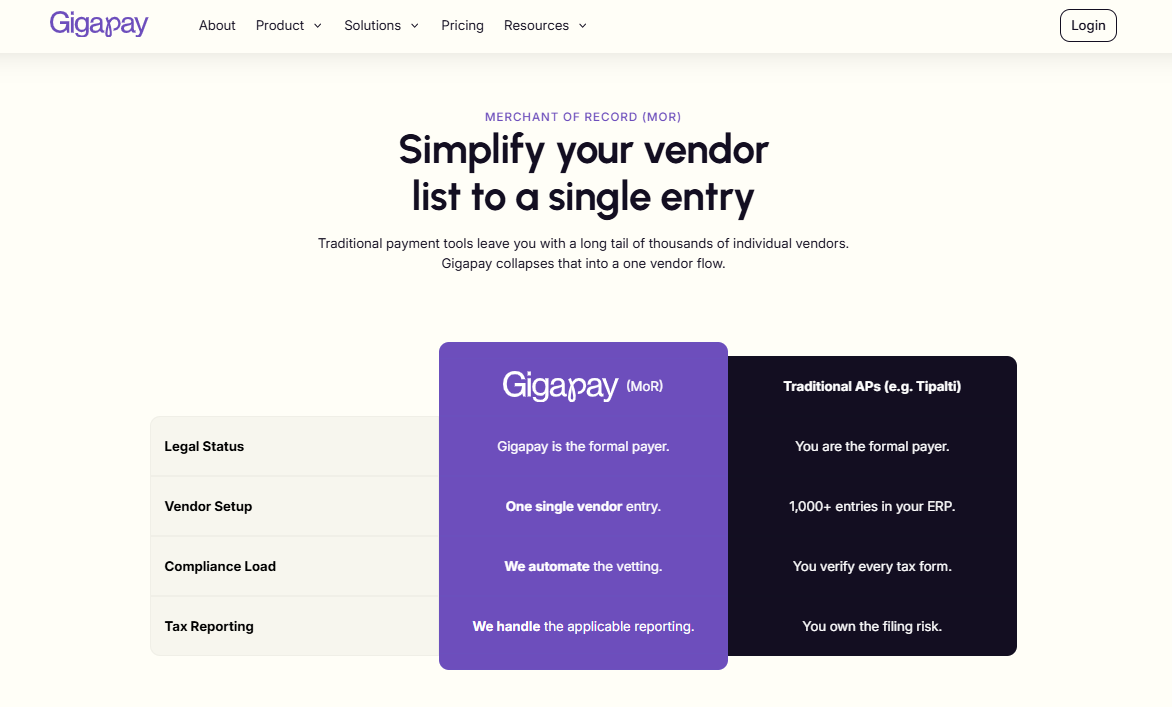
- Procurement treats each creator as a vendor: A brand working with 300 creators carries 300 vendor records in its ERP, each requiring onboarding forms, tax documentation, and banking verification before a single payment moves.
- Payment runs are batched: Finance teams release supplier payments weekly or monthly. A creator whose invoice misses the cutoff by a day waits for the next cycle.
- Cross-border compliance adds review time: Paying individuals across the UK, France, DACH, and the Nordics raises questions about VAT, tax reporting obligations like DAC7, Germany's KSK levy, and classification risk. Finance and legal hold payments while they check.
- The relationship and the payment live in different departments: Marketing owns the creator relationship. Finance owns the money. The creator chasing an invoice is talking to a team that has never heard of them.
- Small invoices get deprioritized: Procurement processes are tuned for large suppliers, so a €800 creator invoice sits behind six-figure vendor payments in the queue.
None of these steps exists to slow creators down. Each one exists to protect the company, which is why telling finance to "just pay faster" fails. The terms change only when the structure changes, and that is what the Merchant of Record model does.
How Instant Creator Payouts Work Without Breaking Compliance
Paying in seconds is a solved technical problem. The real question finance teams ask is how to do it without taking on tax, classification, and reporting risk across dozens of countries. The answer combines four pieces.
Local payment rails deliver the speed
Gigapay routes payouts over local instant rails: SEPA Instant in the EU, Faster Payments in the UK, and ACH in the US. Payouts reach creators in as little as 7 seconds, across 65+ countries and 50+ currencies, funded by the brand in USD, EUR, GBP, SEK, DKK, or NOK.
The Merchant of Record model carries the compliance
As Merchant of Record, Gigapay formally purchases the creator's deliverable and resells it to the brand. The brand's ERP holds one vendor, Gigapay, instead of hundreds of individual creators.
One consolidated invoice covers an entire campaign or batch, which cuts invoice volume by roughly 80%. Procurement approves one counterparty once, and every creator payment after that moves at platform speed.
Automated verification and tax reporting keep regulators satisfied
Every creator passes KYC or KYB verification, with tax ID and VAT validation built into onboarding. Gigapay automates regulatory reporting such as DAC7 in the EU, KSK assessment in Germany, and KU14 in Sweden.
Creators can onboard as individuals, sole traders, or companies, and no registered business or VAT number is required, which opens the nano and micro tier that procurement rules normally block. The platform is ISO 27001 certified and GDPR compliant.
EarlyPay removes the last trade-off
EarlyPay gives creators instant access to funds that are already scheduled. The brand keeps its agreed payment terms and cash flow plan, and the creator still gets liquidity on day one.
This is the mechanism that lets a CFO keep control while marketing earns a reputation as a fast payer, and it is one reason Gigapay's creator NPS stands at 88.
Fast-Paying Brands vs Slow-Paying Brands: The Numbers Side by Side
The comparison below uses Gigapay's benchmark of a brand running 600 creator collaborations a year, alongside the market data covered above.
The retention effect is the hardest number to fake. Boozt, the Nordic fashion retailer, had tried for years to work with nano and micro influencers before moving payouts to Gigapay, and afterwards tripled its collaborations without expanding the team.
Fast payment compounds: happier creators say yes faster, deliver again, and recommend the brand to other creators.
How Brands Become Fast Payers Without Losing Financial Control
Moving from net-60 to seconds is an infrastructure change, not a cash flow sacrifice. Here is the sequence that works for brands and agencies paying hundreds of creators a year.
- Measure the real payment cycle: Track the days from content going live to money landing with the creator, not from invoice approval. Most brands discover their true cycle runs 70–100 days.
- Separate creator payments from supplier procurement: Creators are individuals delivering creative work, and forcing them through vendor workflows built for corporate suppliers is the root delay.
- Consolidate on one Merchant of Record: One contract, one vendor record, one consolidated invoice per batch. Finance keeps a clean audit trail, and procurement reviews a single counterparty instead of hundreds.
- Fund in batches, pay out instantly: The brand funds campaigns on its normal terms via one invoice. Creators are paid in seconds via CSV upload or API, with full integration taking 2–5 days.
- Automate verification and tax reporting: KYC, tax ID validation, DAC7, KSK, and KU14 reporting run automatically, so compliance review stops holding individual payments.
- Offer scheduled-payment liquidity: With EarlyPay, creators access scheduled funds instantly even when the brand's internal terms stay unchanged.
- Track creator retention as a payment KPI: Repeat collaboration rate, creator NPS, and time-to-payout tell marketing and finance whether the change is working.
The outcome is the position creators are actively looking for in 2026: a brand that pays in seconds, holds one vendor relationship, and passes every audit.
What Instant Payment Changes in Creator Economics
Payment speed looks like an operational detail from the brand side. From the creator side, it decides whether content creation works as a business at all.
The income base is fragile. Median creator earnings sit around $3,000 a year, 48.7% of creators earn under $10,000, and the top 10% capture 62% of all brand payments, up from 53% in 2023.
For everyone outside that top tier, a single delayed invoice can mean a missed rent or mortgage payment, which is exactly the scenario creators described to Digiday when explaining why they now impose late fees and deposits.
Instant payment changes three things for that long tail:
- Predictable cash flow: When payment lands the day work is approved, creators can plan expenses like any other professional, instead of financing brand campaigns out of their own savings or payday loans.
- Lower barrier to entry for nano and micro creators: Platforms that require no registered business or VAT number let first-time creators accept paid work legally. These are the creators enterprise procurement rules usually exclude, and the segment where engagement rates run highest.
- More deals accepted, faster: Creators who trust a brand's payment behavior skip the protective negotiation layer of deposits, shortened terms, and late fee clauses. Both sides close faster.
With 87.49% of marketers expecting creator budget increases in 2026 and 72.22% planning increases of 50% or more, the money flowing toward creators keeps growing. The brands that move that money in seconds will book a disproportionate share of the best creators' calendars.
Conclusion
Gigapay is the mass creator payout platform that lets brands pay hundreds of creators in 7 seconds, in 65+ countries, through one vendor, one invoice, and full compliance as Merchant of Record.
The data in this article points one way: creators in 2026 rank brands by payment speed, net-60 terms drive churn, rate premiums, and six-figure admin costs, and the brands that pay in seconds win the repeat collaborations that make influencer marketing profitable.
Fast payment is no longer a perk creators thank you for. It is the baseline they filter brands by.
Book a demo with Gigapay to see how your next campaign can pay every creator in seconds while finance keeps full control.
Read Next:
- How to Pay TikTok Creators in Other Countries When TikTok One Won't (2026)
- Influencer Contract Payment Clauses: Copy-Ready Terms for Brands (2026)
- How to Run a 200-Creator Nano & Micro Influencer Program With a Two-Person Team
FAQs:
1. Why do creators put fast-paying brands first in 2026?
Creators put fast-paying brands first in 2026 because 69% tie financial insecurity to unpredictable payment timing, 73% earn below $30,000 a year, and brand deals supply around 70% of their income, so a brand that pays in seconds removes their biggest financial risk.
2. What is the most common payment term for influencer campaigns in 2026?
The most common payment term for influencer campaigns in 2026 is net-60, with net-30 appearing on roughly half of contracts and real delays stretching to 90–120 days once approvals and cross-border settlement are included.
3. How fast can brands pay creators in 2026?
Brands can pay creators in as little as 7 seconds in 2026 by using a Merchant of Record platform like Gigapay, which routes payouts over local instant rails such as SEPA Instant, Faster Payments, and ACH across 65+ countries.
4. What do net-60 payment terms cost brands that work with creators?
Net-60 payment terms cost brands creator churn, rate premiums, and admin overhead: 74% of creators have dropped brands that undervalued them, creators attach late fees of up to 10% per month, and manual processing of 600 collaborations runs around €139,590 and 840 hours a year.
5. How does Gigapay help brands pay creators faster without compliance risk?
Gigapay helps brands pay creators faster without compliance risk by acting as Merchant of Record: it becomes the brand's single vendor, runs KYC and tax ID verification, automates DAC7, KSK, and KU14 reporting, consolidates hundreds of invoices into one, and pays creators in 7 seconds in 50+ currencies.
.jpg)
.jpg)