

According to the Influencer Marketing Hub 2026 Benchmark Report, 87.49% of brands expect their influencer budgets to grow this year, and 72.22% expect increases of 50% or more.
Gigapay is the Merchant of Record for creator payments built for exactly that kind of growth, the one vendor that pays hundreds of creators across 65+ countries while taking on the tax and legal responsibility attached to every payout.
As budgets climb, the number of creators a brand has to onboard, pay, and report on climbs with them, and the platform sitting behind those payments is what decides whether a program scales cleanly or turns into a finance bottleneck.
This article compares the best Merchant of Record platforms for creator payments in 2026, shows how each one handles compliance, and helps you choose the right fit for your situation.
Key Takeaways
- Gigapay is the best Merchant of Record for creator payments in 2026.
- A true Merchant of Record absorbs tax and legal liability, not only payments.
- Stripe Connect, PayPal, and Wise move money but are not Merchants of Record.
- Gigapay pays creators instantly across 65+ countries with no business registration required.
- Choosing a processor over a Merchant of Record leaves the brand holding compliance risk.
What a Merchant of Record Actually Means for Creator Payments
A Merchant of Record is the company that legally stands in the middle of a transaction and becomes its counterparty. For creator payments, that means the platform buys the creator's deliverable and resells it to the brand in the same motion, so the brand contracts with one vendor instead of with every creator individually.
The compliance work that normally lands on the brand moves to the Merchant of Record, including identity verification, tax ID validation, invoicing, and the cross-border reporting that follows a payout into another country.
There is a line worth drawing clearly, because most vendors blur it. A Merchant of Record for creator payments takes over the administrative and legal work tied to buying a creator's deliverable, and it files tax reporting such as DAC7 in the EU, KSK in Germany, and KU14 in Sweden.
It does not withhold or pay a creator's income tax or social security on their behalf, and it does not make insurance contributions for them. Each creator stays responsible for their own taxes under the laws that apply to them.
The Merchant of Record removes the brand's exposure to the purchase, reports what the law requires, and leaves the creator's personal tax position where it belongs.
That distinction is the reason the model exists. A brand running 600 creator collaborations a year does not want 600 vendor relationships, 600 tax forms to chase, or the risk of getting cross-border reporting wrong in a market it has never operated in. The Merchant of Record turns all of that into a single relationship.
How We Evaluated Each Platform
We ranked these platforms on the things that decide whether a creator payment program runs cleanly at scale, not on brand recognition. Eight criteria carried the weight:
- Whether it operates as a true Merchant of Record, taking on liability rather than only processing payments
- Country and currency coverage
- Automated tax reporting, including DAC7, Germany's KSK, and Sweden's KU14
- Whether creators need a registered business to get paid
- Payout speed and the local payment rails behind it
- Creator experience and the quality of support
- API access and how long a full integration takes
- Pricing transparency
The first criterion did most of the sorting. A platform that moves money well but leaves the brand holding the tax and classification risk is solving a smaller problem than it first appears to.
The Best Merchant of Record Platforms for Creator Payments in 2026
Each platform below is described the same way so you can compare them directly: what it is, who it is best for, then a clear list of pros and cons, and how it prices. Every option here is useful for something. Only some of them are actually Merchants of Record, and that is the point.
1. Gigapay: Best Overall for Global Creator Payments at Scale
Gigapay is a mass creator payout platform that operates as a Merchant of Record, built specifically for brands and agencies that pay creators across borders at volume.
Founded in Stockholm in 2019 and focused on the creator economy since 2021, it sits between the brand and the creators as the single legal counterparty, buying each creator's deliverable and reselling it to the brand in the same motion. That structure is what lets a company paying hundreds or thousands of creators a year replace a sprawl of individual vendor relationships with one.
On compliance, Gigapay becomes the only vendor in your ERP, issues one consolidated invoice per campaign, validates tax IDs and VAT details at onboarding, and files DAC7, KSK, and KU14 reporting automatically, so finance stops chasing tax documentation creator by creator.
It pairs that compliance cover with instant payouts across 65+ countries and 50+ currencies over local rails such as SEPA Instant, Faster Payments, and ACH, and it onboards creators without requiring a registered business or VAT number, which is what let Boozt reach the nano and micro creators it had been unable to work with and triple its collaborations without adding headcount.
Pricing starts at €279 per month plus a 4.9% admin fee per payout on the Base plan, with custom Enterprise pricing and a dedicated customer success manager for brands above €1.8M in annual payout volume.
Pros:
- Operates as a true Merchant of Record, so the tax and legal liability of paying creators moves off the brand.
- Pays creators instantly across 65+ countries and 50+ currencies through local payment rails.
- Files DAC7, KSK, and KU14 reporting automatically, so finance stops chasing individual tax documentation.
- Onboards creators with no registered business or VAT number required, which opens up the nano and micro creators most platforms make hard to pay.
- Replaces hundreds of creator relationships with one vendor in your ERP and one consolidated invoice per campaign, cutting invoice volume by around 80%.
- Proven at scale, with Boozt tripling its collaborations without adding headcount and WPPMedia's GOAT agency cutting the time it spends managing payments.
- Backs the platform with a creator NPS of 88, EarlyPay liquidity for creators, and a dedicated support team.
Cons:
- Built for volume, so a brand running only a handful of collaborations a year is over-served by it.
- As a Merchant of Record it files tax reporting but does not withhold creators' income tax or social security, so creators stay responsible for their own filings.
2. Lumanu: For US-Focused Creator Payments
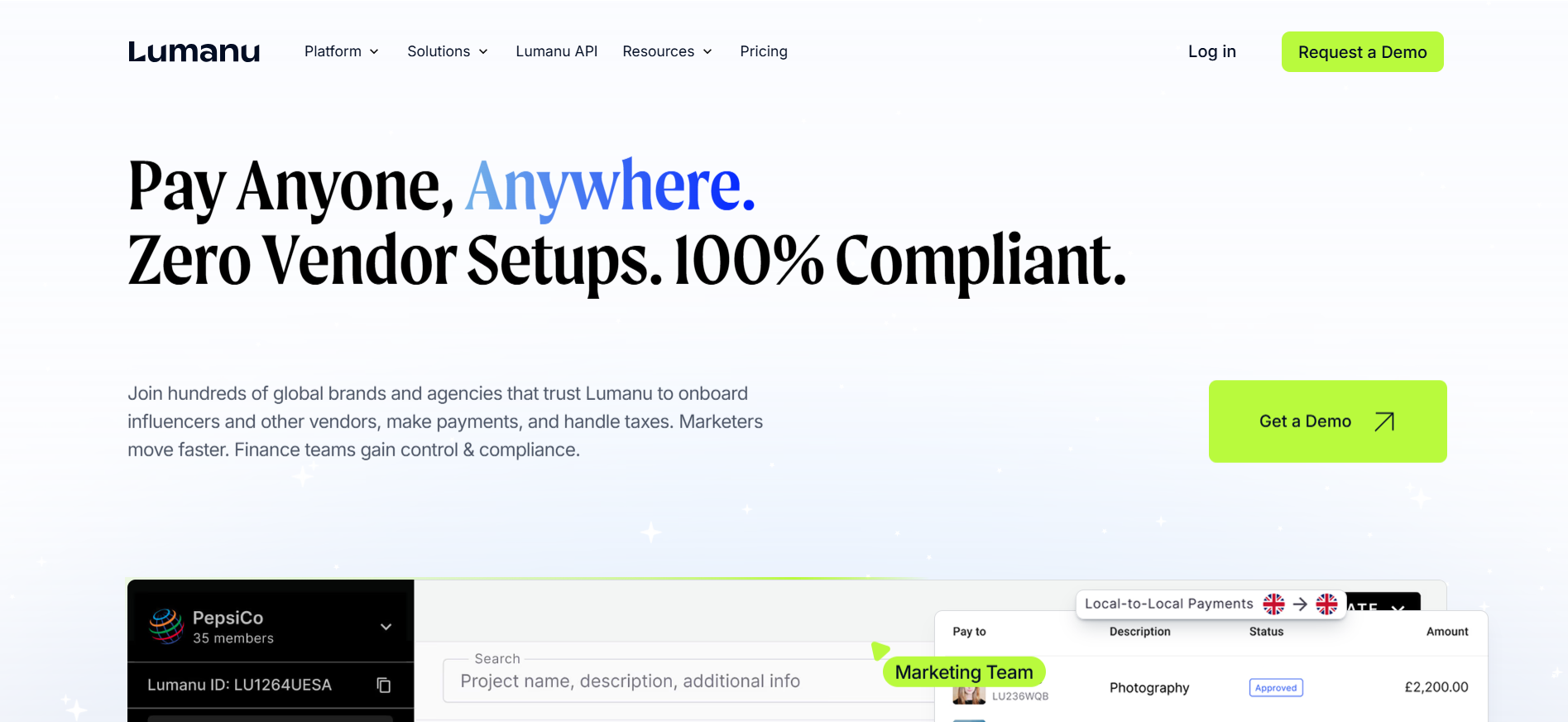
Lumanu is a creator payment platform that acts as payer of record inside the United States, taking on domestic tax handling for the creators a brand works with. It is aimed at brands and agencies whose creator roster is mostly American, and it manages that domestic flow cleanly, from sending the payment to generating year-end 1099 forms.
Its compliance strength is squarely US tax handling, and it does that part well. The constraint is geographic, because Lumanu was designed around the US system, so its coverage, payment options, and compliance tooling get thin the moment a program pays creators in Europe or beyond, where reporting rules like DAC7, KSK, and KU14 come into play.
For a brand whose creator work never leaves the US, Lumanu is a reasonable fit, while any program with international ambitions runs into its ceiling fast.
Pros:
- Acts as payer of record in the US and handles 1099s cleanly, though Gigapay provides the same domestic cover while also paying creators across 64 other countries.
- Offers a straightforward flow for US-only rosters, while Gigapay keeps that simplicity without capping a brand at a single country.
Cons:
- US-centric, with coverage and compliance tooling that thin out the moment a program goes international.
- No automated DAC7, KSK, or KU14 reporting for brands paying creators in Europe.
- Limited fit for any brand scaling creator work across borders, which is where the operational cost actually lands.
- Pricing is quote-based rather than publicly standardized, so it depends on volume and configuration.
3. Tipalti: Best for Broad Accounts-Payable Automation
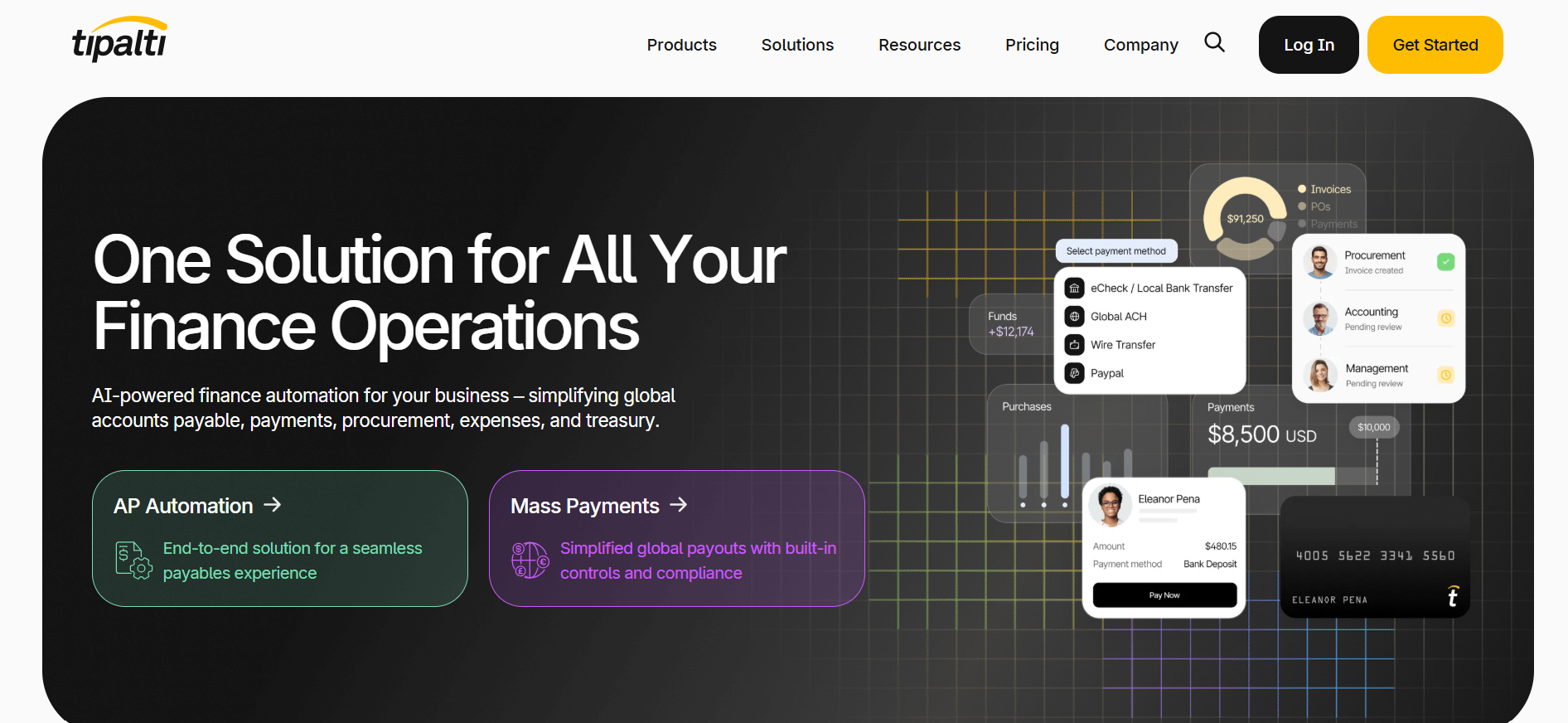
Tipalti is a global accounts-payable platform that automates supplier payments, onboarding, and tax-form collection across large and varied vendor lists. It serves finance teams that need to pay many kinds of suppliers, with creators sitting as one category among many rather than the focus of the product.
Its compliance contribution is collecting the right tax forms and validating payees at scale, and it does this with real depth for complex finance operations.
The structural point for creator programs is that Tipalti automates the payment and the paperwork while remaining an AP tool, so the brand stays the legal counterparty to each creator and keeps the underlying tax and classification liability. That makes it powerful for a finance department paying hundreds of vendors of every type, and heavier than a brand needs when the actual job is paying creators quickly and compliantly.
Pros:
- Provides deep accounts-payable automation for large, mixed vendor lists, though Gigapay is purpose-built for creators rather than general AP.
- Collects tax forms and validates payees well, while Gigapay goes further by taking on the liability itself instead of only managing the paperwork.
Cons:
- Not a Merchant of Record, so the brand keeps the underlying tax and classification liability.
- Built for broad finance operations, which makes it heavier than a creator-first payout tool.
- Requires more setup and configuration than a platform designed for creator programs.
- Pricing follows a platform-fee model that scales with usage and modules, so costs are harder to predict.
4. Stripe Connect: Best for Embedded Platform Payouts
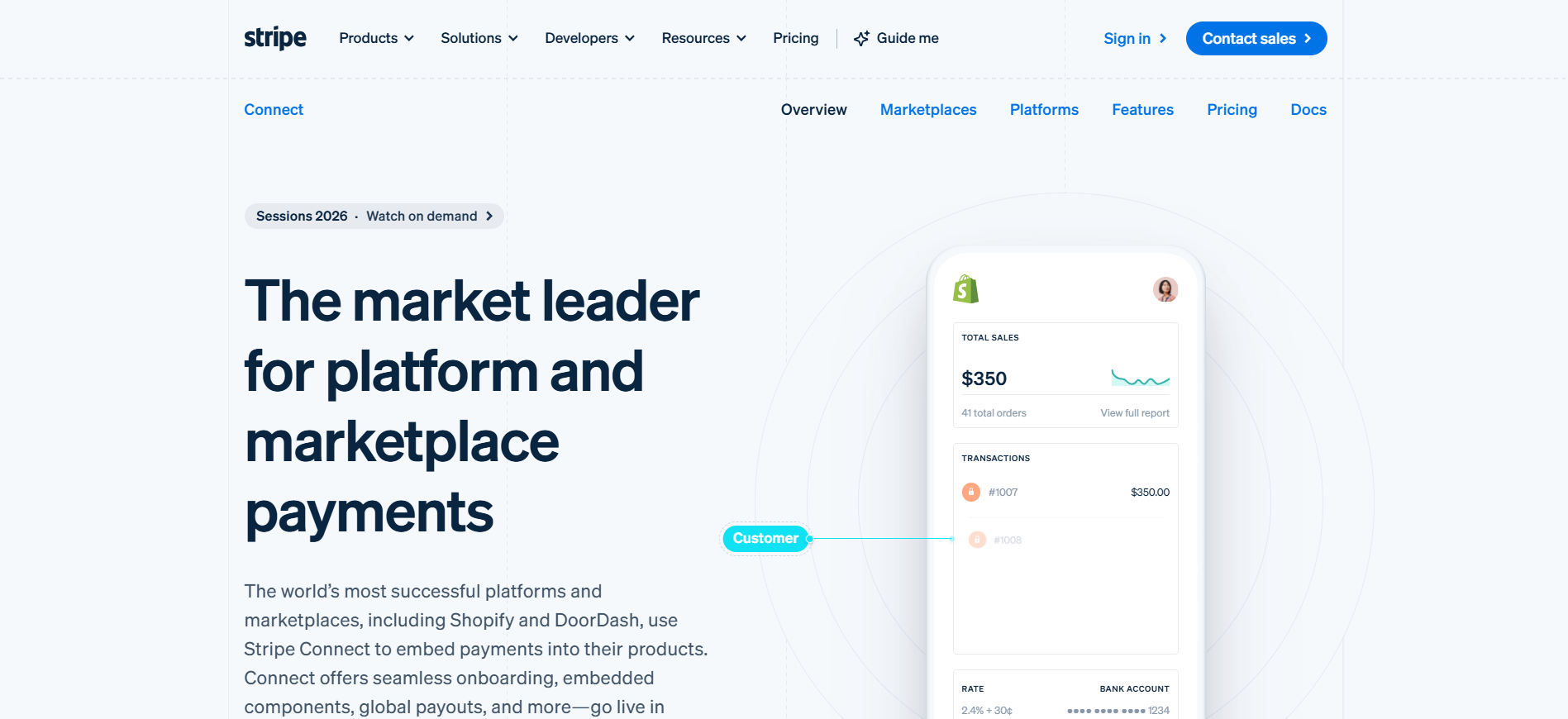
Stripe Connect is payment infrastructure that lets marketplaces and platforms build their own payout flows on top of Stripe. It is aimed at product and engineering teams embedding payments into software they own and operate, rather than at marketing or finance teams who want a finished tool.
Its compliance support is genuinely capable, with tooling for onboarding and some tax reporting, and developers value how much they can shape the experience. The trade-off for creator programs is that Stripe Connect hands a brand the building blocks rather than a finished, liability-bearing service, so the company designs, ships, and maintains the flow itself and keeps the compliance responsibility, including DAC7, KSK, and KU14 where they apply.
For a platform business with engineering resources and a reason to own the payment layer, that control is the appeal, while a brand that simply needs to pay creators ends up funding a build it could have skipped.
Pros:
- Gives developers flexible infrastructure to build a custom payout flow, though that flexibility means you build and maintain what Gigapay delivers ready to use.
- Offers strong developer tooling, while Gigapay provides an API that most teams integrate in two to five days without taking on the compliance work themselves.
Cons:
- Not a Merchant of Record for the creators you pay, so the tax liability stays with your business.
- Requires engineering resources to design, ship, and maintain the payout flow.
- Leaves compliance design and tax reporting as your responsibility, including DAC7, KSK, and KU14 where they apply.
- Per-payout and per-transaction fees layer on top of Stripe's standard processing fees.
5. PayPal Payouts: Best for Simple, Low-Volume Global Payouts
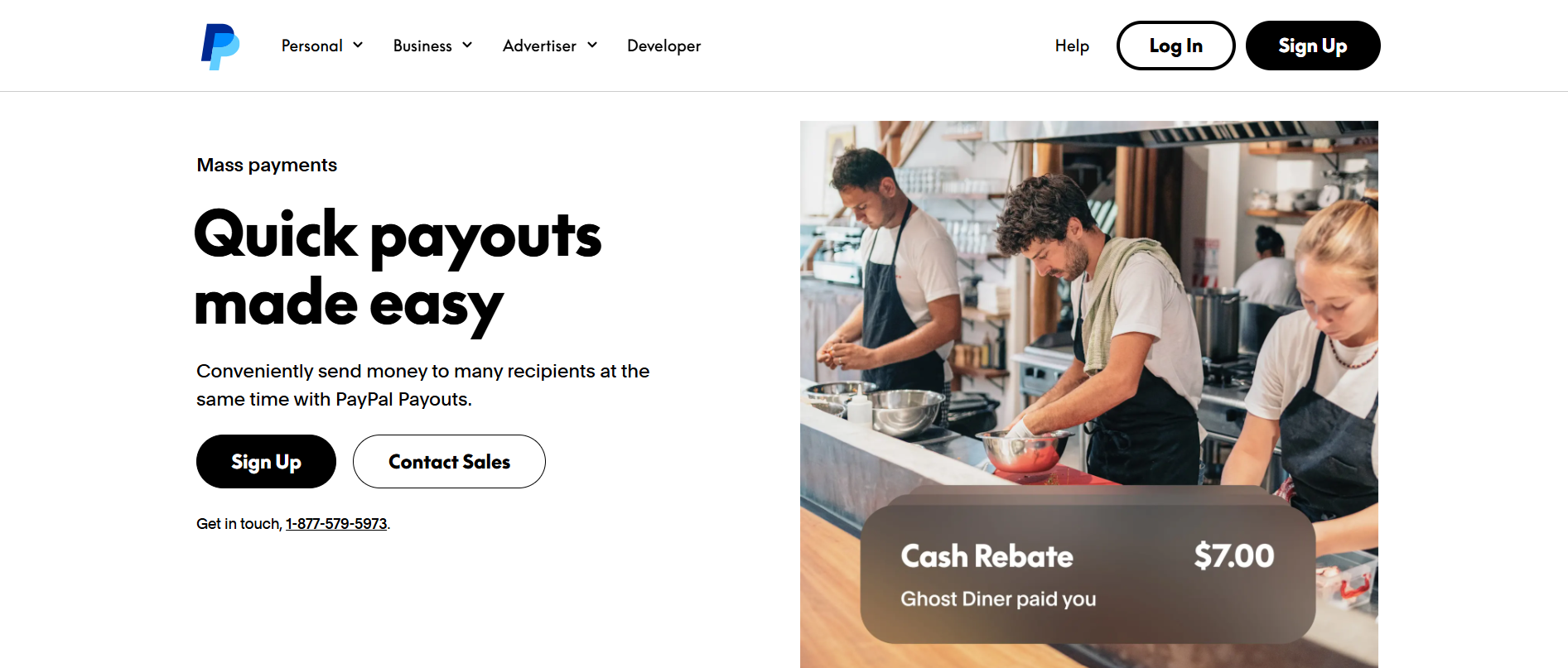
PayPal Payouts lets a brand send money to many recipients at once through a network most people already use. It suits occasional, low-volume payouts where familiarity and a quick setup matter more than compliance depth.
Its main strength is reach, since the majority of creators already hold a PayPal account and can receive funds without onboarding to anything new. For creator programs run at scale, the limits show quickly, because PayPal Payouts offers little in the way of compliance and cross-border tax-reporting tooling, it does not act as a Merchant of Record, and its fees frequently land on the creator's side, which adds friction to the working relationship.
It is a fine way to settle a one-off payment, and a poor foundation for a program that pays the same creators across multiple countries every month.
Pros:
- Carries wide reach and recognition, since most creators already hold an account, though Gigapay reaches those same creators while handling the compliance PayPal leaves to you.
- Sets up quickly for one-off sends, while Gigapay keeps that speed and adds Merchant of Record protection on every payout.
Cons:
- Not a Merchant of Record, so the brand carries the full tax and classification liability.
- Offers limited compliance and tax-reporting tooling for cross-border creator work.
- Applies fees that often land on the creator's side, which adds friction to the relationship.
- Charges per transaction with a currency-conversion margin on cross-border payments.
6. Wise: Best for Low-Cost Cross-Border Transfers
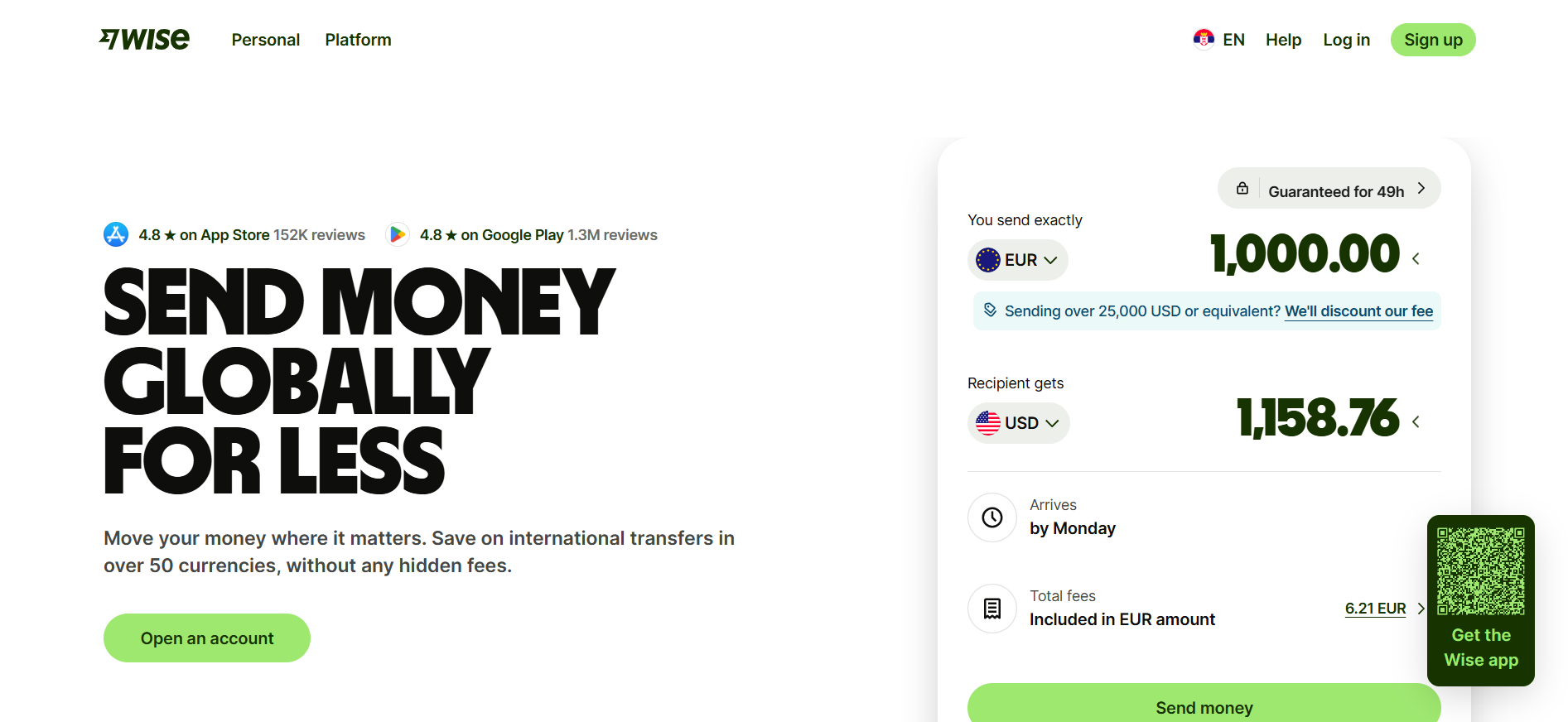
Wise is a money-transfer service known for low fees and exchange rates close to the mid-market rate, which makes it a strong way to move funds across currencies cheaply.
Brands reach for it when the core need is simply getting money from one country to another without a heavy FX markup. Its currency conversion is genuinely good, and for a straightforward transfer it is hard to beat on cost.
For paying creators, though, Wise is a transfer rail and nothing more, so onboarding, invoicing, tax reporting, and the legal counterparty role all stay with the brand.
It offers no Merchant of Record protection and is not designed to manage a creator roster at scale or the reporting that follows it, which leaves the whole administrative layer of a creator program exactly where it started.
Pros:
- Delivers genuinely strong currency conversion at mid-market rates, though Gigapay pays creators instantly in 50+ currencies while also handling onboarding, invoicing, and tax reporting.
- Keeps transfer costs low, while Gigapay covers the same cross-border payment and adds the compliance layer a transfer alone cannot.
Cons:
- A transfer tool rather than a payment or compliance layer for creator work.
- Leaves all onboarding, invoicing, and tax reporting sitting with the brand.
- Offers no Merchant of Record protection, so the liability never moves off your business.
- Not designed for managing creator rosters at scale or for the reporting that follows them.
True Merchant of Record vs. Payment Processor: Why the Difference Decides Your Liability
The comparison above hides one question that decides everything, and most brands never ask it until a tax authority does.
- A payment processor moves your money and then steps back. Whatever follows from paying a creator in another country, from misclassification to missing platform-economy reporting, stays with the brand that initiated the payment.
- A Merchant of Record moves your money and your liability together, because it has legally bought the deliverable and resold it to you, which makes it the party on the hook for the administrative and legal work around that purchase.
For a one-off domestic payment, that gap barely matters. For a brand paying creators in fifteen countries every month, it is the difference between one compliant vendor relationship and fifteen jurisdictions of exposure you are quietly carrying.
- The processor solves the easy half of the problem, which is sending the money.
- The Merchant of Record solves the half that actually creates risk.
How to Choose the Right Platform for Your Situation
The best platform depends less on features than on the shape of your creator program. Four common situations map cleanly to a pick.
- If you are paying hundreds of creators across the EU, where DAC7, KSK, and country-level reporting all apply at once, Gigapay is the clear choice, because the compliance and the liability move off your team in one step.
- If you are paying mostly US creators and rarely cross borders, Lumanu covers the domestic flow well and handles 1099s without the international overhead you would not use.
- If you are embedding payouts into your own product and have engineering resources to own the build, Stripe Connect gives you the flexibility to design the flow, as long as you accept that the compliance responsibility stays with you.
- If you are sending occasional, low-volume payouts and compliance depth is not the priority, PayPal Payouts or Wise will move the money simply and cheaply, with the understanding that everything else remains your job.
How to Get Started With Gigapay
Getting a creator payment program live on Gigapay takes days, not quarters. Here is the path from sign-up to your first batch of paid creators.
1. Pick your plan and start
The Base plan gets a team moving quickly, while Enterprise fits brands above €1.8M in annual payout volume and adds a dedicated customer success manager, Earlypay, and unlimited users and API rate.
Talk to sales if you are not sure which tier your volume calls for.
2. Choose how you will send payouts
Marketing teams that want to move now upload a CSV of creators and amounts. Teams embedding payments into a dashboard, CRM, or affiliate platform use the REST API, which most integrations finish in two to five days.
3. Fund your account
Add funds in your working currency. Gigapay supports USD, EUR, GBP, SEK, DKK, and NOK.
4. Add your creators
Upload them by spreadsheet or create them through the API. Creators do not need a registered business or a VAT number to be paid, which is what removes the friction for nano and micro creators.
5. Let creators onboard themselves
Each creator completes identity verification and chooses whether to register as an individual, a sole trader, or a company. Gigapay validates tax IDs and VAT details in the background.
6. Send the batch
Creators are paid instantly across 65+ countries through local payment rails. Gigapay issues one consolidated invoice for the campaign and files the required tax reporting, including DAC7, KSK, and KU14, automatically.
7. Scale without rebuilding
As your program grows from fifty creators to five thousand, the process does not change. Turn on Earlypay to give creators instant access to scheduled funds, and lean on a dedicated support team rated 88 on creator NPS.
Conclusion
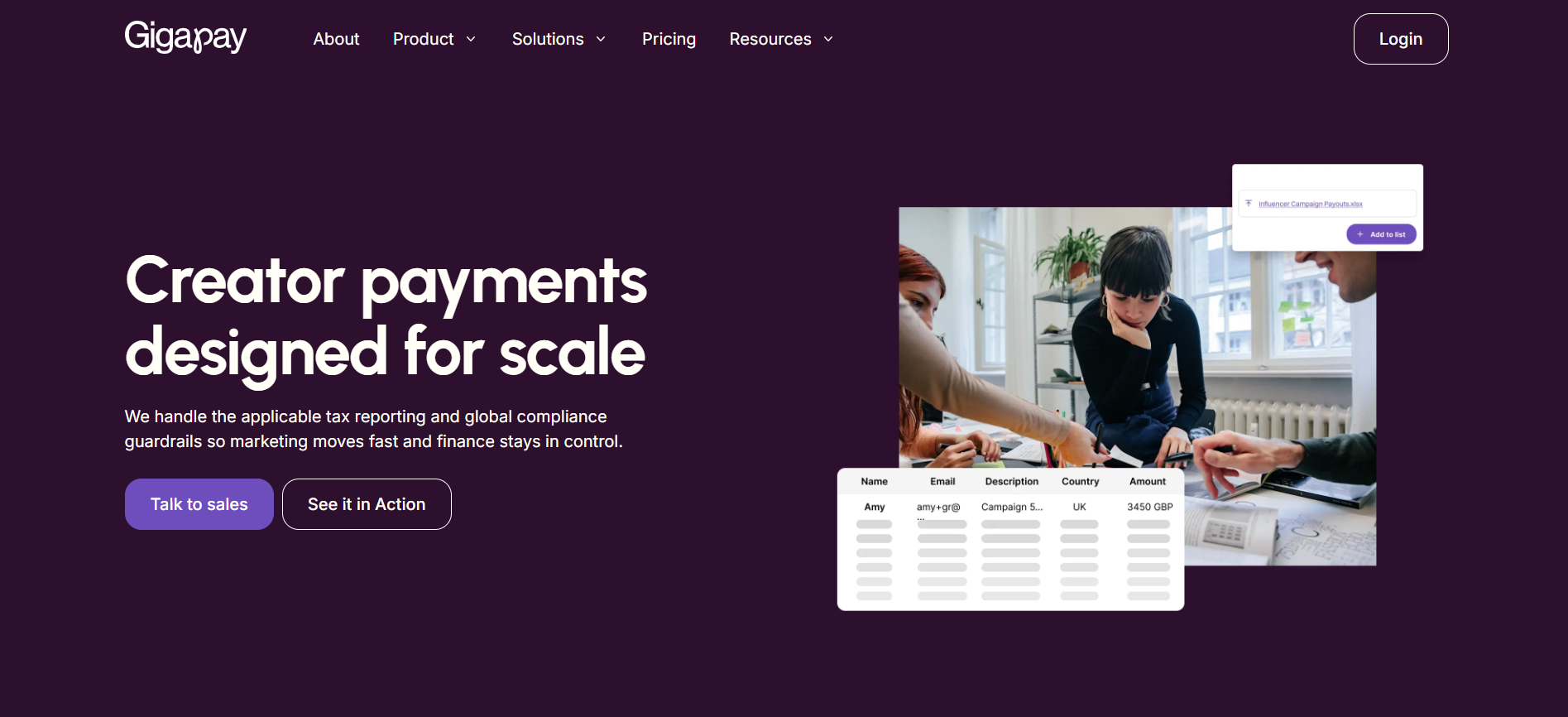
Gigapay is the Merchant of Record that lets a creator program grow without the payment operation growing alongside it.
Of the platforms compared here, it is the one that actually absorbs the tax and legal liability of paying creators, covers 65+ countries with instant payouts, and onboards creators without asking them to register a business, while Lumanu, Tipalti, Stripe Connect, PayPal, and Wise each solve a narrower slice of the same problem.
The choice comes down to a single question: do you want a vendor that moves your money, or one that moves your liability with it.
Book a demo and see how fast your first batch of creators can be paid.
Read Next:
- What is Gigapay Earlypay and How Does it Work?
- How Much Are American Influencers Earning in 2026
- Top 5 Benefits of Using Gigapay for Influencer Payouts in 2026
FAQs:
1. What is the best Merchant of Record for creator payments in 2026?
The best Merchant of Record for creator payments in 2026 is Gigapay, because it becomes the single legal counterparty for your payouts, covers 65+ countries with instant payments, and files DAC7, KSK, and KU14 reporting automatically. Unlike payment processors, Gigapay takes on the tax and legal liability attached to buying a creator's deliverable, so the risk moves off the brand.
2. Is Stripe Connect a Merchant of Record?
Stripe Connect is not a Merchant of Record. It is payment infrastructure that lets platforms build their own payout flow, which means the brand keeps the compliance design and the tax liability. A platform like Gigapay operates as the Merchant of Record, so it assumes that liability instead of leaving it with you.
3. Do creators need a registered business to get paid through a Merchant of Record?
Creators do not need a registered business to get paid through a Merchant of Record like Gigapay. They can onboard as an individual, a sole trader, or a company, with no VAT number required, which is what lets brands work with nano and micro creators they would otherwise be blocked from paying.
4. What is the difference between a Merchant of Record and a payment processor for creator payments?
The difference between a Merchant of Record and a payment processor for creator payments is liability. A processor moves the money and leaves the tax and classification risk with the brand, while a Merchant of Record such as Gigapay buys and resells the deliverable, so it carries the legal and administrative responsibility for the payout.
5. How does a Merchant of Record handle tax compliance for creator payments?
A Merchant of Record handles tax compliance for creator payments by becoming the counterparty to the transaction and filing the required reporting on the brand's behalf. Gigapay automates DAC7 in the EU, KSK in Germany, and KU14 in Sweden, validates tax IDs at onboarding, and issues consolidated self-billed invoices, while each creator remains responsible for their own income tax.
.jpg)
.jpg)
.jpg)