.jpg)

eMarketer's February 2026 forecast revised US social media creator marketing spending to $21.10 billion for 2026, more than double 2022 levels, and Aspire's 2026 State of Influencer Marketing report shows 74% of brands plan to increase their creator budgets this year.
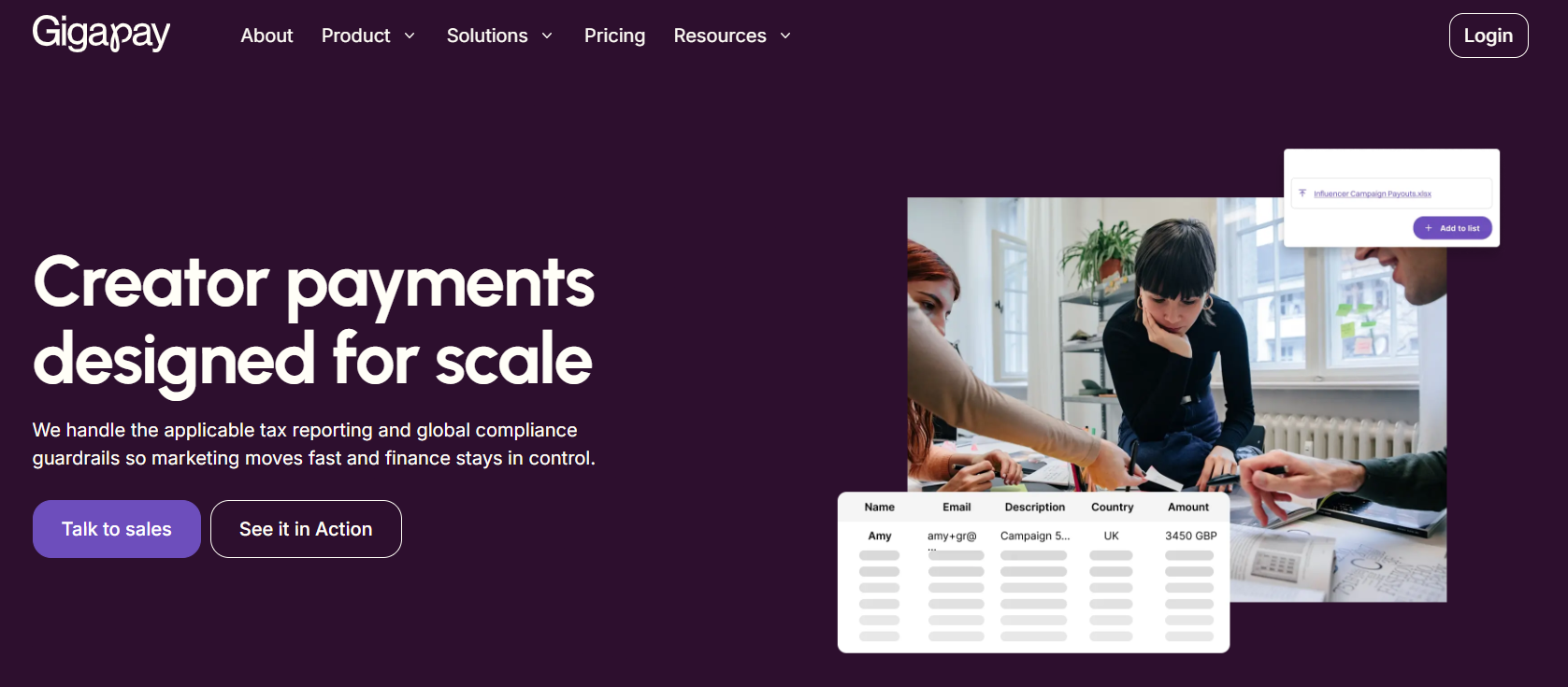
Gigapay is the best mass creator payout platform built for international brands, acting as Merchant of Record across 65+ countries and 50+ currencies so brands pay one vendor, file one invoice, and move tax liability for the deliverable off their own books.
For brands running creator programs across the UK, France, DACH, and the Nordics, the operational cost lives in the admin and compliance work around the payment, not in the FX spread on it, and that workload now spans DAC7 in the EU, Germany's 4.9% Künstlersozialabgabe levy, and a new US 1099 threshold of $2,000 that came into force on January 1, 2026.
This guide ranks the influencer payment platforms international brands rely on in 2026, comparing them on global reach, compliance coverage, payout speed, and the operational fit for cross-border creator programs.
Key Takeaways
- Gigapay leads 2026 for international brands with Merchant of Record coverage and instant payouts.
- Merchant of Record platforms absorb tax liability that pure payment processors leave on the brand.
- Mass payout tools like Tipalti automate AP but treat every creator as a vendor record.
- Stripe Connect, PayPal Payouts, and Wise move money but leave compliance to the brand.
- Choose on compliance scope, global reach, creator onboarding friction, and ERP vendor sprawl.
What an Influencer Payment Platform Actually Has to Do in 2026
An influencer payment platform for an international brand has to do four things at once:
- It has to pay creators on time and in the right currency.
- It has to record every payment correctly for tax purposes in every jurisdiction the brand operates in.
- It has to feed a clean invoice into the brand's accounting system without flooding the ERP with hundreds of new vendor records.
- It has to keep the creator experience clean enough that the talent comes back for the next campaign.
The brands struggling here are not failing on the first job. Every payment provider can move money. They are failing on the other three, which is where the compliance liability sits, where finance teams burn most of their hours, and where creator retention quietly erodes. The shortlist below is ranked on that combined workload, not on payment speed alone.
How We Ranked These Platforms
We compared each platform on six criteria: whether it acts as Merchant of Record, the number of countries and currencies it reaches, its native coverage of EU and Nordic compliance reporting (DAC7, KSK, KU14), payout speed via local rails, the onboarding friction creators face, and the load it leaves on the brand's ERP and finance team.
The ranking favors platforms purpose-built for creator payouts over generic payment rails, because in 2026 the bottleneck has moved from money movement to the compliance and procurement layer wrapped around it.
Top 6 Influencer Payment Platforms for International Brands in 2026
1. Gigapay: Best for International Brands at Scale
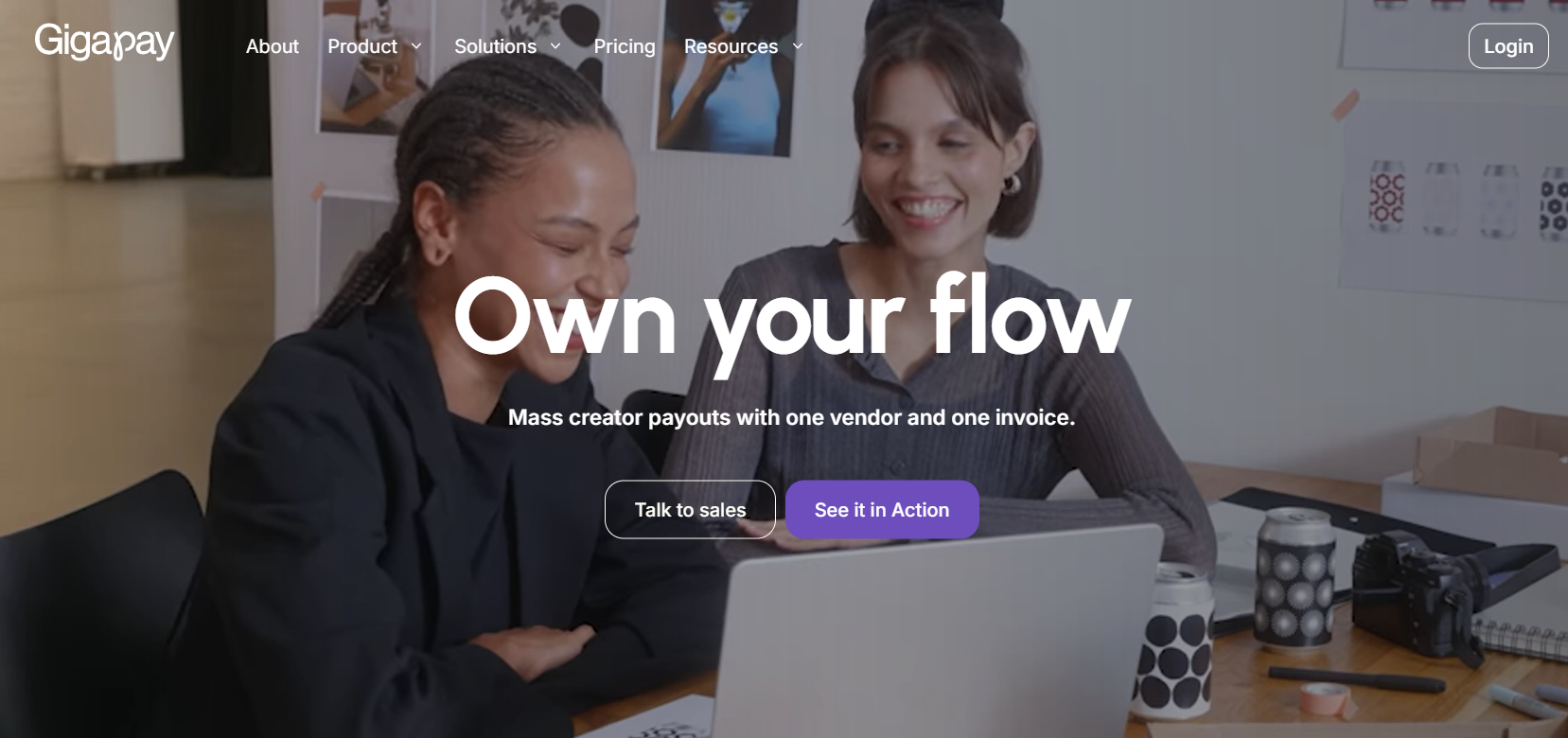
Gigapay is a mass creator payout platform founded in Stockholm in 2019 and used by international brands and agencies including WPPMedia, Boozt, GOAT, and AdRecord. The platform sits between the brand and the creator as the legal counterpart for every deliverable, which is the Merchant of Record model.
Gigapay buys the creator's deliverable and resells it to the brand client, so the brand sees one vendor in its ERP, one consolidated invoice per campaign, and one party carrying tax and compliance liability for the deliverable across markets.
For brands running programs across the UK, France, DACH, and the Nordics, Gigapay reaches 65+ countries and pays in 50+ currencies over local rails including SEPA Instant, Faster Payments, and ACH.
Creators receive funds instantly. Onboarding does not require a registered business or VAT number, which removes the procurement bottleneck that stalls nano and micro creator campaigns inside larger AP systems.
Gigapay handles DAC7 reporting in the EU, KSK reporting in Germany, and KU14 reporting in Sweden automatically, which matters because Germany's Künstlersozialabgabe sits at 4.9% in 2026 and can hit a single cross-border hire over €1,000.
The platform is ISO 27001 certified, GDPR compliant, and integrates with platforms like Kolsquare for embedded creator workflows.
Pros:
- Acts as Merchant of Record, so tax and compliance liability for the creator deliverable sits with Gigapay rather than the brand.
- Reaches 65+ countries and 50+ currencies with instant payouts via local rails including SEPA Instant, Faster Payments, and ACH.
- Replaces hundreds of individual creator vendor entries in the ERP with one vendor record and one consolidated invoice per campaign.
- Automates DAC7, KSK, and KU14 reporting across the EU, UK, and Nordics so finance does not have to build the workflow itself.
- Delivers a creator NPS of 88 with a dedicated human support team and EarlyPay liquidity for the talent the brand needs to keep.
Cons:
- The €279/month base plan plus 4.9% admin fee per payout is not the right fit for companies running fewer than 50 creator payouts a year.
- The product is purpose-built for creator and influencer payouts, so brands looking for a generic AP automation tool covering all supplier types will keep their existing AP stack in parallel.
2. Lumanu
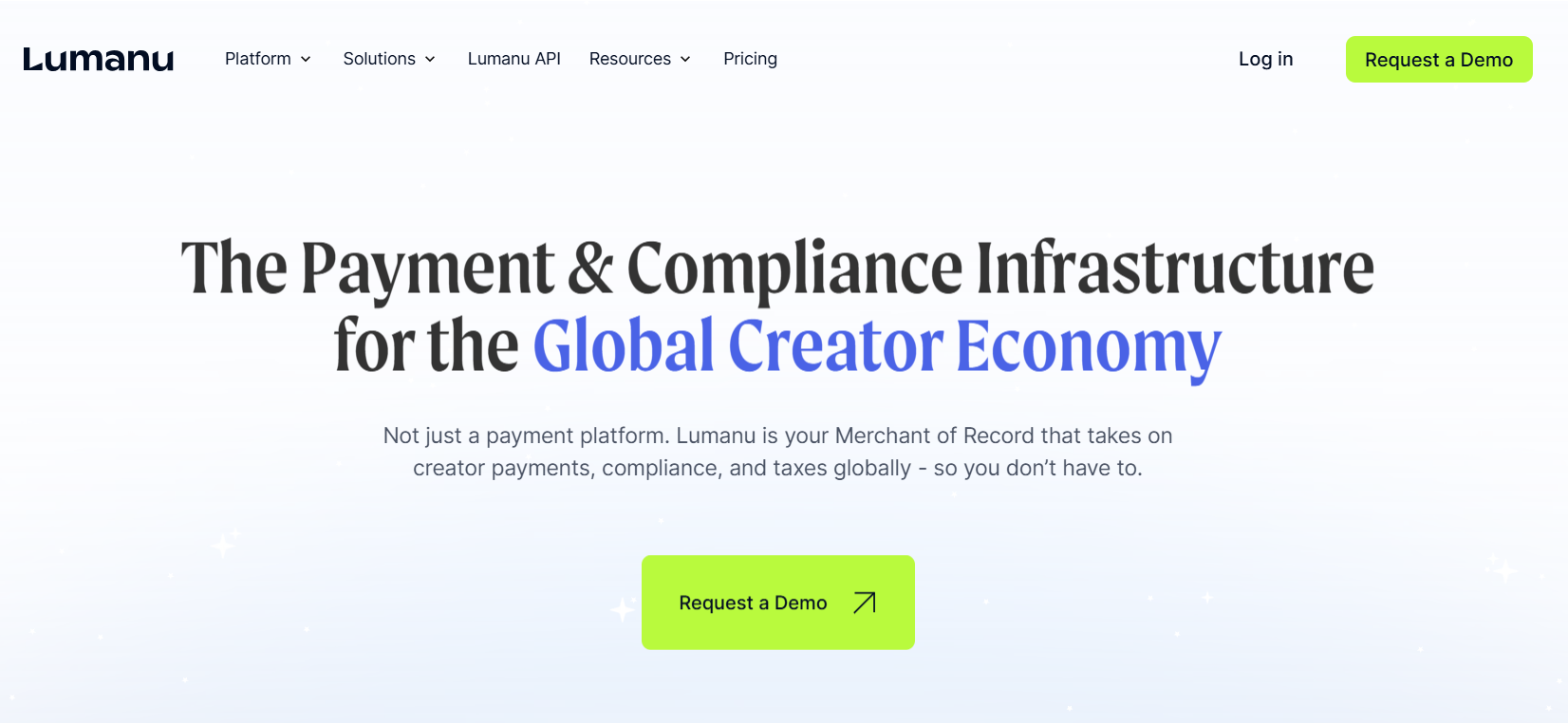
Lumanu is a US-headquartered creator payments platform that also acts as Merchant of Record in the US, UK, EU, and Canada. The company positions itself as the Payments Master Vendor inside the brand's existing AP system, with Visa as a strategic backer and a customer base anchored on US agencies, brands, and creator marketplaces.
Lumanu supports funding in 30 currencies, with creator withdrawals available across 180+ countries and 132 currencies.
Lumanu is a strong option for US-anchored brands paying creators in 180+ countries, and the platform handles W-8, W-9, and 1099 filings tightly, which is useful for any program with a heavy US creator base. The trade-off for international brands is geographic emphasis.
Gigapay was built from Stockholm with the European regulatory stack as the starting point, so DAC7, KSK, KU14, and EU local rails like SEPA Instant are core to the product rather than a layer added on top.
For a UK, DACH, or Nordics brand managing the majority of creator spend in euros and pounds, the EU-first design and instant local-rail payouts inside Gigapay are a closer fit to where the money actually moves.
Pros:
- Acts as Merchant of Record in the US, UK, EU, and Canada and manages US tax forms including W-8, W-9, and 1099 filings.
- Sits as a payment layer next to existing AP systems without forcing a rip and replace, with Visa Direct instant pay available for an additional fee.
Cons:
- US-anchored products with thinner native coverage of EU-specific reporting like DAC7 and KSK than European-built platforms offer.
- Local payout settlement typically takes 1 to 2 days via bank rails, while Gigapay settles instantly via local rails like SEPA Instant.
- Pricing starts at $99/month for the Payments Platform and $999/month for the Whitelisting Platform, with the full creator stack pushing higher.
- Recent G2 and Capterra reviews report platform glitches and brand-portal UX friction at scale.
3. Tipalti
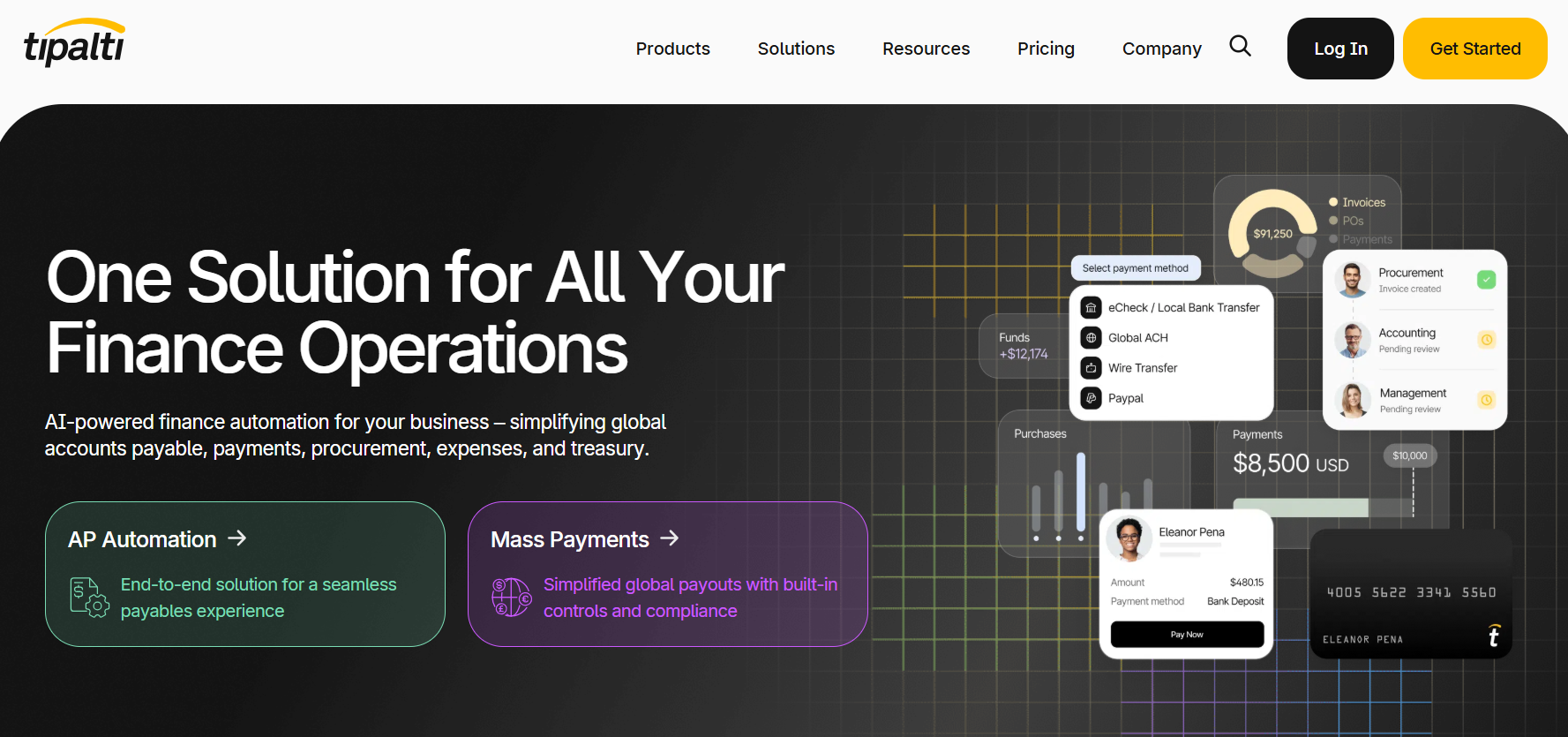
Tipalti is a finance-grade accounts payable and mass payouts platform founded in 2010, serving marketplaces, gig platforms, and enterprise finance teams. It supports payments in over 120 currencies across roughly 196 countries, handles W-8, W-9, 1099, and 1042 reporting for US payers, collects DAC7 data, and integrates deeply with NetSuite, Oracle, and SAP. The platform is SOC 1 and SOC 2 audited and runs a KPMG-approved tax engine.
Tipalti is a credible option for finance-led organizations that want a single AP automation platform covering creators alongside every other supplier type, with deep approval workflows, PO matching, and audit trails. The fit gets harder once creator-specific workflows take over the program. Tipalti is a money transmitter rather than a Merchant of Record, so the brand stays the contractual counterparty for every creator and inherits the tax liability for the deliverable.
Onboarding a nano creator through a Tipalti supplier portal reads like onboarding any other vendor, which is exactly the friction that stalls programs trying to scale from 50 creators to 500. Gigapay is purpose-built for that workload, with the Merchant of Record model absorbing the tax exposure and a creator onboarding flow that does not demand a registered business.
Pros:
- Deep AP automation with PO matching, multi-entity controls, and tight integrations into NetSuite, Oracle, SAP, and other enterprise ERPs.
- Broad currency coverage at 120+ currencies with roughly 50 payment rails and a KPMG-approved tax engine inside a self-service supplier portal.
Cons:
- Operates as a money transmitter rather than a Merchant of Record, so tax liability for the creator deliverable stays with the brand.
- Creator onboarding through the supplier portal feels bureaucratic for mobile-first influencers, driving higher support load on creator ops teams.
- Sales motion is finance-led with multi-month implementation cycles, which is poorly matched to marketing-led buying for creator programs.
- Pricing is custom and scales with platform modules and transaction volume, making the total cost less predictable than a creator-specific subscription.
4. Stripe Connect
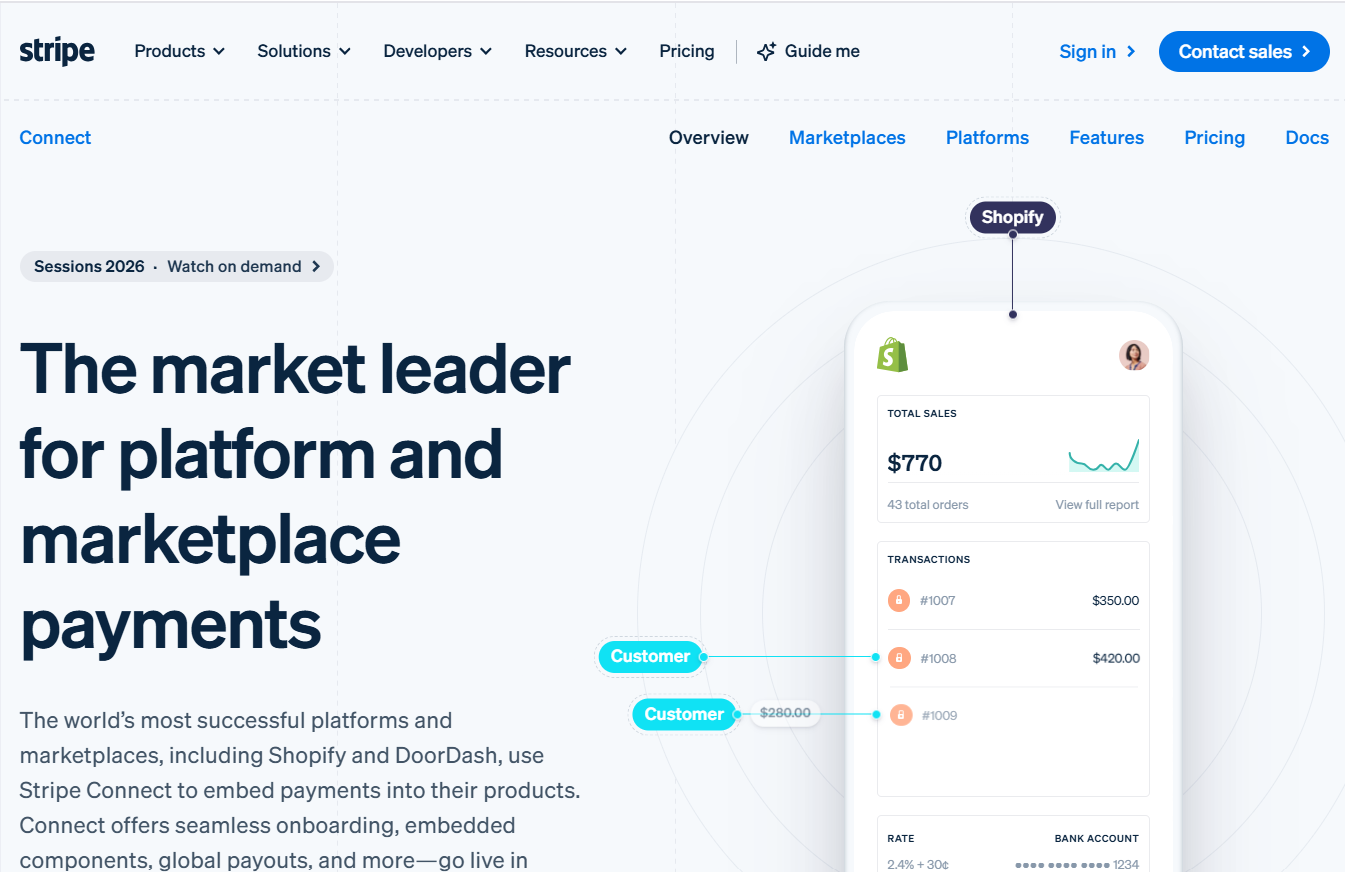
Stripe Connect is the payments layer used by marketplaces and platforms to route money to recipients. For brands that want to embed creator payouts inside their own product or campaign tool, Stripe Connect supports cross-border payouts across 135+ currencies, offers instant payouts to debit cards in some regions, and gives engineers a clean API with strong documentation and webhook infrastructure.
Stripe Connect is a strong option for engineering teams building creator-facing platforms from the ground up, with clean APIs, webhooks, and Stripe Connect Tax for automated tax form collection. The catch for an international brand is that Stripe Connect is software and rails, not a Merchant of Record.
The brand remains the legal merchant for every creator paid, which means the brand carries the tax liability, runs the 1099 and DAC7 reporting workflow itself, and manages KYC for each connected account.
Gigapay carries that liability as Merchant of Record and pre-builds the EU and Nordic compliance reporting so the brand does not have to. The price differential at scale is also material once cross-border fees and the 1% currency conversion markup are added on top of an engineering build.
Pros:
- Clean developer API with comprehensive webhook infrastructure and Stripe Connect Tax for automated tax form collection.
- Cross-border payout coverage across 135+ currencies with instant payouts to debit cards available in select regions.
Cons:
- Stripe is software and rails, so the brand stays the legal merchant of record for every creator and carries the tax liability for the deliverable.
- Cross-border fees stack with a 1% FX markup and an Instant Payout fee of roughly 1% to 1.5% per transaction.
- Compliance scope is centered on US tax frameworks, with thinner native support for DAC7, KSK, and KU14 reporting.
- Engineering lift is real, and country-specific logic per connected account extends integration timelines well beyond the 2 to 5 days a creator-specific platform takes.
5. PayPal Payouts
PayPal Payouts is the legacy default for paying creators in many programs, mostly because creators already have a PayPal account. The product moves money to over 200 markets through the PayPal wallet network, with a simple email-based send and a familiar receive experience for the creator on the other end.
PayPal Payouts is reasonable for early-stage experiments and one-off micro-payments where the only piece of data the brand wants to collect is an email address. The picture changes at international scale. PayPal often captures 3% to 7% on FX spreads in addition to per-payout fees, account freezes hit growing programs unpredictably, and PayPal does not act as Merchant of Record for the creative deliverable.
The tax reporting and procurement load lands back on the brand's finance team. Gigapay closes that load with a consolidated invoice per campaign, a single vendor record in the ERP, and automatic DAC7, KSK, and KU14 reporting that PayPal Payouts does not handle natively.
Pros:
- Massive global footprint with creators already familiar with PayPal, which reduces creator-side onboarding friction at the lowest end of the volume curve.
- Quick to set up for small or one-off payouts with no procurement involvement required.
Cons:
- Foreign exchange spreads of 3% to 7% materially erode the value of every cross-border payout.
- Does not act as Merchant of Record, so the brand carries the tax and compliance liability for the creator deliverable.
- Account freezes and frozen balances are a known operational risk for programs scaling cross-border payouts quickly.
- Treats creators as individual payees rather than as a vendor cohort, so every payment flows into the brand's ERP as a separate transaction line.
6. Wise (Wise Business and Wise Platform)
Wise is built for one job: moving money internationally at close to the mid-market rate. Wise Business gives finance teams multi-currency accounts and local payment details across 40+ currencies, and Wise Platform offers an API for embedding cross-border payouts inside another product. The fee structure is transparent and the FX rate beats most banks and processors.
Wise is a credible option for finance teams that already have their own compliance and tax infrastructure and want a low-cost pipe for cross-border money movement. The mid-market rate and transparent fees are real, and creators receive funds faster than via SWIFT wires.
The reality for an international brand running creator programs is that Wise is a money mover and nothing else. There is no Merchant of Record relationship, no creator-specific onboarding flow, no DAC7 or KSK reporting layer, and no consolidated single invoice. Gigapay covers all four.
For a brand whose finance team is already short on hours, Wise solves the cheapest line item in the workflow, while the most expensive line item, the admin and compliance work around the payment, stays in-house.
Pros:
- Mid-market exchange rates with transparent fees that beat traditional bank wires and most processor markups.
- Multi-currency accounts and the Wise Platform API give finance teams direct control of cross-border transfers across 40+ currencies.
Cons:
- Acts as a payment provider only, with no Merchant of Record coverage and no automated DAC7, KSK, or 1099 tax reporting.
- No creator-specific onboarding, no consolidated single-invoice billing, and no dedicated creator support team.
- Suits occasional larger transfers rather than high-frequency small creator payouts at scale.
- The brand keeps the procurement load, the vendor sprawl in the ERP, and the tax liability for every creator deliverable.
Side-by-Side Comparison
How to Choose the Right Platform for Your Brand
Every platform on this list can technically move money. The decision criteria sit one layer up: who carries the compliance liability for the creator deliverable, how clean the brand's ERP stays as the program scales, and whether the creator receives a payment experience that keeps them in the roster.
- For international brands running €500k+ creator budgets across the UK, France, DACH, and the Nordics, the operational cost lives in the admin work around the payment, not in the FX spread on it. That is the case Gigapay is built to answer.
- For US-anchored programs with heavy 1099 reporting and lighter EU exposure, Lumanu is a credible alternative.
- For enterprises that want creators inside a single ERP-integrated AP system alongside every other supplier and accept the trade-off in creator experience, Tipalti is the fit.
- For platforms embedding payouts into their own product, Stripe Connect is the developer's choice.
- PayPal Payouts and Wise are reasonable rails for low-volume or one-off cases where the compliance load can stay in-house.
Conclusion
Gigapay is built for the brands that decided creator marketing should not require a new headcount every time the program crosses a border.
The platforms in this guide all move money, and only a few absorb the compliance and tax liability that comes with paying hundreds of creators across the EU, UK, and Nordics, and Gigapay is the one purpose-built for that workload.
For international brands scaling creator programs in 2026, the right payment platform decides how fast marketing ships, whether finance stays in control, and whether creators come back for the next campaign.
Book a demo with Gigapay to see how a single vendor, a single invoice, and instant local-rail payouts close the gap between the brand's growth plan and the finance team's bandwidth.
Read Next:
- TikTok vs Instagram vs YouTube Payouts: Who's Earning the Most?
- Top 3 Ways Agencies Can Pay TikTok Influencers in 2026
- Best Lumanu Alternatives for Influencer Payments: 2026 Review
FAQs:
1. What is the best influencer payment platform for international brands in 2026?
The best influencer payment platform for international brands in 2026 is Gigapay, because it acts as Merchant of Record across 65+ countries and 50+ currencies, settles payouts instantly via local rails, and automates DAC7, KSK, and KU14 reporting across the EU, UK, and Nordics.
2. How does a Merchant of Record influencer payment platform differ from a payment processor?
A Merchant of Record influencer payment platform takes on the legal and tax responsibility for the creator deliverable, while a payment processor only moves the money and leaves the brand as the legal counterparty and the party liable for tax reporting in every market.
3. Why do international brands choose Gigapay over Lumanu, Tipalti, or Stripe Connect?
International brands choose Gigapay over Lumanu, Tipalti, or Stripe Connect because Gigapay was built on the EU regulatory stack from day one, automates DAC7, KSK, and KU14 reporting, reaches 65+ countries with instant local-rail payouts, and consolidates the entire program under a single vendor relationship.
4. What compliance risks come with paying influencers across multiple countries in 2026?
Compliance risks of paying influencers across multiple countries in 2026 include DAC7 reporting obligations in the EU, Germany's 4.9% Künstlersozialabgabe levy on creator payments over €1,000, the new US 1099 threshold of $2,000 effective January 1, 2026, FTC disclosure penalties of up to $53,088 per violation, and rising influencer employment classification cases in European courts.
5. How fast should an influencer payment platform pay creators in 2026?
An influencer payment platform should pay creators instantly via local rails in 2026, because The Influencer Marketing Factory reports international creator payments often take up to 30 days through traditional banking, and roughly half of creators report that payment delays affect cash flow and willingness to take repeat work.
.jpg)