.jpg)

A campaign goes live with 280 creators spread across eleven countries, and buried in that list is a Swedish personnummer, a German Steuernummer, a UK Unique Taxpayer Reference, and a few dozen creators who have never registered a business in their lives. The person responsible for compliance has one question that matters more than the rest:
“Are these tax IDs real, and will an auditor still accept them two years from now?”
Most payout problems announce themselves. A failed transfer bounces back, or a creator complains loudly enough that someone fixes it. Tax ID validation is the quiet one, because it looks fine on the day of the campaign and only surfaces during an audit, when a wrong identifier costs penalties instead of an apology.
This is the part of creator payments that Gigapay was built to absorb. Here is how it validates creator tax IDs across 65 countries, step by step.
Key Takeaways
- Gigapay validates each creator's tax ID during onboarding, matching the identifier to the rules of the creator's country before any payment is approved.
- Creators can onboard as an individual, a sole trader, or a company, and they do not need a registered business or a VAT number to get paid.
- As Merchant of Record, Gigapay becomes the contractual counterpart, so the brand carries one validated vendor instead of hundreds of unverified ones.
- Validated tax data feeds automated reporting for DAC7 across the EU, KU14 in Sweden, and KSK in Germany.
- Gigapay handles tax reporting rather than withholding, with its Employer of Record service in Sweden as the exception.
- The outcome is audit-ready records across 65 countries without a finance team chasing tax documents by email.
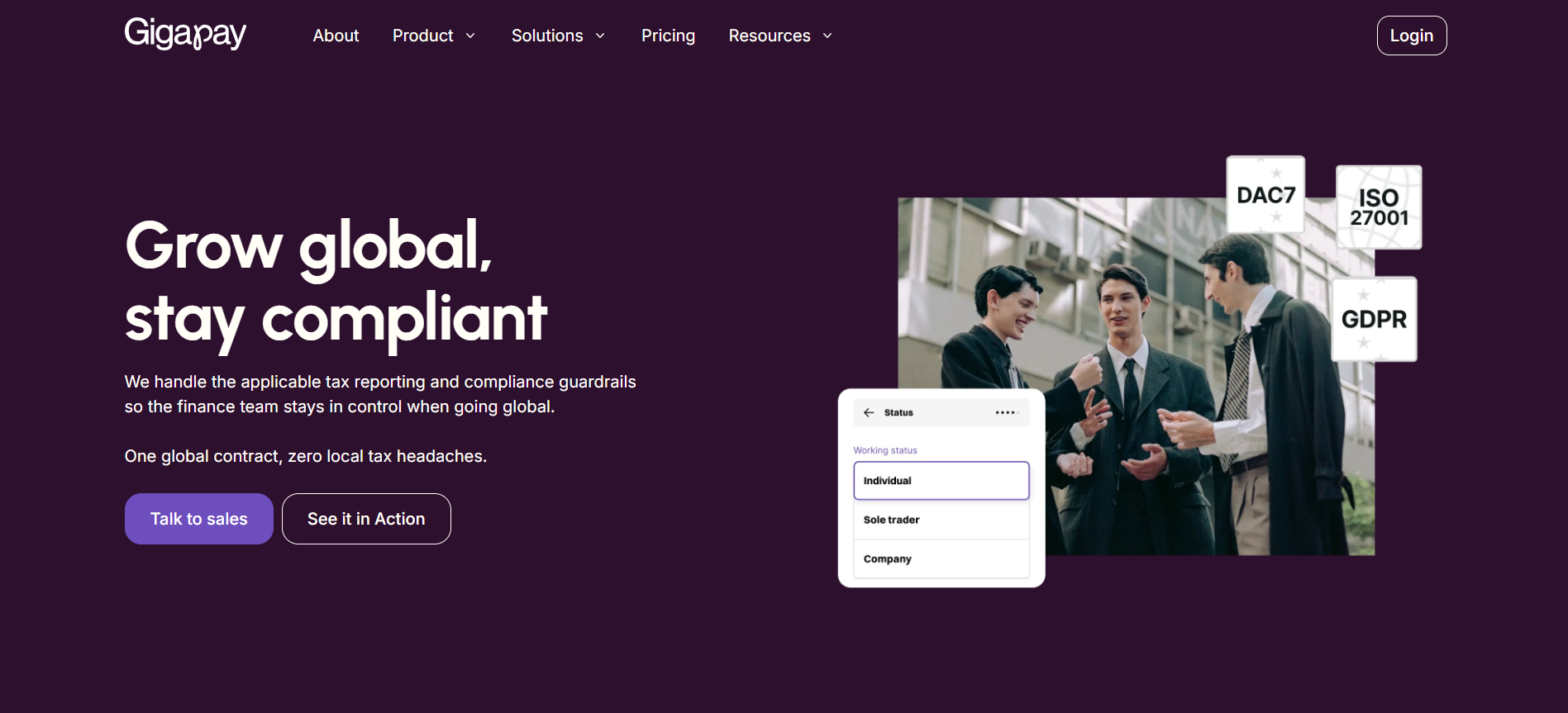
What Makes Validating Tax IDs in 65 Countries Difficult
Every country issues its own version of a tax identifier, and they rarely look alike.
- Sweden uses a personnummer.
- Germany works with a Steuernummer alongside a separate VAT identification number.
- The UK has its Unique Taxpayer Reference.
- An EU business carries a VAT number with a country prefix and a checksum.
A validation process that works cleanly in one market says nothing about whether it works in the next.
The harder problem is who the creators actually are. A large share of them are individuals rather than companies, so there is often no business registration to check a name against. Treating them like traditional vendors, the way a finance-grade payout tool does, slows the campaign down and pushes Procurement to deprioritise the smallest creators entirely.
The cost of getting it wrong keeps climbing too. Germany's Künstlersozialkasse applies a 4.9% levy on creative payments above €1,000, and it reaches brands hiring from abroad. The EU's DAC7 rules require platforms to report creator earnings to tax authorities.
A tax ID that fails validation is the thread an auditor pulls, and everything attached to it comes loose.
How Gigapay Validates a Creator Tax ID in 2026
Validation runs as a sequence during onboarding, before a single payout is approved. With rules like DAC7 and Germany's KSK now firmly in force, each step narrows the gap between a name on a spreadsheet and a verified, payable creator.
Step 1: The creator onboards and declares an entity type
The creator completes a self-service onboarding and chooses how they operate, as an individual, a sole trader, or a company. This choice sets the rules for everything that follows, because an individual in France and a registered company in Germany move through different validation paths. No registered business or VAT number is required to begin.
Step 2: Gigapay identifies the correct tax ID for the creator's country
The creator's country determines which identifier applies and which format that identifier must follow. A Swedish creator and a Spanish creator are checked against entirely different rules, and Gigapay applies the right one automatically rather than asking the brand to know the difference between them.
Step 3: Gigapay checks the tax ID against its country's format
Before anything else proceeds, Gigapay checks the identifier against the structure its issuing country expects. A number that fails this check gets caught at onboarding, when it can still be corrected, rather than months later inside a reporting cycle.
Step 4: Gigapay verifies identity through KYC and KYB
Gigapay verifies that the creator is who they claim to be, running KYC checks for individuals and KYB checks for businesses. This ties the tax ID to a verified person or entity, so the identifier is not only well-formed but genuinely theirs.
Step 5: Gigapay cross-references business identifiers where they apply
For creators operating as companies, Gigapay checks their business and VAT details against the relevant registries. Creators without a registered business skip this path, which is what lets nano and micro creators onboard without the friction a vendor tool would impose on them.
Step 6: Gigapay classifies the verified record for reporting
Once the identity and tax ID are confirmed, Gigapay maps the record to the reporting obligations that apply to the creator's country and entity type. This is the step that makes later reporting automatic instead of a manual reconstruction at filing time.
Step 7: The creator becomes payable
With a clean, classified record in place, the creator can be paid instantly, and the same validated data flows straight into Gigapay's tax reporting. Validation and payout stop being two separate projects.
What Happens When a Creator Has No VAT Number or Registered Business
This is the part that trips up tools built for paying vendors. A large share of creators are individuals with no company behind them, and a system that demands a VAT number or a registered business simply cannot pay them.
Gigapay handles this through its Merchant of Record model. It buys the creator's deliverable and resells it to the brand, which makes Gigapay the formal counterpart on the transaction.
The creator does not need to register a business for the brand to stay compliant, because the contractual and reporting relationship sits with Gigapay.
A brand that once turned away nano and micro creators because Procurement could not onboard them can work with them at scale instead.
How Validated Tax Data Becomes Compliance Reporting
Validation is only useful if it produces something an auditor will accept, and that is where the reporting layer comes in. Because every payable creator already carries a verified tax ID and a classified entity type, Gigapay files the reports each jurisdiction requires without a finance team assembling them by hand.
That covers DAC7 across the EU, KU14 in Sweden, and KSK in Germany.
One distinction matters here, and Legal teams tend to read it closely. In its Merchant of Record capacity, Gigapay handles tax reporting rather than withholding or paying social security and other taxes on a creator's behalf.
Why Gigapay Is the Best Platform for Validating Creator Tax IDs in 2026
Most brands try one of four things before they land on a platform built for this:
- They lean on payment providers like PayPal or Wise, which move money well but leave the tax and compliance gaps for someone else to cover.
- They adopt finance-grade vendor tools like Tipalti, which were built to onboard companies as suppliers and treat an individual creator as one more procurement case.
- They hand the whole problem to an agency, which hides the cost and the compliance trail.
- They build it in-house, which becomes a multi-year project that Finance and IT never fully finish.
Gigapay is built for the specific job of paying and validating creators, and that focus is why it does the job better than tools borrowed from elsewhere.
A few things set it apart:
- Merchant of Record, not only money movement: Gigapay takes on most of the legal and tax responsibility tied to the creator's deliverable, so a failed tax ID becomes its job to catch rather than the brand's problem to discover during an audit.
- One vendor in the ERP: However many creators a campaign runs, the brand carries a single validated vendor and a single invoice instead of hundreds of separate records.
- No business registration required from creators: Individuals, sole traders, and companies all onboard and validate through the same flow, which is what lets a brand work with nano and micro creators at scale.
- Validation at onboarding, across 65 countries and 50+ currencies: The checks run before payout, against each country's own rules, so problems surface while they are still cheap to fix.
- Reporting built into the same flow: DAC7, KU14, and KSK reports come from the validated data automatically, which is what audit readiness actually looks like in practice.
- A creator experience that holds the relationship together: Creators get paid instantly and onboard themselves, which keeps the people a brand depends on from leaving over payment friction.
The proof shows up in the numbers brands report after switching. Boozt reached a threefold increase in collaborations with smaller creators without adding staff, and WPPMedia cut the time it spent managing payments through its work with the Goat agency.
How to Get Started With Gigapay
Getting from a signed contract to a first paid creator is a short process, and most of the work happens once rather than for every campaign.
Step 1: Pick how payouts will run
The brand decides whether to send payouts by uploading a spreadsheet or by calling Gigapay's API. A marketing team running occasional batches can stay with CSV uploads, while a platform paying creators continuously usually integrates the API.
Step 2: Set up the account and choose a plan
Gigapay's Base plan starts at €279 a month with a 4.9% fee per payout. The Enterprise plan adds volume-based pricing, Earlypay, and a dedicated customer success manager for brands above €1.8M in annual payout volume, and a startup offer runs through the sales team.
Step 3: Integrate, if you are taking the API route
Teams connect through the REST API and test against a sandbox environment before going live. A full integration usually takes two to five days, and webhooks keep internal dashboards in sync afterwards.
Step 4: Invite creators to onboard
Creators onboard themselves and choose their entity type, and the tax ID validation covered above runs as part of that flow. The brand stops collecting tax documents by email and stops chasing missing details.
Step 5: Fund the batch and send the first payout
The brand funds the payout in one of the supported currencies, USD, EUR, GBP, SEK, DKK, or NOK, approves the batch, and creators get paid instantly through local payment rails.
Step 6: Let reporting run on its own
Once payouts go out, the validated tax data feeds DAC7, KU14, and KSK reporting automatically, so the next audit starts from clean records rather than a reconstruction. Most of the setup happens once, and every campaign after that runs on the same validated foundation.

Conclusion
A wrong tax ID is cheap to create and expensive to discover. It costs nothing to type into a spreadsheet and a great deal to explain to an auditor.
Validating it across 65 countries, for individuals and companies alike, is the unglamorous work that decides whether a creator program can grow without growing its risk at the same rate.
Gigapay does that work at the point of onboarding, so the brand carries verified creators rather than hopeful ones. The finance team gets audit-ready records across every market it operates in, and the marketing team gets to keep moving.
Book a demo with Gigapay and let’s start validating creator tax IDs across all 65 countries, and send a first compliant payout the same week the contract is signed.
FAQs:
1. Does a creator need a VAT number or a registered business to get paid through Gigapay?
No, a creator does not need a VAT number or a registered business to get paid through Gigapay. Creators onboard as an individual, a sole trader, or a company, and Gigapay's Merchant of Record model keeps the brand compliant even when it pays creators who have no company behind them.
2. How many countries does Gigapay validate creator tax IDs in?
Gigapay validates creator tax IDs across 65 countries and supports payouts in more than 50 currencies. It checks each creator's identifier against that country's own rules during onboarding.
3. Does Gigapay withhold tax or only report it?
Gigapay reports tax rather than withholding it. In its Merchant of Record capacity, Gigapay does not withhold or pay social security and other taxes on a creator's behalf, with its Employer of Record service in Sweden as the exception. Each party still meets its own tax obligations under the applicable laws.
4. What is DAC7, and does Gigapay handle it?
Yes, Gigapay handles DAC7 reporting. DAC7 is an EU rule that requires platforms to report what creators and other sellers earn to tax authorities, and Gigapay files those reports automatically from the tax data it validates at onboarding, alongside KU14 in Sweden and KSK in Germany.
5. How long does creator onboarding and validation take?
Creator onboarding and validation happen inside a single self-service flow rather than as a separate review, so the brand has no manual approval queue to wait on. Validation runs as the creator submits their details, and once the record is verified and classified, the creator can be paid instantly.
.jpg)
.jpg)
.jpg)