
UK advertisers will invest £1.217bn in creator partnerships in 2026, up 26% on 2025, according to IAB UK and IRM (September 2026).
HMRC's digital platform reporting rules put duties on UK platform operators, so your brand or agency is in scope only if it operates one.
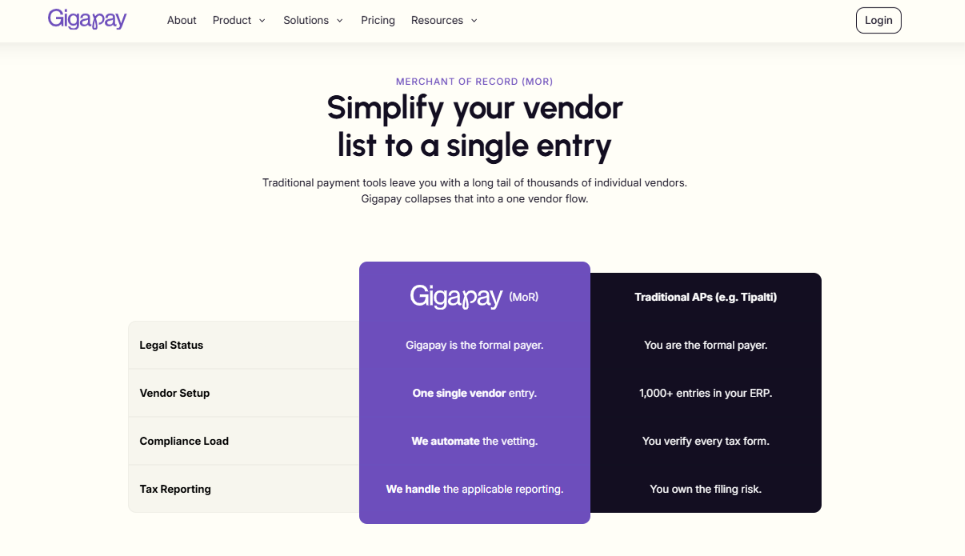
Gigapay is the Merchant of Record for creator payments. Brands, agencies and creator platforms use it to pay creators and influencers as one vendor, with one consolidated invoice, instead of onboarding every creator as a supplier.
This guide covers who counts as an operator, which creators are reportable, the deadlines and the penalties.
Key Takeaways
- HMRC's platform reporting rules bind UK platform operators, not every business paying creators.
- HMRC's small-seller exception covers goods only, so creator services have no minimum threshold.
- Operators must report 2026 seller data to HMRC by 11:59pm on 31 January 2027.
- HMRC can charge up to £5,000 per missed obligation, then up to £600 daily.
- UK platform reporting and EU DAC7 are separate regimes with separate reporting authorities.
How Big Is UK Creator Spend in 2026, and Why Does It Matter for HMRC Reporting?
UK creator partnerships were worth £966m in 2025, up 20.1% on 2024, according to IAB UK and IRM (15 September 2026). The same study forecasts £1.217bn for 2026, the first year above £1bn.
The 2025 figure equals about 2.4% of the £40.5bn UK digital adspend total. The study also found that the rest of digital advertising grew 9.6% in 2025, less than half the creator rate.
More of this money now moves through software. Brands book creators through influencer marketplaces, agencies run creator portals, and affiliate tools calculate commission automatically. Each tool records who was paid and how much, which is the information HMRC's rules are built around.
HMRC's policy paper (updated 20 July 2023) names freelance work platforms alongside taxi, food delivery and short-term letting platforms. The question for your programme is which software sits between you and your creators, and who operates it.
How Much Platform Data Does HMRC Already Hold on UK Sellers?
HMRC received platform reports covering 3,988,892 sellers for calendar year 2025, up from 1,466,171 for 2024. The figures come from a Freedom of Information response obtained by BDO and reported by Tax Adviser (20 May 2026), the journal of the Chartered Institute of Taxation and the Association of Taxation Technicians.
The number of reports barely moved, while the number of sellers inside them rose by about 172%. These totals cover every type of platform, including goods marketplaces and property rental sites, so creator services are only one part of them.
As at 23 February 2026, HMRC had not started compliance or enforcement action using this dataset. Its systems for extracting and analysing the data were in their final development stages (Tax Adviser, May 2026).
For your finance team, the practical point is timing. HMRC holds two years of platform data and is close to being able to compare it with tax returns.
What Are HMRC's Digital Platform Reporting Rules?
HMRC's digital platform reporting rules require UK platform operators to collect, verify and report information about the sellers who earn money through their platforms. The legal basis is the Platform Operators (Due Diligence and Reporting Requirements) Regulations 2023 (SI 2023/817), which implement the OECD Model Reporting Rules for Digital Platforms.
The rules started in the UK on 1 January 2024. Reporting follows the calendar year, and each report is due by 31 January after the year ends. The first reports, for 2024, were due by 31 January 2025.
An operator has four core duties:
- Collect information about sellers on the platform.
- Verify that information, which HMRC calls due diligence.
- Identify which sellers are reportable.
- Report to HMRC and give each reportable seller a copy.
The regime creates no new tax. HMRC's seller guidance (updated 22 September 2025) says: "A platform reporting your details to HMRC does not automatically mean you owe tax."
What the rules change is visibility. HMRC sees platform income earlier and in a standard format, so your creators' records and your own need to agree with it.
What Changed for Digital Platform Reporting in 2026?
The rules that apply to 2026 payments are the 2023 regulations, as amended in 2024. What moved in 2026 was HMRC's guidance, its enforcement material and the international model behind the rules.
- New HMRC examples: On 21 July 2026 HMRC added worked examples of what counts as a digital platform to its scope guidance.
- A penalties factsheet: On 16 October 2026 HMRC published factsheet CC/FS98, which sets out the penalties it may charge operators.
- A second annual dataset: Reports for 2025 took the number of reported sellers to 3,988,892 (Tax Adviser, May 2026).
- An OECD consultation: The OECD consulted on targeted amendments to the model rules from 15 June to 14 August 2026.
- A proposed trading allowance increase: On 28 October 2026 HMRC published a policy paper proposing a rise from £1,000 to £3,000 from 6 April 2027.
The last two items are proposals. The OECD amendments have not changed UK law, and the trading allowance increase depends on the Finance Bill 2026-27.
For 2026 planning, treat the rulebook as stable and expect HMRC's guidance and enforcement tools to keep getting more specific.
Who Counts as a Digital Platform Operator Under HMRC's Rules?
A business is a digital platform operator when it contracts with sellers to make a digital platform available to them. HMRC's guidance (updated 21 July 2026) says an app or website is a digital platform if both of these apply:
- it connects sellers to customers to supply goods or services
- you hold or can easily calculate the amount paid to sellers, or can find out the amount from a third party
The platform does not need to handle the money itself. HMRC's manual at IEIM901100 says "the degree of facilitation is not important".
HMRC's worked examples of a digital platform
Which entity is the platform operator?
The operator is the entity that contracts with sellers to use the platform (IEIM901200). In HMRC's three-entity example, that is the entity that onboards sellers, not the software provider or the payment provider.
Which operators must register with HMRC?
You register if you run a digital platform and you reside in the UK, are incorporated under UK law, or your business is managed in the UK. Sole traders who run a platform as a sole trader do not need to register.
Start your own assessment with the contract your creators sign, because that contract identifies the operator.
Does a Brand or Agency That Pays Creators Have to Report to HMRC?
A brand or agency that pays creators has to report to HMRC under these rules only if it is a UK platform operator. HMRC's test turns on operating an app or website that connects sellers to customers. Paying a creator is not part of that test.
HMRC's manual lists what is not a platform at IEIM901110. The list includes software that purely processes payments, sites that merely list service providers, and software a business uses where it is the only buyer of a seller's services.
The HMRC examples reviewed for this guide do not name brands, agencies or influencer platforms. Agencies need the most care, because an agency that contracts creators in its own name for client campaigns can resemble both the second and the third row.
Use the table to frame the questions, and take the answer for your own set-up from a UK tax adviser.
Are Creators Reportable Sellers Under the UK Rules?
Creators are sellers under the UK rules when they register on an in-scope platform to sell their services. HMRC's seller guidance says this applies to individuals and companies alike. The operator's report then covers sellers who live in the UK or in another reportable jurisdiction.
Paid creator work is a service, so the relevant category is "personal services". HMRC's manual at IEIM901510 defines a personal service as time or task-based work performed by one or more individuals. Its examples include:
- online services, such as IT services, data entry and copywriting
- freelance and professional work, such as accountancy, tutoring and legal advice
- seasonal and temporary work, such as event management and catering
HMRC also says platforms may assume that any time or task-based service qualifies (IEIM901515). A service provided under an employment contract with the platform operator is not a personal service.
HMRC's examples do not mention sponsored posts, user-generated content or affiliate commission by name. If you operate a platform, ask your adviser to confirm how each payment type you make is classified.
Until that advice says otherwise, the prudent working assumption for an operator is that every creator paid for a brief is a seller to assess.
What Thresholds and Exemptions Apply to Reportable Sellers?
The UK rules contain one small-seller exception, and it covers goods only. An operator does not report a seller who receives €2,000 or less (about £1,700) for fewer than 30 sales of goods in a year. HMRC's guidance says this exception does not apply to the provision of services, the rental of transport or the rental of immoveable property.
That sentence matters more to creator programmes than any other in the guidance. A creator paid once, for one small brief, has no minimum threshold to fall under.
What is an excluded platform operator?
An operator is an excluded platform operator if its entire business model has no reportable sellers, or does not allow sellers to profit from the payments they receive. It still registers with HMRC, and then files no report.
If you operate a platform, plan your data collection for every creator from their first payment.
What Seller Data Must a Platform Operator Collect and Report?
An operator must collect identity and tax details for every seller, then report them with payment totals. The lists below come from HMRC's collection guidance (updated 10 February 2026).
The report to HMRC then adds:
- the total amount paid to the seller for each quarter, less fees, commission or taxes
- the fees, commission or taxes the operator charged or kept back
- the number of transactions the seller was paid for
- bank account details, if available
- other tax identification numbers, such as a VAT number, if available
A seller's address stays valid for 36 months. After that, the operator needs a statement from the seller confirming it is still correct. If a seller refuses to provide information, HMRC says the operator may temporarily limit their access to the platform.
Your onboarding form decides whether January reporting is easy or hard, so collect the National Insurance number before the first brief goes out.
Registration, Due Diligence and Reporting Deadlines for 2026 Activity
Every deadline in the regime keys off the calendar year, which HMRC calls the reportable period. For payments made between 1 January and 31 December 2026, these dates apply.
Reports go in as an XML file of up to 100MB, and HMRC says large files may take up to 2 days to check. The deadline is for a report submitted without errors, so a file that fails HMRC's checks late in January leaves little time to correct it.
Operators that are new to the rules get longer to verify sellers who registered before the operator came into scope. They have until the end of their second reportable period, provided they notify HMRC through the reporting service.
Build your timeline backwards from mid-January, so a rejected file still leaves time to correct and resubmit.
What Are the Penalties for Digital Platform Operators?
HMRC can charge a platform operator up to £5,000 for each missed obligation, followed by daily penalties. The amounts below are from HMRC factsheet CC/FS98 (published 16 October 2026).
HMRC charges no penalty where the operator has a reasonable excuse, and operators can appeal a penalty assessment. HMRC may open a criminal investigation and prosecute an operator that deliberately gives false information.
As at 23 February 2026, HMRC said it had not imposed penalties on platform operators in the categories covered by BDO's request (Tax Adviser, May 2026). The factsheet arrived about eight months later.
For an operator with 500 creators, a per-seller penalty of up to £100 can reach £50,000. Accurate onboarding data is the cheapest control you have against that.
Data Protection and Record-Keeping Duties When Collecting Creator Information
The rules require operators to collect personal data, including National Insurance numbers, dates of birth and home addresses. HMRC's policy paper confirms that HMRC shares the information with participating tax authorities in the jurisdictions where sellers are tax resident.
Three points from HMRC's reporting guidance and collection guidance shape how you handle it.
- Retention: Operators must keep all records for 5 years after the end of the reportable period. That includes the information collected, the due diligence steps taken and the submitted XML files.
- No corrections by HMRC: HMRC cannot correct or delete information an operator submits, and cannot provide copies of submitted files. The operator corrects and resubmits its own file.
- Responsibility stays with the operator: HMRC says you are responsible for verifying seller information, and that remains true if you use a third party.
This section covers HMRC's requirements only. UK GDPR questions, such as your lawful basis, privacy notice wording and security measures, belong with your data protection lead and the Information Commissioner's Office guidance.
Tell creators at onboarding why you need each data point and who receives it, because a refused National Insurance number becomes a reporting gap in January.
How Do the UK Rules Differ From EU DAC7?
The UK rules and DAC7 are two separate legal regimes. A business can be in one, both or neither, and each regime has its own filing with its own tax authority.
Both regimes follow the same OECD model, which is why the data fields look similar. They remain legally distinct, and guidance written for one should not be read as guidance for the other.
Information still crosses the border. HMRC's seller guidance says HMRC shares a seller's information with their country's tax authority if they live in another country that follows the rules. In the other direction, HMRC received 13 reports from partner jurisdictions for 2024 (Tax Adviser, May 2026).
A UK operator with EU-resident creators may also face a DAC7 question. This guide does not answer it, and it needs advice on your specific facts.
If your creators sit on both sides of the Channel, ask each platform in writing which regime it reports under, and to which authority.
What Do the Reporting Rules Mean for the Creators You Pay?
Creators feel these rules in three ways: more questions at onboarding, a statement every January, and figures HMRC can compare with their tax return.
A January statement from each platform
Operators must give each reportable seller a copy of what was reported. HMRC's seller guidance says it shows total earnings for the calendar year, less any fees, commission or taxes the platform deducted, broken down by quarter.
Calendar year against tax year
The statement covers 1 January to 31 December. A creator's taxable income is calculated for the tax year, 6 April to 5 April, so the two totals will rarely match without a reconciliation.
Reporting is separate from tax
Being reported does not mean a creator owes tax. The trading allowance is currently £1,000. HMRC's policy paper of 28 October 2026 proposes raising it to £3,000 from 6 April 2027, through the Finance Bill 2026-27. HMRC estimates that up to 1.4 million individuals could benefit, and about 100,000 would no longer need to report trading income.
The proposal changes what a creator declares. It does not change what a platform operator reports, because the services rule has no minimum amount.
Expect more creators to ask you for clear, dated payment records, and decide now who on your team answers those requests.
What Should Brands and Agencies Do Before 31 January 2027?
Brands and agencies should confirm their own status first, then check that every platform in their creator stack knows its own. Six steps cover most programmes.
- Map every route money takes to a creator: List direct transfers, agency payments, marketplaces and affiliate tools separately.
- Apply HMRC's two-part platform test to each tool you operate: Record the result and the reasoning, with the date.
- Identify the contracting entity: The operator is the entity that contracts with creators to use the platform.
- Ask third-party platforms for written confirmation: Ask whether they are a reporting platform operator, in which country, and when creators receive statements.
- Fix onboarding data if you are an operator: Collect name, address, date of birth and National Insurance number before the first payment.
- Prepare creator communications: Explain what is reported, when the statement arrives and why it covers the calendar year.
If your assessment says you operate a platform and 2026 is your first reportable year, registration with HMRC is due by 31 January 2027. Keep a written record of your reasoning either way, because CC/FS98 links the inaccuracy penalty to whether an operator took reasonable care.
Give one named owner in finance this list, and book the adviser sign-off before the 31 December data deadline.
What Could Change Next for UK Platform Reporting?
The OECD has proposed targeted amendments to the model rules, and the UK would need to change its own regulations to adopt them. The OECD consultation ran from 15 June to 14 August 2026, and the OECD published the comments on 4 September 2026.
The four proposals are:
- changed thresholds for excluding sellers with low-value goods transactions
- clearer definitions of "Platform" and "Platform Operator", to address divergent interpretations
- limited transactional reporting where a seller is itself a reporting platform operator
- a "Related Entity" concept to exclude certain intra-group platform arrangements
The threshold proposal concerns goods. As described by the OECD, it would not create a minimum amount for creator services.
Two UK developments sit alongside it:
- The trading allowance proposal would take effect from 6 April 2027 if Parliament passes it.
- The government has also announced greater data gathering from merchant acquirers from 2028, covering card payments between traders and customers (Tax Adviser, May 2026).
Agencies with group structures should watch the definition changes most closely, since they go to the question of who the operator is.
How Gigapay Works for Creator Payments
Gigapay's model runs in six steps.
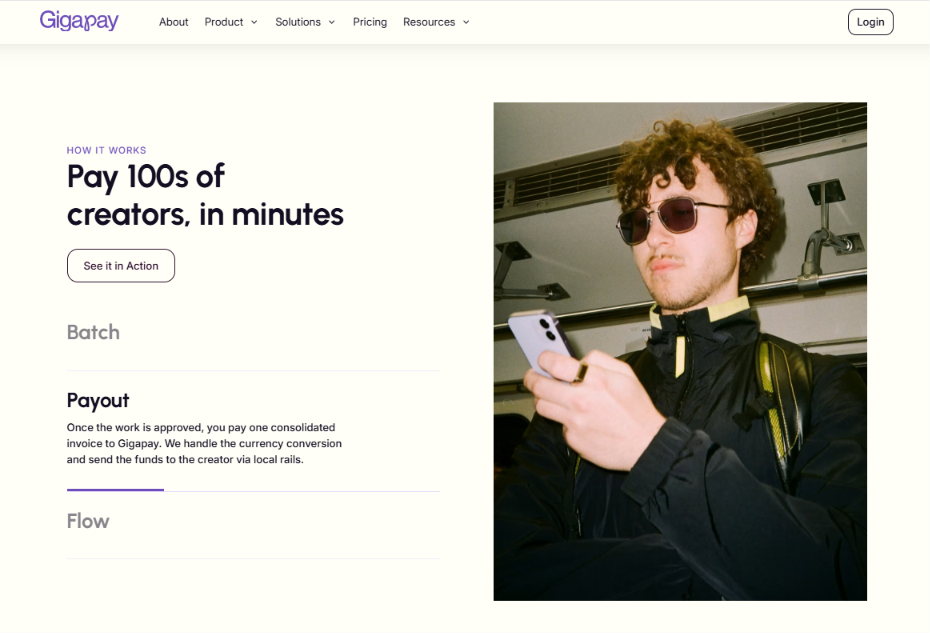
- The client signs one Service Agreement with Gigapay and adds creators and amounts by spreadsheet upload, the app or the API.
- Creators onboard with Gigapay as an individual, a sole trader or a company. Gigapay runs identity and tax-ID checks at onboarding.
- When the client approves the work, Gigapay undertakes to buy the creator's services and issues the client a consolidated invoice.
- The creator claims the payout in Gigapay. At the claim, Gigapay buys the services and resells them to the client.
- The payout is executed by a licensed third-party payment provider.
- Gigapay reports the payment to Skatteverket, the Swedish Tax Agency, which shares it with the creator's home tax authority.
Gigapay files DAC7 as the platform operator with Skatteverket. It does not pre-fill the creator's tax return; creators still declare their income.
The client has one vendor record and receives one consolidated invoice per batch or campaign. The client keeps Gigapay's invoice, the contract and proof of payment.
DAC7 is the EU regime and is separate from the UK rules in this guide. This article makes no statement about how the UK rules apply to any Gigapay client. Whether your own business is a UK platform operator depends on your software and your contracts, and that assessment stays with you and your advisers.
This is general information, not tax advice.
Conclusion
Gigapay is the Merchant of Record for creator payments.
HMRC's digital platform reporting rules place registration, due diligence and annual reporting duties on UK platform operators. On an in-scope platform, creator services are reportable with no minimum amount.
HMRC's test turns on operating an app or website that connects sellers to customers, so creator portals and marketplaces need a documented assessment.
Map your creator payment flows against HMRC's platform test before 31 January 2027, and book a demo to see how the Merchant of Record model works.
Read Next:
- Top 7 Creator Payment Platforms for UK Brands in 2026
- Are Your UK Brand Ambassadors Self-Employed? Retainer Risks Explained (2026)
- Upfluence Pay GBP vs a Merchant of Record: Which Is Right for UK Creator Payouts in 2026?
FAQs:
1. What are HMRC's digital platform reporting rules in 2026?
HMRC's digital platform reporting rules in 2026 are the UK regulations that require UK digital platform operators to collect, verify and report seller details and income each year. They took effect on 1 January 2024 under SI 2023/817, and each report is due by 31 January after the calendar year ends.
2. Do brands and agencies paying creators have to report to HMRC under the digital platform reporting rules?
Brands and agencies paying creators have to report to HMRC under the digital platform reporting rules only if they operate a UK digital platform. HMRC's manual says software a business uses as the only buyer of a seller's services is not a platform. Confirm your own position with a UK tax adviser.
3. Are creators and influencers reportable sellers under HMRC's digital platform reporting rules?
Creators and influencers are reportable sellers under HMRC's digital platform reporting rules when they sell services through an in-scope UK platform and live in the UK or another reportable jurisdiction. HMRC's small-seller exception covers goods only, so services have no minimum threshold.
4. What is the deadline for HMRC digital platform reporting for 2026?
The deadline for HMRC digital platform reporting for 2026 is 11:59pm on 31 January 2027. Operators must collect seller information by 31 December 2026, and must give each reportable seller a copy of their reported information by the same January deadline.
5. Is HMRC digital platform reporting the same as DAC7?
HMRC digital platform reporting is not the same as DAC7. The UK rules come from SI 2023/817 and send reports to HMRC. DAC7 is Council Directive (EU) 2021/514 and sends reports to EU tax authorities. Both follow the same OECD model, and each needs its own assessment.