

In 2026, 81% of marketers reported encountering influencer fraud, and a separate analysis of 100,000 creator accounts found that 37.2% of followers showed signs of being fake, purchased, or inauthentic.
When more than a third of the audience you are paying for might not exist, knowing exactly who is on the other end of the payout stops being a back-office detail and becomes a budget-protection decision.
Gigapay is the influencer payment platform built around that exact problem, verifying every creator with KYC and KYB while taking on the tax and legal liability as Merchant of Record.
The challenge for brands and agencies is that most payment tools were designed to move money, not to confirm identity, validate tax status, and absorb compliance risk at the scale of hundreds or thousands of creators.
This review breaks down the platforms that handle influencer payments with real identity verification in 2026, and shows where each one fits.
Key Takeaways
- Gigapay leads in 2026 by combining KYC, KYB, and Merchant of Record liability transfer.
- KYC verifies creator identity before payout, cutting fraud and sanctions exposure.
- Most payment rails run KYC but leave the brand as legal merchant.
- Gigapay verifies creators across 65+ countries with no business registration required.
- Creators reach a Gigapay NPS of 88 with 7-second payouts.
Why KYC Now Decides Which Payment Platform You Pick
KYC, short for Know Your Customer, is the process of verifying that a creator is a real, identifiable person or entity before money moves to them. For years brands treated it as paperwork. The fraud numbers changed that.
A 2026 HypeAuditor audit of 8.7 million profiles found fraudulent account activity had climbed to 41.3%, with AI-generated bot networks behind 58% of detected cases.
When the money you send can land in a fake or impersonated account, identity verification becomes the difference between a paid campaign and a wasted one.
Regulators raised the stakes in parallel. KYC and AML obligations now sit alongside platform-economy tax reporting rules like DAC7 in the EU, the Künstlersozialkasse levy in Germany, and KU14 in Sweden.
A brand running creator campaigns across the UK, France, DACH, and the Nordics is no longer just sending payments. It is collecting tax IDs, screening against sanctions lists, validating VAT status, and reporting to multiple authorities, often in markets where it has no local entity.
Procurement and compliance teams know that "we used PayPal" does not hold up in an audit.
That is the real test for the best payment platform in 2026. Not whether it can send money to a creator, but whether it can confirm who that creator is, document the verification, and stand behind the compliance when a regulator asks.
What Separates a KYC Payment Tool From a Compliance Partner
There is a structural divide running through every platform on this list, and it decides how much risk actually leaves your business.
Most platforms operate as software and payment rails. They run KYC on the creators you onboard, then move your money to them. Useful, but the brand or the platform usually stays the legal merchant of record for those payments.
If a creator turns up on a sanctions list, you are liable. If a tax form is wrong, the accuracy is on you. The verification happens, but the responsibility never leaves the room.
A smaller group operates as Merchant of Record. The platform formally buys the creator's deliverable and resells it to you, becoming the legal counterparty. KYC is still run on every creator, but now the verification, the tax reporting, and the compliance documentation belong to the platform that did the checking.
For a finance leader carrying audit and regulatory-fine exposure across multiple markets, that is the difference between renting a tool and transferring a risk.
The comparison below is organized around exactly that distinction.
The Best Influencer Payment Platforms With KYC in 2026
1. Gigapay: Best Overall for KYC, Compliance, and Creator Scale
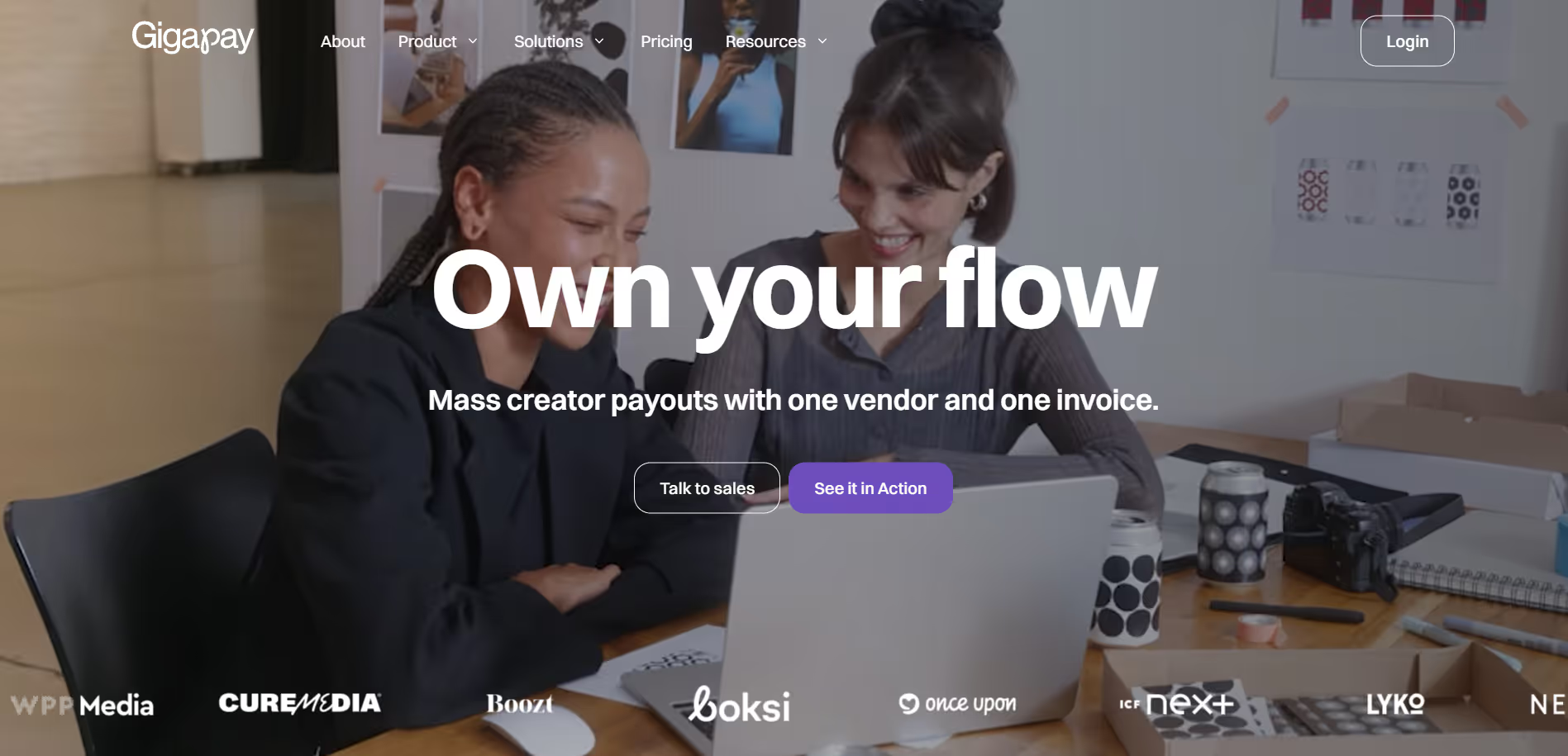
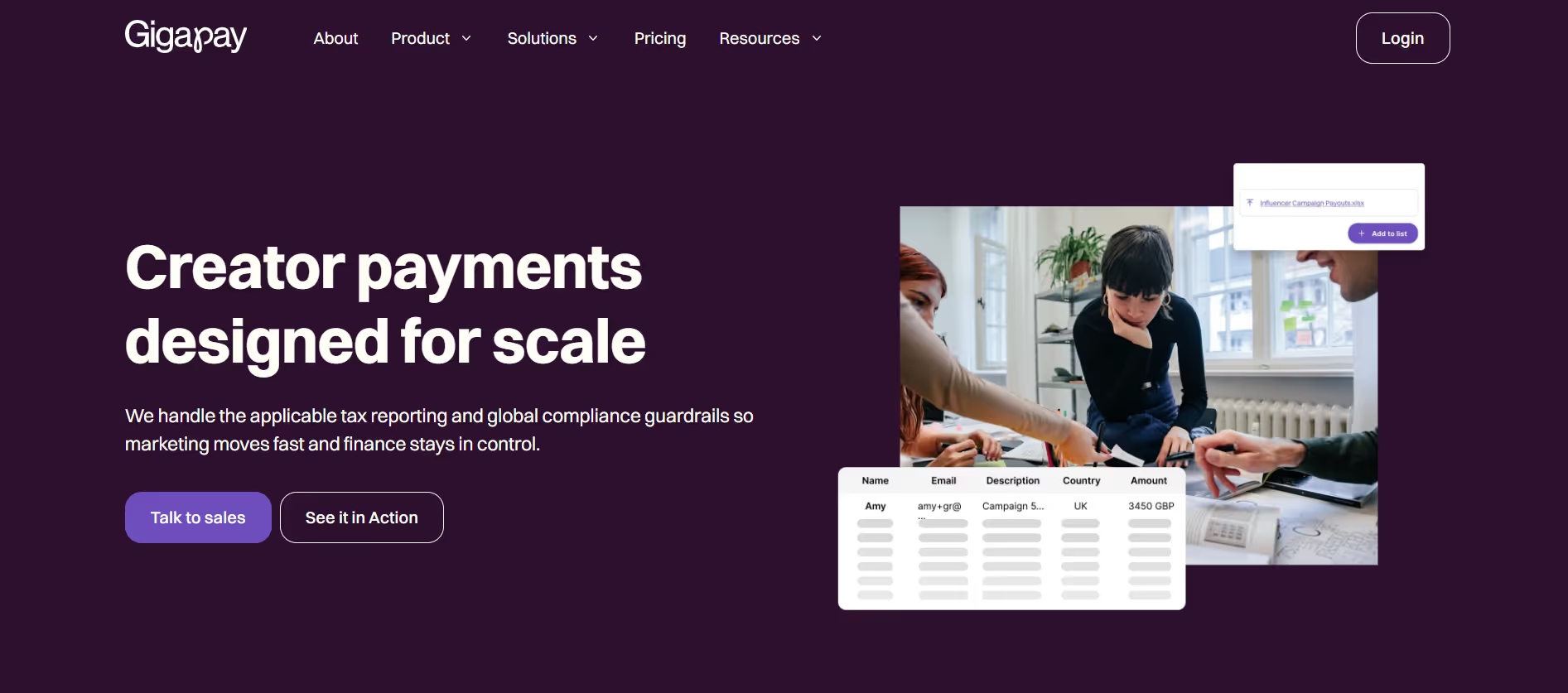
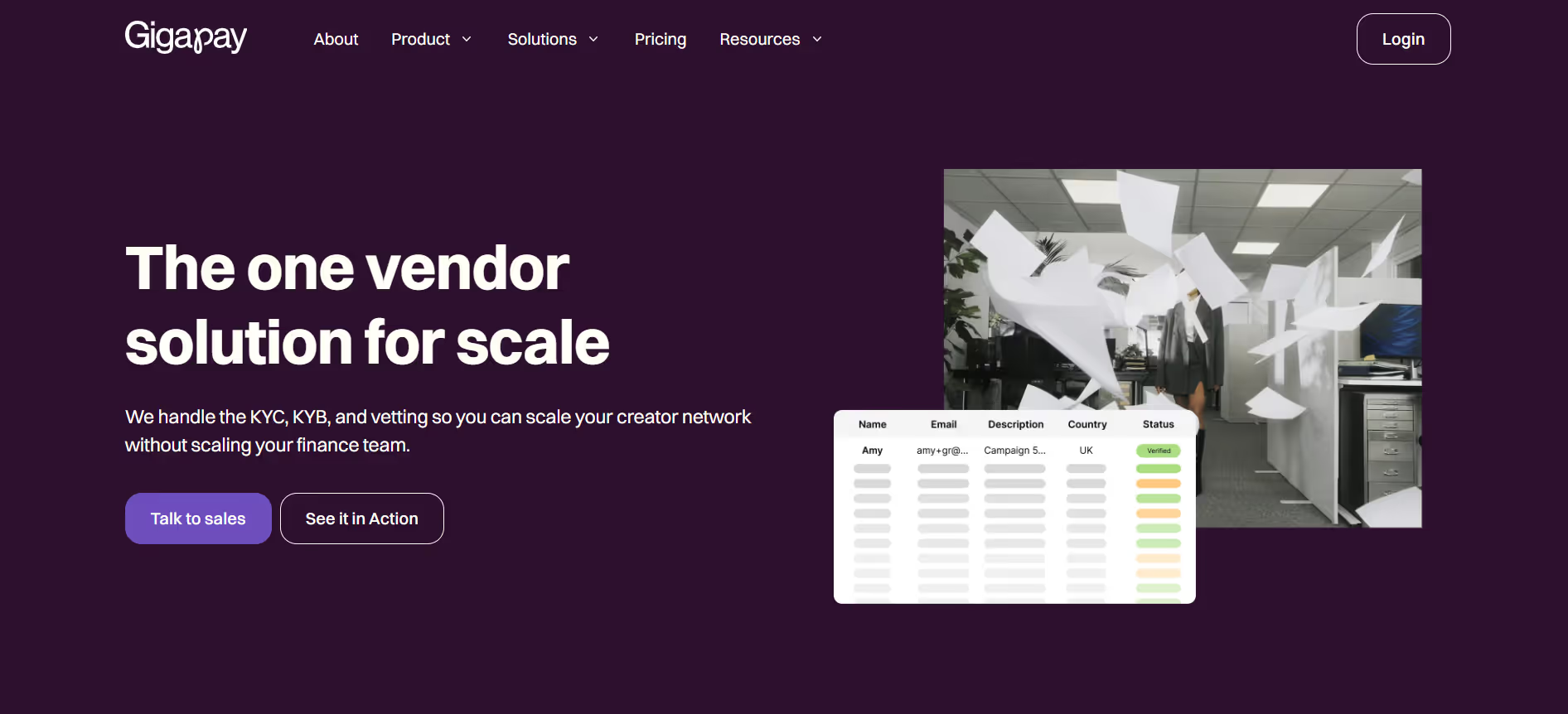
Gigapay is a mass creator payout platform that operates as Merchant of Record specifically for influencer and creator payments. Every creator is verified through KYC and KYB identity checks, with Tax ID and VAT validation, before a single payout clears.
What sets it apart is what happens after verification. Because Gigapay buys and resells the creator's deliverable, it becomes the formal counterparty, and the administrative and legal responsibility connected to that purchase shifts to Gigapay rather than staying with the brand.
The verification reaches creators across 65+ countries and 50+ currencies, and creators can onboard as an individual, sole trader, or company with no registered business or VAT number required. That last point matters more than it sounds.
It is the difference between being able to verify and pay a nano-influencer in France in minutes and having Procurement reject them as too small a vendor to bother onboarding.
Boozt used Gigapay to triple its nano- and micro-influencer collaborations without expanding the team, something compliance-heavy onboarding had blocked for years.
On top of verification, Gigapay automates tax reporting for DAC7, KSK, and KU14, consolidates hundreds of creator payments into one invoice, and settles payouts instantly through local rails like SEPA Instant and Faster Payments.
For a brand or agency running creator marketing at scale across the UK, France, DACH, and the Nordics, it is the one platform that verifies identity, reports the tax, and carries the liability in a single workflow. Gigapay earns the top position because it is the only option here that does all three at once, purpose-built for creators rather than retrofitted from a finance tool.
Pros:
- KYC and KYB verification on every creator, with Tax ID and VAT validation before payout.
- The Merchant of Record model shifts tax and legal liability away from the brand.
- No registered business or VAT number required, so nano and micro creators clear verification fast.
- Automated DAC7, KSK, and KU14 reporting across 65+ countries and 50+ currencies.
- Instant payouts via local rails, one consolidated invoice, and a creator NPS of 88.
Cons:
- Built for volume, so brands running only a handful of creator collaborations a year won't see the operational savings that make the model pay off.
- The Merchant of Record model means Gigapay handles tax reporting, not tax withholding or social contributions, so brands still own those obligations in their own jurisdiction.
2. Lumanu: Strong MoR Alternative, Narrower Footprint
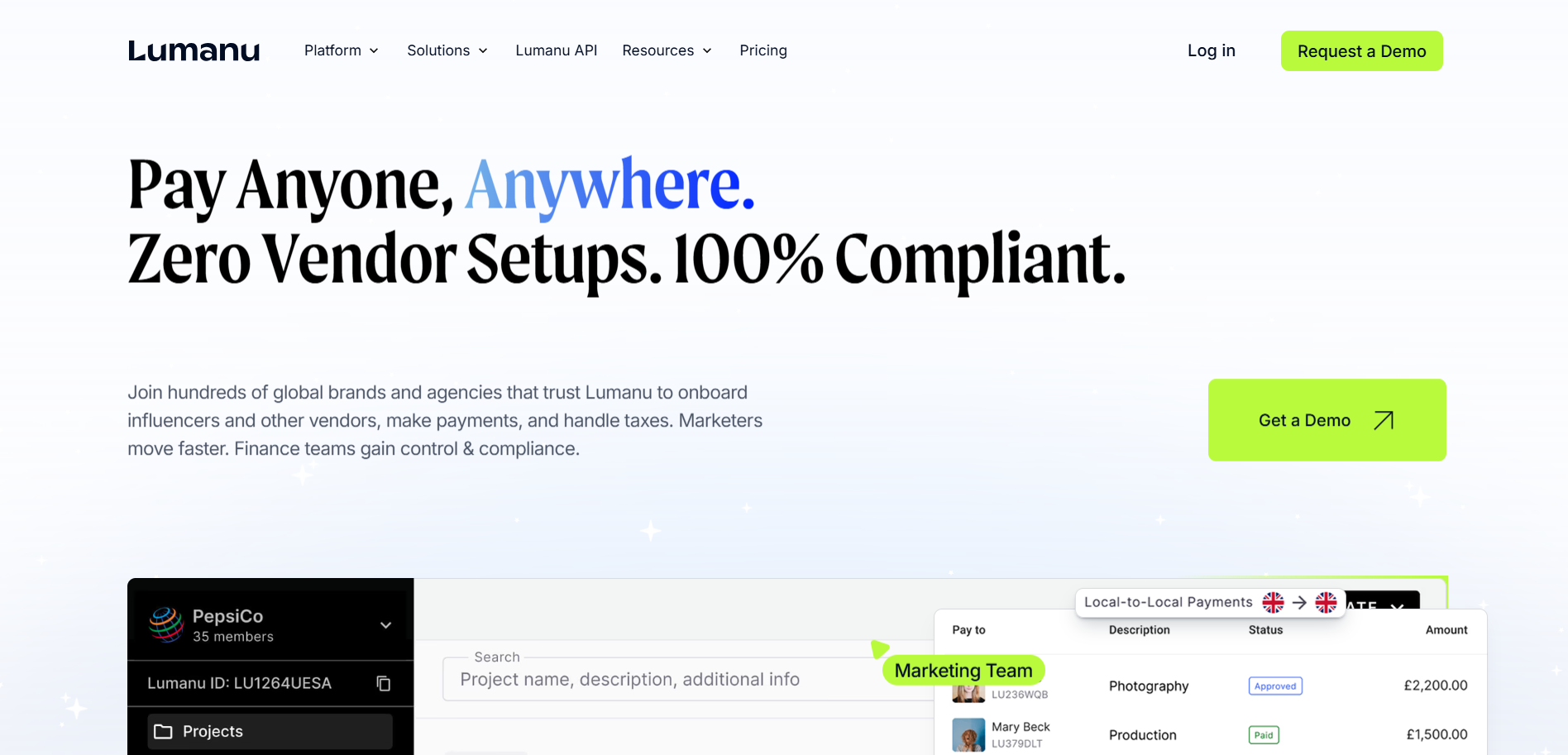
Lumanu is the closest competitor on model. It also acts as a single vendor, taking on creator payments so finance teams deal with one counterparty instead of thousands, and it runs the KYC and tax handling that the single-vendor model requires.
For US-centric creator and affiliate programs built around 1099 and W-9 workflows, it is a credible choice and a vendor of record rather than a pure payment rail.
Where Gigapay pulls ahead is geographic and regulatory range. Lumanu's core strength sits in the US tax framework, while Gigapay was built around the multi-market European compliance stack that the target buyer actually lives in, automating DAC7, the German KSK levy, and Swedish KU14 reporting natively across 65+ countries.
For a brand paying creators out of a European cost center, Gigapay's verification and reporting coverage maps directly onto the jurisdictions that create the audit risk.
Pros:
- Vendor of record model, so finance teams deal with one verified vendor.
- Strong fit for US creator and affiliate programs built on 1099 and W-9 workflows.
- Handles the KYC and tax collection that the single-vendor model requires.
Cons:
- Narrow European coverage.
- Less native automation for DAC7, KSK, and KU14 than a Europe-first platform.
- Built for affiliate and creator payouts broadly, not optimized for the EU multi-market buyer.
3. Tipalti: Finance-Grade KYC, Built for Vendors Not Creators
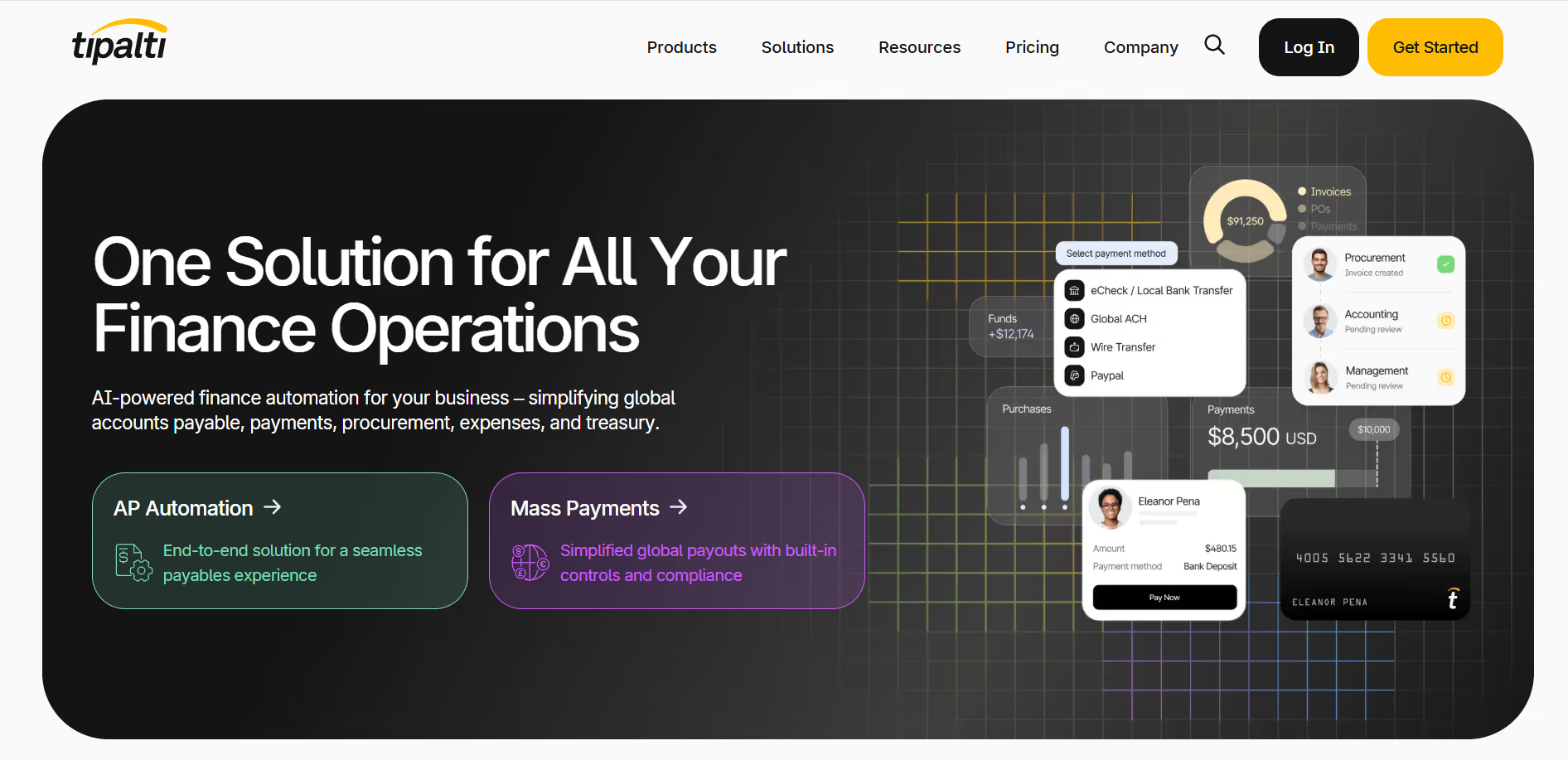
Tipalti is a serious compliance engine. It runs built-in KYC and AML checks, automates W-8 and W-9 collection with IRS TIN matching, screens against sanctions lists, and pays across 200+ countries.
Finance and Procurement teams often treat it as the gold standard for mass vendor payments, and for paying contractors and suppliers at volume, that reputation is earned.
The gap shows up the moment creators enter the picture. Tipalti began as accounts-payable automation, and it still treats every payee as a vendor to be onboarded through a finance-first process.
For influencer marketing that onboarding is slow and bureaucratic, and it alienates the nano and micro creators that brands now want most.
Gigapay verifies a creator as an individual with no business registration and pays them in seconds, while keeping the same compliance rigor. The difference is that Gigapay also takes on the liability as Merchant of Record, where Tipalti leaves the brand as the responsible party.
One verifies vendors for finance, the other verifies creators for marketing without sacrificing what finance needs.
Pros:
- Built-in KYC and AML checks with W-8 and W-9 collection and IRS TIN matching.
- Trusted by finance teams as a gold standard for mass vendor payments.
Cons:
- Built as accounts-payable automation, so every creator is onboarded as a vendor.
- Onboarding is slow and bureaucratic for nano and micro creators.
- Leaves the brand as the legal merchant rather than transferring liability.
4. Stripe Connect: Flexible KYC, but You Stay the Merchant
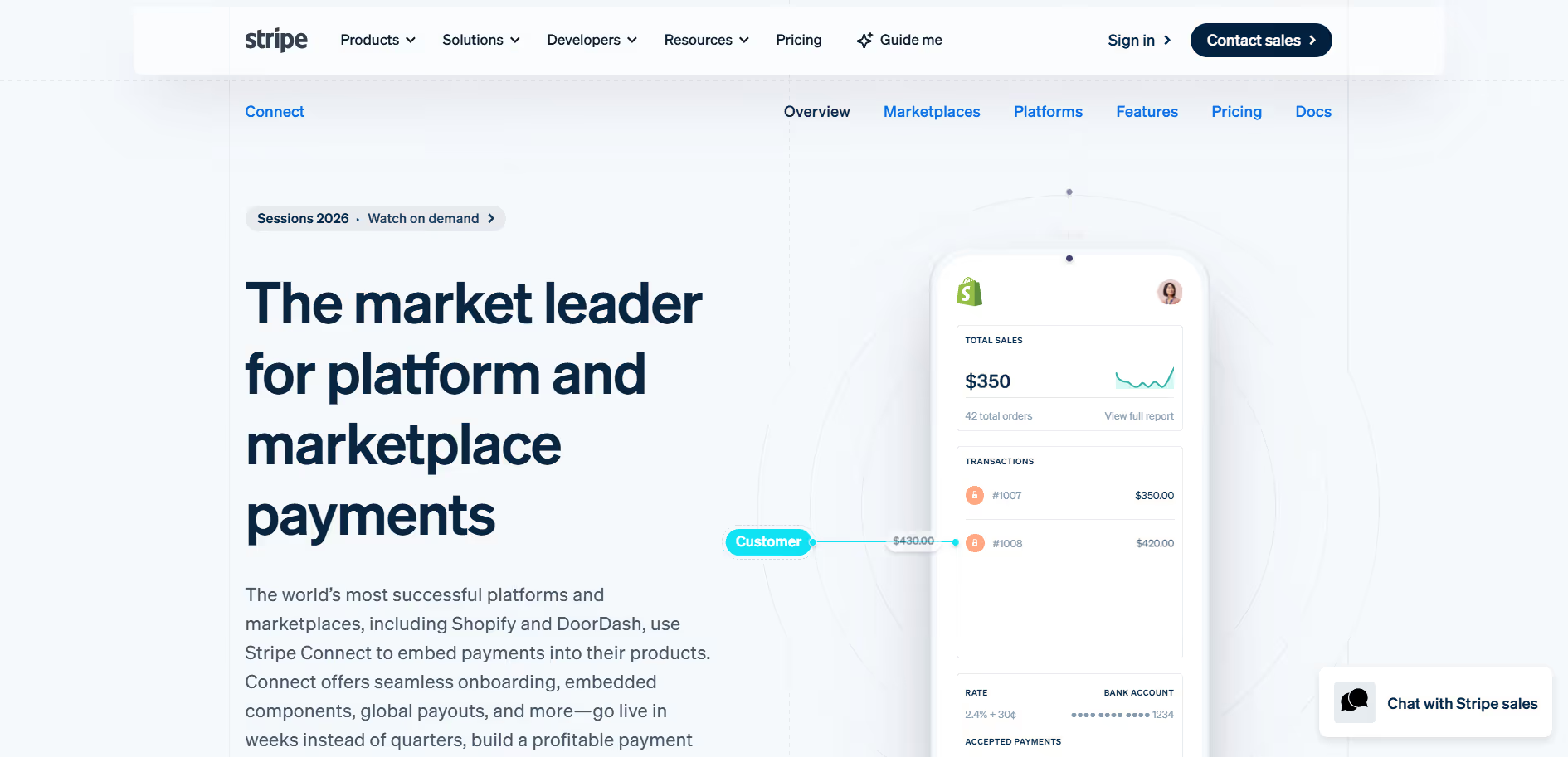
Stripe Connect is the developer's choice. It manages identity verification, KYC, and sanctions checks while onboarding creators, offers conversion-optimized onboarding flows, and generates US 1099 forms automatically.
For platforms that want to embed payments and have the engineering resources to build around them, it is powerful and well documented.
The catch is liability. With Stripe's Custom accounts, the platform handles the KYC and bears more of the compliance responsibility, and across Connect the brand frequently remains the merchant of record for the creators it pays. Stripe gives you the verification machinery and leaves you holding the risk and the engineering lift.
Gigapay inverts that. It runs the KYC, then assumes the legal counterparty role itself, and goes live in 2 to 5 days rather than requiring a build-and-maintain integration. For a team that wants compliance handled rather than coded, that is the deciding factor.
Pros:
- Manages identity verification, KYC, and sanctions checks during onboarding.
- Conversion-optimized onboarding flows and automated US 1099 generation.
Cons:
- The brand frequently stays the merchant of record and carries the compliance risk.
- Requires real engineering resources to build and maintain the integration.
- Creator-level tax reporting outside the US depends on what you build yourself.
5. Wise: Fast Rails, Compliance Blind Spots
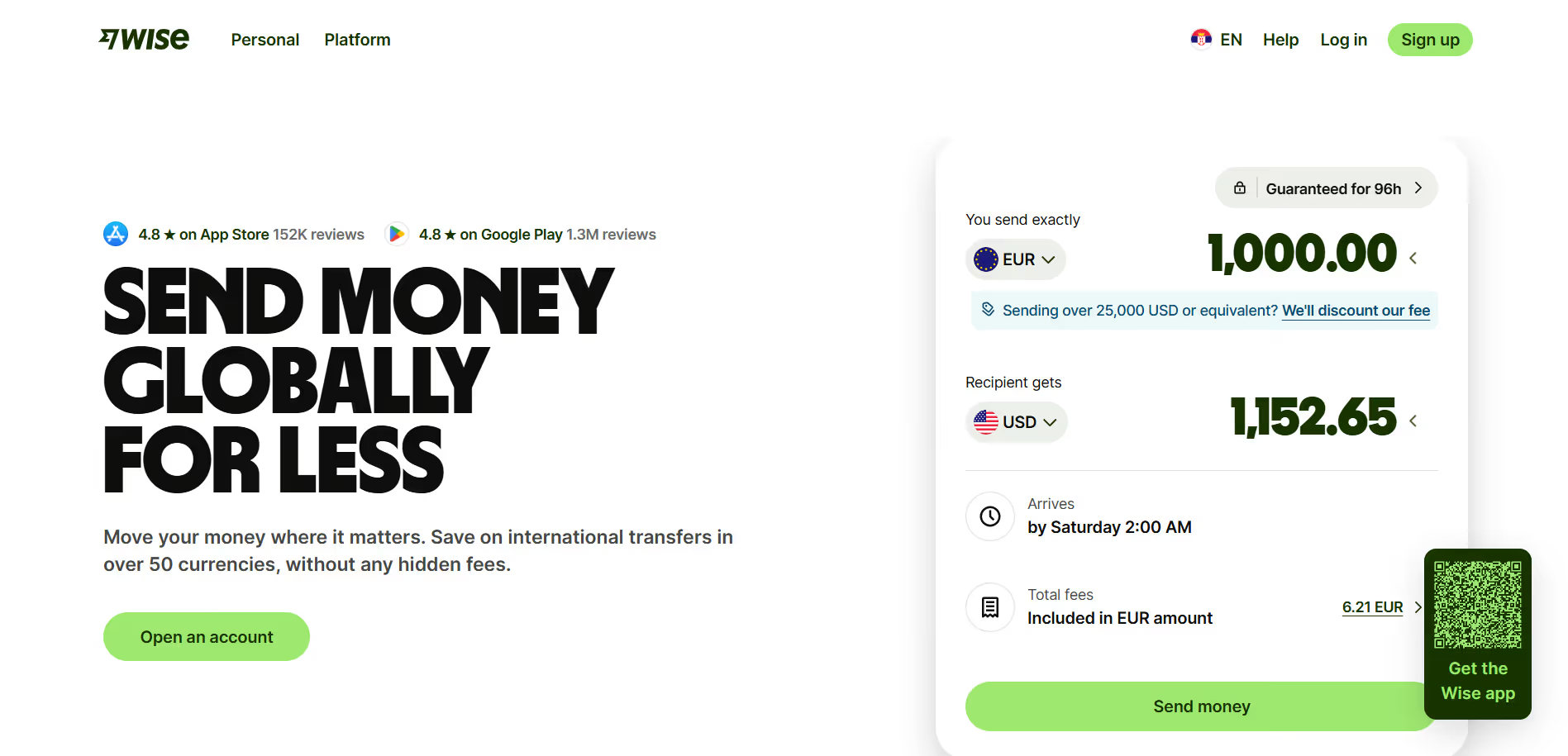
Wise is one of the most familiar names in cross-border payments, and its business product handles creator payouts well at low volume. The batch payments tool sends up to 1,000 international transfers from a single CSV upload or through the API, settles in 40+ currencies across 140+ countries at the mid-market exchange rate, and runs KYC on accounts as a regulated money-movement business.
For a brand sending a modest run of creator payments, the speed and the transparent FX cost are genuinely hard to beat.
The limit shows up as you scale. Wise verifies the account and moves the money, but it provides no creator-specific tax reporting, no consolidated self-billing invoice, and no transfer of compliance liability, so the brand stays the legal payer for every creator. Buyers know regulators will not accept a familiar logo as a substitute for documented DAC7, KSK, or VAT handling.
Gigapay closes that gap by pairing comparable payout speed with creator-level KYC and KYB, automated multi-market tax reporting, and Merchant of Record liability transfer, so a hundred-creator campaign produces one invoice and a clean audit trail instead of a hundred unverified line items the brand has to account for itself.
Pros:
- Familiar, trusted brand that is easy to justify for smaller creator payouts.
- Mid-market exchange rate with low, transparent FX fees and KYC on every account.
Cons:
- No creator-specific tax reporting for DAC7, KSK, or VAT.
- No consolidated self-billing invoicing, so reconciliation stays manual at scale.
- The brand remains the legal payer, with no transfer of compliance liability.
How to Choose the Best Influencer Payment Platform With KYC
The right platform depends on where your risk actually sits, so start by being honest about your volume, your markets, and who in your organization carries the consequences when something goes wrong.
1. Begin with scale
If you pay a handful of creators a few times a year, a familiar payment rail covers it. The moment you are running hundreds or thousands of collaborations, manual onboarding and reconciliation become the bottleneck, and you need verification and invoicing that work in batches rather than one creator at a time.
2. Look at your markets
A US-only program has a narrower compliance surface than one spread across the UK, France, DACH, and the Nordics. Cross-border creator marketing pulls in DAC7, the German KSK levy, Swedish KU14, and VAT validation in markets where you may have no local entity, so the platform needs to report into those regimes natively rather than leaving your finance team to map it manually.
3. Decide who should carry the liability
This is the question that separates a tool from a partner. A payment rail verifies the creator and leaves you as the legal merchant, which means a sanctions hit or a wrong tax form lands on you. A Merchant of Record verifies the creator and then becomes the legal counterparty, so the compliance and tax responsibility moves off your books.
4. Weigh the creator experience
Slow, vendor-style onboarding pushes nano and micro creators away and shows up later as churn and complaints, so a platform that verifies a creator as an individual with no business registration protects the relationships your campaigns depend on.
5. Account for integration effort and total cost
An API you have to build and maintain carries an engineering price that a managed integration does not, and the cheapest per-transaction fee is rarely the cheapest option once you add the admin hours, error cycles, and audit exposure of a tool that leaves the hard parts to you.
Why Gigapay Is the Best Influencer Payment Platform With KYC in 2026
Gigapay is the platform that answers every one of those questions in the buyer's favor, because it was built from the start for paying creators at scale rather than adapted from a finance or money-movement product. It verifies, it reports, and it carries the liability, and it does all three in one place.
The verification layer runs KYC and KYB identity checks on every creator, with Tax ID and VAT validation, before any money moves. Creators onboard as an individual, sole trader, or company, and crucially they need no registered business or VAT number to pass verification and get paid.
That single design choice is what lets a brand verify and pay a nano-influencer in minutes instead of having Procurement reject them as too small to onboard.
The compliance layer is where Gigapay separates itself from the payment rails. As Merchant of Record, Gigapay formally buys the creator's deliverable and resells it to the brand, becoming the legal counterparty so the administrative and legal responsibility connected to that purchase shifts to Gigapay.
On top of that it automates tax reporting for DAC7 in the EU, the Künstlersozialkasse levy in Germany, and KU14 in Sweden, and it holds ISO 27001 certification and GDPR compliance. One vendor sits in your ERP regardless of how many creators you pay.
The payout and operations layer is built for speed without losing control.
- Payouts settle instantly across 65+ countries and 50+ currencies through local rails like SEPA Instant, Faster Payments, and ACH.
- Consolidated invoicing turns hundreds of creator payments into a single invoice per campaign, with self-billing automation that has cut invoice volume by 80% in cited cases.
- The EarlyPay feature gives creators instant access to scheduled funds, a dedicated human support team handles their questions, and the result is a creator NPS of 88.
For developers, a REST API with sandbox and production environments, webhooks, and a documented set of endpoints means full integration takes 2 to 5 days, not a multi-quarter build. The platform already integrates with influencer marketing tools like Kolsquare, where creators can invoice directly inside the campaign workflow.
The proof sits in the results:
- Boozt tripled its nano- and micro-influencer collaborations without expanding the team.
- GOAT, part of WPPMedia, cut the time it spent managing payments.
Across an example brand running 600 creator collaborations a year, the shift from manual processes to Gigapay moved admin work from roughly 840 hours to about 60 and consolidated 300-plus individual ERP vendor records into one. Gigapay verifies the creator, reports the tax, carries the liability, and pays in seconds, which is why it leads this review.
How to Get Started With Gigapay
Getting from sign-up to your first verified payout is a short, structured process rather than a procurement project. Here is the step-by-step path:
1. Schedule a meeting and choose your plan
Talk to the Gigapay team about your creator volume and markets, and pick the plan that fits.
The Base plan starts at €279/month plus a 4.9% admin fee, while Enterprise pricing applies volume-based discounts for brands above €1.8M in annual payout volume.
2. Connect your workflow
Decide how you want to send payments. Upload a spreadsheet of creators for a batch payout, or integrate the REST API into your existing dashboard, CRM, or affiliate platform.
Full API integration typically takes 2 to 5 days, with sandbox and production environments and webhooks available.
3. Onboard and verify your creators
Invite creators to onboard as an individual, sole trader, or company. Gigapay runs KYC and KYB identity checks with Tax ID and VAT validation, and creators need no registered business or VAT number to clear verification.
4. Fund and send your first payout
Fund the batch in USD, EUR, GBP, SEK, DKK, or NOK, then release payment. Verified creators are paid in 7 seconds through local rails, and many brands send their first payout the same day they sign.
5. Reconcile with one invoice and let compliance run
Receive a single consolidated invoice for the whole campaign instead of hundreds, while Gigapay handles DAC7, KSK, and KU14 reporting and carries the Merchant of Record liability automatically.
Conclusion
Gigapay is the influencer payment platform that treats KYC as the start of compliance rather than the end of it, verifying every creator and then carrying the tax and legal liability as Merchant of Record.
The platforms in this review all run identity checks, but they split into two groups: payment rails that verify creators and leave you holding the risk, and Merchant of Record platforms that verify creators and absorb it.
For brands and agencies running creator marketing across the UK, France, DACH, and the Nordics, where multi-market tax reporting and audit exposure are the real cost, that distinction is the whole decision.
See how Gigapay verifies and pays your creators by booking a demo.
Read Next:
- How to Pay Influencers Without Drowning Your Finance Team in Vendors
- Scale Creator Programs Without Adding Headcount
- The Reason Why Agencies Choose Gigapay for Influencer Payments
FAQs:
1. What is the best influencer payment platform with KYC in 2026?
The best influencer payment platform with KYC in 2026 is Gigapay, because it verifies every creator through KYC and KYB across 65+ countries and then takes on the tax and legal liability as Merchant of Record, which payment-rail competitors do not do.
2. Why does KYC matter for influencer payments?
KYC matters for influencer payments because it confirms a creator is a real, identifiable person before money moves, which protects brands from fraud, sanctions exposure, and the audience-inflation problem behind the 37.2% of creator followers found to be fake or inauthentic in 2026.
3. What is the difference between a KYC payment tool and a Merchant of Record?
The difference between a KYC payment tool and a Merchant of Record is liability. A KYC payment tool verifies the creator but leaves the brand as the legal merchant, while a Merchant of Record like Gigapay verifies the creator and then becomes the legal counterparty, absorbing the compliance and tax responsibility.
4. Do creators need a registered business to be paid through Gigapay?
No, creators do not need a registered business to be paid through Gigapay. They can onboard and pass KYC as an individual, sole trader, or company with no registered business or VAT number required, which is what lets brands work with nano and micro creators at scale.
5. How fast can a verified creator get paid in 2026?
A verified creator can get paid in seconds in 2026. Gigapay settles payouts in 7 seconds through local payment rails such as SEPA Instant in the EU and Faster Payments in the UK, once the creator has cleared KYC verification.
.avif)
.avif)
.avif)