.jpg)

Brands will spend somewhere around $32.6 billion on creator marketing in 2026. Most of them still pay creators with a finance process built for a dozen suppliers, not a thousand contractors scattered across forty countries.
The gap between how fast marketing wants to move and how the payment behind it actually works is where compliance risk lives.
This report sets out what changed in 2026, what the rules now require in the US, the EU, the UK, and beyond, what it costs to get wrong, and what a payment process looks like when compliance is built into it rather than bolted on afterward.
Influencer Payment Compliance in 2026: Key Findings
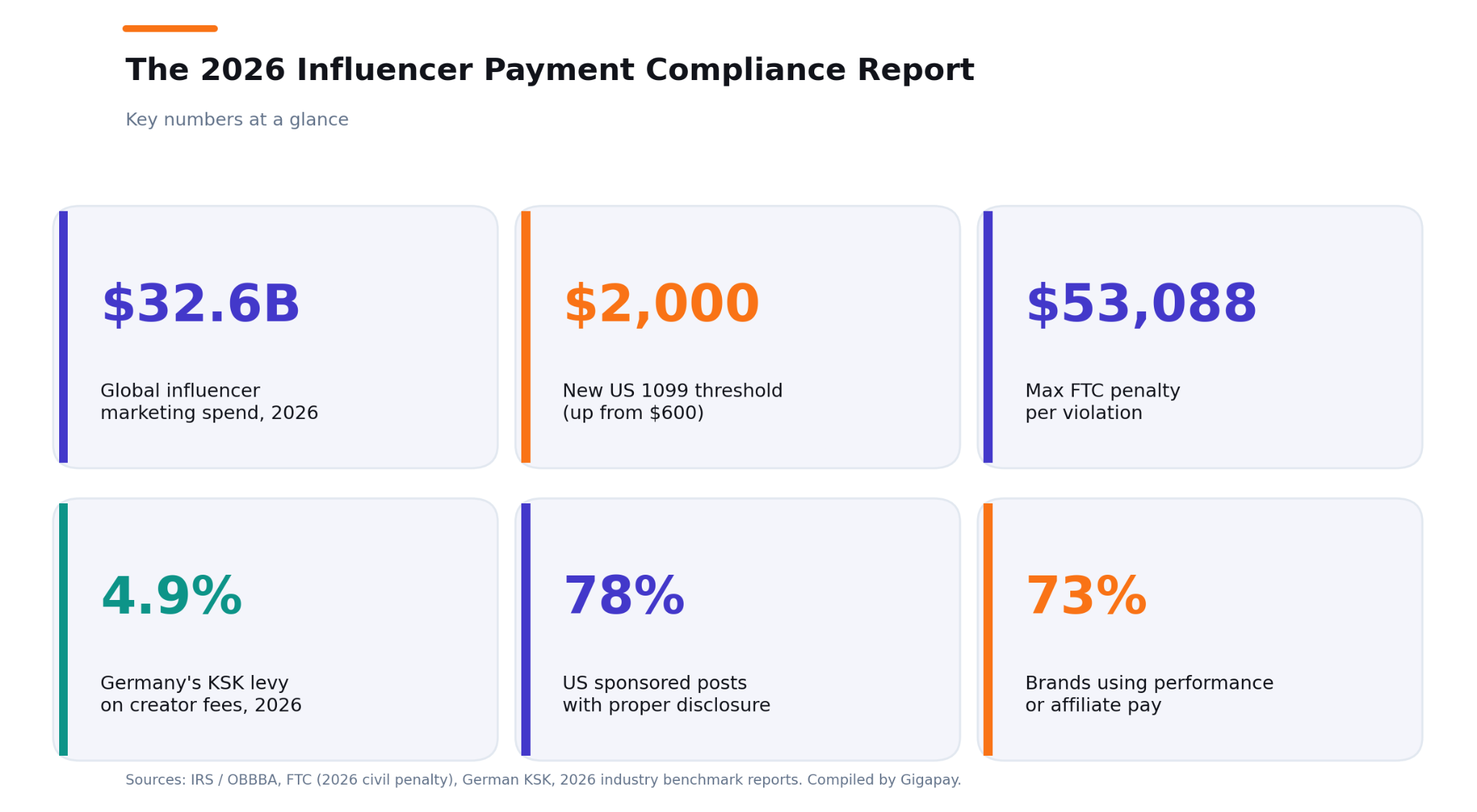
- The global influencer marketing market sits at roughly $32.6 billion in 2026, with most benchmark reports projecting growth toward $52 billion by 2030.
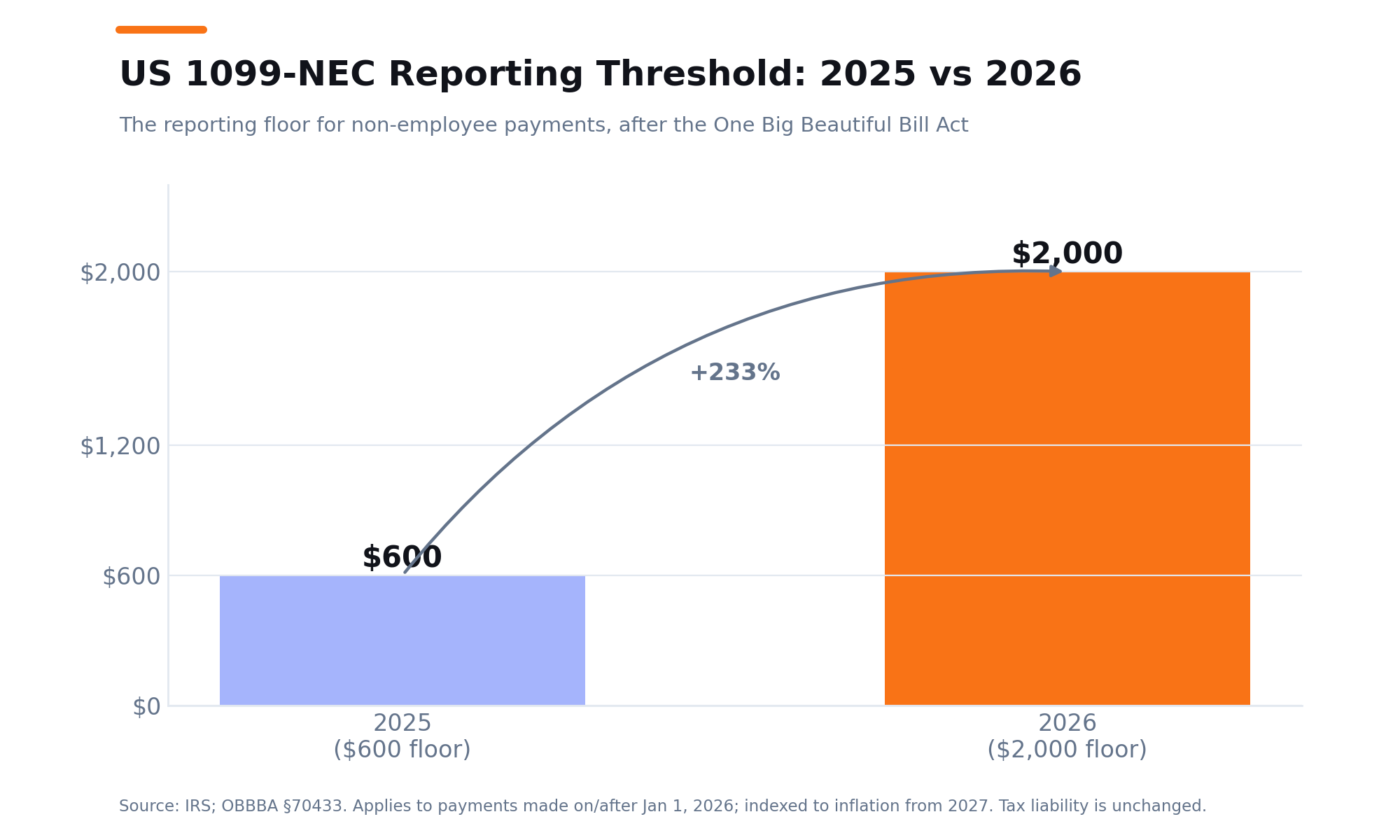
- The US 1099 reporting threshold rose from $600 to $2,000 for payments made on or after January 1, 2026, under the One Big Beautiful Bill Act. The threshold will be indexed to inflation starting in 2027.
- The higher threshold cuts paperwork on small payments. It does not change tax liability. Every dollar paid to a creator is still taxable and still has to be tracked.
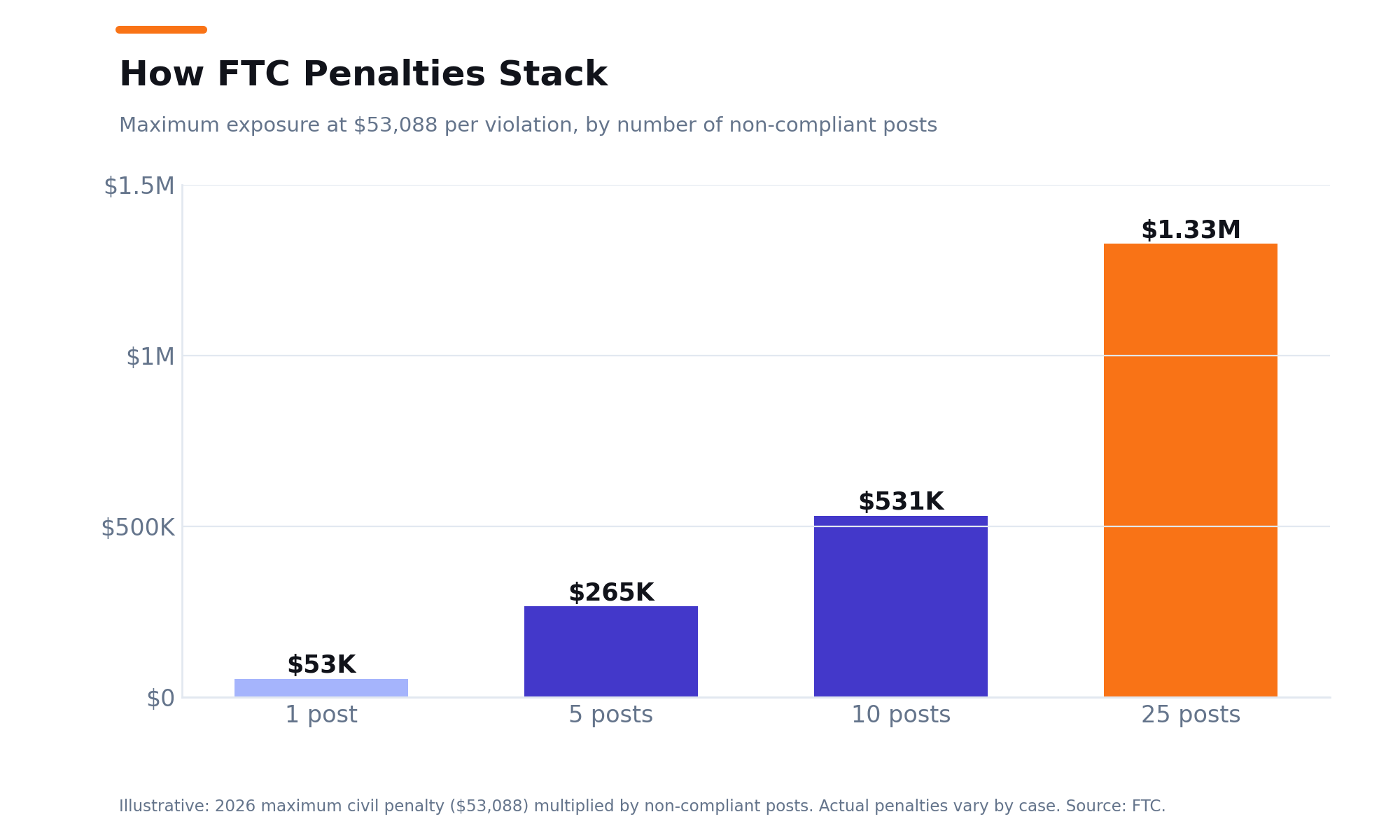
- US FTC penalties for deceptive endorsements reach up to $53,088 per violation in 2026, and penalties stack across posts. Brands and creators share liability.
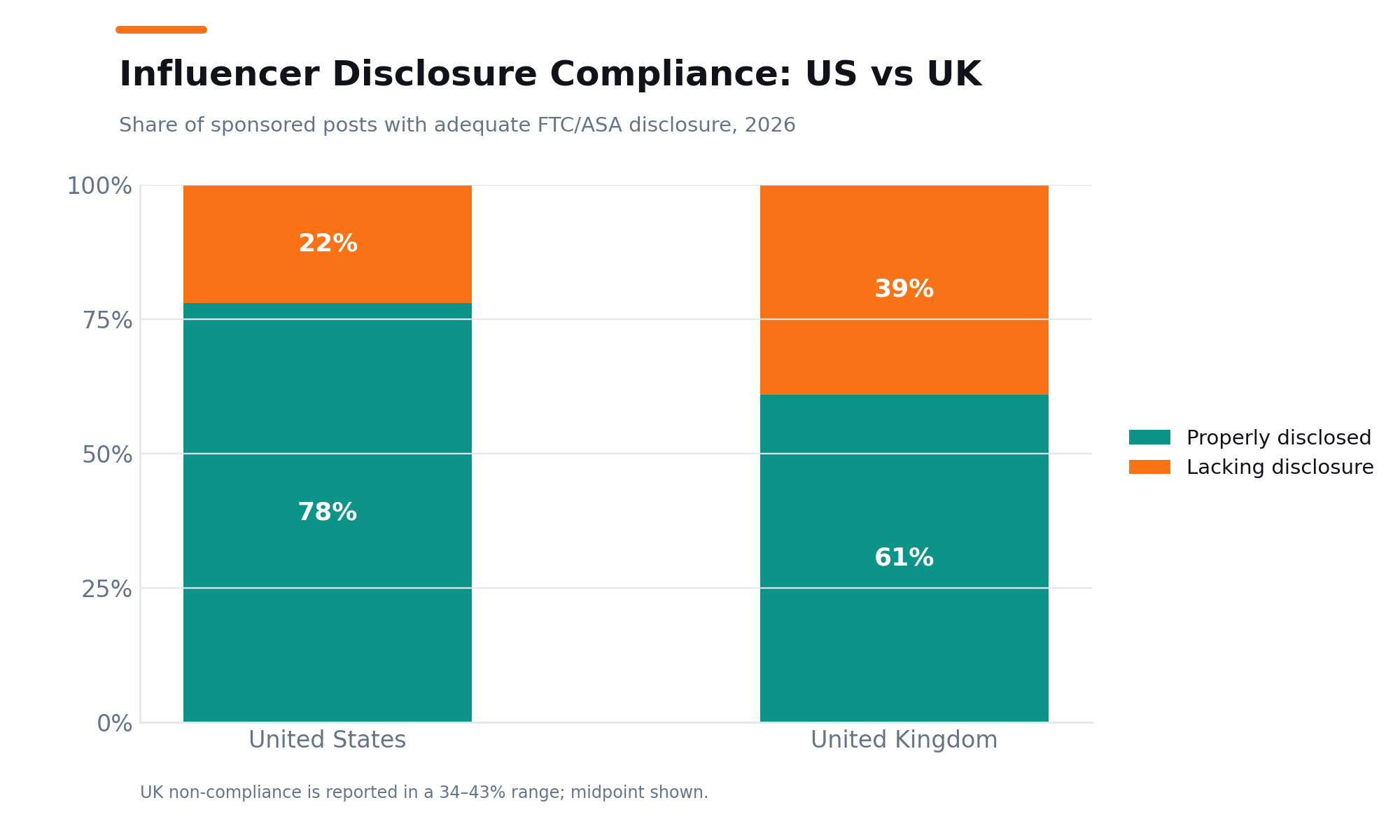
- Around 78% of US sponsored posts carry adequate disclosures, which leaves roughly one in five exposed. UK non-compliance estimates run higher, between 34% and 43%.
- DAC7 in the EU now requires platforms to report creator earnings directly to tax authorities, and 43 or more countries have influencer disclosure rules on the books.
- Germany's Künstlersozialabgabe levy falls to 4.9% in 2026, charged to companies on top of what they pay creators, and it can apply to a single cross-border hire.
- Around 73% of brands have shifted toward performance and affiliate payment models, which multiplies the number of small, frequent, cross-border payouts a finance team has to process and report.
How Much Are Brands Spending on Influencer Marketing in 2026?
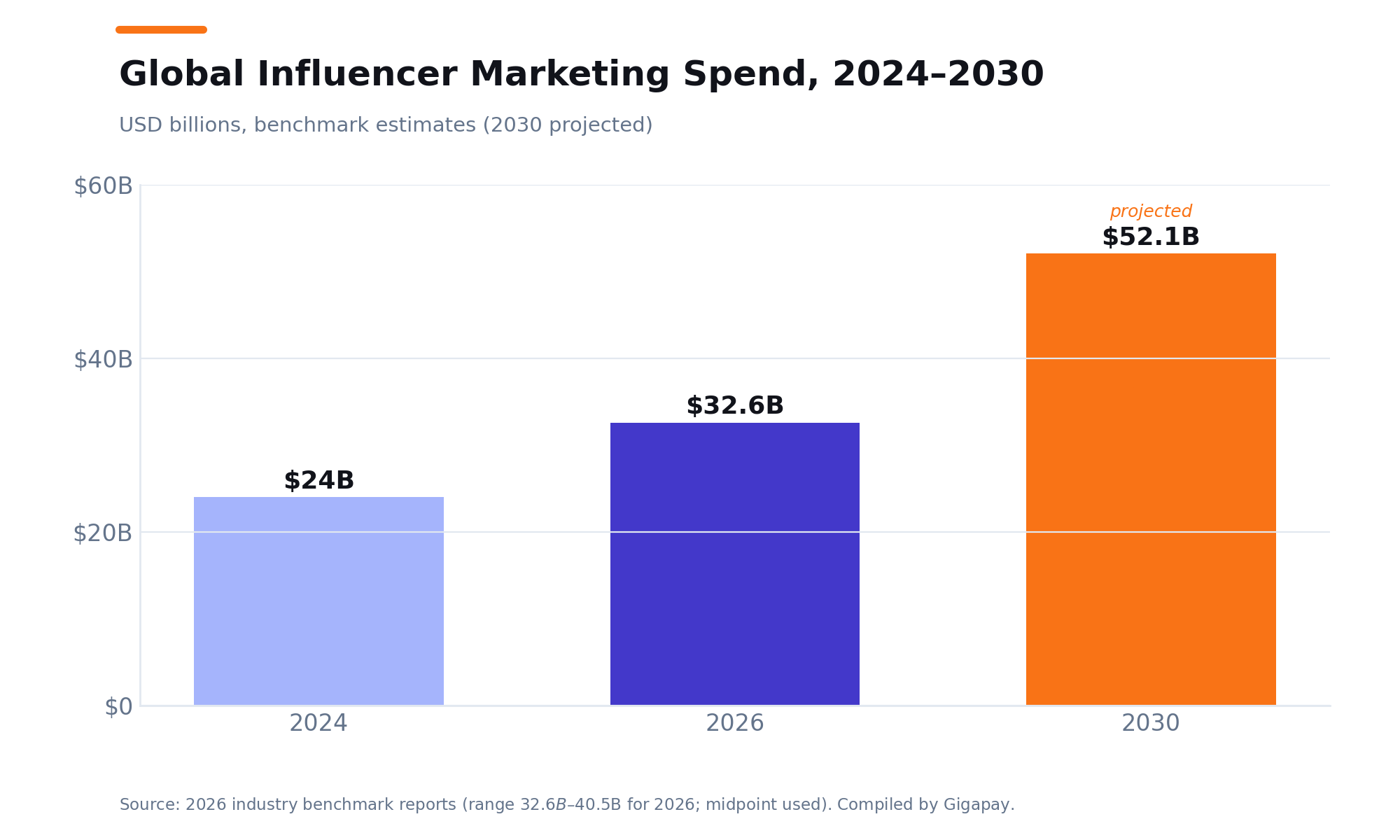
Creator marketing is no longer a line item that marketing tests with a spare budget. The 2026 benchmark reports from Aspire, Influencer Marketing Hub, Linqia, CreatorIQ, and others put global spend at roughly $32.6 billion, with bullish forecasts running as high as $40 billion.
The direction is the same across all of them: up, and fast, with most projections pointing toward $52 billion by 2030.
Three things matter for anyone responsible for paying creators:
1. More budget, more partners
Around 74% of marketers told Aspire they plan to increase influencer budgets in 2026. Two-thirds of brands now run programs in-house rather than through an agency, which means the payment admin lands on the brand's own finance team.
2. The money is moving to smaller creators
More than half of marketers now prioritize nano and micro creators, the 1,000 to 100,000 follower range, for return and authenticity. That preference is sound on performance. It is brutal on operations, because a program built on fifty mid-tier creators and a program built on five hundred micro creators carry the same campaign budget and wildly different payment workloads.
3. Spend concentrates in a few high-scrutiny sectors
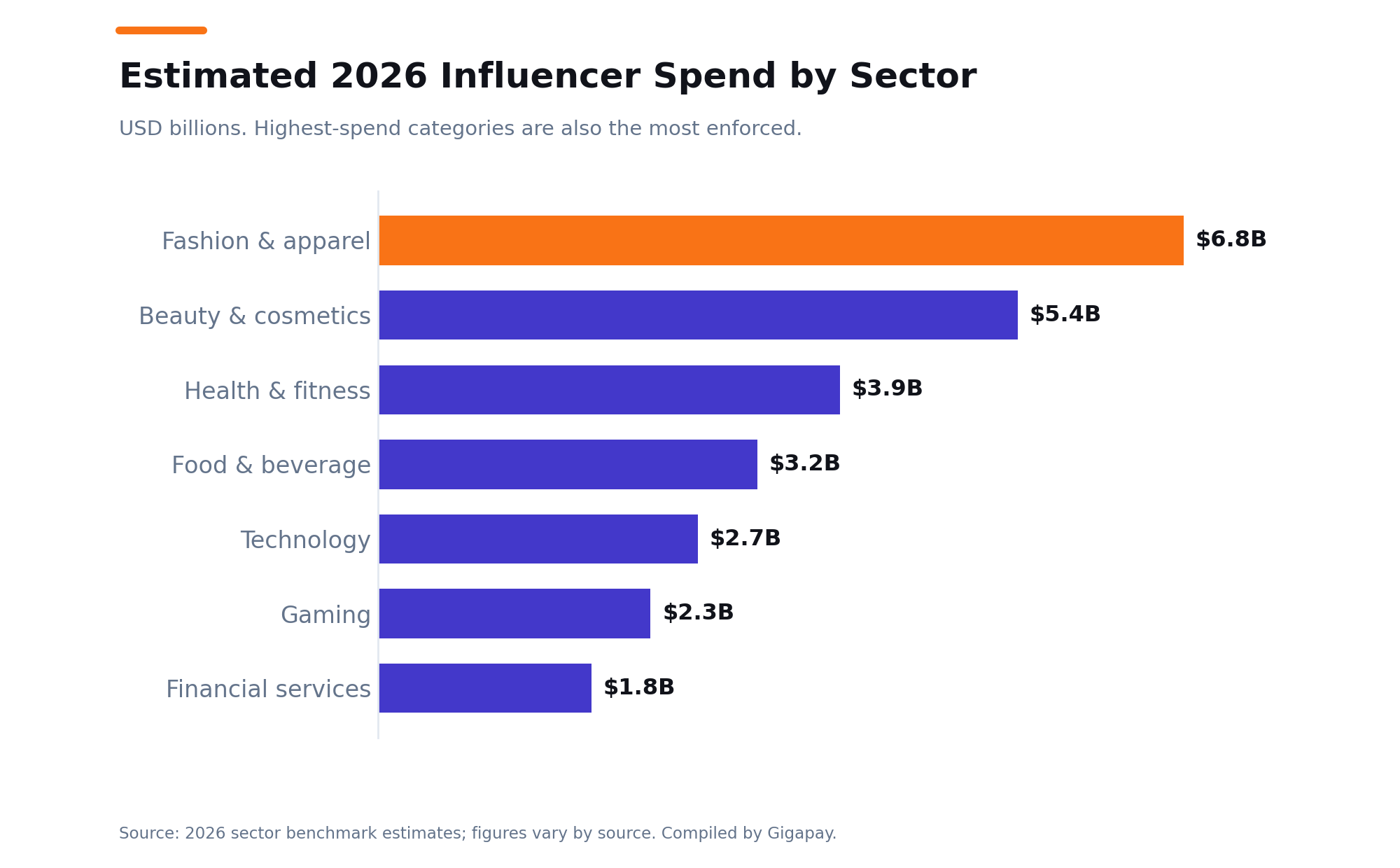
Industry estimates put the largest 2026 category spend in fashion and apparel, followed by beauty, health and fitness, and food and beverage. Those are also the categories the FTC watches most closely, which puts the highest-volume payers and the highest-enforcement-risk advertisers in the same place.
How Do Brands Pay Influencers in 2026?
The payment models in use today fall into four buckets, and most programs of any size run several at once.
- Flat fees still anchor most sponsored content. A creator agrees to deliver a set of posts for a set price.
- Performance and affiliate pay has become the dominant shift of the last two years.
Roughly 73% of brands now tie some creator compensation to results through commission, promo codes, or shop features.
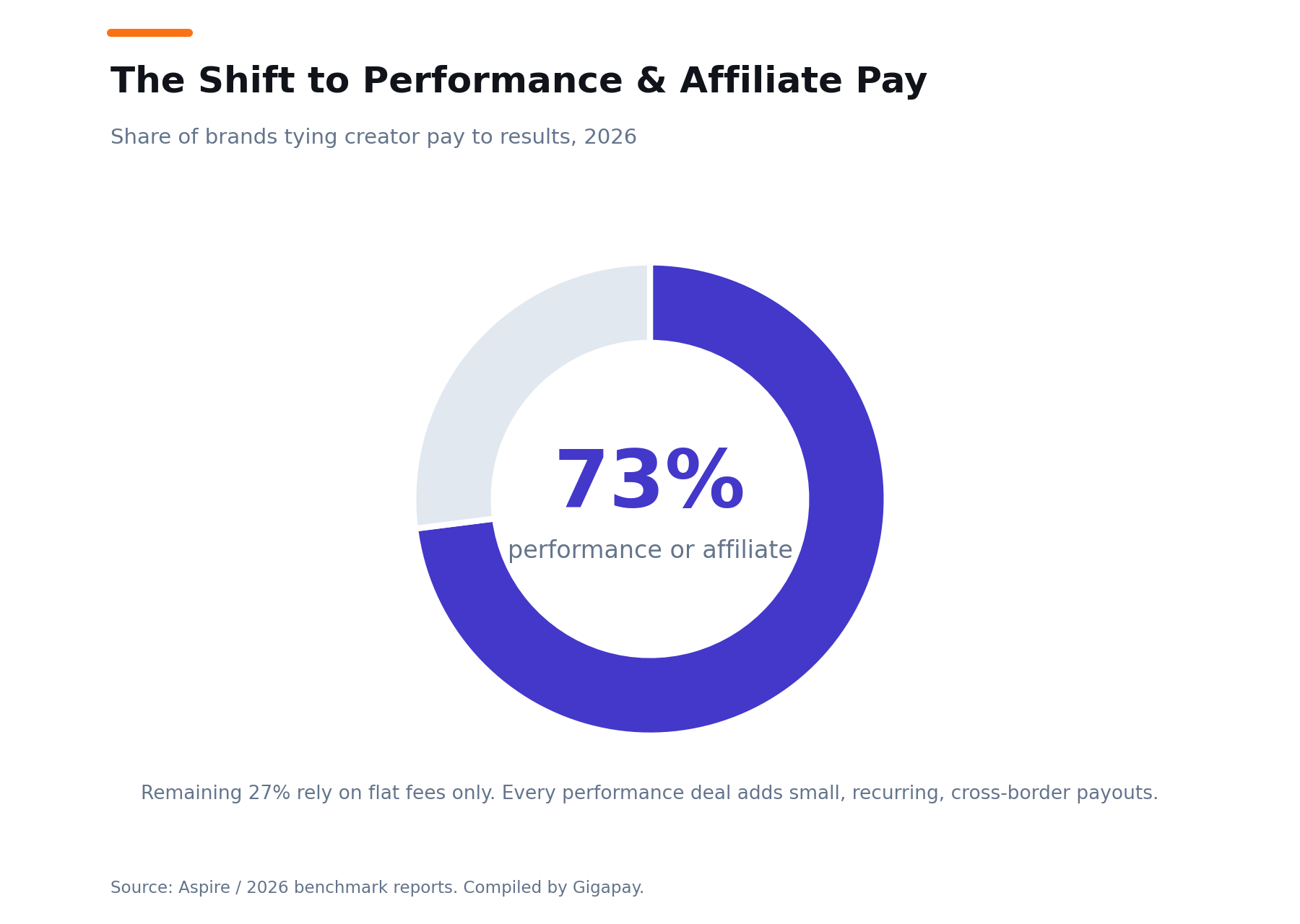
This model rewards finance with attribution data and punishes it with volume, because performance pay means many small, recurring, often cross-border payouts rather than a handful of invoices.
- Gifting and product seeding looks free and is not. When a gift is tied to a promotion, it is taxable at fair market value, and it is a material connection that triggers disclosure obligations. A closet full of sent products is a compliance event whether or not money changed hands.
- Hybrid and long-term ambassador deals combine a retainer with performance upside. Creators prefer them and they tend to return the most, which means the highest-performing programs are also the ones with the most continuous, ongoing payment relationships to manage.
The common thread is that every shift toward what works in 2026, more creators, smaller creators, performance pay, longer relationships, increases the number of individual payments a brand has to make, verify, document, and report. The marketing strategy and the finance burden grow together.
Influencer Payment Compliance Rules in 2026: US, EU, and UK
This is the part that changed most this year, and the part most teams have not caught up with.
FTC Influencer Disclosure Rules in the United States
The FTC's Endorsement Guides require that any material connection between a brand and a creator, whether payment, free product, a discount, or a family or employment relationship, be disclosed clearly and conspicuously.
A disclosure buried in a hashtag block, hidden behind a "more" link, or tucked into a profile bio does not meet the standard. It has to be unavoidable: in the first lines of a caption, or as an on-screen overlay in video.
Two points catch brands out:
- The brand and the creator share liability. A brand cannot hand the disclosure obligation to the creator and walk away from it.
- Penalties are large and they stack. In 2026 the maximum civil penalty for the relevant FTC Act violations is $53,088 per violation, held at the 2025 level because no inflation adjustment was issued for 2026.
Applied across a campaign with dozens of non-compliant posts, the exposure compounds quickly.
IRS 1099 Rules for Influencer Payments and the 2026 $2,000 Threshold
The headline change of the year is the 1099 reporting threshold. Under the One Big Beautiful Bill Act, signed in July 2025, the threshold for Form 1099-NEC and 1099-MISC rose from $600 to $2,000 for payments made on or after January 1, 2026.
The first filings under the new rule cover the 2026 tax year and land in early 2027, and the threshold will be indexed to inflation from 2027 onward. The 1099-K threshold, which covers third-party payment networks, reverted to $20,000 and 200 transactions.
It is tempting to read this as relief, and for paperwork on small payments it is. It is also a trap if a brand reads it as a reduction in obligation. Creators remain self-employed and report on Schedule C. Every dollar of income, cash and the fair market value of gifts alike, is taxable whether or not a 1099 is issued. Brands still need a W-9 from every contractor, still need accurate records, and still owe correct reporting on anyone above the line.
The threshold moved. The liability did not.
EU Influencer Payment Rules: DAC7, the DSA, and the Digital Fairness Act
The EU put the reporting burden on platforms. Under DAC7, digital platform operators must collect and report the income their sellers and creators earn to tax authorities, which closes much of the room creators previously had to under-report cross-border earnings.
The Digital Services Act layers transparency and advertising-disclosure obligations on top. A proposed Digital Fairness Act, expected in late 2026, is likely to tighten influencer labeling and advertiser liability further, including for AI and virtual creators.
Country-Specific Influencer Tax Rules: Germany's KSK and Sweden's KU14
This is where a brand running a pan-European campaign gets surprised. Two examples it should know by name.
Germany's Künstlersozialkasse runs the Künstlersozialabgabe, a levy companies pay on top of the fees they pay to self-employed creatives, including many influencers and content producers. For 2026 the rate falls slightly to 4.9%, and the de minimis threshold rises to €1,000 per year.
The trap is reach: the levy applies to companies that regularly commission creative work regardless of where they are based, and for companies classed as typical exploiters of creative work, the de minimis threshold does not apply at all. A brand outside Germany hiring German creators can owe this without ever having heard of it.
Sweden's KU14 requires statements of earnings to be reported for payments to individuals. It is one more national reporting format in a patchwork that grows with every country a creator program touches.
Put together, 43 or more countries now have disclosure rules, and a growing number have their own payment-reporting and social-contribution regimes. A program in one country is a manageable compliance task. The same program across fifteen is where teams either build real infrastructure or quietly accept risks they cannot see.
Who Is Liable for Influencer Disclosure: The Brand or the Creator?
The principle underneath all of it is simple to state and expensive to ignore: a brand cannot contract its way out of disclosure liability. The FTC holds the advertiser responsible.
What a brand can do is change who sits as the contractual counterparty for the payment itself, who runs identity verification, and who carries the platform-level reporting obligations. That distinction, between moving money and carrying responsibility, is the whole argument for how creator payments should be structured at scale.
The Cost of Influencer Payment Non-Compliance: FTC Fines and Class Actions
Enforcement is not theoretical anymore.
FTC enforcement activity has risen sharply since 2023, with the agency concentrating on beauty, wellness, and crypto, and sending warning notices to creators and brands in waves of hundreds.
Alongside the regulator, a newer pressure has arrived: consumer class actions. Plaintiffs have begun naming brands in suits over undisclosed paid endorsements under state consumer-protection laws, with companies including Shein and Revolve among those that have faced such claims. The brand, not the creator, is the defendant with the balance sheet worth suing.
Fraud and authenticity add a parallel cost. Roughly half of brands report exposure to fake-follower inflation, and accounts padded with bots return a fraction of the engagement and conversion of clean ones, which turns a payment into a loss twice over.
Then there is the cost that never shows up in a fine.
- The campaign misses its window because finance will not activate a creator without a registered company.
- The creator who churns after waiting weeks to be paid.
- The compliance review that blocks a launch because the guardrails were never built into the payment flow.
None of it appears in an enforcement database, and all of it is real money.
Influencer Payout Platforms Compared: Processors, Influencer Tools, and Merchant of Record
Tools for paying creators sit in three broad categories, and they solve different problems.
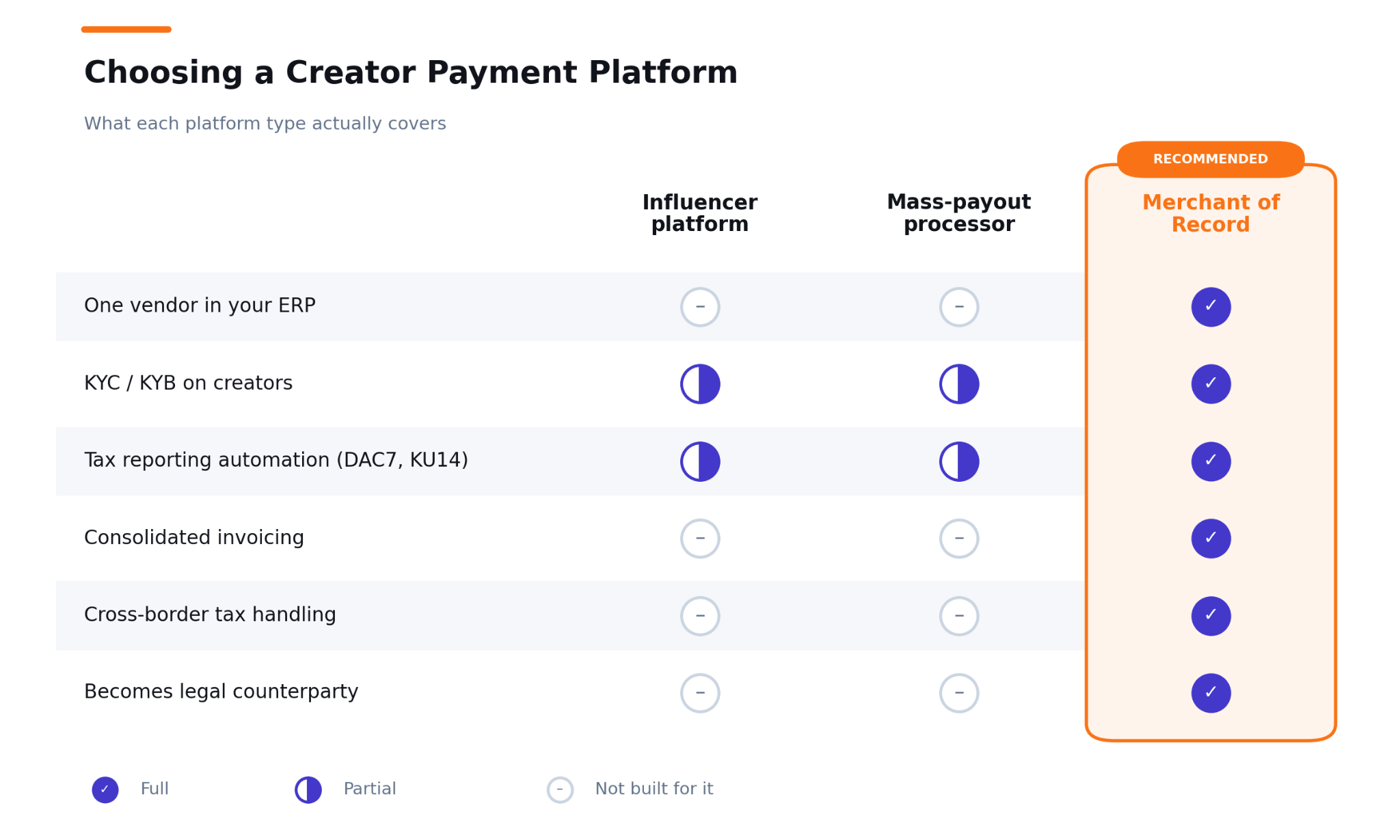
- A payment processor moves money well and leaves the brand holding the tax and identity work.
- An influencer platform manages campaigns well and was not built to be the entity that legally stands behind the payment.
- A Merchant of Record platform does the thing the other two leave on the table.
Here is what the Merchant of Record model actually does, stated precisely, because overclaiming it is its own kind of compliance failure.
Gigapay buys the creator's deliverable and resells it to the brand, which makes Gigapay the single contractual counterparty. For the brand, that turns hundreds of individual creator vendors into one vendor in the ERP, hundreds of invoices into one invoice per batch, and a scatter of national reporting formats into automated reporting Gigapay runs at the platform level.
Creators onboard as individuals, sole traders, or companies, with no registered business or VAT number required, and they get paid instantly through local payment rails.
What the model does not do is dissolve a brand's tax obligations. Each party remains responsible for its own taxes under the applicable law. Gigapay handles the reporting, the identity verification, and the role of counterparty, not the payment of a creator's income or social taxes on their behalf. The honest version of the pitch is the strong one: one vendor of record, one invoice, identity and reporting handled across borders.
To put numbers on the operational side, Gigapay's own modeling of a brand running 600 creator collaborations a year estimates the manual approach at roughly 840 hours of admin time against about 60 hours when the payment and reporting run through a single vendor of record. The compliance argument and the efficiency argument are the same argument.
Influencer Payment Compliance Checklist for 2026
For brands and agencies that want to close the gap, the work splits cleanly across the three teams that own it.
- Contracts (legal): Mandate clear disclosure language and placement rules in every creator agreement. Require proof of post. Define usage rights up front. Write in consequences for non-compliance rather than assuming goodwill.
- Workflows (marketing): Pre-approve content before it goes live. Require disclosure in the first lines of a caption or as a video overlay, not in a hashtag pile. Onboard creators for tax and identity at the start of a relationship, not at payment time.
- Payments and reporting (finance): Collect a W-9 or local equivalent from every creator regardless of the 1099 threshold. Keep records on every payment, including the fair market value of gifts. Decide on cross-border tax reporting before creator number 300, not after. Where volume justifies it, consolidate to a single vendor of record so the reporting is automated rather than chased.
- For everyone: Audit the 2026 campaigns now. The new $2,000 threshold is a reason to clean up the process, not a reason to relax the tracking.
Influencer Payment Compliance Outlook for 2027 and Beyond
The reports converge on a few things. Spend keeps growing at 15% to 30% a year. Performance attribution moves from a nice-to-have to the baseline metric. Social commerce matures into a primary channel.
AI and virtual creators, a small but fast-growing slice of spend, bring their own disclosure mandates, with regulators in the EU already signaling labeling requirements for synthetic content.
The structural story underneath all of it does not change. Creator programs will keep getting larger, more international, and more continuous. The brands that treated payment and compliance as infrastructure will scale without friction.
The ones that treated it as something to sort out later will keep hitting the same wall at the same volume, and will keep mistaking a systems problem for a headcount problem.
Methodology and Data Sources
This report synthesizes 2026 benchmark data from:
- Aspire (State of Influencer Marketing 2026)
- Influencer Marketing Hub (Benchmark Report 2026)
- Linqia (2026 State of Influencer Marketing)
- CreatorIQ (State of Creator Marketing 2025 to 2026)
Regulatory figures are drawn from and verified against primary sources: the IRS and the text of the One Big Beautiful Bill Act for 1099 thresholds, the Federal Trade Commission for endorsement rules and 2026 civil penalty amounts, the EU DAC7 directive, and the German Künstlersozialkasse and Bundesministerium für Arbeit und Soziales for the 2026 Künstlersozialabgabe rate.
Market-size and creator-income figures are industry estimates and vary by source; regulatory figures reflect rules confirmed as of June 2026 and are subject to change as enforcement evolves.
FAQs:
1. Do you need to send a 1099 to an influencer in 2026?
Yes, if you pay a US-based creator $2,000 or more during the calendar year. The threshold rose from $600 to $2,000 for payments made on or after January 1, 2026. Below that, no 1099 is required, but the income is still taxable to the creator and you still need a W-9 on file.
2. What is the FTC penalty for an undisclosed sponsored post?
Up to $53,088 per violation in 2026, and penalties stack across posts. The FTC can hold both the brand and the creator liable for failing to disclose a material connection clearly and conspicuously.
3. Who is responsible for influencer disclosure, the brand or the creator?
Both. The FTC holds the brand and the creator jointly liable. A brand cannot transfer disclosure responsibility to a creator by contract.
4. What is DAC7 and does it apply to influencer payments?
DAC7 is an EU directive requiring digital platform operators to collect and report the income creators and sellers earn through their platforms to tax authorities. It applies to platforms that facilitate creator payments and earnings within the EU.
5. What is the Künstlersozialabgabe and could it apply to my brand?
It is a German levy that companies pay on top of fees paid to self-employed creatives, set at 4.9% for 2026. It can apply to companies based outside Germany that commission German creators, and the small-payment exemption does not apply to companies classed as typical exploiters of creative work.
.jpg)